
Why Is Warming Up Before Exercise So Important
Key takeaways
- A warm-up raises body temperature and blood flow, which prepares muscles, joints, and heart for harder effort.
- Warm muscles are more pliable, so the risk of strains drops compared with starting cold.
- Five to 15 minutes of light movement plus dynamic stretches covers most workouts.

Warming up before exercise means doing your chosen activity at a slower pace and lower intensity for a few minutes first. A brisk walk before a run, or easy cycling before a hard ride, are both warm-ups. The point is to let the body shift from rest to effort gradually rather than all at once.
This article explains why warming up before exercise is so important, including what happens in the body during a warm-up, how long a warm-up should last, and what a good warm-up contains. It also covers the difference between dynamic and static stretching, and when each belongs in a session.
This article is for general information, not medical advice.
What a warm-up does to the body
A warm-up slowly raises body temperature and increases blood flow to the working muscles. Mayo Clinic explains that warming up helps the body get ready for aerobic activity by warming the heart and blood vessel system, raising body temperature, and increasing blood flow to muscles. When you warm up, it may also help lower muscle soreness and lessen injury risk.
The University of Georgia puts it in terms of supply. A warm-up slowly increases heart rate, which increases blood flow to the working muscles, and this provides the muscles with the oxygen and nutrients necessary for contraction. Doing a proper warm-up before exercising can greatly reduce the risk of injury, according to the same source.
Joints benefit too. Movement circulates synovial fluid, which lubricates the joints, and warm muscles stretch more easily than cold ones. Physiosunit notes that cold muscles are tight and stiff, which raises the risk of strains and tears, while a warm-up helps increase blood flow, loosen muscles, and improve elasticity, making them more flexible and resilient.
The heart gets a gentler ramp as well. Mayo Clinic notes that warm-ups and cool-downs pose little risk, and they seem to give the heart and blood vessels a chance to ease into and out of an exercise session. Jumping straight from a chair to a sprint asks the cardiovascular system to meet a sudden surge in oxygen demand, and a warm-up spreads that demand over several minutes.
There is honest debate about how much injury prevention a warm-up delivers. Mayo Clinic states that there is debate about whether warming up and cooling down can prevent injuries. The case for warming up rests on physiology and on the low cost of doing it, not on a guarantee that no one who warms up gets hurt.
How long a warm-up should last
Five to 15 minutes covers most sessions. Physiosunit advises aiming for 10 to 15 minutes of light aerobic activity, such as jogging, followed by dynamic stretches, and notes that sport-specific warm-ups may take longer. Mayo Clinic gives a simpler rule: warm up by doing the activity at a low, slow pace that builds in speed and intensity.
Short on time is not a reason to skip it. Physiosunit states that even a 5-minute warm-up reduces injury risk, and advises prioritising dynamic movements over static stretching if rushed. A short warm-up beats a cold start.
Mayo Clinic gives concrete examples. To warm up for a brisk walk, walk slowly for 5 to 10 minutes.
To warm up for a run, walk briskly for 5 to 10 minutes. To warm up for swimming, swim slowly at first, then pick up the speed as you are able. The pattern is the same each time: same movement, lower intensity, gradual build.
A warm-up should cause mild sweating but should not leave you tired. Mayo Clinic notes that a warm-up generally will not leave you tired.
If you are breathing hard before the workout starts, you went too fast. Ease back until you feel warm and loose rather than spent.
What a good warm-up contains
A good warm-up has three parts: light aerobic movement, dynamic stretching, and activity-specific drills. Physiosunit lists light aerobic exercise such as jogging, light cycling, or jumping jacks to increase blood flow and heart rate, then dynamic stretches that mimic the movements of the sport, then drills that resemble the movements of the activity itself.
Start with the large muscle groups. Mayo Clinic advises focusing first on large muscle groups, such as the hamstrings, then doing exercises more specific to the sport or activity if needed. A leg-day session deserves extra attention on hips and legs, while an upper-body session needs shoulders, chest, and back.
Make the warm-up match the workout. The University of Georgia stresses that a warm-up should be movement specific.
If the plan involves the lower body, the warm-up should work the whole body but spend more time dynamically stretching the lower body. If the session involves the upper body, warm up and dynamically stretch the shoulders, neck, chest, back, and torso.
Keep listening to the body during the warm-up. Physiosunit advises not pushing too hard, since the goal is to prepare, not exhaust.
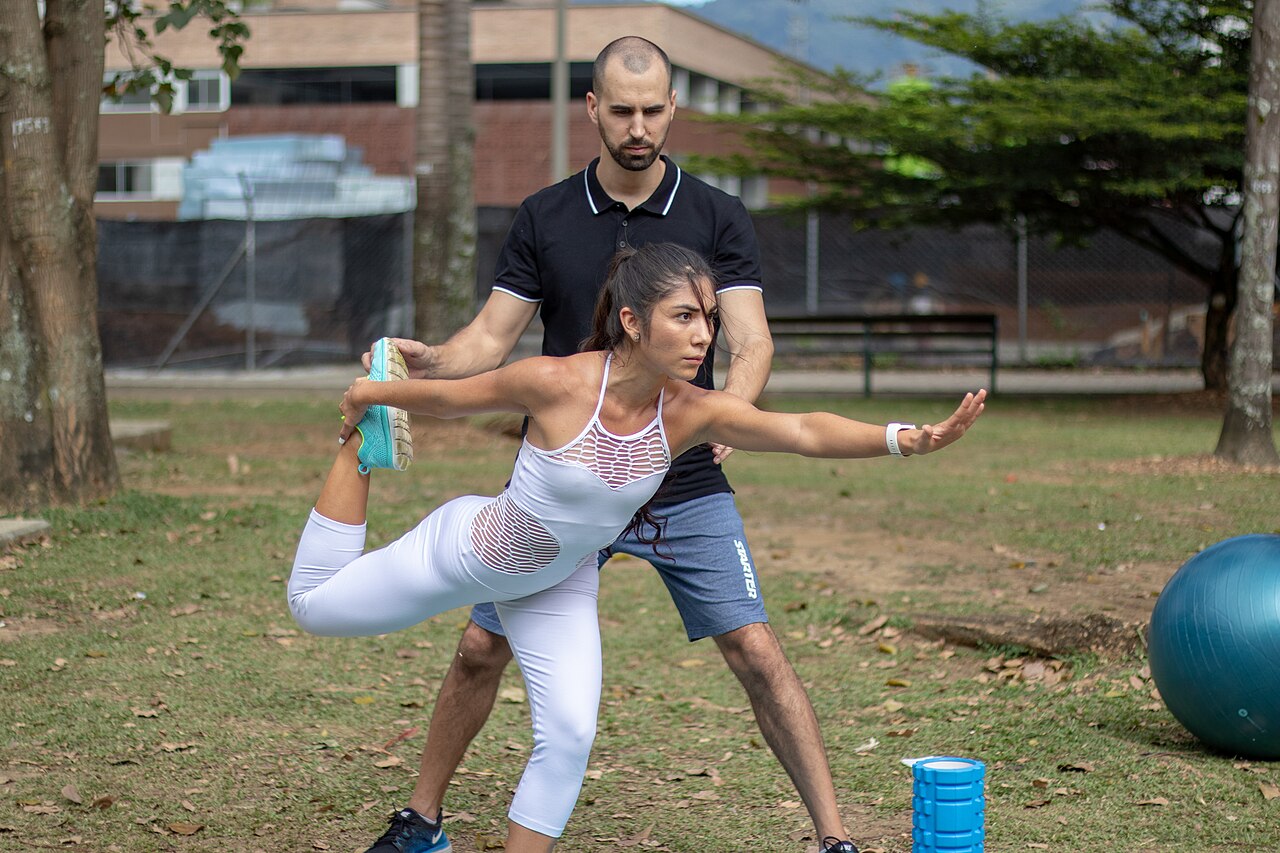
Dynamic stretching versus static stretching
The two kinds of stretching belong at different points in a session, and mixing them up is the most common warm-up mistake.
Dynamic stretching moves a joint through its full range of motion. The University of Georgia describes it as taking a muscle through a full range of motion from contraction to relaxation, with examples such as high-knee or butt-kick running exercises.
Leg swings, arm circles, and walking lunges are other examples. This is the kind that belongs in a warm-up.
Static stretching holds a stationary pose. The University of Georgia defines it as holding a stationary pose for 20 seconds at a time.
Mayo Clinic advises doing stretching exercises after the warm-up or cool-down phase, when the muscles are warm. Stretching can improve flexibility and range of motion about a joint, but Mayo Clinic notes that studies have not regularly shown that stretching helps prevent muscle soreness or injury.
A third method, PNF stretching, is advanced. The University of Georgia explains that PNF involves contracting the muscle you want to stretch for 6 seconds and then relaxing into a static stretch for 20 seconds. It is meant to help the muscle move through a greater range of motion, and it belongs after the workout, not before it.
The practical rule is simple. Move before the workout, hold after it. Dynamic work prepares the body for effort, while static work helps restore resting length once the session is over.
What happens if you skip the warm-up
Skipping the warm-up puts a sudden load on the cardiovascular system. Physiosunit explains that if the sudden surge in oxygen demand by the muscles is unmet, it may result in muscle soreness and dull, aching pain. Cold muscles are prone to strains, and the heart and lungs struggle to meet sudden oxygen demands, which leads to poor performance and muscle soreness.
The cool-down matters too. Mayo Clinic notes that cooling down after a workout lets the heart rate and blood pressure slowly recover to pre-exercise levels. Physiosunit cites a 2025 review finding that cool-down strategies such as stretching, foam rolling, and cold-water immersion were linked to reduced muscle soreness and faster recovery, and that combining warm-up with cool-down produced better results than either alone.
Rest and recovery sit alongside the warm-up. Beginners should learn how many rest days they need each week, and anyone chasing strength should understand progressive overload in simple terms. A warm-up prepares one session, while rest prepares the next one.
A sample 10-minute warm-up
Use this structure for a general workout, then add drills for your sport. It fits the 10 to 15 minute range Physiosunit recommends and the gradual build Mayo Clinic describes.
Minutes 1 to 4: light cardio. Walk, jog in place, cycle easy, or do jumping jacks at a conversational pace. Breathing should quicken without leaving you winded.
Minutes 5 to 7: dynamic stretches. Arm circles, leg swings, walking lunges, hip openers, and gentle torso twists. Move each joint through its full range without forcing it.
Minutes 8 to 10: activity-specific drills. Before a run, add high knees and butt kicks.
Before a strength session, do bodyweight squats or empty-bar reps of the first lift. Before a game, add the footwork and passing patterns the sport uses.
For a run, Mayo Clinic's version is simpler: walk briskly for 5 to 10 minutes, then run.

Flexibility work fits around this structure. Daily stretching routines can improve flexibility over time, and posture work helps people who fix posture after sitting all day. Keep static holds for after the workout, when the muscles are warm.
Frequently asked questions
Can I skip warming up if I am short on time?
No. Even a 5-minute warm-up reduces injury risk, according to Physiosunit. Prioritise dynamic movements over static stretching if rushed, and keep the intensity light.
Is static stretching before a workout bad?
Static stretching is better placed after the warm-up or cool-down phase, when muscles are warm, according to Mayo Clinic. Dynamic stretching is the right choice before the workout, since it moves joints through their range without holding a cold muscle in a long stretch.
Does warming up prevent all injuries?
No. Mayo Clinic notes debate about whether warming up can prevent injuries, and Physiosunit notes there is no research evidence that warm-up can entirely prevent all muscle pain. Warming up lowers risk and improves readiness, but it is not a guarantee.
Outlook
Warming up matters because the body needs time to shift from rest to effort. A few minutes of light movement plus dynamic stretches raise temperature, increase blood flow, loosen muscles, and give the heart a gradual ramp.
It is a small habit with a clear payoff, and it costs nothing but five to 15 minutes. Make it part of every session, keep static stretching for after the workout, and treat pain during a warm-up as a reason to stop rather than push on. For more on training well, see what to eat around a workout and how planks and crunches differ for core strength.
This article is for general information, not medical advice. Talk to a qualified health professional about pain, injury, or a new exercise programme.
Tags: warm-up, exercise, injury prevention, fitness
Latest in Fitness
- Progressive Overload in Simple Terms
- How Many Rest Days Do Beginners Need Each Week?
- How to Improve Flexibility With Daily Stretching Routines
- What to Eat Around a Workout
Subscribe to the Rive News newsletter for one practical fitness guide each week.
Related stories

How long does it really take to build noticeable muscle?
Strength gains start in week one, but visible muscle takes 8-12 weeks for most beginners. What the Oklahoma CT-scan study measured,

Why you feel dizzy after a workout: the 5 common causes
Post-workout dizziness usually comes from a blood pressure dip, dehydration, or low blood sugar. The numbers behind each cause, and when

Why Do Knees Hurt When Squatting but Not Running?
Knees hurt when squatting but not running because deep bends multiply force on the kneecap. Learn the mechanics, common causes, fixes,