
What Is Progressive Overload in Simple Terms for Beginners
Key takeaways
- Progressive overload means asking your muscles to do a little more over time.
- You can progress by adding weight, reps, sets, or by improving your form.
- Small, steady increases beat big jumps, which raise injury risk.

Progressive overload means doing a little more over time. If you lifted the same weight for the same reps every session, your body would soon treat that workout as routine. A small increase keeps the challenge alive, so your muscles keep adapting.
Think of it as a conversation with your body. You ask for a bit more, your body recovers, and it comes back slightly stronger. Then you ask for a bit more again.
This article explains what progressive overload is, how it works, and how to use it without rushing.
What is progressive overload?
Progressive overload is the gradual increase of the stress placed on your muscles during training. Healthline defines it as gradually increasing the weight, frequency, or number of repetitions in a strength training routine. That added challenge is what tells the body to get stronger.
The word "progressive" matters as much as the word "overload." Overload alone could mean one very hard workout. Progressive means the demand rises step by step, session after session, week after week.
A beginner example makes this concrete. In week one, you might do 10 to 12 squats with no added weight. By week three, you might do 12 to 15 squats.
By week five, you might do 15 squats. Nothing dramatic happened in any single session, yet the total work climbed.
How progressive overload works
When you train, you place stress on muscle fibers. Your body repairs that stress during rest, and the repair leaves the muscle slightly stronger than before. This repair cycle is the reason rest days count as part of training, not as time off from it.
Rest days give beginners time to recover between sessions.
The catch is adaptation. Once your body has adjusted to a given weight, that weight stops being a fresh stimulus. The same workout that once felt hard starts to feel easy.
At that point, progress slows unless the challenge grows.
That is why people plateau. A plateau often means the routine stayed the same while the body changed. The fix is not always harder training.
It is a slightly larger demand, applied at the right time.
Research supports the basic idea. A 2011 study published in the European Journal of Applied Physiology followed 83 people over 12 weeks of arm strengthening exercises. The researchers found that gradually increasing weight and repetitions was effective for building bicep strength and muscle growth in both men and women, according to Healthline.
Ways to add a little more
Adding weight is the best-known method, but it is only one of several. Any of these can count as progressive overload, as long as the change is small and you can measure it.
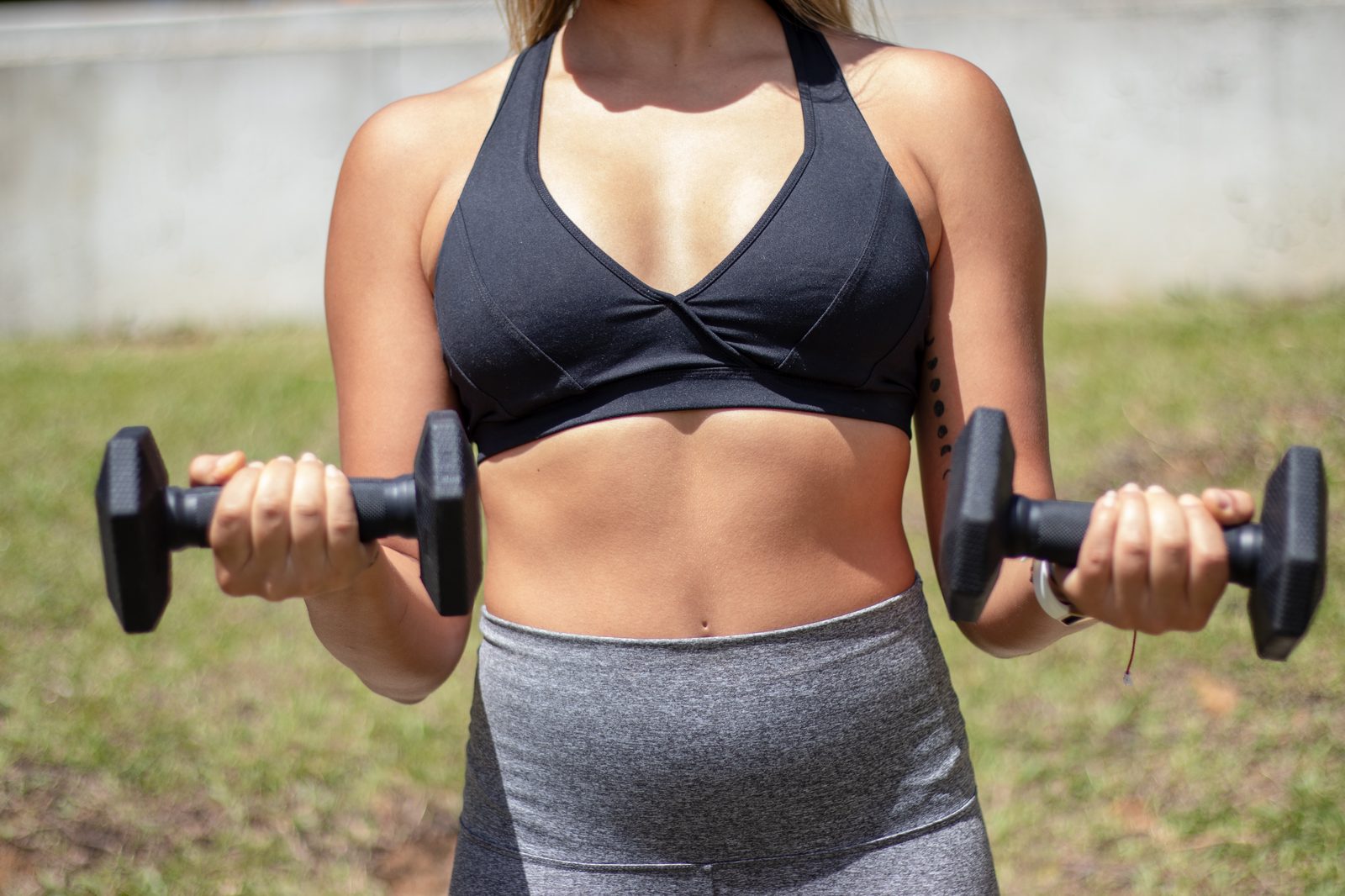
Add weight. Move to a heavier dumbbell or add a small plate to the bar. Healthline gives a bicep curl example: 10 or 12 pound weights in week one, 12 or 15 pounds in week four, and 15 or 18 pounds in week eight.
Add reps. Stay at the same weight and do more repetitions. Going from 2 sets of 10 reps one month to 2 sets of 12 reps the next month is a real increase.
Add sets. If you normally do 2 sets, try 3 sets at the same weight and reps. More sets mean more total work.
Slow the tempo. Lower the weight more slowly, or pause briefly at the hardest point. A slower rep can make the same weight feel heavier without loading the joints more.
Improve your form. A deeper squat or a fuller range of motion can raise the difficulty of a move. Better form also lowers injury risk, so it pays twice.
Shorten rest periods. Cutting rest between sets raises the density of the workout. Use this method with care, since tired muscles lose form faster.
Pick one variable at a time. If you add weight, reps, sets, and speed in the same week, you will not know what worked, and fatigue will pile up fast.
How much should you add?
The American College of Sports Medicine has recommended a load increase of 2 to 10 percent when a lifter can perform one to two repetitions more than the planned target on an exercise. That range gives beginners a concrete rule. If you aimed for 10 reps and finished 12 with good form, a small increase is reasonable.
Small jumps matter more than they look. A 2 percent increase on a 50 kilogram squat is 1 kilogram. Over months, those kilograms add up.
A 10 percent jump every session would stall fast, because the body cannot adapt that quickly.
Healthline offers a useful readiness check. You should be comfortable lifting a weight for 10 to 12 repetitions before moving to a heavier weight. You should also have good form on the exercise first.
Strength built on shaky form is a short road to injury.
Time also plays a role. Healthline notes that progressive overload training should start only after you have mastered an exercise with proper form, and after you have followed the same routine for at least 2 weeks, ideally a month. Beginners who rush this step often add weight to a move they cannot yet perform well.
A simple weekly plan
A simple plan beats a clever one you cannot follow. Start with two or three full-body sessions per week. Leave at least one rest day between lifting sessions for the same muscle groups.
Week one sets the baseline. Choose weights that let you finish each set with 1 or 2 reps still in reserve. Write down every weight, set, and rep.
A notebook or a phone note works fine. Without a record, "a little more" becomes guesswork.
Week two repeats week one, with one small change. If your squats felt easy, add a rep or two. If your curls felt hard, keep the weight and aim for cleaner reps.
The goal is a trend, not a record every session.
Week three or four is a natural point to add load on the moves that feel solid. Use the smallest plates available. A 1.25 kilogram plate on each side is a 2.5 kilogram jump, which is plenty for most upper-body lifts.
Every fourth to sixth week, plan a lighter week. Cut the weight by about a third and keep the reps smooth. This lighter week lets fatigue drain away, and many lifters return stronger.
Warming up before each session also helps your joints and muscles handle the extra load.
Common mistakes
Adding weight too fast. Healthline warns that progressive overload must be done gradually, and that increasing load or frequency too quickly can lead to injury. Soreness after a hard session is normal, but sharp pain is a signal to stop and seek advice.
Chasing numbers with bad form. A heavier lift with a rounded back or collapsing knees is not progress. It is a heavier risk. Keep the form standard, and let the numbers follow.
Changing everything at once. New weight, new reps, new tempo, and a new exercise in one week is a recipe for burnout. Change one variable and watch how your body responds.
Skipping rest. Muscles grow during recovery, not during the set. Two lifting days in a row for the same muscles leave less room for repair. Core work also benefits from planned recovery between hard sessions.
Comparing your jumps to someone else. A lifter with three years of training adds weight more slowly than a beginner. Early gains come fast because the body is new to the stimulus. That pace is normal, and it slows over time.
Does progressive overload work for cardio?
The same idea applies beyond the weight room. Healthline gives a running example: 20 minutes at a light to moderate pace, 2 days per week in week one, then 30 minutes in week three, then 30 to 40 minutes, 3 days per week in week five. Distance, duration, and frequency are all levers.
The rule stays the same. Raise one lever a little, hold it, and let the body catch up. A runner who adds distance and speed in the same week often ends up injured or exhausted.
Frequently asked questions
How long does progressive overload take to show results?
Strength gains often show up within a few weeks for beginners, since the nervous system learns to use existing muscle more efficiently. Visible muscle growth takes longer, usually several months of steady training, enough protein, and sleep. The 12-week study above is a realistic window for measurable change.
Do I need to lift heavy to use progressive overload?
No. The principle works at any load. Bodyweight moves can progress through harder variations, slower tempos, or extra reps.
Heavy weights are one tool, not the whole method.
What if I stall for weeks?
A stall usually means one of three things: the jumps were too big, recovery is short, or the routine has not changed in months. Try a lighter week, check your sleep, and change a single variable. If pain or illness appears, talk to a health professional before pushing on.
Is soreness a sign that overload worked?
Not by itself. Soreness often follows a new move or a long break. A good session can leave little soreness and still build strength.
Track your weights and reps instead of your soreness.
The bottom line
Progressive overload is a simple idea with a big payoff. Do a little more than last time, keep your form clean, rest between sessions, and write it all down. Small increases, repeated for months, build strength that lasts.
The best program is the one you can follow without getting hurt.
Tags: progressive overload, strength training, beginner fitness, muscle growth
Latest in Fitness
- Warming up before exercise
- How many rest days beginners need
- Plank vs crunch for core strength
- Daily stretching routines for flexibility
Subscribe for one practical fitness explainer each week.
Related stories

How long does it really take to build noticeable muscle?
Strength gains start in week one, but visible muscle takes 8-12 weeks for most beginners. What the Oklahoma CT-scan study measured,

Why you feel dizzy after a workout: the 5 common causes
Post-workout dizziness usually comes from a blood pressure dip, dehydration, or low blood sugar. The numbers behind each cause, and when

Why Do Knees Hurt When Squatting but Not Running?
Knees hurt when squatting but not running because deep bends multiply force on the kneecap. Learn the mechanics, common causes, fixes,