
Why Do You Feel Shaky After a Heavy Lift? Nervous System Fatigue
Key takeaways
- Shaking after a heavy lift comes from tired motor units dropping out, forcing the nervous system to recruit replacements unevenly.
- After maximal effort, tremor amplitude can rise up to tenfold and stay elevated for hours.
- Central nervous system fatigue reduces the strength and precision of the signals your brain sends to muscles.
You rack the barbell after a heavy set and your hands will not stay still. The tremor can last minutes, sometimes hours. It feels alarming the first time, but it is one of the most normal responses in strength training.
The shaking is not a sign that something broke. It is the visible result of your nervous system struggling to keep a fatigued muscle under smooth control.
This article explains why heavy lifts make you shake, what researchers have measured about the tremor, and when shaking deserves a second look.
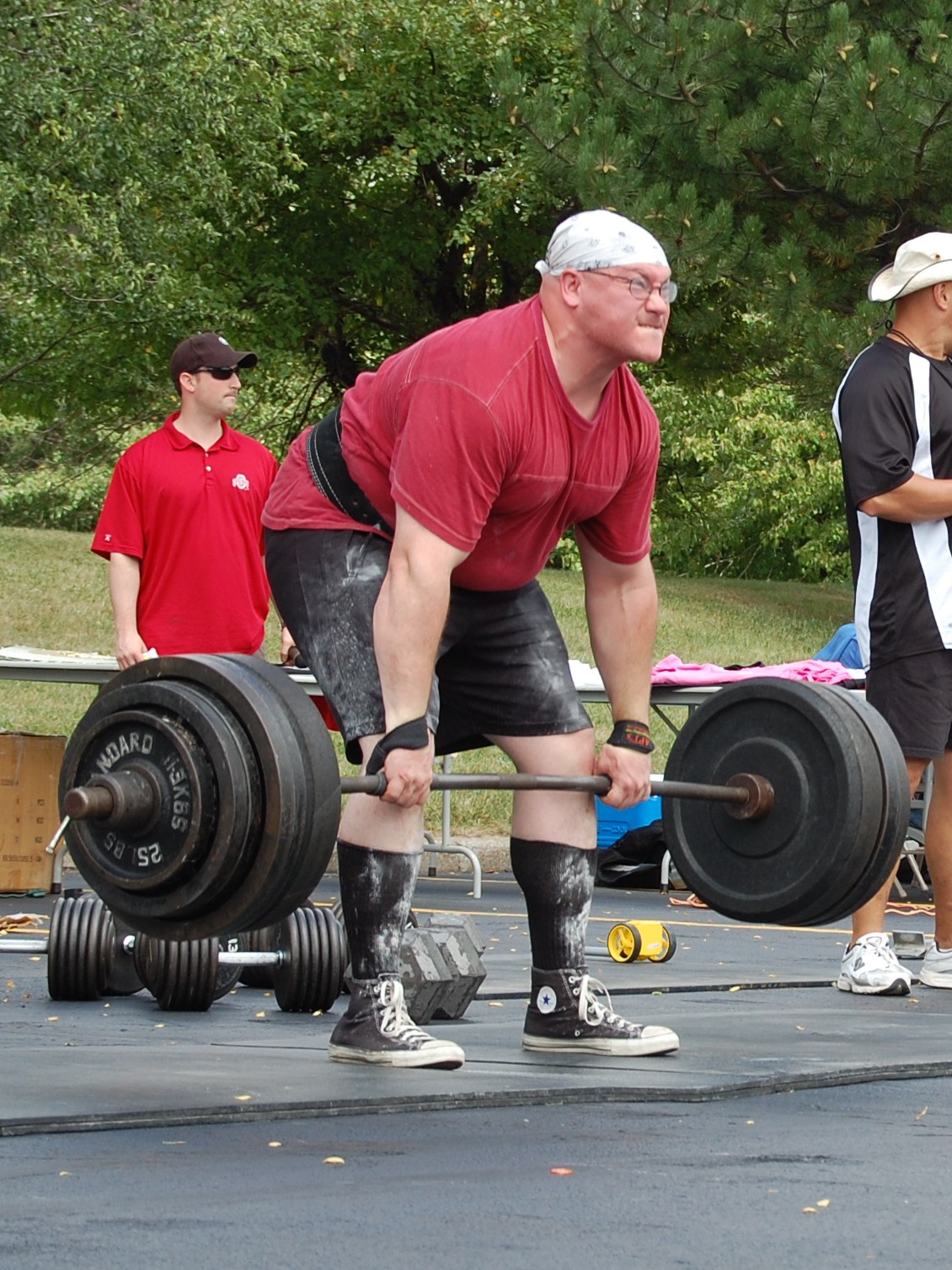
A deadlift demands near-maximal motor unit recruitment. Photograph: stu_spivack.
Image Credits: Wikimedia Commons / stu_spivack
Motor units: the teams that lift the weight
Every signal to move travels from the spinal cord, through motor neurons, down to the muscle. Each neuron connects to a group of muscle fibers rather than a single fiber. The neuron plus its fibers is called a motor unit.
When you lift, your nervous system recruits motor units in order of size. Light loads use small, fatigue-resistant units. As the load climbs, larger and more powerful units join in. A heavy lift near your maximum may recruit nearly every available unit at once.
The trouble starts when those units tire. Individual motor units begin to drop out, briefly stopping their firing. The nervous system compensates by recruiting and de-recruiting other units to keep the load supported. That recruitment is not perfectly smooth, so the force the muscle produces oscillates slightly. That oscillation is what you see and feel as a tremor.
In short: shaking is the signature of a control system working around its own fatigue.
What the measurements show
Your muscles always tremble a little, even at rest. This baseline is called physiological tremor, and most of it sits in an 8 to 12 Hz band, reflecting the rhythm of motor unit firing and the central drive from the brain.
Heavy effort cranks that tremor up. After a maximal contraction lasting only a couple of minutes, tremor amplitude can jump by up to a factor of ten and stay elevated for several hours, across all frequencies. Push to genuine fatigue over a longer set and a coarser, large-amplitude slow tremor at roughly 4 to 6 Hz can appear on top of it. That is why a truly hard set leaves your hands visibly wobbling afterward.
A study of lower-limb tremor in speed skaters found the tremor measured within ten minutes of finishing training was significantly larger than before, in both the slow (2 to 5 Hz) and fast (9 to 14 Hz) bands. The effect is not limited to one sport or one muscle group. It is a general property of a taxed neuromuscular system.
This is an explainer, not medical advice. If shaking is one-sided, persists long after rest, or comes with pain or numbness, see a clinician.
Central fatigue: when the signal itself weakens
So far the story has been about the muscle. The other half is the brain and spinal cord. During prolonged or intense effort, the central nervous system can fatigue too, a phenomenon called central fatigue.
Central fatigue shows up as a reduced ability to send strong, coordinated signals to the muscles, sometimes described as a reduction in descending neural drive. Fewer motor units get recruited, and the ones that are recruited fire less frequently. The signals become weaker or less regular, and fine motor control takes the hit.
This is thought to be partly protective: the nervous system throttles output to stop the body pushing past its current capacity and risking injury. The shaking you feel is the system hunting for a stable firing pattern while running on reduced drive.
Several contributors stack on top of central fatigue. Depleted ATP and phosphocreatine slow the cross-bridge cycling between actin and myosin that generates force. Metabolic byproducts such as inorganic phosphate interfere with calcium handling in the muscle. Low blood sugar and dehydration add further noise to nerve signaling. Adrenaline from the effort itself can amplify the tremor as it subsides.
Your body switches between movement patterns without conscious thought, and the same automatic systems manage the transition from effort back to rest. For more on that automatic control, see how your body switches from walking to running without thinking.
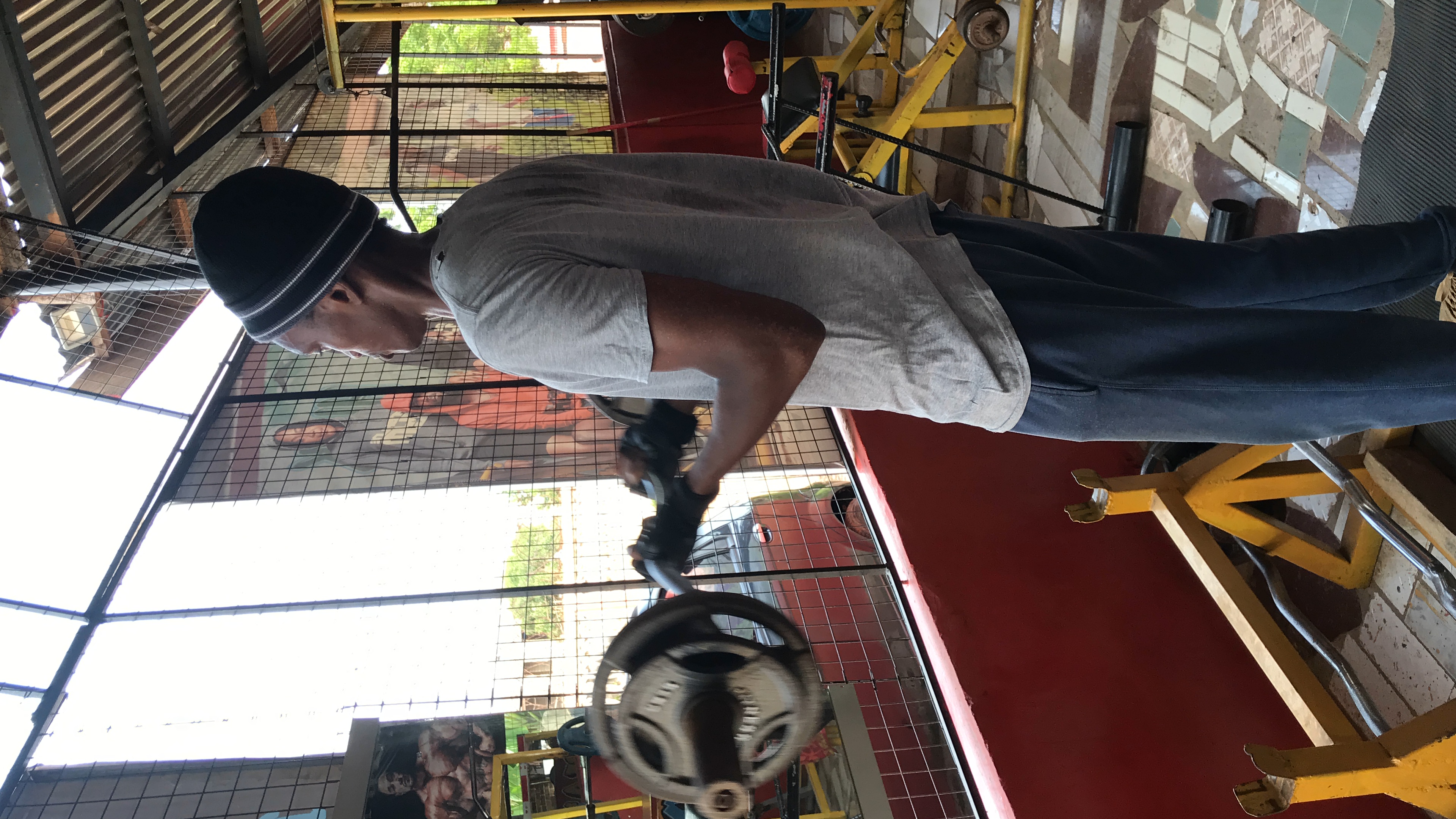
Heavy barbells demand maximal recruitment, which is why the shake follows the heaviest sets. Photograph: SAgbley.
Image Credits: Wikimedia Commons / SAgbley
When shaking is a warning sign
Normal post-lift shaking is symmetric, fades with rest, and follows hard efforts. A few patterns deserve attention instead.
Shaking that affects one limb much more than the other, tremor that persists for days without fading, or shaking accompanied by sharp pain, numbness, or a real loss of coordination are different from fatigue tremor. Those patterns point toward nerve or joint problems rather than tired motor units.
Most lifters never see those. What they see is the ordinary cost of asking the nervous system for maximum output. Rest, food, and hydration settle it. The tremor is the receipt, not the bill.
Frequently asked questions
Is shaking after lifting a sign of weakness?
No. It is a sign of effort. Beginners shake because their nervous systems are inefficient at recruiting motor units; experienced lifters shake because they pushed close to their limits. Either way, the tremor reflects fatigue, not frailty.
How long should the shaking last?
Usually minutes, occasionally a few hours after a maximal session. Research shows tremor amplitude can stay elevated for several hours after a maximal contraction. If it is still there the next day at rest, that is unusual and worth checking.
Does caffeine make it worse?
It can. Caffeine increases physiological tremor in most people, and adrenaline from hard training adds to the effect. The combination is harmless but noticeable.
Should I stop training if I shake?
Not for ordinary fatigue tremor. Reduce the load, rest between sets, and let the nervous system recover. Stop and reassess only if the shaking is one-sided, painful, or paired with numbness or lost coordination.
The bottom line
Shaking after a heavy lift is your nervous system managing fatigue in real time. Tired motor units drop out, replacements fire unevenly, and central drive weakens, producing a tremor that can be ten times its resting size. Rest and refuel, and the system resets. The shake is proof you asked your body for everything it had.
Latest in Fitness
- How Does Your Body Switch From Walking to Running Without Thinking?
- Why Do Climbers Tape Their Fingers?
- Why Do You Get Goosebumps From Music?
- Why Do Doors Stick More in Summer?
Get one research-backed training insight in your inbox each week. Subscribe to the Rive News newsletter.
Related stories

How long does it really take to build noticeable muscle?
Strength gains start in week one, but visible muscle takes 8-12 weeks for most beginners. What the Oklahoma CT-scan study measured,
Why you feel dizzy after a workout: the 5 common causes
Post-workout dizziness usually comes from a blood pressure dip, dehydration, or low blood sugar. The numbers behind each cause, and when
Why Do Knees Hurt When Squatting but Not Running?
Knees hurt when squatting but not running because deep bends multiply force on the kneecap. Learn the mechanics, common causes, fixes,