
Why Does Your Face Turn Red During Exercise?
Key takeaways
- Exercise heats your core, so skin blood vessels widen to carry heat outward.
- The face reddens most because its vessels sit close to the surface.
- Flushing is usually harmless and typically fades within 30 to 60 minutes.
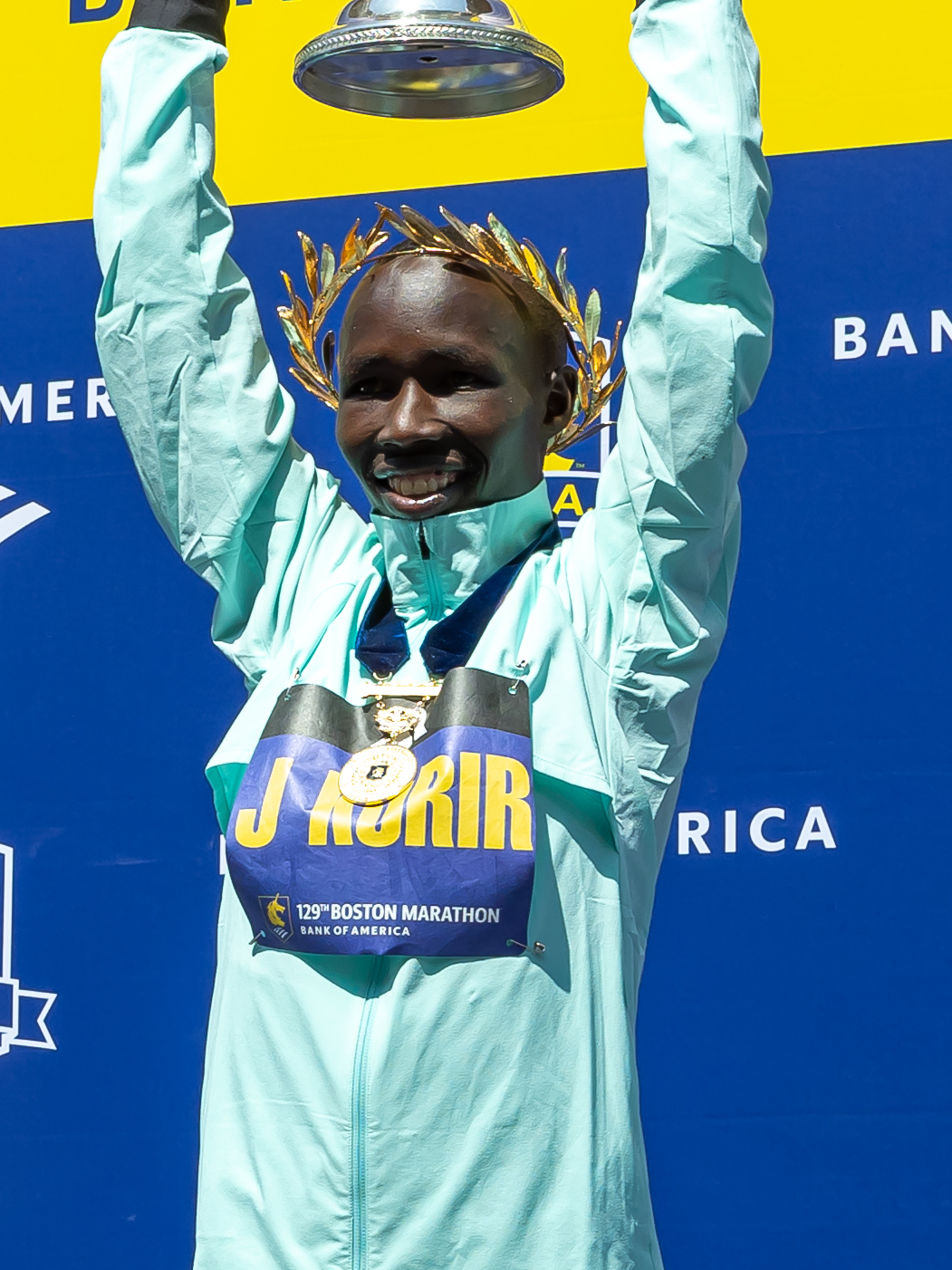
A runner mid-race with a deeply flushed face. Widened blood vessels are dumping heat from working muscles to the skin. Photograph: Margot Murphy
Image Credits: Wikimedia Commons / Margot Murphy
A red face during exercise is a radiator in action. Contracting muscles release most of their metabolic energy as heat, and the body sheds that heat by sending more blood to the skin, where it can escape into the air.
This article takes a closer look at why your face turns red during exercise, including the two blood-flow systems behind it, why the face shows it more than other body parts, and when redness deserves a second look.
Your cooling system opens the skin's blood vessels
When core temperature rises during exercise, the hypothalamus orders two coordinated changes. Skin blood flow increases, and sweat glands switch on. Both serve the same goal: move heat from the inside of the body to the surface, where convection and evaporation can remove it.
Skin blood flow is governed by two systems working in balance. A sympathetic vasoconstrictor system narrows vessels, while an active vasodilator system widens them.
During exercise, the vasodilator system takes over, opening small vessels in the skin so warm blood surges through them. Dermatologist Dr. Carl Thornfeldt told Experience Life that this blood flow shifts to the periphery to keep the brain, heart, and liver from getting too hot, and that the same cooling mechanism that makes you sweat also dilates your blood vessels, which creates the redness.
A 2025 review in the Research Archive adds detail. During exercise, vasodilation begins at a higher core temperature than at rest, and skin blood flow tends to plateau as core temperature approaches about 38 degrees Celsius. In other words, the body waits until you are genuinely warm, then opens the floodgates and holds them open as temperature climbs.
Why the face reddens more than the rest of you
Blood flow to the skin rises all over during exercise, but the face shows it first and most vividly. The vessels in facial skin sit unusually close to the surface, with little insulating fat to hide them, so increased flow becomes visible as color.
The same review found that blood flow in facial skin regions increased with exercise intensity in a similar way across the forehead, eyelid, nose, cheek, and ear when measured with laser speckle flowgraphy. Interestingly, blood flow in the lip did not rise at the highest intensity, showing that even the face does not respond uniformly.
Genetics set the baseline. Some people have blood vessels that dilate easily, so they turn crimson within minutes of starting.
Stephen Cheung, an associate professor of kinesiology at Brock University, explained that people who redden very quickly simply have a very sensitive vasodilation response, meaning their bodies act quickly to lose heat. He wrote that there is nothing harmful about this and it should not scare anyone off exercising.
Fair skin shows the change more because it lacks pigment that would mask the redness. People of northern European descent are most prone to visible flushing, as Thornfeldt noted. Hot weather, dehydration, and high-intensity cardio like running or cycling all amplify the effect.
When a red face needs attention
Ordinary exercise flushing follows a predictable pattern. According to Dr. Donald Grant, a GP and Senior Clinical Advisor at The Independent Pharmacy, the redness typically takes around 30 minutes to an hour to fade.
Intensely hot conditions can stretch that to about two hours, but longer is unusual.
Certain factors prolong or intensify flushing without being dangerous. Rosacea makes blood vessels more reactive, so sufferers often flush dramatically.
Allergies, sun damage, and some medications can do the same. Sauna sessions and hot yoga combine external heat with exertion, producing especially intense redness.
Real warning signs look different from a workout flush. Prolonged redness alongside dizziness, nausea, confusion, or a body that feels hot but has stopped sweating can indicate heat exhaustion or heat stroke.
That combination needs cooling and medical attention, not another interval. Persistent flushing at rest, or flushing that appears without exercise, heat, or emotion, is worth discussing with a clinician, since causes like rosacea or fever are separate issues.
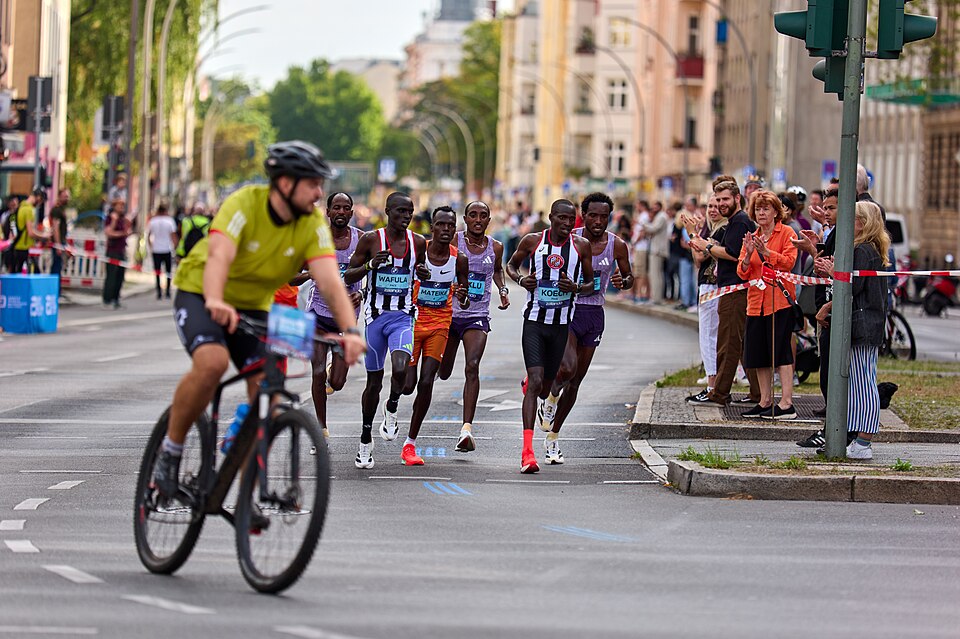
Elite runners at the Berlin Marathon. Harder efforts push more blood to the skin, so faces redden in step with intensity. Photograph: Leonhard Lenz
Image Credits: Wikimedia Commons / Leonhard Lenz
Why some workouts redden you more than others
Not all exercise flushes equally. Cardio sessions like running, cycling, and swimming raise core temperature steadily and keep it high, which is why Dr. Grant notes they are more likely to induce flushing than a few heavy sets of lifting with long rests between them.
Heat plus exertion multiplies the effect. A hot yoga class or a sauna session layers external warmth on top of metabolic heat, forcing the vasodilator system to work at full capacity. Humidity plays a part too: when sweat cannot evaporate, the body leans harder on skin blood flow, and the face shows the extra effort.
Frequently asked questions
Is a red face a sign I am unfit?
No. Flushing tracks heat production and your individual vasodilation sensitivity, not fitness. Fit athletes often flush more because they sustain higher workloads and move heat to the skin efficiently.
Why does my face turn red but my training partner's does not?
Vascular sensitivity varies widely. Some people's vessels dilate quickly and visibly; others dissipate the same heat with less visible change. Skin tone, genetics, hydration, and the humidity of the room all play a part.
How long should redness last after a workout?
Usually 30 to 60 minutes. After very hot or very intense sessions it can linger up to about two hours. If it regularly lasts much longer, check with a clinician.
Can I reduce exercise flushing?
Training in cooler conditions, staying hydrated, and wearing moisture-wicking clothing all help. A cool-down with light movement lets core temperature fall gradually instead of keeping vessels wide open.
The bottom line
Your face turns red during exercise because your body is deliberately routing hot blood to the skin to protect your core organs. Two vessel-control systems orchestrate the shift, the face shows it most because its vessels lie near the surface, and sensitive responders simply cool themselves faster.
It is one of the most visible signs that your thermoregulation is working as designed. Give it an hour, and the mirror goes back to normal.
Latest in Fitness
- How your body shifts gears from a walk to a run without thinking
- Why music can raise goosebumps on your skin
- Why climbers tape their fingers before hard routes
- Why your car has a rev limiter, and what your body borrows from the idea
Subscribe to the Rive News newsletter for one science-backed explainer like this every morning.
Related stories
How long does it really take to build noticeable muscle?
Strength gains start in week one, but visible muscle takes 8-12 weeks for most beginners. What the Oklahoma CT-scan study measured,
Why you feel dizzy after a workout: the 5 common causes
Post-workout dizziness usually comes from a blood pressure dip, dehydration, or low blood sugar. The numbers behind each cause, and when
Why Do Knees Hurt When Squatting but Not Running?
Knees hurt when squatting but not running because deep bends multiply force on the kneecap. Learn the mechanics, common causes, fixes,