
Why pasta water needs to be salty: the science behind the rule
Key takeaways
- "Salty as the sea" is a maxim, not a measurement: real seawater is about 3.5% salt, while the pasta-water target is 1 to 1.5%, roughly 10 grams per liter.
- Pasta absorbs cooking water as it hydrates, so salting the water is your only chance to season the pasta itself rather than just the sauce.
- Salted, starchy pasta water doubles as a sauce ingredient: the dissolved starch helps sauce cling to the pasta instead of sliding off.
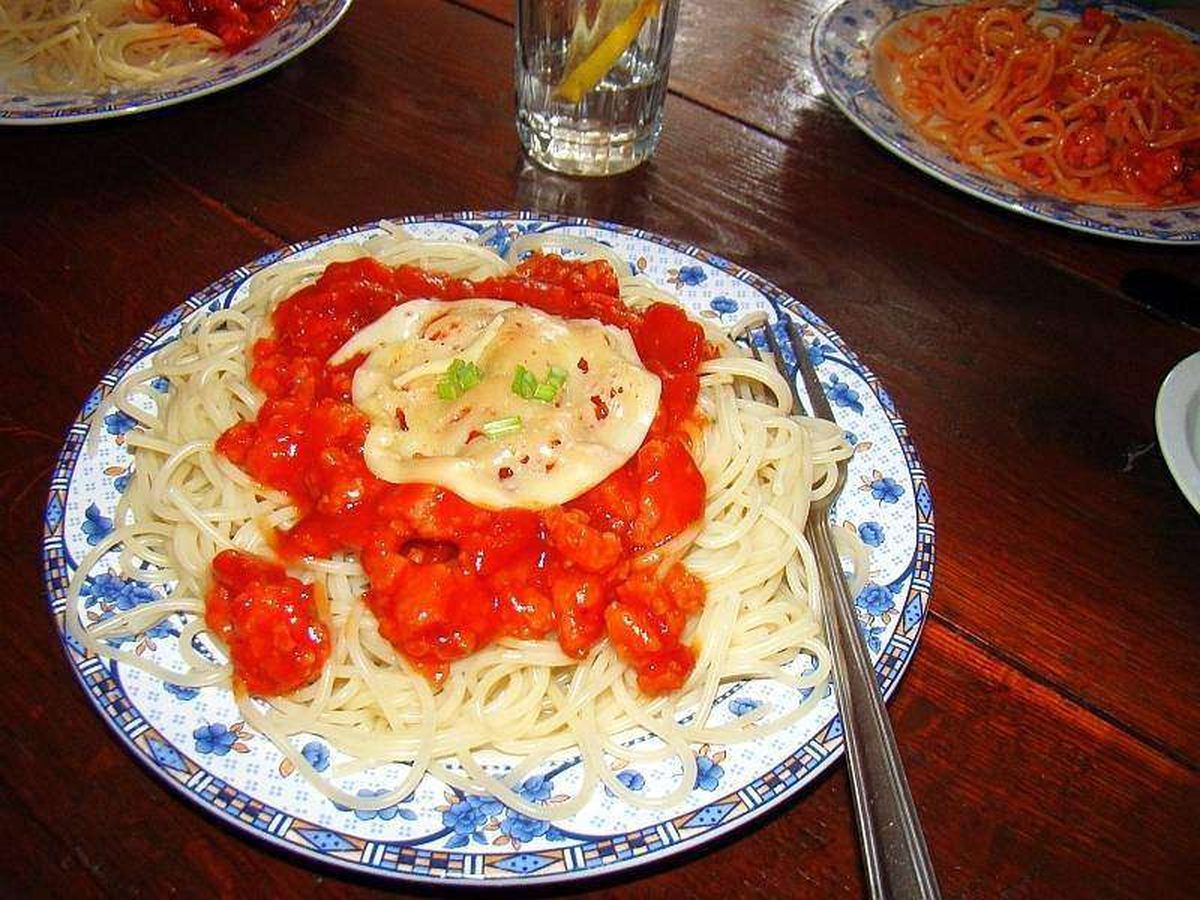
The classic instruction for cooking pasta says to salt the water until it tastes like the sea. It appears in cookbooks, on pasta packets, and in roughly every pasta video ever filmed.
Behind the saying sits real food science. Pasta absorbs water as it cooks, salt seasons it from the inside out, and the leftover starchy water becomes a sauce ingredient in its own right.
This article explains pasta-water salting, including what the saying really means, how much salt to actually use, why salt matters for flavor, the science of starchy pasta water, and mistakes to avoid.
What the saying really means
The sea comparison is poetry, not a recipe. Ocean water is about 3.5 percent salt by weight, a measured figure rather than a figure of speech, according to the food-science writer behind Salt Notes.
A four-quart pot of water weighs about 3.8 kilograms. At genuine seawater strength, that pot would need roughly 130 grams of salt, nearly half a cup of table salt.
Nobody does this. The cooks who repeat the instruction throw in a couple of tablespoons, somewhere between a quarter and a third of what they just told you, and the dish comes out fine, as Salt Notes dryly observes. The saying survives because it pushes shy salters toward generosity, not because anyone follows it literally.
How much salt to actually use
The working standard in professional kitchens is far milder than the ocean. Aim for about 1 percent of the weight of the water, roughly 10 grams of salt per liter.
For a full pound of pasta in about 3 liters of water, that means around 30 grams of salt, per What's in the Pan. The pasta absorbs only a fraction of it, and the rest goes down the drain with the water.
If you measure by spoon, the salt type matters. For a four-quart pot, Salt Notes gives roughly 4 1/2 tablespoons of Diamond Crystal kosher salt, 2 5/8 tablespoons of Morton kosher, 2 1/4 tablespoons of fine sea salt, or 2 tablespoons of table salt. Four different volumes, one weight, because crystal size changes how much volume you need for the same sodium.
Other voices land in the same zone. Tastyble recommends 10 to 15 grams per liter, calling it the 1 to 1.5 percent sweet spot, and chef Joey Sergentakis of New Jersey recommends 10 grams of salt per liter of cooking water, telling Fox News Digital that "if your water tastes like a mouthful of seawater, it's probably too much."
Science backs a similar number from a different angle. A Lund University team led by senior physical chemistry lecturer Andrea Scotti studied spaghetti's structure with particle accelerators and neutron facilities, and found 7 grams per liter optimal for keeping the pasta's structure, with findings published in the journal Food Hydrocolloids. That is a touch milder than the kitchen standard, but it sits in the same ballpark.
The simplest test needs no scale. Taste the water before the pasta goes in. It should taste clearly seasoned, like a well-made soup, without making you wince.
Why salt matters for flavor
Pasta is dried dough, and dried dough drinks. As the noodles soak up water in the pot, water moves into the starch and gluten network, and whatever is dissolved in that water travels with it.
That makes the cooking pot your only chance to season the pasta itself. "It's your one chance to season the pasta itself while it's cooking," Sergentakis told Fox News Digital. Once drained, no sauce can reach the interior of the noodle.
Salt also works on texture. South Carolina chef and restaurateur Mark Bolchoz told Fox News Digital that "we salt pasta water not only for increased flavor throughout the dough itself, but also because salt reduces starch gelatinization (the swelling and bursting of starch granules in hot water), which improves the overall texture of the pasta." Tighter starch structure means better bite.
The difference shows up on the plate. Pasta boiled in plain water tastes flat even under a great sauce, because the bland interior waters down every bite. Properly salted pasta tastes seasoned on its own, so the sauce adds flavor instead of rescuing it.
The science of starchy pasta water
Something else happens in the pot while the pasta cooks. Surface starch lifts off the noodles and dissolves into the water, turning it cloudy.
That cloudy liquid is a natural emulsifier (a mixer that holds oil and water together). The starch binds oil and water together, so a ladle of pasta water stirred into the sauce makes it smooth and glossy, thickening it without cream or extra butter, according to the American Chemical Society's guidance summarized by Food52.
It also solves the cling problem. The starchy water helps sauce stick to the cooked pasta instead of pooling at the bottom of the bowl, which matters most with bronze-die pasta and its rough surface, as the food writer behind Using Mainly Spoons notes. A dry, separate sauce and a wet, separate noodle become one dish.
That is why chefs call the cloudy liquid gold. Reserve a cup before you drain, because once it goes down the sink, you cannot get it back.
Mistakes to avoid
The first mistake is adding oil to the water. It seems logical, but the American Chemical Society points out that most of the oil washes off when you drain the pasta, as Grazia Daily reported. Worse, the slick coating that remains can stop sauce from sticking properly.
The second mistake is rinsing the cooked pasta. Researchers call pouring cold water over drained pasta "a classic mistake," because it washes away the sticky starch that makes sauce cling, per the same ACS guidance. Skip the rinse entirely.
The third mistake is believing salt makes water boil faster. The common belief is half right: salt does change the water's chemistry, but it slightly raises the boiling point rather than lowering it, according to Reader's Digest. The bump is only one to four degrees Fahrenheit, depending on the pot and the salt, so the effect on cooking time is tiny.
The fourth mistake is undersalting out of caution. A pinch in a big pot does almost nothing, and the result is pasta that tastes dull no matter how good the sauce is. If your water tastes like plain hot water, it needs more salt.
Salt timing is more forgiving than legend claims. Adding salt to cold water and bringing it to a boil works fine, and salting after the boil works too. What matters is that the salt is fully dissolved before the pasta goes in.
Frequently asked questions
Should pasta water really taste like the sea?
Not literally. Seawater is about 3.5% salt, and that would make pasta inedible, per Salt Notes. Aim for 1 to 1.5% instead, which tastes clearly seasoned without being briny.
How much salt is that in spoons?
For a four-quart pot, about 4 1/2 tablespoons of Diamond Crystal kosher salt or 2 tablespoons of table salt, per Salt Notes. Fluffier salts need more volume for the same weight, so do not swap salts one-for-one by spoon.
Does salt make the water boil faster?
No. Salt slightly raises the boiling point by one to four degrees Fahrenheit, which is negligible for cooking time, according to Reader's Digest. Salt the water for flavor and texture, not speed.
Why save some pasta water before draining?
The dissolved starch emulsifies and thickens the sauce and helps it coat every noodle, according to Food52's summary of the ACS guidance. A ladle or two stirred into the sauce is the difference between glossy and greasy.
The bottom line
Pasta water needs to be salty because it is the only seasoning the inside of the noodle will ever get. Forget the ocean: aim for about 10 grams of salt per liter, taste the water before the pasta goes in, and save a cup of the starchy liquid for the sauce.
Next time you boil a pot, salt it with intent instead of a pinch. It costs nothing and it is the single biggest difference between decent pasta and restaurant pasta.
---
Tags: pasta, cooking science, salt, Italian cooking, kitchen tips
Rive News's research desk covers travel, money, and everyday science with sourced explainers. No PR, no sponsored placements.
Latest in Food
- Baking soda and baking powder: what's the difference?
- Why Does Bread Go Stale Faster in the Refrigerator?
- Why Should You Rest Meat After Cooking? The Science of Juiciness
- What Is the Maillard Reaction in Simple Terms?
Subscribe for one sourced explainer every morning.
Rive News (c) 2026. Corrections: reply to any article and we fix verified errors within 48 hours.
Related stories

Why Does Bread Go Stale Faster in the Refrigerator?
Bread goes stale faster in the fridge because starch recrystallizes fastest near 4°C. Here is the retrogradation science and the right way

Baking soda and baking powder: what's the difference?
Baking soda is pure sodium bicarbonate; baking powder adds two dry acids for double-acting lift. Learn when to use each, plus exact

What Is the Maillard Reaction in Simple Terms?
The Maillard reaction is the browning chemistry between amino acids and sugars above 140 C that creates the crust, color, and rich flavor