
Why Soaking Red Onions in Water Makes Them Taste Milder
Key takeaways
- Cutting an onion releases sulfur compounds, including syn-propanethial-S-oxide, that cause the sharp bite and tears.
- A 10 to 15 minute soak in ice water leaches out some of these water-soluble compounds, mellowing the flavor.
- Cold water keeps the slices crisp; heat or long soaks past 30 minutes change the texture for the worse.
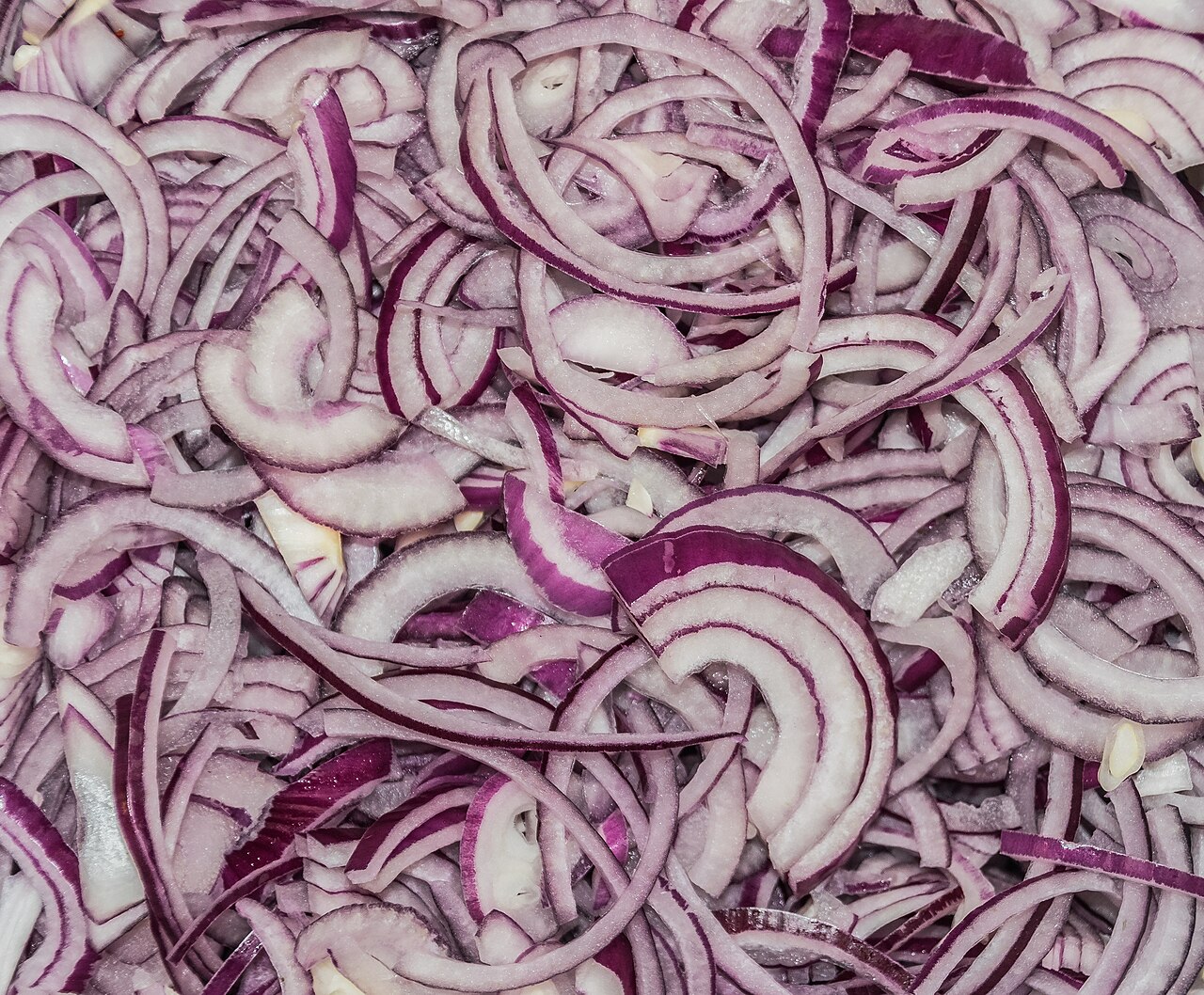
Image Credits: Wikimedia Commons / Krzysztof Golik
The chemistry behind the bite
Red onions do not taste harsh until you cut them. The onion stores sulfur-containing compounds and enzymes in separate compartments inside its cells. Your knife breaks those compartments open, the enzymes meet the sulfur compounds, and the resulting reactions produce volatile substances that sting your eyes and bite your tongue.
The most famous of these is syn-propanethial-S-oxide, the lachrymator that makes you cry, along with thiosulfinates, the sulfur compounds behind the pungent raw flavor. Red onions are actually milder and sweeter than many yellow onions to begin with, according to Chowhound's food-science coverage, which makes them the natural choice for raw preparations like salads and tacos.
This article explains why soaking works, including the chemistry of the onion's sulfur compounds, the right timing for an ice-water bath, and the trade-offs of soaking too long.
What the water actually removes
When you submerge sliced onion in water, you give the water-soluble sulfur compounds a place to go. Thiosulfinates and other volatile sulfur products diffuse out of the cut cell surfaces and into the surrounding liquid. The concentration of the harsh compounds in the onion drops, so the bite softens.
The timing matters. Culinary guides consistently recommend 10 to 15 minutes in ice water. Under five minutes removes little, because diffusion needs time to work.
Beyond 30 minutes, the soak starts diluting the onion's desirable flavor too, and the texture can soften, as the soak guide at Wellness/Alibaba explains.
Cold matters as well. Cold water slows the enzyme reactions that keep generating new sulfur compounds, so the chill itself reduces pungency even before diffusion does its work. Parade's explainer notes that the cold temperature helps slow down the reaction that releases irritating compounds, while the water dilutes some of the sulfur load.
Why the crunch survives the soak
Heat would mellow onions too, but it cooks them, collapsing cell walls and turning them soft. Cold water takes a different path. It does not break down pectin or cook proteins, so the sliced rings keep their snap.
In fact, cold water can crisp up onion that has gone slightly limp in the fridge, a trick Chowhound notes chefs have used for years.
Slice thickness changes the math. Thin slices expose more cut surface area per volume, so they release sulfur compounds faster than thick chunks. If your onions are cut paper-thin, check them at the ten-minute mark before committing to the full soak.
What soaking cannot fix
Soaking has real limits, and honest cooks should know them. It reduces sharpness, but it does not remove every sulfur compound, and it does not change the fundamental character of a strong onion. A fierce yellow onion soaked for 15 minutes will still taste like a strong onion, just a calmer one.
There is also a cost. The same soak that pulls out harsh sulfur compounds also pulls out water-soluble nutrients, anthocyanins (the pigments that give red onions their magenta color), and some natural sugars.
Food-science commentary has pointed out that prolonged soaking can fade the vibrant color and flatten the aromatic complexity of the onion. If the magenta matters on the plate, keep the soak to ten minutes and no more.
Alternatives exist. A brief acid soak in water with lemon juice or vinegar reduces the bite and adds brightness, but it changes the flavor profile toward tart.
Letting thin slices air out uncovered for five to seven minutes oxidizes away some of the most aggressive sulfides with no water at all. Pickling is the most decisive option, but then you are making pickled onions, not mild raw ones.
The practical method
Slice the red onion as thin as you can, pole to pole for sturdy rings. Submerge the slices in a bowl of ice water, using enough water that the onion floats freely. Refrigerate the bowl if you are preparing ahead.
After 10 to 15 minutes, drain the slices and pat them dry before adding them to the dish, so they do not water down the salad.
For a stronger onion, taste a piece after the first soak. A second short soak can take off more edge, but each round also takes more flavor with it. Soaked slices are best used the same day; overnight soaking leaves them pale and bland.
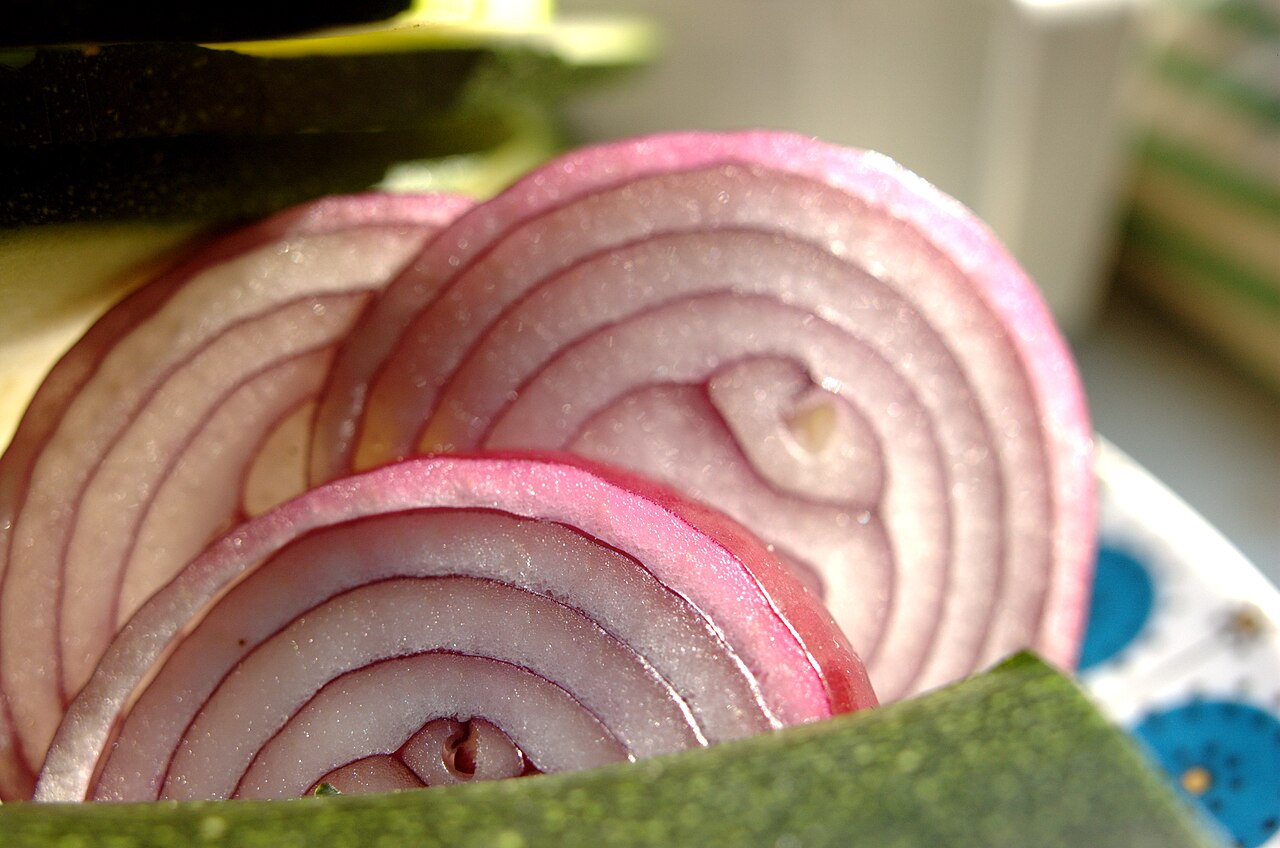
Image Credits: Wikimedia Commons / Roland Geider (Ogre)
How long should I soak red onions in water?
Ten to fifteen minutes in ice water is the standard. That window removes enough sulfur compounds to mellow the bite while keeping the onion crisp. Under five minutes does little; past 30 minutes the texture softens and flavor fades.
Does soaking remove all the onion flavor?
No. Soaking reduces the sharp sulfur compounds but leaves the onion's sweetness and raw character. Some flavor and nutrients are lost to the water, so keep the soak as short as you need for your taste.
Why do onions make you cry but soaked ones sting less?
Cutting releases enzymes that create syn-propanethial-S-oxide, the gas that mixes with eye moisture and stings. Soaking washes away some of these compounds, and the cold slows the enzyme reaction that makes more of them.
Which onions benefit most from soaking
Red onions are the best candidates for the ice-water trick. They are already milder and sweeter than yellow storage onions, and they are usually served raw in salads, sandwiches, and tacos, where a softer bite matters most. White onions sit in the middle and respond well to the same treatment.
Sweet onions, such as Vidalia or Walla Walla types, barely need it. They are bred for low sulfur content, so their bite is gentle even raw.
Hot yellow or brown onions benefit the most from soaking, but they may still overpower a delicate salad after 15 minutes. For those, cooking or pickling is usually the better path.
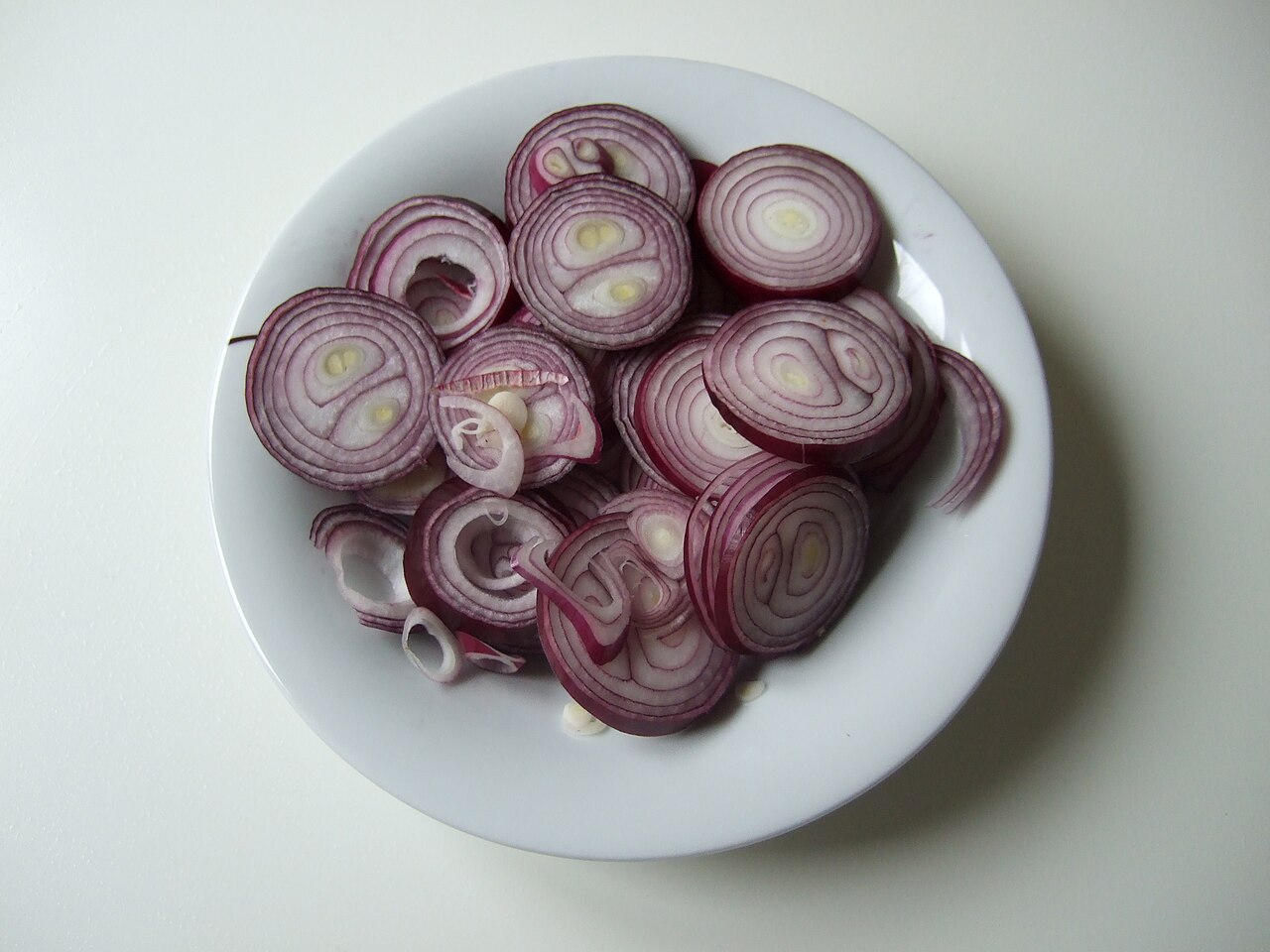
Image Credits: Wikimedia Commons / Sebastian Wallroth
Can I soak onions in hot water instead?
Hot water would mellow the bite but also cook the onion, changing its texture and raw flavor. Ice water is the standard because it keeps the slices crisp.
The bottom line
Red onions taste milder after soaking because cold water leaches out the sulfur compounds behind the harsh bite. Ten to fifteen minutes in ice water is the sweet spot: long enough to calm the pungency, short enough to keep the crunch and color. Soak longer and you trade vibrancy for blandness, so taste as you go.
Latest in Food & Cooking
- Why onions make you cry and how to stop it
- The Maillard reaction explained in simple terms
- Why coffee tastes stale days after grinding
Get one practical food-science tip in your inbox each week. Subscribe to the Rive News newsletter.
Related stories
Why Does Bread Go Stale Faster in the Refrigerator?
Bread goes stale faster in the fridge because starch recrystallizes fastest near 4°C. Here is the retrogradation science and the right way
Baking soda and baking powder: what's the difference?
Baking soda is pure sodium bicarbonate; baking powder adds two dry acids for double-acting lift. Learn when to use each, plus exact
What Is the Maillard Reaction in Simple Terms?
The Maillard reaction is the browning chemistry between amino acids and sugars above 140 C that creates the crust, color, and rich flavor