
How Does Salt Preserve Food? Osmosis, Water Activity, and Microbes
Key takeaways
- Salt preserves food mainly through osmosis: it pulls water out of microbial cells, dehydrating them so they cannot grow.
- The key number is water activity (aw): fresh food sits near 0.99, and most bacteria stop growing around 0.91.
- Salt also disrupts microbial enzymes and DNA, and curing salt plus nitrite blocks the deadly Clostridium botulinum.
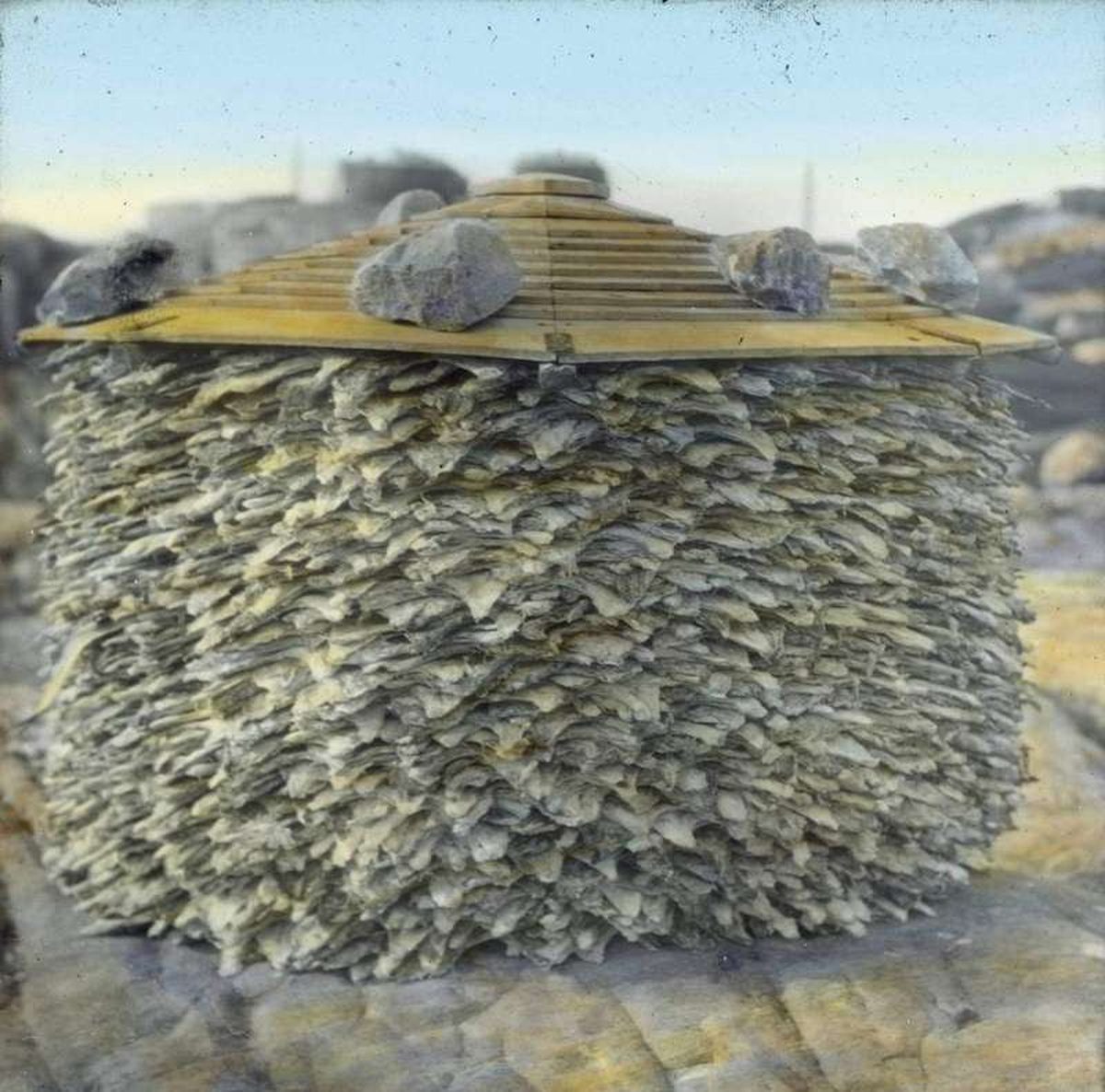
Image Credits: Wikimedia Commons
Salt preserves food by making life impossible for the microbes (tiny organisms) that cause spoilage. Bacteria, yeasts, and molds all need water to survive and multiply. Salt takes that water away.
The process is called osmosis. When salt contacts food, it draws available water from inside the food to the outside and pushes salt molecules into the food, as Scientific American explains.
That is the headline mechanism, but it is not the whole story. Salt also attacks microbes in subtler ways, and the amount of salt needed is not guesswork: it is measured and regulated.
This article explains how salt preserves food scientifically, including osmosis and dehydration, the water activity threshold of 0.91, salt's secondary attacks on enzymes and DNA, how much salt curing actually requires, and what salt cannot do.
Spoilage is a water problem
Food spoils because microbes eat it first. Bacteria, yeasts, and molds colonize meat, fish, and produce, breaking them down into compounds that smell and taste rotten.
Every one of those microbes needs free water to function. Take the water away and they stall. They cannot reproduce, they cannot digest food, and many simply die.
Salt does not kill microbes by poisoning them in the usual sense. It kills them by dehydration, the same way a desert kills a traveler. The chemistry is gentler than heat or acid, which is why salted food still tastes like food.
This is also why salting is one of humanity's oldest technologies. Salted meat and fish fed sailors, armies, and settlers for thousands of years before refrigeration existed.
Osmosis: salt pulls water out
Osmosis is the movement of water across a membrane from an area of low salt concentration to an area of high salt concentration. In food preservation, the membrane is the cell wall of the microbe.
When salt coats a piece of meat or fish, the environment outside the microbial cell becomes far saltier than the inside of the cell. Water rushes out of the cell to balance the concentrations.
Scientific American describes the result plainly. Salt draws available water from within the food to the outside and inserts salt molecules into the food interior. The product is drier throughout, not just on the surface.
The dehydrated microbe shrivels. Its digestion grinds to a halt. Without enough internal water, it cannot grow or divide, and the food stays stable.
Water activity: the 0.91 threshold
Food scientists measure this with a number called water activity, written aw. It is a scale of unbound, free water in the food, the water microbes can actually use.
Most fresh foods have an aw of about 0.99, according to Scientific American. That is nearly pure water from a microbe's point of view, and everything grows happily.
Salt drags that number down. The aw needed to hold back the growth of most bacteria is roughly 0.91. Get the food below that line and the bacterial spoilage crew mostly stops.
Yeasts and molds are tougher. They usually require even lower water activity to stop growing, which is why very sugary or very salty foods can still grow mold if the salt level is only moderate.
The USDA's Food Safety and Inspection Service uses this threshold in its curing rules. Its guideline for fermented, salt-cured, and dried products states that a water activity of 0.92 or below is sufficient to ensure Clostridium botulinum (the bacterium behind botulism, a deadly food poisoning) will not grow in those products.
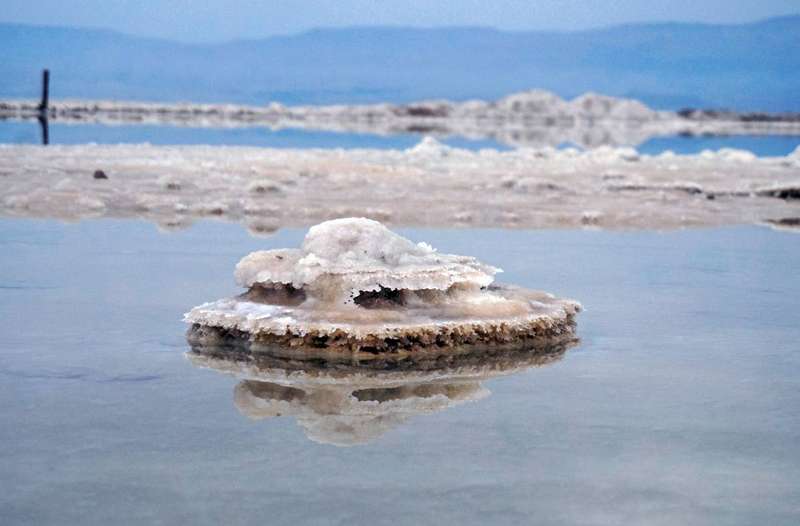
Image Credits: Wikimedia Commons
Salt's secondary attacks: enzymes and DNA
Osmosis is the headline act, but Scientific American notes that salt and sugar have other germ-fighting tricks. These matter especially at salt levels that are high but not extreme.
Salt interferes with a microbe's enzyme activity. Enzymes are the protein machines that run a cell's chemistry, and high salt concentrations twist their shape and slow them down.
Salt also weakens the structure of microbial DNA. The genetic machinery that copies DNA and builds proteins starts misfiring in a salty environment.
These effects are why salt preservation is more than just drying. A piece of meat dried without salt is safer than fresh meat, but a piece dried with salt is safer still, because the microbes face two attacks at once.
Sugar works similarly, and it adds a bonus trick. Sugar can speed up the buildup of germ-fighting compounds from other organisms, like the change of sugar to ethanol (alcohol) in wine by fermentative yeasts or to organic acids in sauerkraut by lactic acid bacteria.
How much salt does curing actually take?
Traditional curing is not a pinch of salt and hope. The numbers are specific, and in commercial production they are law.
For fermented products such as summer sausage, Canadian food safety guidance cited by the USDA calls for at least 2.5 percent salt plus at least 100 parts per million of nitrite or nitrate to control Clostridium botulinum during fermentation and drying.
The USDA notes that 50 parts per million of sodium nitrite, or a water activity of 0.92 or below, is enough to prevent C. botulinum from growing in salt-cured and dried products.
For old-style country hams, the federal standard (9 CFR 319.143) is stricter still. When no nitrate or nitrite is used, the finished ham must reach a brine (salt-water) concentration of at least 10 percent. Curing plus salt equalization must take at least 45 days for hams, and the finished ham must weigh at least 18 percent less than the fresh uncured meat.
Utah State University Extension sums up the partnership: nitrite and salt together hold back the growth of Clostridium botulinum, the deadly microorganism behind botulism. Salt handles the water; nitrite handles the specific germ that salt alone might miss.
What salt cannot do
Salt is powerful, but it has limits. Understanding them is as important as understanding the mechanism.
Salt does not reliably kill everything. Some salt-tolerant microbes survive high-salt environments, and toxins already produced by bacteria before salting are not destroyed by salt.
Salt also does not fix bad hygiene. Scientific American's key point is that these processes stop or prevent growth of food-borne germs such as Salmonella or Clostridium botulinum when properly applied. "When properly applied" carries the weight: the right concentration, the right time, the right conditions.
Modern food safety treats salt as one hurdle among several. Temperature, acidity, nitrite, and packaging each add a hurdle, and germs have to clear all of them. Salt alone, applied casually, is not a guarantee.
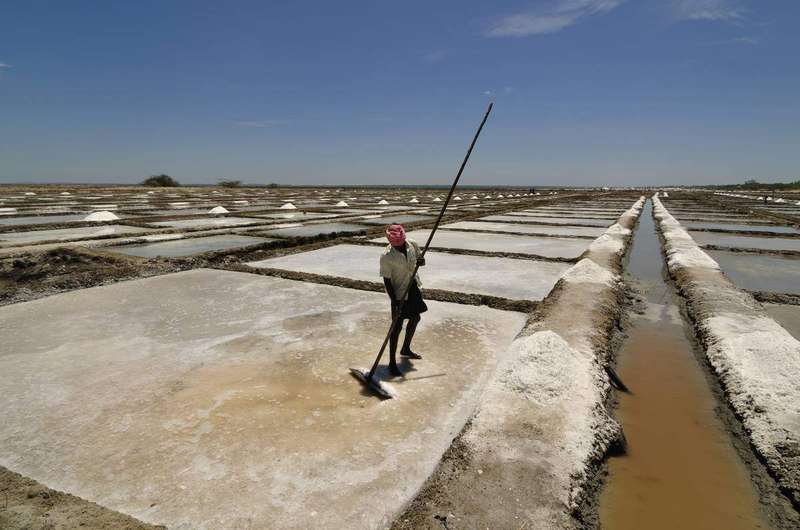
Image Credits: Wikimedia Commons
Frequently asked questions
Does salt kill bacteria or just stop them growing?
Mostly it stops them growing. Osmosis dehydrates microbial cells so they cannot digest food or divide, and salt's effects on enzymes and DNA slow them further. Many microbes die in the process, but salt is mainly a growth stopper, which is why concentration and time matter.
Why does salted meat still need refrigeration sometimes?
Because moderate salting only slows microbes rather than stopping them, and yeasts and molds tolerate lower water activity than bacteria. Fully dry-cured products like country ham are shelf-stable; lightly salted or brined products are not.
What is the difference between salt and curing salt?
Table salt is sodium chloride. Curing salt adds sodium nitrite (and sometimes nitrate), which specifically blocks Clostridium botulinum and gives cured meat its pink color. The USDA requires at least 2.5 percent salt plus nitrite in fermented products to control botulism.
Can I preserve meat at home with just salt?
Traditional dry curing uses at least 10 percent brine concentration and 45 or more days of curing for hams without nitrites, per federal standards. Home curing carries real botulism risk if the numbers are wrong, so tested recipes from extension services are the safe route.
The bottom line
Salt preserves food by waging war on water. Osmosis pulls moisture out of microbial cells, dropping water activity below the roughly 0.91 threshold where most bacteria stall. Salt then follows up by disrupting enzymes and weakening DNA.
Real curing runs on real numbers: 2.5 percent salt with nitrite for fermented sausage, 10 percent brine for nitrite-free country ham, and water activity at or below 0.92 to stop botulism. Respect the numbers and salt remains what it has been for thousands of years: the original food technology.
---
About the author: Rive News is the research desk behind these explainers, covering practical questions with verified facts and named sources.
Latest in Food & Cooking
- Why Does Bread Go Stale Faster in the Refrigerator?
- The Maillard Reaction in Simple Terms
- Baking Soda vs Baking Powder: The Difference
- How to Revive Stale Bread (and Why It Works)
Subscribe for one practical explainer like this in your inbox every morning.
Rive News follows a corrections policy: factual errors are fixed promptly and noted with an update timestamp.
Related stories

Why Does Bread Go Stale Faster in the Refrigerator?
Bread goes stale faster in the fridge because starch recrystallizes fastest near 4°C. Here is the retrogradation science and the right way

Baking soda and baking powder: what's the difference?
Baking soda is pure sodium bicarbonate; baking powder adds two dry acids for double-acting lift. Learn when to use each, plus exact

What Is the Maillard Reaction in Simple Terms?
The Maillard reaction is the browning chemistry between amino acids and sugars above 140 C that creates the crust, color, and rich flavor