
Why does basil turn bitter after it bolts into flower?
Key takeaways
- Bolting rebuilds basil's essential oils: sweet linalool can fall by half while harsher terpenes climb, changing the flavor.
- Heat above 85°F and long days flip the plant from leaf production to flowering and seed production.
- Pinching flower buds the day they appear keeps basil vegetative and protects the flavor you grow it for.
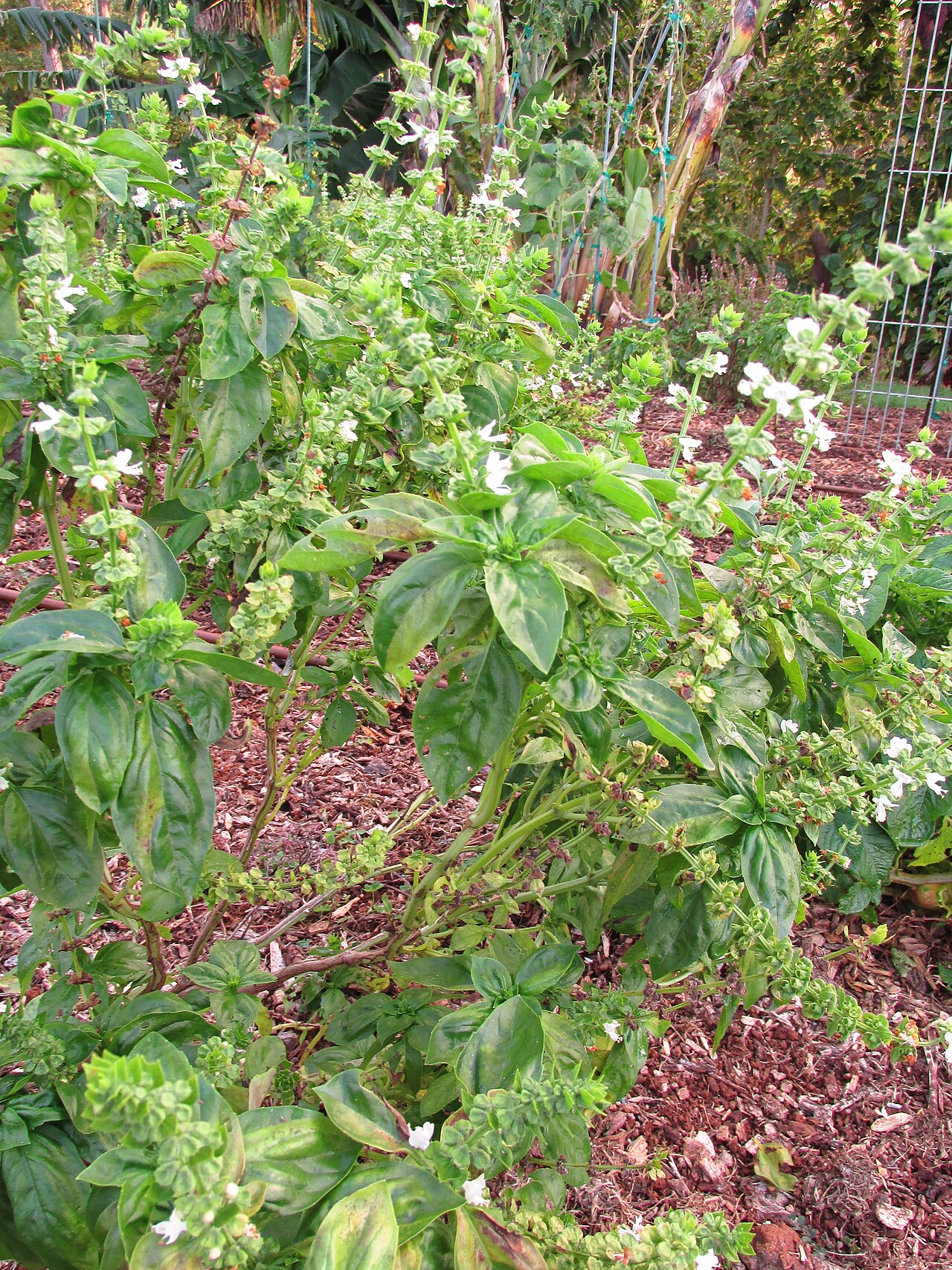
A basil plant in full flower. The tall spikes signal the switch from leaf production to seed production. Photograph: Forest and Kim Starr
Image Credits: Wikimedia Commons / Forest and Kim Starr, Jessephu, AjayDas
Why does basil turn bitter when it bolts?
The short answer is chemistry. Bolting is the plant's switch from growing leaves to growing flowers and seeds. Once that switch flips, the chemistry inside the leaves changes, and the sweet, clove-like flavor gardeners expect gives way to something sharper and more bitter.
This article takes a closer look at what bolting is, the chemistry that changes basil's flavor when it flowers, what triggers the switch, how to stop it, and what to do with leaves from a plant that has already bolted.
What bolting actually is
Bolting is the plant abandoning leaf production to flower and set seed ahead of schedule. The stem elongates rapidly, flower buds form at the tips, and the leafy plant you were harvesting becomes scaffolding for reproduction, according to Herbs at Home's guide to herb bolting.
The trigger is environmental signaling, with day length above all. Heat accelerates the process or stands in for it.
Running through the plant's flowering genes, the visible stem stretch is powered by gibberellin, the same hormone class at work in bolting plants generally. In other words, bolting is a scheduled hormonal program, which is why you can delay it but not argue a plant out of it.
Basil is one of the most controllable bolters a gardener will grow. It flowers from the tips, where the buds are easy to see forming, and pinching them off the day they appear sends the plant back toward leaf production, per the same guide. Extension guidance cited there is blunt: basil turns bitter once the flowers actually bloom.
Why does basil turn bitter when it bolts? The oil shift
The flavor change is not your imagination. It is a measurable chemical rebuild.
Measured across the transition into flowering, basil's essential oil is substantially reconstructed, with major aroma compounds rising and falling by whole categories. In one Genovese-type variety, the profile shifted to nearly two-thirds methyl cinnamate at flowering, according to Herbs at Home.
A published analysis of basil's volatile compounds before and after flowering, cited by Plantin's basil guide, shows how dramatic the swing is. Linalool, a major source of basil's sweet floral note, dropped from about 1,240 mg per kg to 620 mg per kg, a fall of 50 percent. Eugenol, the compound behind the sweet clove character, fell from about 980 mg per kg to 410 mg per kg, down 58 percent.
Meanwhile compounds linked to woodier, harsher tones rose. Caryophyllene climbed from about 310 mg per kg to 520 mg per kg, a 68 percent increase.
Geraniol, another sweet contributor, fell 59 percent. The pattern is consistent: the oils responsible for basil's signature sweetness decline after bolting, while compounds linked to bitterness rise.
A 2022 study in Food Chemistry, summarized by Plants Stack Exchange's gardening community, reached a similar conclusion: post-flowering basil carries higher levels of certain terpenes, producing a sharper, less desirable taste. Texture changes too. Leaves can become tougher and less juicy, which makes them a poor fit for fresh use in salads, pesto, or garnishes.
The structural changes that add to the problem
Chemistry is only half the story. Bolting is the rapid elongation of the flower stalk, and the plant deposits lignin and cellulose to give the stalk the mechanical strength needed to hold up the flower head, according to Vectree's review of herb bolting biochemistry.
That woodiness degrades texture directly. Chemically, the energy spent on structural integrity is energy taken away from the secondary metabolites that humans find palatable. The existing leaves often become more bitter as the plant increases defense compounds, such as polyphenols and alkaloids, to protect its maturing reproductive parts from herbivores.
At the flowering stage the phytochemical profile undergoes its most dramatic transformation. The plant starts producing floral volatiles, such as esters and benzene derivatives, designed to attract pollinators rather than please a cook. In many herbs this shifts the flavor profile from herbal to floral or even soapy.
The transition is controlled by what plant biologists call a metabolic switch. MADS-box genes and various transcription factors trigger a systemic change in enzyme expression. Instead of focusing on primary metabolism, meaning growth and leaf expansion, the plant pivots toward secondary metabolism: defense and reproduction.
Enzymes such as phenylalanine ammonia-lyase may see increased activity, raising phenolic compounds. This genetic reprogramming is irreversible and dictates the final chemical signature of the herb before seed set.
What triggers basil to bolt
Several factors combine to push basil into flowering:
- Long daylight hours. Photoperiod-sensitive varieties respond to days exceeding 14 hours, according to Plantin's growing guide.
- High temperatures. Sustained heat above 85°F (29°C) accelerates flowering and alters oil composition.
- Plant maturity. Older plants are more prone to initiate flowering.
- Stress conditions. Irregular watering, nutrient deficiency, or root crowding can induce premature bolting as a survival mechanism, forcing the plant to produce seeds before it dies.
Heat stress deserves special attention. Inconsistent watering, either too much or too little, can trigger chemical changes in the plant. Late-day harvesting can also matter: picking leaves late in the day may yield a higher concentration of volatile compounds linked to bitterness.
And nitrogen matters in the background. Deficiencies in nitrogen, or excess phosphorus, can affect flavor quality.
How to stop basil from bolting
Basil is unusually forgiving here because the fix is visible and mechanical. The plant flowers from the tips, so the buds announce themselves before the damage is done.
Pinch early and often. Remove flower buds as soon as they appear. This redirects the plant's energy back into leaf production and delays the hormonal shift that causes bitterness, according to Plantin's guide. Studies from the University of California, summarized by the gardening community, show that regular pinching can extend the vegetative stage by several weeks.
Harvest from the top down. Regular cutting of the top growth is itself a form of pinching. Every harvest that takes the growing tip doubles the leafy branches below it, so frequent harvesting is the single best habit for a productive plant.
Keep water consistent. Water stress is a bolting trigger, so steady moisture matters. Mulch helps here too. A layer of organic mulch cools the soil and evens out the moisture swings that stress plants.
Give afternoon shade in hot climates. Since heat above 85°F accelerates flowering, a spot that escapes the worst afternoon sun can add weeks of sweet-leaf harvest in summer. Basil is also sensitive to the same heat that makes plants wilt even when watered, so shade pays double.
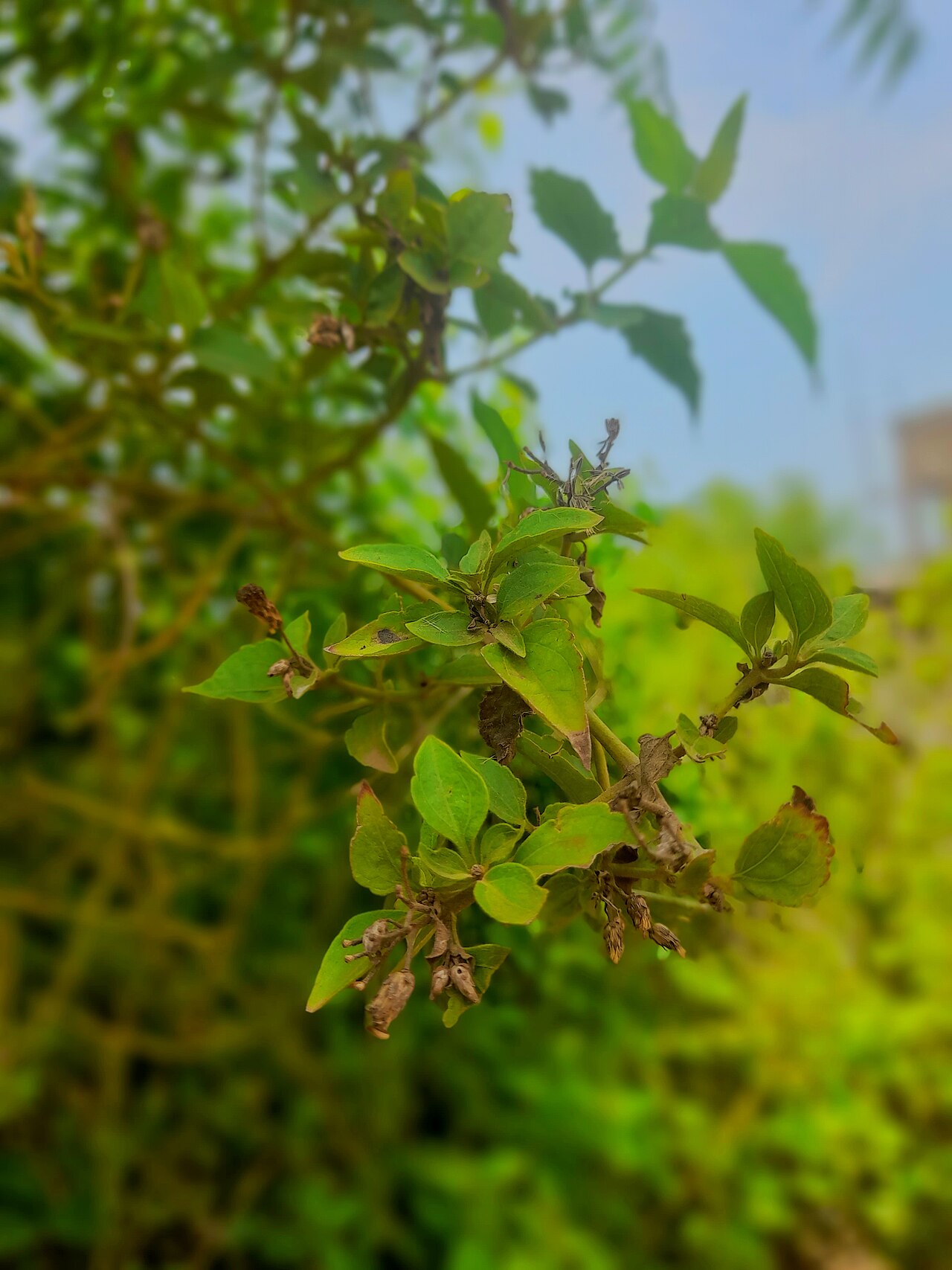
Holy basil in full flower. Pinching spikes like these early keeps the plant producing sweet leaves. Photograph: Jessephu
Feed lightly but steadily. Healthy soil biology supports steady growth, and a small amount of nitrogen-rich feeding keeps leaves tender. Avoid starving the plant or hitting it with heavy fertilizer late in the season.
What to do with bolted basil
Bolted basil is non-toxic and safe to consume, according to Plantin's guide. The leaves often develop a bitter taste from increased lignin and altered essential-oil profiles, which makes them less desirable raw, but they are not ruined.
Cooking is the rescue route. Heat breaks down some of the harsher volatile compounds, so bolted leaves work in cooked sauces, soups, and stir-fries where their bitterness fades into the background. Pesto is a tougher sell since it is served raw, but a batch cut with plenty of oil, nuts, and cheese can still be good.
The flowers themselves are edible and make an attractive garnish with a mild basil flavor. Bees love them, so letting one plant flower fully is a gift to pollinators. And if you want seed for next year, a bolted plant is doing exactly what it should: the flowers will set seed you can collect, dry, and sow when you are ready.
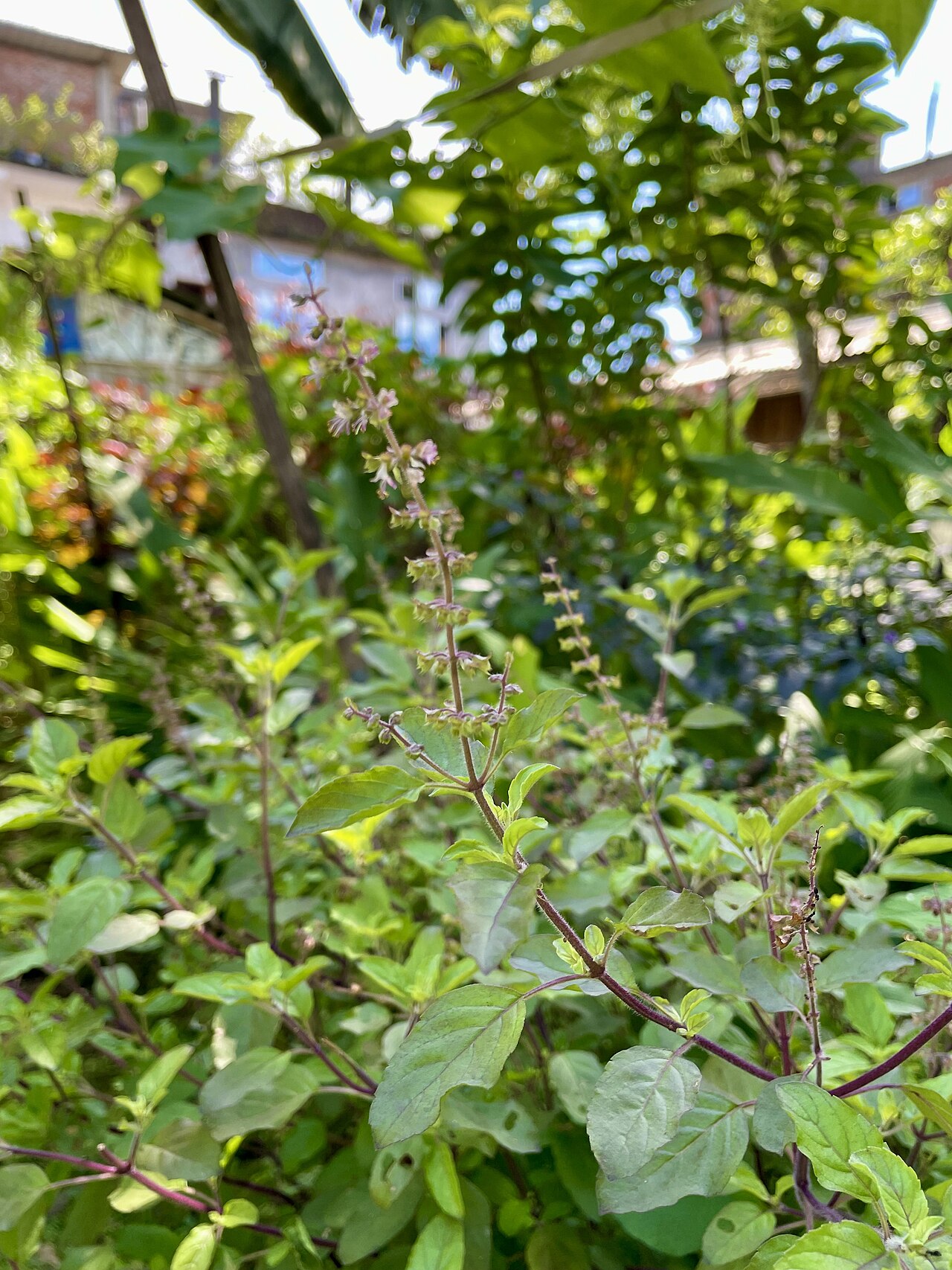
A close-up of a basil flowering spike. The blooms are edible, attract pollinators, and will set seed. Photograph: AjayDas
Basil seeds are among the seeds that need light to germinate, so surface-sow them rather than burying them.
Frequently asked questions
Is bolted basil safe to eat?
Yes. Bolted basil is non-toxic and safe to consume, according to Plantin's basil guide.
The bitterness comes from increased lignin and shifted essential oils, not from anything harmful. Use the leaves cooked rather than raw for the best results.
Will cutting off the flowers fix the bitterness?
Removing flower buds early redirects the plant's energy back into leaf production and delays the hormonal shift that causes bitterness. Once flowering is fully underway and the chemistry has shifted, cutting helps less, so pinch buds the day they appear.
Does basil bolt faster in hot weather?
Yes. Sustained heat above 85°F (29°C) accelerates flowering and alters oil composition, according to Plantin's guide. Afternoon shade and consistent watering are the main defenses in hot climates.
Can you use basil flowers in cooking?
Yes. The small white or purple blooms are edible, with a mild basil flavor.
They work as a garnish on salads and pasta. Many gardeners let one plant flower fully to feed bees and then collect the seed.
The bottom line
Basil turns bitter when it bolts because flowering rewrites the plant's chemistry: sweet compounds like linalool and eugenol fall by half or more while harsher terpenes rise, and lignin makes the leaves tougher. Heat and long days trigger the switch, and the fix is simple: pinch flower buds the day they appear, harvest often, and keep water steady.
A bolted plant is not wasted. Cook the leaves, enjoy the flowers, and save the seed.
Latest in Gardening
- Some seeds need light to germinate, others need darkness
- What mulch actually does to soil beyond looking tidy
- How earthworms improve soil
- Why plants wilt in heat even when watered
Subscribe to the Rive News newsletter for one research-backed explainer every morning.
Related stories
What Is Companion Planting and Does It Work?
Marigolds work as a nematode cover crop, but the basil flavor claim failed repeated tests. An honest evidence review of what companion
Determinate vs. indeterminate tomatoes: growth, pruning, and harvest differences
Determinate tomatoes grow to a set size and ripen all at once, while indeterminate types vine all season. That one difference shapes
How to improve clay soil for gardening
Gypsum will not fix ordinary clay soil, say extension experts. What actually works: 2 to 3 inches of compost, mulch, better drainage,