
Why Do Plants Wilt in Heat Even When the Soil Is Wet?
Key takeaways
- Afternoon wilting is a plumbing problem, not a water problem: leaves lose water through transpiration faster than roots can replace it.
- Hot, dry air raises the vapor pressure deficit, which pulls water out of leaves at a rate the roots cannot match even in wet soil.
- Most heat-wilted plants recover by evening. Water deeply in the morning, mulch the soil, and only worry if they are still limp at sunrise.

A sunflower field under a hot summer sun, the kind of afternoon that tests every garden. Photograph: John Sutton/Wikimedia Commons
Image Credits: Wikimedia Commons
Wilting is a plant losing its internal water pressure. When cells are full of water they press outward against their walls, a state called turgor, and the plant stands upright. When that pressure drops, stems and leaves go limp and droop.
What confuses gardeners is that this can happen while the soil is soaking wet. The plant is not out of water. It is losing water from its leaves faster than its roots can pull replacement water out of the ground.
This article explains what wilting actually is, how heat turns transpiration into a water deficit, why wet soil does not prevent it, how plants defend themselves by closing their leaf pores, and how to tell harmless midday wilt from real trouble.
What wilting actually is
A plant stands up the way a water balloon holds its shape: pressure from inside. Every living plant cell contains a water-filled vacuole that pushes against the cell wall. The sum of that pressure across millions of cells is what keeps leaves flat and stems rigid.
Lose the pressure and the structure collapses. The cells are still alive and the plant still contains water. It has simply lost turgor, the internal pressure that gave it form. This is why a wilted plant looks so dramatically different from a healthy one even though nothing has been removed from it.
The key insight, documented by University of Delaware extension specialist Gordon Johnson, is that wilting means water loss from the leaves has outrun water uptake by the roots. That imbalance is the whole story, and heat is the fastest way to create it.
How heat turns transpiration into a deficit
Transpiration is the plant's water pump. Water travels from the soil into the roots, up through the stem, and out through tiny pores in the leaves called stomata, where it evaporates into the air. As Hartley Botanic's Roger Marshall explains, this evaporation also cools the plant, the same way sweating cools skin.
Heat accelerates every part of this. The hotter and drier the air, the greater the vapor pressure deficit, which is the gap between the moisture in the leaf and the moisture in the air. A bigger gap pulls water out of the leaf faster, like a stronger vacuum.
The scale of water movement surprises most gardeners. Horticulture's gardening meteorologist Ed Brotak notes that a quarter inch of water or more can evaporate from an open water surface in a single hot summer day, and soil loses moisture at a comparable pace. A big leafy plant on a hot afternoon is moving an enormous volume of water through a narrow pipeline.
When the outflow beats the inflow, leaf water potential falls below the threshold that maintains turgor. The cells deflate, the leaf droops, and you see wilt. The soil can be perfectly wet the entire time.
Why wet soil does not save them
Roots have a maximum delivery rate. The root surface area and the xylem vessels that carry water upward can only move so much water per minute. On a scorching afternoon the leaves can demand more than that pipeline can supply.
Hot soil makes the mismatch worse. Warm soil holds less dissolved oxygen, and roots need oxygen to power the active transport that moves water across cell membranes. As soil heats up, root activity slows exactly when the leaves need it most.
This is why Johnson's extension work found transplants wilting with adequate water sitting right in the root zone. The water was there. The roots simply could not move it fast enough to match what the leaves were losing to the air.
Small or damaged root systems suffer first. A newly transplanted seedling, a plant in a small pot, or anything with compacted soil around its roots will wilt hours before an established plant in the same bed. If you are troubleshooting, leggy seedlings struggling with weak root systems are a good reminder that the roots are half the equation.
The stomata shutdown: the plant's emergency brake
Plants are not passive in this. When leaf water potential drops, the plant closes its stomata, the pores it uses to release water. Brotak describes the sequence plainly: the plant shuts its pores, pressure is lost, and the limp, wilted appearance follows.
Closing the pores is a trade-off with real costs. Shut stomata save water but also block carbon dioxide from entering, which pauses photosynthesis. The plant also loses its evaporative cooling, so a wilted plant runs hotter than a transpiring one, as Marshall points out.
There is even a small upside to the droop itself. Wilting leaves fold and expose less surface to the air, which reduces further water loss through transpiration. It is a crude defense, but it buys the plant time until conditions improve.
That improvement usually comes at dusk. Once temperatures moderate, the vapor pressure deficit falls, the stomata reopen, water flow resumes, and turgor returns. This reversibility is the signature of heat wilt: the plant that looked half-dead at 3 p.m. stands tall again by morning.

Dark storm clouds gathering over a sunflower field; evening cooling is what lets heat-stressed plants recover. Photograph: Domalchuk/Wikimedia Commons
Image Credits: Wikimedia Commons
How to tell heat wilt from real trouble
Heat wilt follows a schedule. It appears in the afternoon, peaks in the worst heat, and reverses overnight. If the plant is perky at sunrise, the plumbing kept up once demand fell.
Disease and root damage do not follow that schedule. A plant wilted by root rot, a vascular disease, or a severed root stays limp in the cool morning air. Yellowing lower leaves, brown stem lesions, or one-sided wilting point to pathogens rather than weather.
The finger test settles the watering question. Push a finger two inches into the soil: if it is moist and the plant still wilts every afternoon, you are looking at heat, not thirst. Our guide to overwatering vs underwatering walks through the full check.
One caution: repeated severe wilting is not harmless. Brotak warns that drought stress can reduce flowers and fruit even in plants that never visibly wilt, so chronic afternoon collapse costs you harvest even when the plant survives.
What to do when plants wilt in the afternoon
Water deeply in the morning, not at noon. A deep morning soaking charges the full root zone before the heat peaks, giving roots the maximum reservoir to draw from. Shallow midday sprinkles mostly evaporate.
Mulch the soil with two to three inches of organic material. Mulch keeps soil cooler, which protects root oxygen levels, and it slows surface evaporation. Cool roots pump better than hot ones.
Give vulnerable plants afternoon shade. A 30 to 50 percent shade cloth over heat-sensitive crops on extreme days cuts the solar load driving transpiration. Greenhouses are the extreme case: Marshall notes temperatures inside can top 100°F (38°C) even with every vent open.
Resist the urge to flood the plant in response. Soggy soil suffocates roots and invites rot, which creates a genuine water-uptake problem where only a temporary one existed. Wet soil plus wilted leaves is the signature of heat, and more water is not the fix.
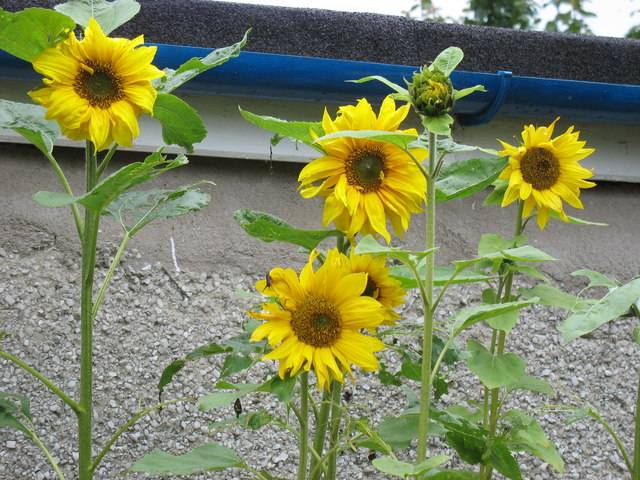
A field at the end of a long hot summer; established plants with deep roots handle these days far better than new transplants. Photograph: Eric Jones/Wikimedia Commons
Image Credits: Wikimedia Commons
Frequently asked questions
Should I water a plant the moment I see it wilt?
Check the soil first. If the top two inches are dry, water deeply. If the soil is moist, the wilt is heat-driven and extra water will not help. Shade and mulch are the better response.
Why do wilted plants perk up again at night?
Cool evening air shrinks the vapor pressure deficit, so transpiration slows to a rate the roots can match. The plant refills its cells, turgor returns, and the leaves stiffen by morning.
Can afternoon wilting damage the plant long term?
Occasional mild wilting is harmless. Repeated severe wilting stresses the plant and can reduce flowering and fruiting, because the plant spends its energy surviving instead of producing.
Does misting the leaves help?
Barely, and only for minutes. Misting raises humidity around the leaf briefly, but on a hot afternoon it evaporates almost immediately. Shade cloth and mulch address the cause. Misting addresses the symptom.
The bottom line
Plants wilt in heat because their leaves can lose water faster than their roots can replace it, and no amount of soil moisture changes the speed limit of the roots. The droop is usually a temporary defense, not a death sentence.
Judge the plant at sunrise, not at 3 p.m.
If it recovers overnight, water deeply in the morning, mulch the soil, and let it ride out the afternoon. Save your worry for the plant that is still limp when the day is cool.
Tags: plant wilting, heat stress, transpiration, watering, gardening tips
Rive News is the research desk behind this publication, covering gardening, plant science, and practical growing advice with sourced, honest guidance.
Latest in Gardening
- What Is Companion Planting and Does It Work?
- How to Tell Overwatering vs Underwatering in Plants: Finger Test and Weight Method
- Why Are My Tomato Leaves Turning Yellow at the Bottom?
- Leggy Seedlings: Why They Stretch, How Light Fixes Them, and When to Start Over
Subscribe for one practical gardening guide in your inbox every week.
Related stories

What Is Companion Planting and Does It Work?
Marigolds work as a nematode cover crop, but the basil flavor claim failed repeated tests. An honest evidence review of what companion

Determinate vs. indeterminate tomatoes: growth, pruning, and harvest differences
Determinate tomatoes grow to a set size and ripen all at once, while indeterminate types vine all season. That one difference shapes

How to improve clay soil for gardening
Gypsum will not fix ordinary clay soil, say extension experts. What actually works: 2 to 3 inches of compost, mulch, better drainage,