
What causes white spots on plant leaves? 6 culprits
Key takeaways
- White spots on leaves usually come from powdery mildew, mealybugs, spider mites, mineral deposits, or edema.
- A quick wipe test tells them apart: mildew wipes off powdery, mealybugs leave sticky residue, mineral crust will not budge.
- Correct identification matters, because a fungicide will not kill insects and an insecticide will not cure a fungus.
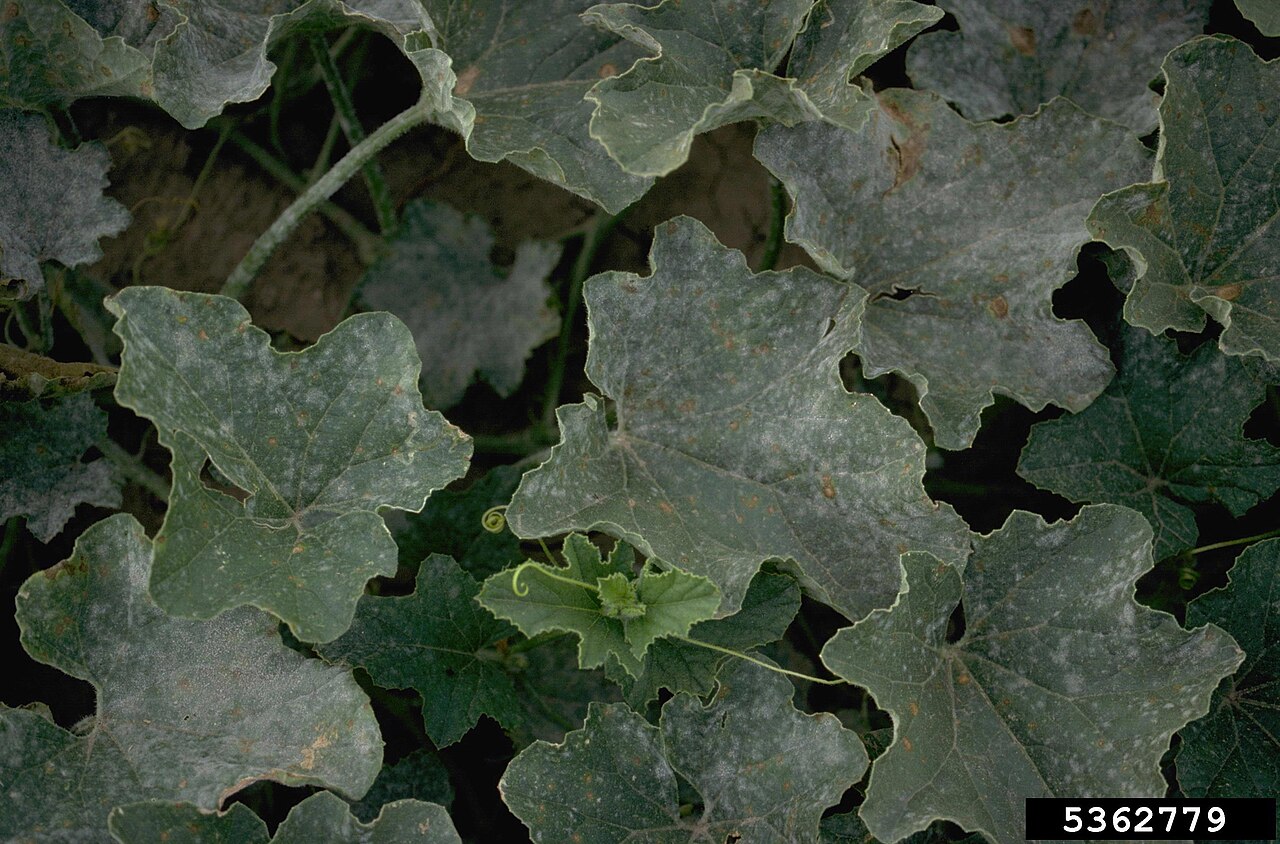
Powdery mildew forming a whitish coating on melon leaves, the classic dusty film of this fungal disease.
Image Credits: M.E. Bartolo, Bugwood.org via Wikimedia Commons
White spots on plant leaves are one of the most common things gardeners notice and misdiagnose. The spots all look similar at a glance, but they come from completely different causes, and each cause needs a different fix.
The good news is that texture and location narrow it down fast. A dusty film that wipes off is a different problem from cottony clusters in the leaf joints, and both differ from a hard white crust.
This article explains what causes white spots on plant leaves, including the main fungal causes, the insect culprits, how to tell them apart, and how to treat each one.
The main fungal causes
Powdery mildew is the most common fungal cause. It is a parasitic fungus that lives on the surface of the leaf, and the white powder you see is a mix of its thread-like mycelium and spores. It starts as small circular white spots and can spread to coat an entire leaf.
Unlike many fungi, powdery mildew does not need water sitting on the leaf to get going. It thrives in high humidity and stagnant air alone, which is why crowded plants on still, humid days are prime targets. Its spores ride air currents to neighboring leaves and plants, so it spreads quickly once established.
The fungus feeds by inserting tiny tubes into leaf cells, stealing nutrients and blocking sunlight. A mild case is mostly cosmetic, but a heavy infection weakens the plant over time and can distort new growth.
Other fungal leaf spots can also look whitish at first, especially when they are young. These usually develop yellow halos or darken with age, which separates them from the persistent white dust of powdery mildew.
The insect culprits
Mealybugs are the leading insect cause. They are small, soft-bodied insects that cover themselves in a white, waxy, cotton-like substance for protection. They cluster in leaf joints, along stems, and under leaves, where they suck plant sap and weaken the plant.
Mealybugs thrive in warm, humid conditions and dense foliage. They also excrete a sticky sugary waste called honeydew, which can grow black sooty mold. If you see white cottony clusters plus sticky leaves, mealybugs are the likely answer.
Spider mites leave a different signature: tiny pale stippled dots where they have pierced individual leaf cells, often with fine webbing on the undersides of leaves. The dots look white from a distance but reveal themselves as feeding damage up close.
Thrips are less common but worth knowing. They leave silvery-white patches with tiny black specks of droppings. Scale insects can also produce white waxy coverings, though theirs are usually harder and more shell-like than the soft cotton of mealybugs.
Two non-living causes round out the list. Hard water leaves a chalky white mineral crust on leaves that rinses off but does not wipe away like mildew. Edema, caused by overwatering, raises corky white or tan bumps on the leaf surface, most often starting underneath.
How to tell them apart
Run three quick tests before you treat anything. They take two minutes and prevent the most common mistake in plant care: spraying a fungicide on an insect problem, or vice versa.
First, the wipe test. Rub a spot gently with a damp paper towel.
If it comes off easily and looks powdery, you are dealing with powdery mildew. If it leaves a sticky residue and you see cottony bugs, those are mealybugs or scale. If it does not budge at all, it is mineral deposits or edema.
Second, check the texture and shape. Powdery mildew is a flat, dusty film.
Mealybugs are three-dimensional cottony tufts hiding tiny insects. Spider mite damage is flat stippling, not a coating. Edema bumps are raised and corky to the touch.
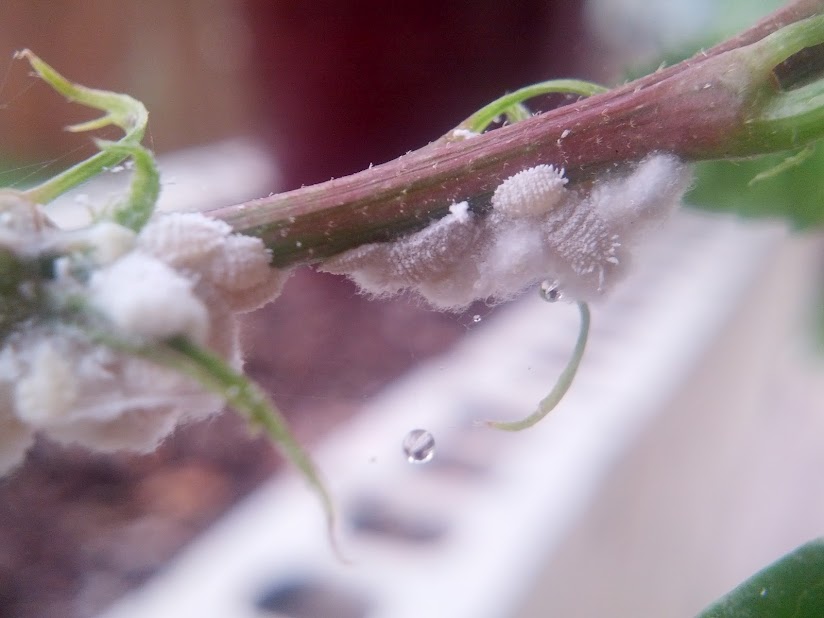
Mealybugs feeding on a hibiscus plant, visible as white cottony clusters along the stems and leaf joints.
Image Credits: Wikimedia Commons
Third, check the location. Problems starting on leaf undersides point to spider mites or thrips.
Cottony masses tucked into leaf axils and stem joints point to mealybugs. A film spreading across upper leaf surfaces in still, humid air points to powdery mildew.
When in doubt, isolate the plant and watch it for a few days. Both mildew and mealybugs spread to neighbors, so separation protects the rest of your collection while you decide.
How to treat each cause
For powdery mildew, start by removing the worst-affected leaves and throwing them away, not composting them. Improve spacing and airflow around the plant, and water the soil rather than the foliage, in the morning so leaves dry during the day.
For mild cases, a homemade spray works: one tablespoon of baking soda plus a few drops of mild liquid soap in four liters of water, applied once a week. For heavier infections, use a garden fungicide labeled for powdery mildew, and never an insecticide, which will do nothing against a fungus.
For mealybugs, dab each visible cluster with a cotton bud dipped in rubbing alcohol, which dissolves their waxy coating. Follow up by spraying the whole plant with neem oil or insecticidal soap, paying attention to leaf undersides and stem joints. Repeat weekly for three to four weeks, since eggs hatch in waves, and keep the plant isolated meanwhile.
For spider mites, rinse the plant firmly with water to knock the mites off, then treat with insecticidal soap or neem oil, covering the undersides of leaves. Raising humidity around the plant also discourages mites, which prefer dry air.
For mineral deposits, simply rinse the leaves and switch to rainwater or filtered water for misting. For edema, the fix is cultural: water less often, improve drainage, and give the plant more light and air movement. The existing bumps will not heal, but new growth will come in clean.
Roses suffer their own famous leaf-spot disease, so if the spots are black rather than white, read why roses have black spots on the leaves instead.
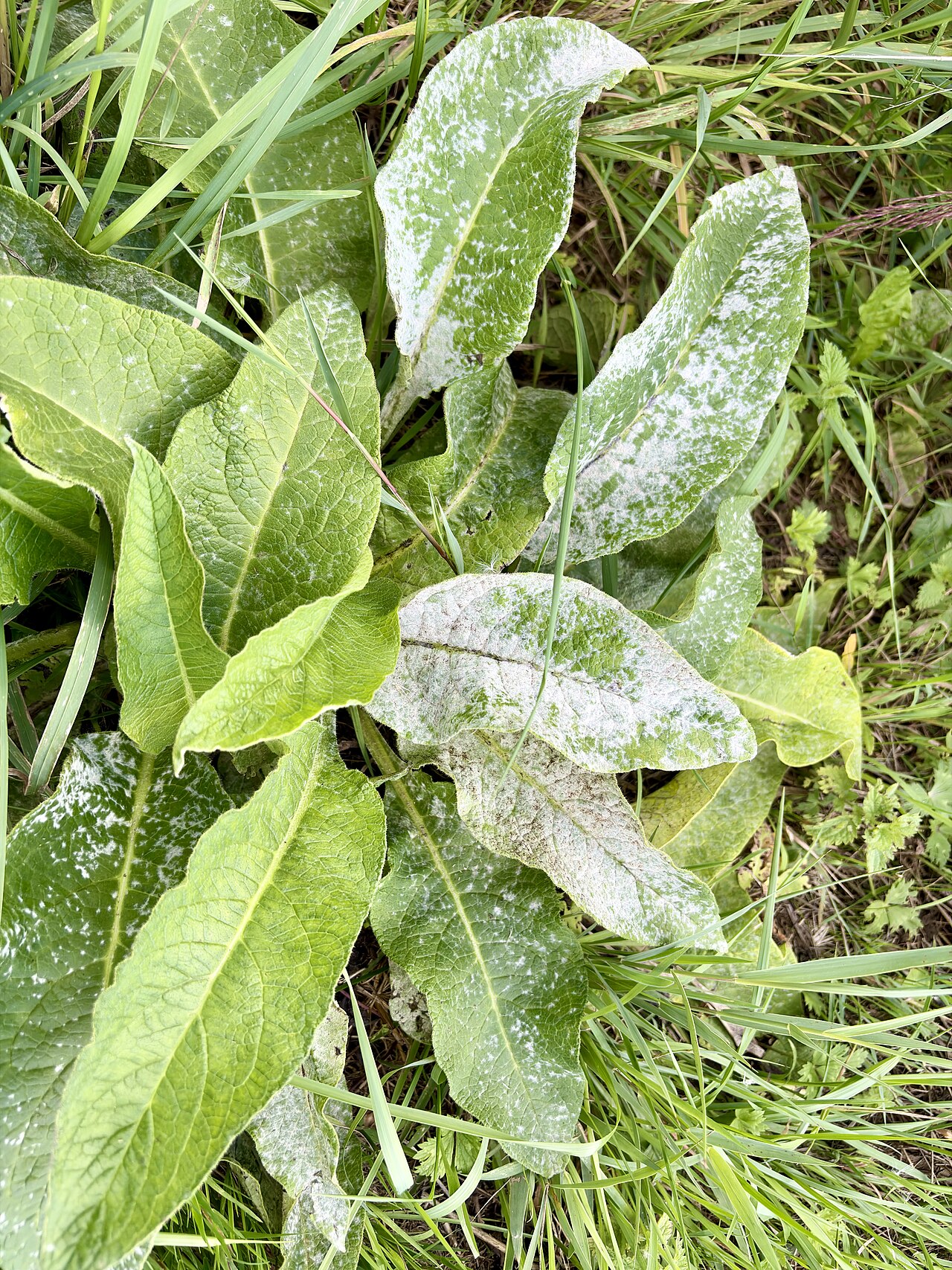
Powdery mildew coating leaves with a white fungal film that spreads fast in still, humid air.
Image Credits: Wikimedia Commons
Frequently asked questions
Is powdery mildew harmful to humans or pets?
No. Powdery mildew is a plant pathogen and does not infect people or animals. Wash produce normally before eating it.
Can white spots on leaves spread to other plants?
Yes, both powdery mildew spores and crawling mealybugs move to nearby plants. Isolate the affected plant as soon as you notice the spots.
Will the damaged leaves recover?
Leaves heavily coated with mildew or drained by pests will not return to normal. Treatment protects the new growth, which is what matters for the plant's future.
Is neem oil effective against both mildew and mealybugs?
Neem oil works against mealybugs and other insects, and it has some effect against mildew, but a dedicated fungicide or baking soda spray controls mildew better.
Should I throw away a plant with mealybugs?
Not necessarily. Light to moderate infestations respond well to alcohol swabs plus repeated neem oil sprays. Discard the plant only if the infestation keeps returning after a month of treatment.
The bottom line
White spots on leaves are a symptom, not a diagnosis. Run the wipe test, check the texture and location, and match what you find to mildew, mealybugs, mites, minerals, or edema. Treat the actual cause, fix the conditions that invited it, and the new growth will come in clean.
Tags: gardening, plant disease, pests, powdery mildew, houseplants
Rive News is a research desk that explains everyday questions with sourced, practical answers.
Latest in Gardening
- Why do seedlings fall over and die?
- Why does your lawn have bare patches?
- How to protect plants from a sudden frost
Subscribe to the Rive News newsletter for one practical explainer every morning.
© 2026 Rive News. All rights reserved.
Related stories
What Is Companion Planting and Does It Work?
Marigolds work as a nematode cover crop, but the basil flavor claim failed repeated tests. An honest evidence review of what companion
Determinate vs. indeterminate tomatoes: growth, pruning, and harvest differences
Determinate tomatoes grow to a set size and ripen all at once, while indeterminate types vine all season. That one difference shapes

How to improve clay soil for gardening
Gypsum will not fix ordinary clay soil, say extension experts. What actually works: 2 to 3 inches of compost, mulch, better drainage,