
Why do cuttings root in water but rot in wet soil?
Key takeaways
- Cuttings root in water because they grow special "water roots" with air channels and a waxy coating that let them survive with almost no oxygen.
- The same cutting rots in wet soil because its original soil roots suffocate when water fills the air pockets that oxygen used to flow through.
- Rot is really about oxygen starvation, not excess water: pathogens like Pythium mostly colonize roots that are already dying from lack of air.
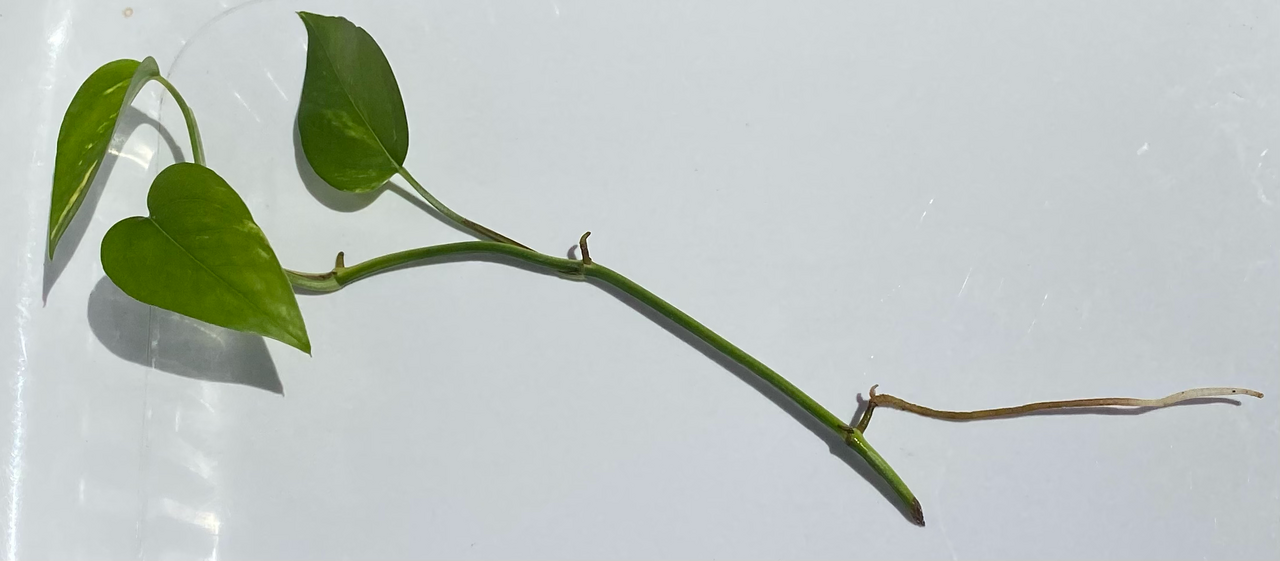
Why do cuttings root in water but rot in wet soil? It looks like a contradiction. A pothos cutting thrives for months in a glass of water, yet the same plant dies in a pot of soggy soil.
The resolution is that "wet" is not the killer. The killer is lack of oxygen, and water and wet soil deliver oxygen in completely different ways.
This article explains the two kinds of roots plants grow, why each survives in only one environment, and how to use that knowledge to stop killing your propagations.
Soil roots and water roots are different organs
When a cutting sits in water, the hormone auxin accumulates at the cut base, cells at the nodes divide, and root primordia push out. That part of the process is identical in any medium. What differs is the kind of root the cutting builds.
Roots grown in water develop aerenchyma: tissue threaded with large hollow air channels that run from the roots up through the stems to the leaves. The formation is triggered by ethylene, a hormone the plant releases when its existing roots start dying from oxygen deprivation. Aerenchyma lets the new roots breathe through the shoots above water, piping oxygen down to cells that the surrounding water cannot supply.
Water roots get a second adaptation: a waxy suberin coating that wraps the root like armor. Described in research by Watanabe and colleagues in 2013, this barrier controls the entry and loss of oxygen, water, salts, and toxic compounds. Soil roots lack this coating entirely; their cell walls stay porous so water and nutrients can move in and out freely.
The physical differences are visible. Water roots grow thicker, spongier, and more brittle than soil roots, and they develop few root hairs. They are precision equipment for an aquatic world.
Why wet soil is the worst of both worlds
In normally aerated soil, roots breathe from air pockets between soil particles. Gaseous oxygen is abundant there, far more concentrated than the dissolved oxygen in water.
Waterlogging destroys that system. When soil pores fill with water, the air pockets collapse and oxygen delivery drops to near zero.
Soil roots, which never developed aerenchyma or waxy armor, cannot switch to the aquatic backup plan fast enough. Their porous cell walls let pathogens walk straight in.
Here is the sequence plant physiologists describe. Oxygen disappears first. Root tissue weakens from hypoxia.
Microbes colonize what is already dying. Water molds such as Pythium and Phytophthora, plus fungi such as Fusarium, are the usual culprits, but they are mostly finishing a job that suffocation started.
This is why gardening advice reframes the slogan. The Unlikely Gardener puts it bluntly: root rot means too little oxygen, not too much water. A constantly wet mix creates a hybrid failure environment where oxygen diffusion is even slower than in pure water while mechanical resistance is higher, which is why rot often shows up 7 to 10 days after transplant rather than immediately.
The transplant trap: why water-rooted cuttings die in soil
The cruelest version of this problem hits after a successful water propagation. The cutting grows a beautiful fan of white roots in its jar, gets moved to potting mix, wilts, and rots within two weeks.
Water roots are anatomically wrong for soil. They were built for dissolved oxygen and constant hydration, not for pulling water through air-filled pores.
Transplanted abruptly into relatively dry mix, they desiccate before they can adapt. The grower sees wilting, assumes underwatering, and waters more heavily. The saturated mix then removes the air-filled pore space the new soil roots need, and rot follows.
Most water roots do not convert into soil roots. They get shed and replaced by a new root system adapted to the substrate, which means the plant must rebuild from scratch while already stressed. Some sources cite Virginia Cooperative Extension research finding 60 to 70 percent failure rates for common species moved from water to soil.
The fix is to ease the transition. Move cuttings when roots are 2 to 5 centimeters long rather than waiting for a dense mass, since longer water roots adapt worse. Keep the first mix lightly moist but never saturated, and use an airy blend with perlite so air pockets survive watering.
Which plants actually suit water propagation
Not every cutting wants a jar of water. The method works reliably for only a small slice of houseplants: pothos, philodendron, mint, spider plants, and a few others root eagerly and tolerate the transition.
Woody shrubs, roses, tomatoes, and lavender mostly fail in water. Their cuttings need the mechanical support and gas exchange of a solid medium, and water-adapted roots lack the structural integrity to survive the move.
Succulents and cacti are the worst candidates of all. Their tissues evolved for extreme drainage, and a stem base sitting in water typically rots before root initiation can even begin. For these plants, root directly in a gritty, fast-draining mix and skip the jar entirely.
How to water without rotting your plants
Since oxygen is the real currency, every good watering habit is really an aeration habit.
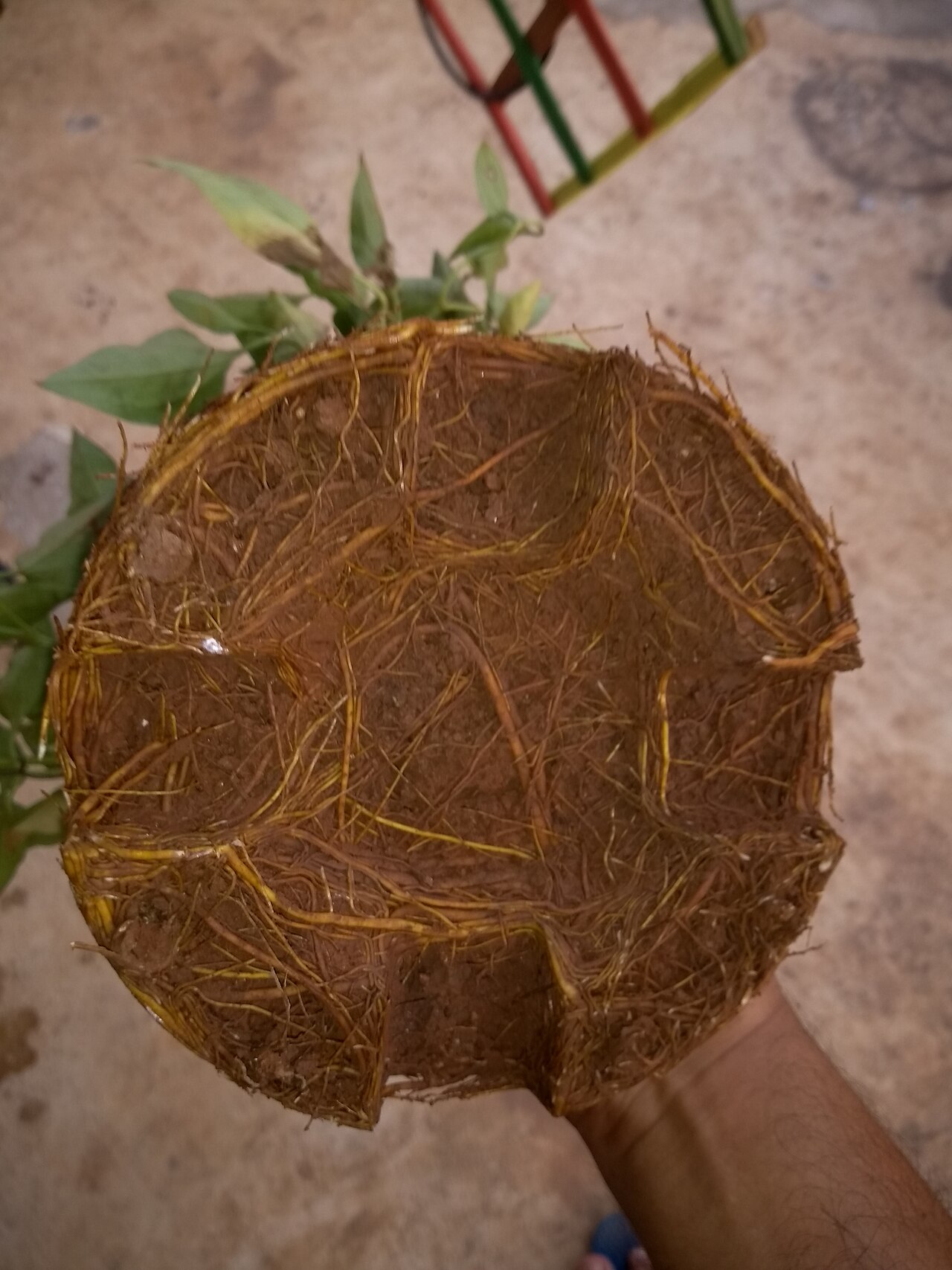
Let the top few centimeters of mix dry between waterings for most houseplants. The finger test beats any schedule: push a finger two inches into the soil, and water only when it feels dry at that depth. Empty saucers after watering so pots never sit in standing water.
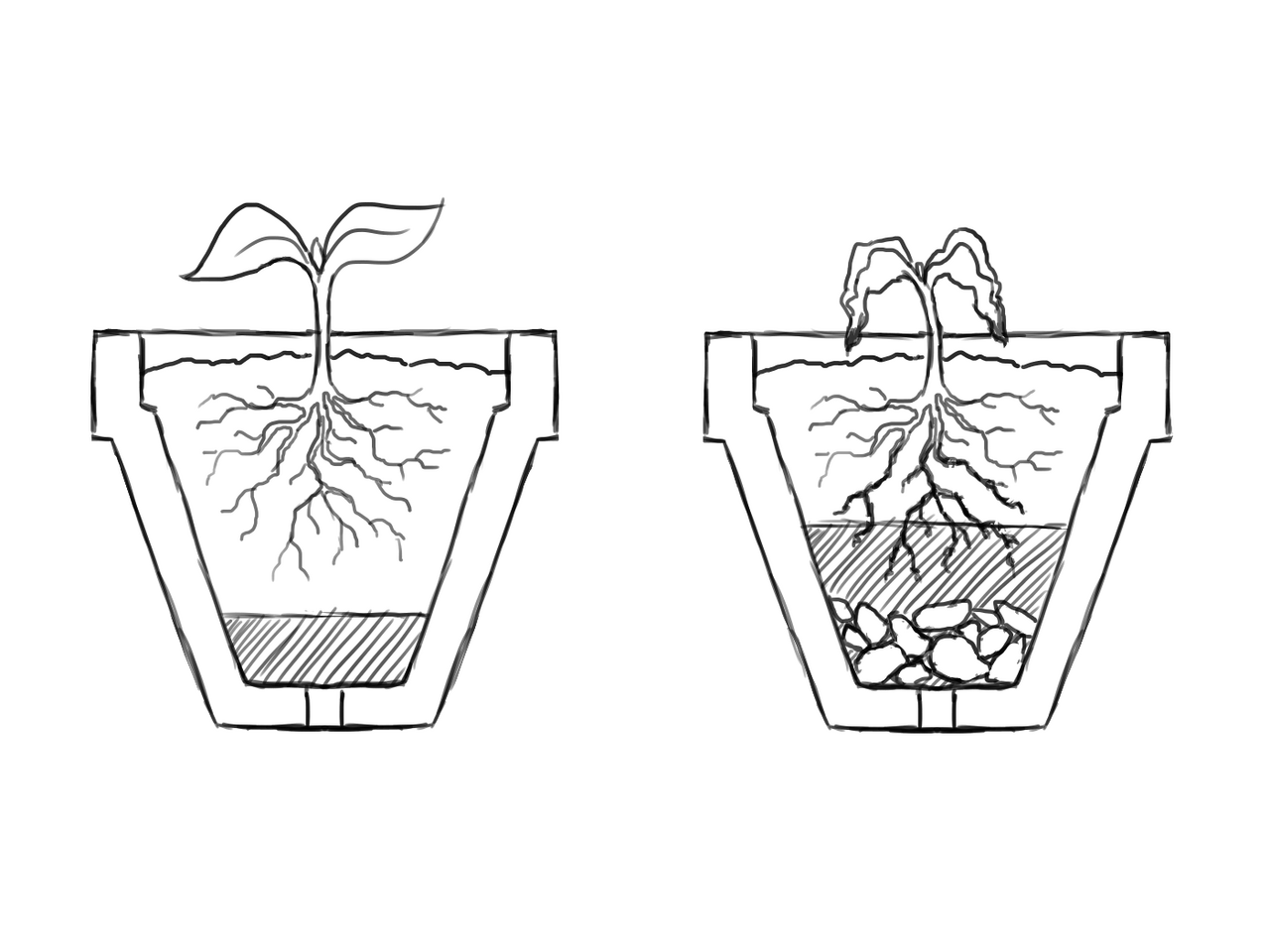
Choose containers with drainage holes and open, chunky mixes. A handful of perlite or bark in standard potting soil keeps air channels open even when the mix is moist. Resist the folk remedy of adding a gravel layer at the pot's bottom; it raises the water table inside the pot instead of improving drainage.
Refresh water for cuttings still in jars. Still water loses dissolved oxygen over time, and a weekly water change keeps the oxygen supply coming while you wait for roots.
Frequently asked questions
Can I leave a cutting in water forever?
Some plants, like pothos and lucky bamboo, can live in water for years with regular water changes and dilute fertilizer. But growth stays slower than in soil, and most species eventually decline without a proper substrate.
Why did my cutting rot in the water jar?
Rot in water usually means the water went stagnant, the cutting sat in darkness, or the stem was already damaged. Change the water weekly, keep the jar in bright indirect light, and trim any mushy tissue back to firm green stem.
Should I use rooting hormone for water propagation?
It is optional. Auxin-based rooting hormones speed root initiation for stubborn species, but easy rooters like pothos produce their own auxin in sufficient quantities. Hormone does not prevent rot; only oxygen management does.
Is it better to root cuttings in soil from the start?
For most plants, yes. Cuttings rooted in a sterile, airy mix develop soil-adapted roots immediately and skip the traumatic transition. Water propagation wins mainly on visibility: you can watch the roots grow.
The bottom line
Cuttings root in water because they build special roots engineered for a low-oxygen world, with air channels and waxy armor. They rot in wet soil because ordinary roots drown when water steals their air. Manage oxygen, not just water: keep mixes airy, let pots drain, and transition water-rooted cuttings before their roots grow too long to adapt.
Latest in Gardening
- Overwatering vs. underwatering: the finger test
- Starting seeds indoors without grow lights
- How to improve clay soil for gardening
Subscribe to the Rive News newsletter for one practical gardening explainer every week.
Related stories
What Is Companion Planting and Does It Work?
Marigolds work as a nematode cover crop, but the basil flavor claim failed repeated tests. An honest evidence review of what companion
Determinate vs. indeterminate tomatoes: growth, pruning, and harvest differences
Determinate tomatoes grow to a set size and ripen all at once, while indeterminate types vine all season. That one difference shapes
How to improve clay soil for gardening
Gypsum will not fix ordinary clay soil, say extension experts. What actually works: 2 to 3 inches of compost, mulch, better drainage,