
What causes ringing in your ears after a concert? It is temporary
By Rive News / Research desk | Rive News / Published October 24, 2026 at 9:00 AM PKT
Key takeaways
- Concerts run at 100-105 dB, well above the 85 dB level where hearing damage begins.
- Most post-concert ringing fades within 16-48 hours as the inner ear recovers from a temporary threshold shift.
- Tinnitus that persists beyond 30 days is classed as permanent; repeated exposure is what usually causes it.
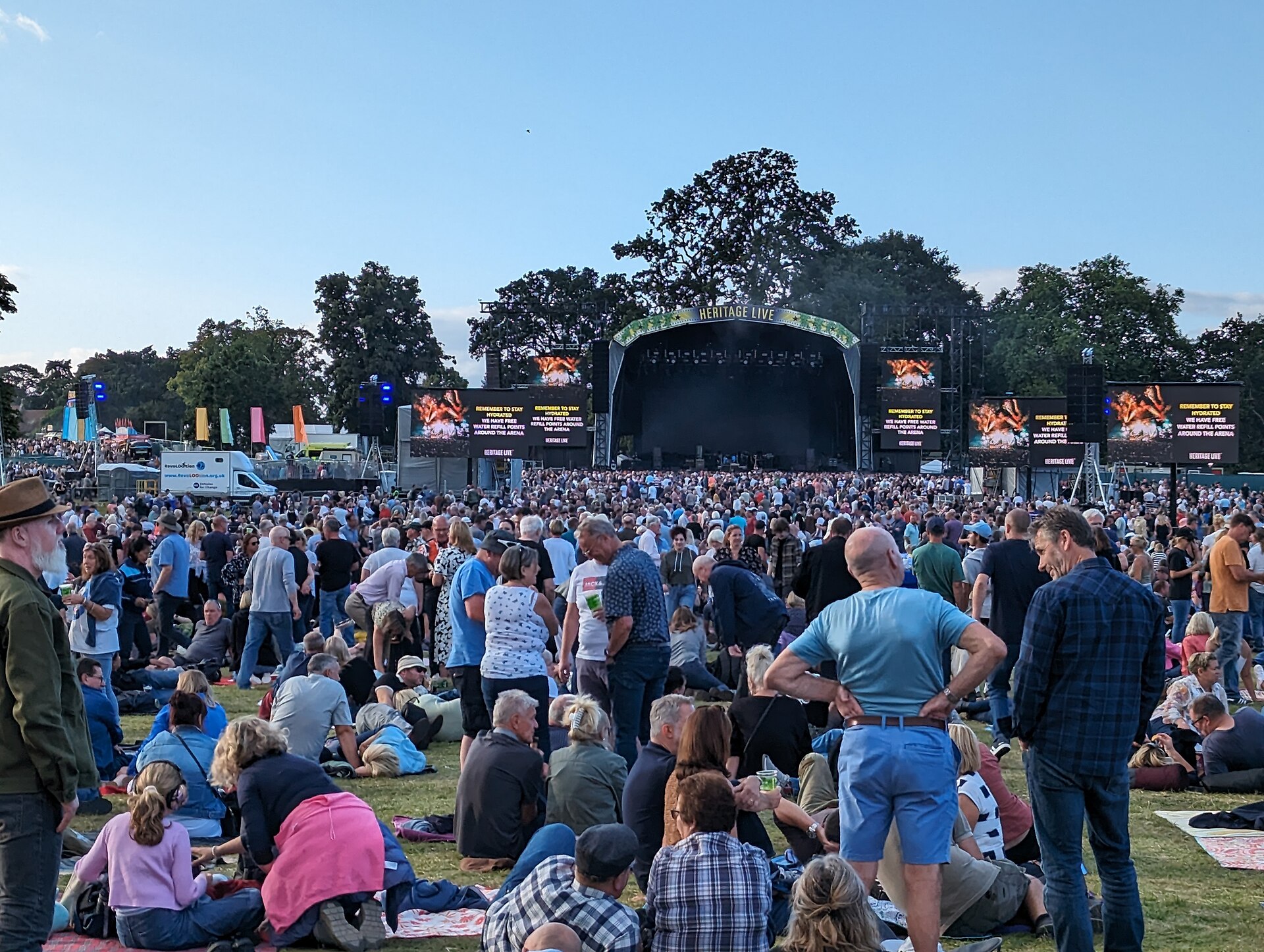
[The concert crowd and stage at Heritage Live, Sandringham 2023, where sound levels reach 100 to 105 decibels.] Photograph: a concert crowd and stage
Image Credits: Wikimedia Commons
That ringing in your ears after a concert is called temporary tinnitus. It is a phantom sound your brain produces after the hair cells in your inner ear take a battering from extreme volume.
It is not the music echoing. It is your auditory system misfiring while it recovers from an acoustic overload. For most people it fades within hours or days.
This article explains what causes ringing in your ears after a concert, including what the ringing actually is, what loud music does inside the ear, how long it usually lasts, when temporary becomes permanent, and how to protect your hearing at the next show.
What is the ringing, exactly?
Tinnitus is the perception of sound with no external source: a ring, buzz, hiss, or whistle that nobody else can hear.
After a concert, it is specifically a temporary threshold shift, the ear's normal biological response to acoustic overload, as audiology clinic NeuroMed Care describes it. Around 80% of people find their post-concert ringing resolves within hours to 48 hours as the inner ear recovers from the acute stress.
The shift happens because sound that loud briefly changes how the ear converts vibrations into signals. The brain, suddenly receiving less input from the ear, fills the gap with a phantom signal. That phantom is the ring.
What does loud music do inside the ear?
The damage starts in the cochlea, the spiral-shaped organ of the inner ear, on microscopic hair cells called stereocilia.
Concerts run at 100 to 105 dB(A), according to hearing-protection maker Bollsen's 2026 guide. Hearing damage begins above 85 dB. That gap means a typical unprotected gig delivers a noise dose far beyond what the ear is built to handle.
At that intensity, the stereocilia bend abnormally or become fatigued, disrupting their ability to convert sound waves into electrical signals, Healthencyclo explains in its tinnitus guide. The brain interprets the sudden drop in external auditory input as a phantom signal, the ringing.
"This ringing is a sign that a damage has occurred, and repeated exposure to noise can result in permanent tinnitus," warns Christopher Cederroth, a researcher at the Karolinska Institutet. His warning carries the point most clearly: even when the ring fades, the ear took a genuine hit.
How long does the ringing usually last?
There is a well-documented recovery window.
For most people, post-concert tinnitus follows a simple pattern: 16 to 48 hours is the most common recovery window for typical concert exposure. Moderate cases, where the noise was especially intense or prolonged, can take 2 to 7 days. Extended symptoms of 7 to 14 days suggest significant damage that needs monitoring.
Doctors class tinnitus as "temporary" if it clears within about 30 days, Bollsen reports. If the ringing persists beyond two weeks, get a professional hearing evaluation rather than waiting it out.
One uncomfortable fact: if the ringing resolves, it does not mean no damage occurred. NeuroMed Care notes that resolution means the damage was mild enough to recover from, not that the ear is untouched. Temporary threshold shift means hair cells bent but did not break; a permanent shift means they broke, and the damage accumulates silently.

[A dense concert crowd, the kind of setting where unprotected ears take the loudest hit.] Photograph: a concert crowd
Image Credits: Wikimedia Commons
When does temporary ringing become permanent?
Repeated exposure is the main route from temporary to permanent.
One unprotected gig rarely causes permanent tinnitus on its own, but it can. Permanent tinnitus is far more common from repeated exposure, which is why 76% of professional DJs and 26% of rock and pop musicians live with chronic tinnitus, according to Bollsen's review of musician hearing data.
The transition can start quickly. Central sensitization, the process that turns temporary tinnitus into a chronic condition, can begin within 72 hours of injury, NeuroMed Care warns. Anxiety or hyper-focus on the sound may also help cement the phantom signal into the brain's networks, according to Healthencyclo.
Each unprotected concert adds to damage that compounds over a lifetime. The ears do not fully reset between shows the way muscles recover between workouts.
How can you lower the risk at the next show?
Earplugs are the single most effective step.
Musician-grade earplugs rated at SNR 24 dB bring a 105 dB show down to roughly 81 dB, below the 85 dB damage threshold, while still letting you hear the music clearly. Stand at least 10-15 feet from the speakers, since volume falls off quickly with distance.
Take listening breaks every hour: step out to the lobby or a quieter area so the ears get recovery time during the show itself. Limit alcohol, which can make people less aware of how loud things are and more likely to stand near the stacks.
After the show, give your ears complete rest for 48 hours. Avoid headphones and other loud environments, get good sleep, and stay hydrated while you monitor symptoms.
Frequently asked questions
Should I see a doctor about ringing after a concert?
See a clinician if the ringing lasts beyond a few days, keeps coming back, gets louder, or comes with hearing loss. Seek urgent care if the ringing beats in time with your pulse.
Do cheap foam earplugs work at concerts?
They reduce volume, though they muffle sound quality more than musician-grade plugs. For occasional gig-goers they are far better than nothing.
Can one concert cause permanent hearing loss?
Rarely on its own, but it is possible with extreme exposure, such as standing directly in front of a speaker stack. Repeated unprotected concerts are the far more common cause of permanent damage.
Does the ringing mean I already have hearing loss?
Not necessarily. Temporary tinnitus is common and usually resolves. But repeated episodes are a warning sign, and a hearing test is the only way to know the full picture.
The outlook
Post-concert ringing is your inner ear's distress signal, and for most people it passes within a day or two. The catch is that "temporary" is not the same as "harmless": every loud night leaves its mark, and the damage compounds.
The fix is cheap and simple. Good earplugs preserve the music and the hearing. This article is for general information only and is not medical advice; talk to a clinician about any symptoms.
Topics: tinnitus, hearing protection, concerts, noise damage
Rive News / Research desk covers health explainers, writing from audiology sources and named researchers.
Related
- Why knuckles crack and what makes the sound
- When a Muscle Cramp Won't Go Away: What It Means and When to Worry
- Why Your Stomach Growls When You Are Hungry: The Science
Subscribe for one plain-English health explainer every morning.
Rive News standards: every claim traced to a named source; no invented statistics; corrections on request.
Related stories
ADHD linked to fourfold dementia risk in Pitt study of 187,000 adults
Adults with ADHD face four times the risk of dementia, a University of Pittsburgh study of 187,000 adults published in JAMA Psychiatry

Why Do Athletes Get Cramps Despite Drinking Water?
Muscle cramps strike even well-hydrated athletes because sweat drains electrolytes that plain water cannot replace. Here is why water alone

Do bananas actually prevent muscle cramps?
A medium banana has 422 mg of potassium, but the evidence says it cannot stop cramps. Here is what the research shows, and what actually