
Why Your Stomach Growls When You Are Hungry: The Science
This article is for general information only, not medical advice. Talk to a clinician if stomach noises come with pain, vomiting, fever, or unexplained weight loss.
Key takeaways
- A growling stomach is borborygmi. Gas and fluid get squeezed through the gut by a housekeeping contraction called the migrating motor complex, which runs every 90 to 120 minutes.
- Hunger does not create the noise, it amplifies it. An empty gut has nothing to muffle the sound, and hunger hormones intensify the contractions.
- Occasional growling is normal, even after eating. See a doctor if the sounds pair with pain, vomiting, persistent bloating, or blood in the stool.
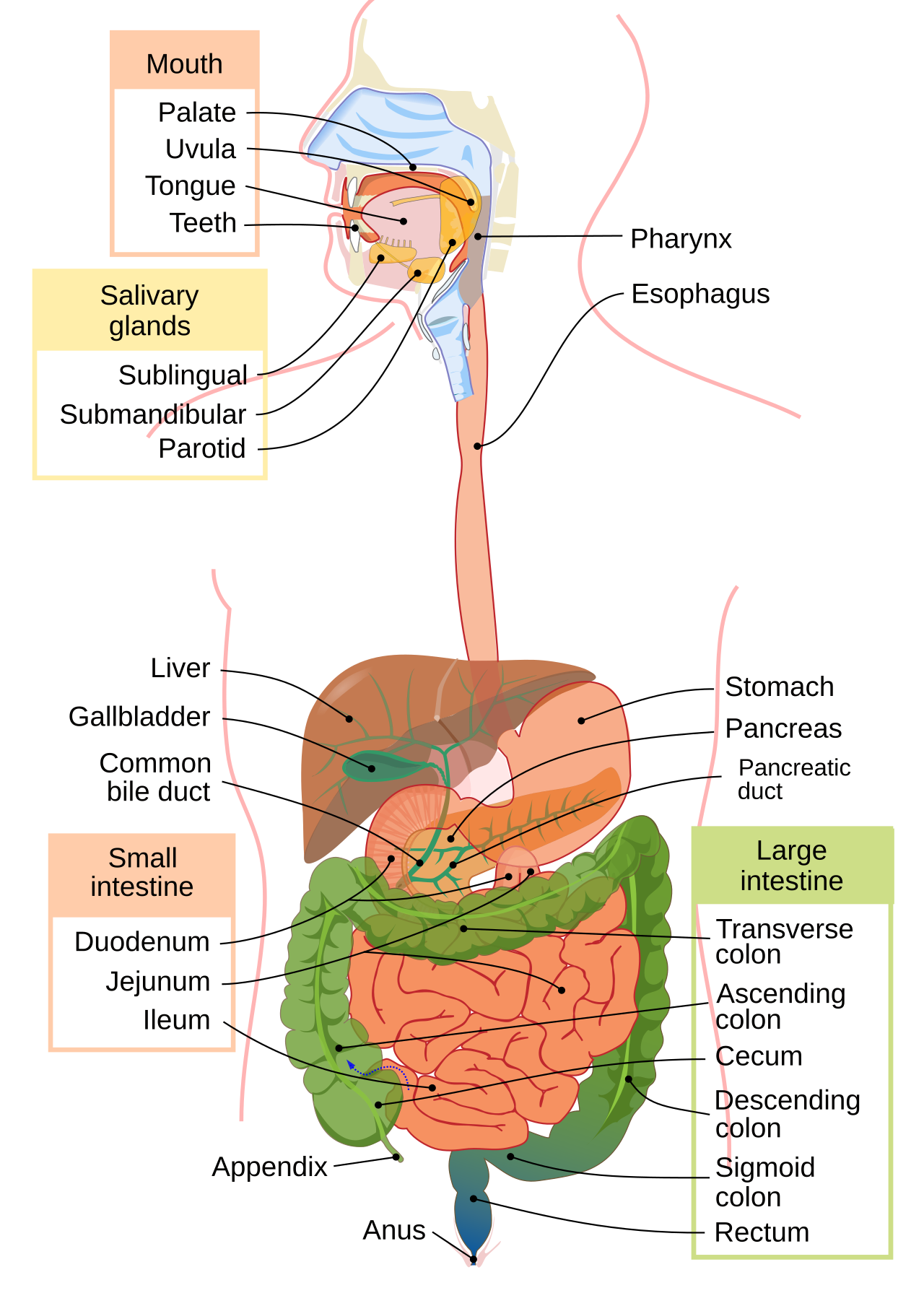
An illustration of the human digestive system. The stomach and intestines shown here are where the muscle contractions behind borborygmi take place. Illustration: Mariana Ruiz/Wikimedia Commons
Image Credits: Wikimedia Commons
A growling stomach feels like your body announcing hunger to the room. But the sound is not a hunger alarm. It is the normal churning of your digestive tract, and it happens whether you have eaten recently or not.
The medical term is borborygmi. It describes the rumbling, gurgling sounds produced as muscles in the stomach and intestines squeeze food, fluid, and gas along the digestive tract. Hunger makes those sounds louder, but hunger is not what creates them.
This article explains why your stomach growls when you are hungry. It covers what borborygmi really is, the migrating motor complex behind it, why an empty gut is noisier, when the sounds are worth a doctor's visit, and how to quiet them down.
What is borborygmi?
Borborygmi is the clinical name for the growling, gurgling, and rumbling sounds that come from the gastrointestinal tract. The gastrointestinal tract is the stomach and intestines. Healthline defines it as noises made within the small and large intestines during digestion.
They happen when food, liquid, digestive juices, and air move through the hollow chambers of the gut.
The intestines are essentially long hollow tubes. Sounds moving through them behave like water moving through pipes. The walls of the stomach and intestines are lined with muscle that contracts in coordinated waves called peristalsis.
Those contractions mix and squeeze contents forward. The movement produces the sounds we hear as growling.
It can happen at any time. Peristalsis runs after meals to move food along, between meals as part of gut housekeeping, and even at night while you sleep. Most of it passes unnoticed.
You only hear it when conditions make the noise audible.
The migrating motor complex: your gut's housekeeping cycle
The star of this story is a process called the migrating motor complex, or MMC. Between meals, the stomach and small intestine run a repeating cycle of strong muscular contractions. They sweep leftover food particles, bacteria, and gas through the tract.
Gastroenterologists describe it as a housekeeping wave. A gastroenterologist is a doctor who treats the digestive system.
Dr Anukalp Prakash, director of gastroenterology at CK Birla Hospital in Gurgaon, explained it in Hindustan Times: "The medical term for this sound is borborygmi. It occurs due to a process called the migrating motor complex, a series of muscular contractions that sweep through the stomach and small intestine roughly every 90 minutes to two hours, regardless of whether food is present."
That last phrase matters most. The MMC runs whether you have eaten or not. Its job is to clear the tract between meals so the next meal enters a clean system.
The contractions exist to sweep out residual material, essentially resetting the gut.
When you have not eaten for a while, two things make these contractions louder. First, there is little food to muffle the sound, so the movement of air and fluid becomes clearly audible. Second, hunger-related signals from the brain ramp up the intensity and frequency of the contractions to prepare the gut for the incoming meal.
Dr Kunal Sood, an anaesthesiologist and pain medicine physician, put the mechanics simply in a video explained on Hindustan Times. An anaesthesiologist is a doctor who manages pain and anesthesia. The sounds happen when the intestines contract and push gas and liquid forward.
"Gas plus fluid creates vibration and that vibration becomes audible through the abdominal wall. ".
Why hunger makes it louder
Hunger does not start the contractions. It turns up their volume. Here is the chain of events, as described by EarthSky's explainer on the topic.
After your stomach has been empty for a couple of hours, it begins producing hormones. They send the brain a message: no food here, eat soon. The brain replies by signaling the digestive muscles to get to work.
It steps up the intensity and frequency of peristalsis in the stomach and intestines so the organs are ready to digest. The brain also stimulates the stomach and intestines to secrete digestive juices in preparation.
More contraction plus more juice plus an empty, unmuffled gut equals louder borborygmi. The actual noise comes from gas and fluid squirting through narrow openings, such as the valve between the stomach and the small intestine. NDTV's science explainer adds that leaner people may hear these sounds more distinctly, since there is less tissue to muffle the vibrations.
This also explains the embarrassing mid-meeting growl that happens right after lunch. After eating, the intestines are actively mixing and moving food along, which is peristalsis doing its normal job. The sound means digestion is working, not that something is wrong.
Our body has plenty of other sounds with straightforward explanations. If you are curious about a different one, see why brain freeze happens with cold drinks, why your foot falls asleep and tingles when it wakes, or why hiccups refuse to stop.
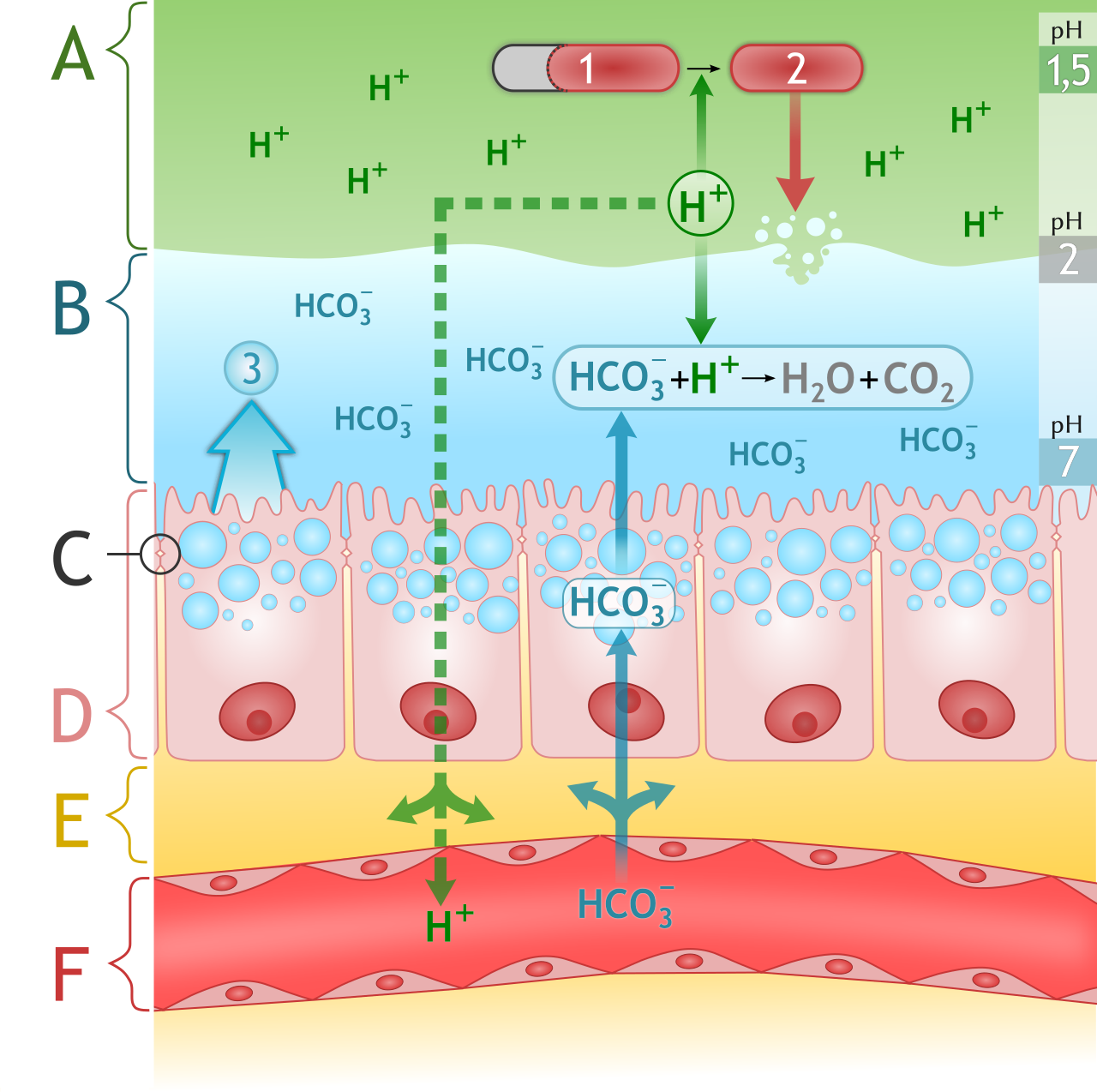
A labeled anatomical illustration of the stomach's mucosal layer. Hunger hormones intensify contractions here, and empty space amplifies the sound of moving gas and fluid. Illustration: M. Komorniczak/Wikimedia Commons
Image Credits: Wikimedia Commons
When stomach growling is not just hunger
Occasional growling is normal and healthy. It becomes worth a medical conversation when it pairs with other symptoms. Then the sounds can signal an underlying issue.
Medical News Today lists conditions that can cause abnormal stomach growling: food allergies, ileus (a lack of intestinal activity), food intolerances, gastrointestinal infections, intestinal blockage, and irritable bowel syndrome. Healthline advises speaking with a healthcare professional if frequent abnormal bowel sounds come with high-pitched sounds, bloody stools, vomiting, fever, severe abdominal pain, or unintentional weight loss.
Dr Sood, quoted on TBS News, gives a similar red-flag list: pain, vomiting, persistent bloating, diarrhoea, constipation, blood in the stool, and unexplained weight loss alongside the sounds.
Stress and anxiety can also affect gut sounds through the brain-gut axis. The brain-gut axis is the two-way link between the brain and the digestive system. Healthline notes that anxiety-related hormones can alter digestion and cause symptoms including stomach growling and cramps.
Chronic stress can sometimes lead to diarrhea or constipation as well.
How to quiet a growling stomach
If the noise bothers you, the fix is usually simple. Eating something is the fastest answer. Food muffles the contractions and satisfies the hunger signals driving them.
Small, frequent meals can help if your stomach growls loudly between long gaps.
Other approaches from Medical News Today and Healthline:
- Drink water. Fluid can settle the stomach and reduce the intensity of the contractions.
- Eat slowly and chew well. Swallowing excess air adds gas, and gas is half the sound equation.
- Limit gas-producing foods before quiet settings. Beans, lentils, cruciferous vegetables, and carbonated drinks all add intestinal gas.
- Avoid trigger foods if you have an intolerance. Lactose, gluten, or other triggers can produce uncomfortable growling along with other symptoms.
- Manage stress. Since anxiety affects the brain-gut axis, stress management can reduce stress-related gut noises.
Lying on your back or applying gentle pressure to the abdomen can also muffle the sound in the moment, according to EarthSky. Eating something works more reliably.
Frequently asked questions
Does a growling stomach mean I am starving?
No. It means your gut's housekeeping contractions are running and you can hear them. They run every 90 to 120 minutes regardless of meals.
Hunger intensifies them and removes the muffling effect of food. That is why the sound is associated with being hungry.
Why does my stomach growl right after I eat?
After a meal, peristalsis is actively mixing and moving food through the intestines. That is normal digestion at work. If post-meal growling is loud and frequent, excess swallowed air or gas-producing foods are common contributors.
Can other people really hear it?
Sometimes, yes. In a quiet room, strong MMC contractions in an empty gut can be loud enough for others to hear. It is a normal body sound, not a sign of illness, and most people recognize it.
Is there any way to stop it completely?
No, and you would not want to. The migrating motor complex is a necessary cleaning process for the gut. You can reduce the volume with food, water, and the habits above.
But silencing it entirely would mean stopping a healthy digestive function.
The bottom line
Your stomach growls because of borborygmi. That is the sound of gas and fluid being squeezed through the gut by the migrating motor complex, a housekeeping wave of contractions that sweeps the stomach and small intestine every 90 to 120 minutes. Hunger amplifies the noise by intensifying the contractions and emptying the muffling food.
It is a sign of a working digestive system. Treat it as a red flag only when it comes with pain, vomiting, persistent bloating, or other digestive symptoms, and see a clinician in that case.
---
Topics: stomach growling, borborygmi, digestion, hunger, gut health, peristalsis
Author bio: Rive News's research desk compiles science explainers from peer-reviewed studies and primary sources. It covers fitness, health, food, and everyday science for curious readers.
Latest in health
- Why Your Eyes Feel Dry and Gritty in the Morning
- Brain Freeze From Cold Drinks: What Happens
- Why Your Foot Falls Asleep and Tingles When It Wakes
Subscribe to the Rive News newsletter for one science-backed explainer in your inbox each morning.
Copyright 2026 Rive News. Articles are written from public sources with named attribution. Report errors via the contact page.
Related stories

ADHD linked to fourfold dementia risk in Pitt study of 187,000 adults
Adults with ADHD face four times the risk of dementia, a University of Pittsburgh study of 187,000 adults published in JAMA Psychiatry

Why Do Athletes Get Cramps Despite Drinking Water?
Muscle cramps strike even well-hydrated athletes because sweat drains electrolytes that plain water cannot replace. Here is why water alone

Do bananas actually prevent muscle cramps?
A medium banana has 422 mg of potassium, but the evidence says it cannot stop cramps. Here is what the research shows, and what actually