
Why Do My Eyes Feel Dry and Gritty in the Morning?
This article is for general information only, not medical advice. See an eye doctor for diagnosis and treatment.
Key takeaways
- Morning grittiness usually comes from overnight tear evaporation, eyelids that don't fully close in sleep, or eyelid inflammation called blepharitis.
- Dry eye affects up to 30 million people in the US, according to NewYork-Presbyterian, and ranks among the most common reasons for eye-doctor visits.
- Warm compresses, a bedroom humidifier, and nighttime lubricating ointment help. See a doctor for pain, vision changes, or discharge.
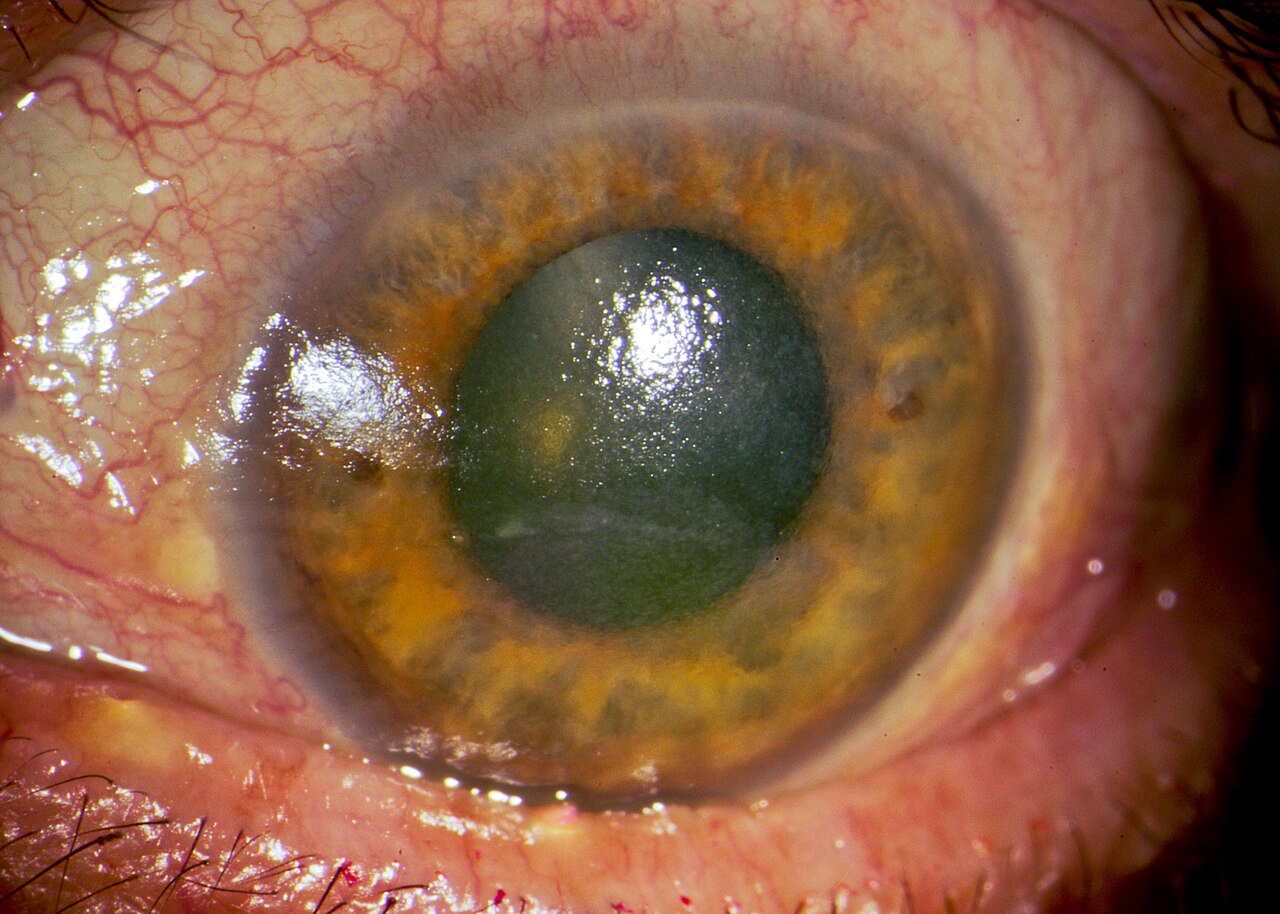
Image Credits: Wikimedia Commons
Dry, gritty eyes in the morning feel like sand trapped under the lids. The sensation often arrives with burning, redness, or crusting along the lash line, and it comes from a tear film that failed to protect the eye overnight.
That film is a layered coating of water, oil, and mucus, spread fresh over the eye with every blink. When any layer runs short, especially the oil layer that slows evaporation, the eye surface dries out and feels irritated by the time you wake up.
This article explains morning eye dryness, including how the tear film works, the most common overnight causes, what helps, and when the symptoms deserve a doctor's visit.
How the tear film works
Every blink spreads a film of tears, oil, and other lubricants over the eye, Harvard Health explains. The lacrimal glands in the upper lids make the watery tears.
Tiny meibomian glands lining the upper and lower lids supply oil that keeps those tears from evaporating too fast. A protein layer called mucin anchors the whole coating to the eye's surface.
As we age, tear and oil production decline, Harvard Health notes, leaving the film thinner and the eyes feeling dry. People who wore contact lenses for years or had laser eye surgery when younger may be more prone to dry eye later in life, according to an ophthalmologist (eye doctor) cited by Harvard Health.
Medications can thin the film too. Dry eye is a known side effect of antihistamines, decongestants, antidepressants, anti-anxiety drugs, diuretics, and some blood pressure medications, Harvard Health reports.
Why mornings are the worst
Overnight, blinking stops, so the tear film gets no refresh for hours. Whatever was marginal during the day becomes unbearable by morning.
Airflow makes it worse. Sleeping with a ceiling fan or vent aimed at the bed speeds evaporation across the eye surface all night. An ophthalmologist quoted by Healthline recommends eliminating that airflow and applying a thicker lubricating ointment before sleep to carry moisture through the night.
Some people sleep with their eyes partly open, a condition called nocturnal lagophthalmos. Even a small gap exposes part of the eye to air for hours, drying the cornea (the eye's clear front window) enough to feel gritty at waking. Many people with it have no idea, unless someone notices their eyes open during sleep.
Blepharitis, inflammation along the lash line caused by bacteria or clogged oil glands, is another classic morning culprit. Crusts and flakes form overnight, then fall into the eye and create a foreign-body sensation (the feeling that something is in the eye). Sticky or crusty eyelids on waking point strongly in this direction.
Meibomian gland dysfunction blocks the oil glands in the lids, so tears evaporate far too quickly. Screen-heavy days feed into it: blink rate can fall by more than half during focused screen use, leaving the tear film depleted before bed.
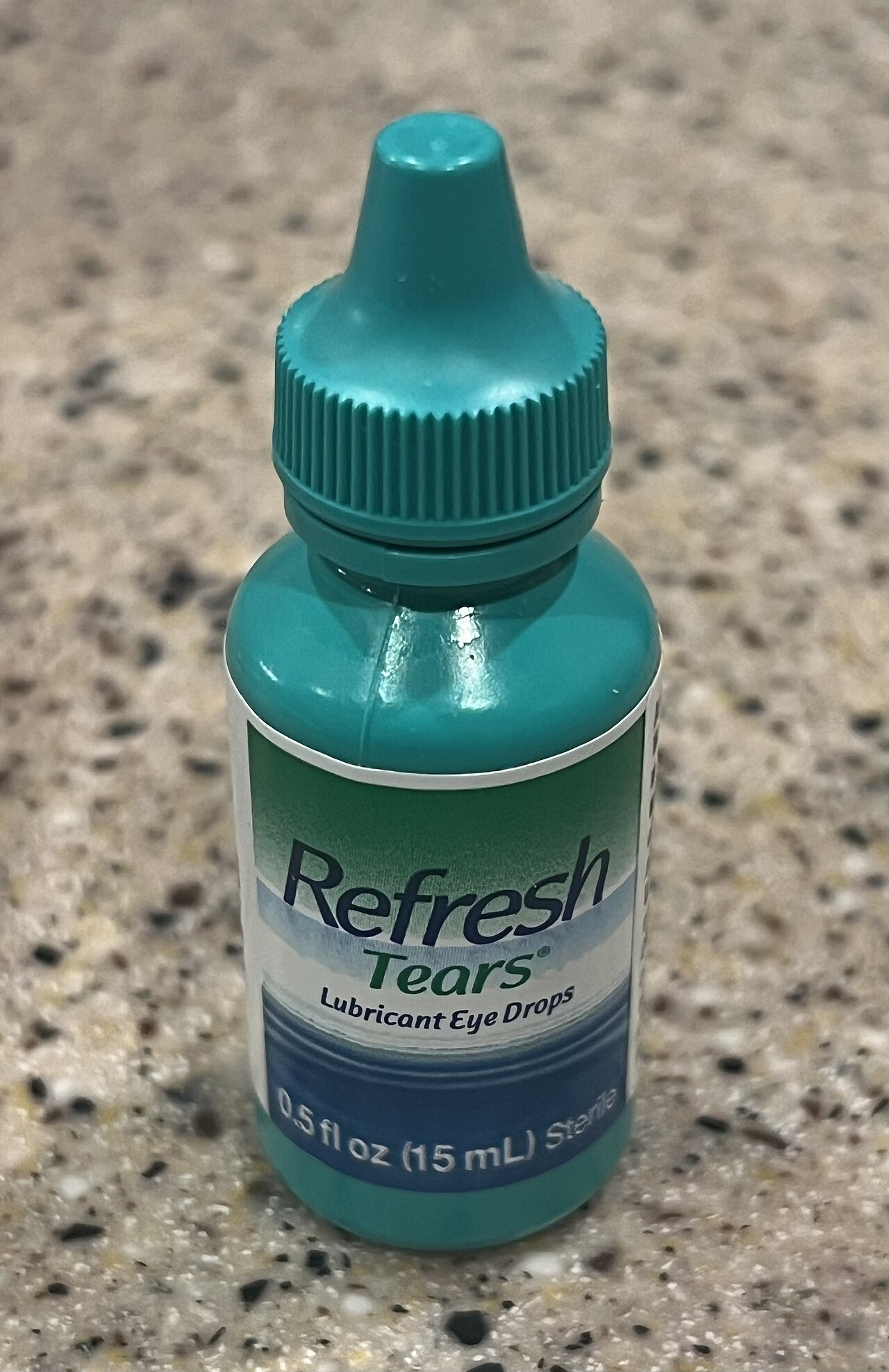
Image Credits: Wikimedia Commons
What helps
A warm compress (a warm damp cloth) on closed lids for several minutes loosens clogged oil glands, and gentle lid cleaning removes the overnight crust that feeds the gritty feeling.
A bedroom humidifier adds moisture to dry air, and redirecting fans or vents away from the face cuts overnight evaporation at the source.
Artificial tears or a thicker gel ointment before bed can carry the eyes through the night. Choose lubricating drops rather than redness-reducing ones for dryness: the redness formulas constrict blood vessels and can cause rebound redness with overuse.
During the day, the 20-20-20 rule helps preserve the film: every 20 minutes of screen time, look at something 20 feet away for at least 20 seconds to restore normal blinking. The same kind of body-signal logic explains why your foot falls asleep and why standing up fast makes you dizzy: small mechanical disruptions, outsized sensations.
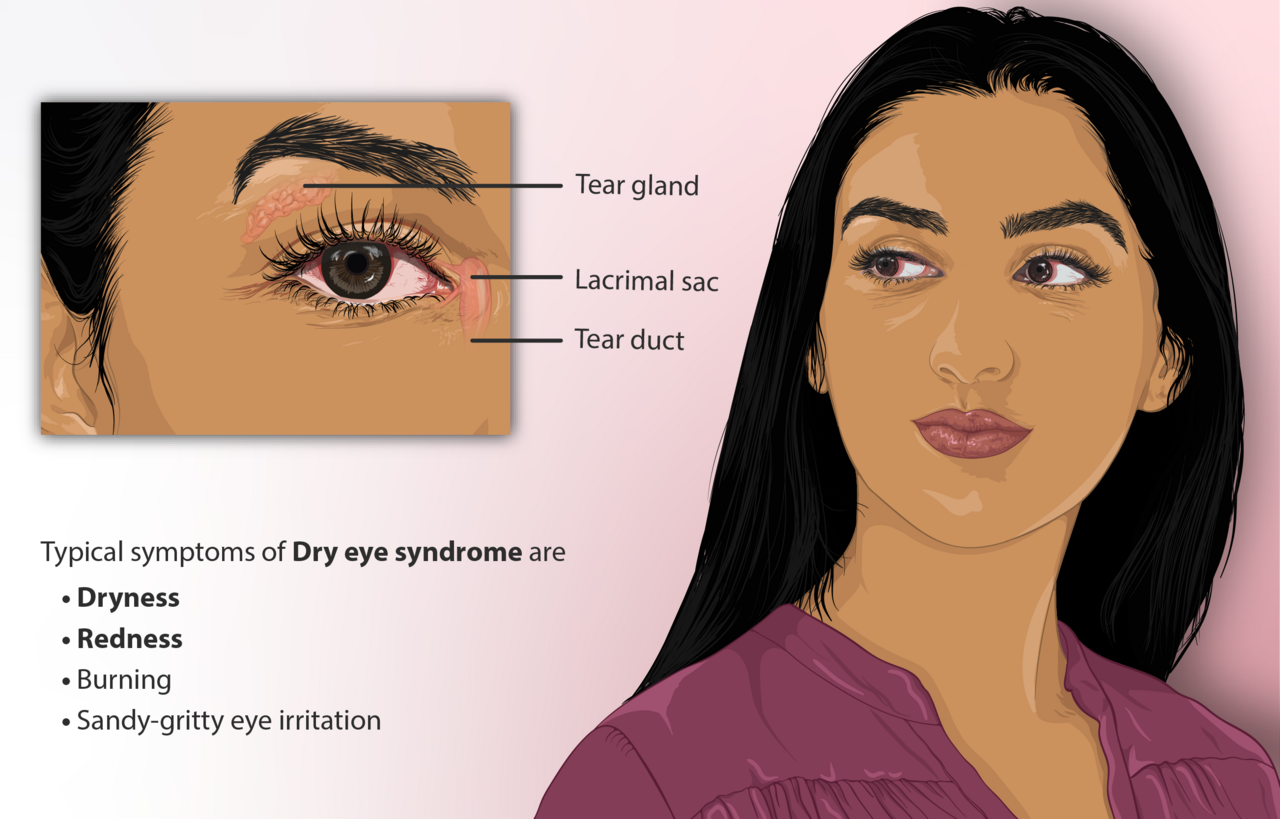
Image Credits: Wikimedia Commons
When to see a doctor
Book an appointment for severe or worsening eye pain, changes in vision or significant blurriness, extreme light sensitivity, thick yellow or green discharge, or a stuck foreign-body sensation that will not clear.
Dry eye cannot be cured, but it can be treated. Dr. Ashley Brissette, an ophthalmologist at NewYork-Presbyterian, tells patients that "the goal of treatment is to have more good days than bad days."
Prescription options exist for persistent cases. These include anti-inflammatory drops that calm the eye surface and punctal plugs, tiny devices placed in the tear ducts (the eye's drainage channels) to keep tears on the eye longer.
Dryness is rarely a single-factor problem. Ophthalmologists emphasize it usually builds from a combination of lifestyle and environmental triggers, from air conditioning and dust to dehydration, poor sleep, and uncorrected vision straining the eyes, according to specialists quoted by the Times of India.
Frequently asked questions
Why do my eyes water if they are dry?
Reflex tearing. The eye floods with watery tears to compensate for a poor-quality film, but those extra tears lack oil and drain away fast, so the dryness remains. Watery eyes are a recognized symptom of dry eye disease.
Can dehydration cause gritty morning eyes?
Low fluid intake and poor sleep can reduce tear production, and vitamins A and D plus omega-3 fatty acids support the eye surface, according to ophthalmologists quoted by the Times of India. Hydration helps, but it rarely fixes gland or eyelid problems on its own.
Are morning crusts normal?
A small amount of sleep in the eyes is normal. Heavy, sticky, or colored crusts point to blepharitis or infection and deserve a doctor's look rather than a shrug.
Do I need prescription eye drops?
Many people manage with over-the-counter artificial tears, warm compresses, and lid hygiene. If symptoms persist for weeks despite that routine, an ophthalmologist can check for gland dysfunction or an underlying condition such as Sjogren's syndrome.
The bottom line
Gritty mornings are usually a plumbing problem in the tear film, not a serious disease. Protect the film overnight with humidity, ointment, and lid care, and get checked promptly if pain, discharge, or vision changes join the grittiness. Why knuckles crack is another harmless body mystery worth the same calm curiosity.
Rive News is the in-house research desk behind these explainers. It reads the sources so you don't have to.
Latest in Health
- Why your foot falls asleep and tingles as it wakes
- Why standing up fast makes you dizzy
- Why you shiver when you already feel hot with fever
- Why your stomach growls when you're hungry
Subscribe to the Rive News newsletter for one health explainer in your inbox every morning.
Corrections: we fix errors promptly; write to the research desk. © 2026 Rive News. Reporting standards: every claim is sourced; no invented quotes, statistics, or experts.
Related stories

ADHD linked to fourfold dementia risk in Pitt study of 187,000 adults
Adults with ADHD face four times the risk of dementia, a University of Pittsburgh study of 187,000 adults published in JAMA Psychiatry found

Why Do Athletes Get Cramps Despite Drinking Water?
Muscle cramps strike even well-hydrated athletes because sweat drains electrolytes that plain water cannot replace. Here is why water alone

Do bananas actually prevent muscle cramps?
A medium banana has 422 mg of potassium, but the evidence says it cannot stop cramps. Here is what the research shows, and what actually hel