
Why Do We Shiver When We Have a Fever Even Though We Feel Hot?
Key takeaways
- A fever raises the brain's temperature set point, so your current body temperature suddenly feels too cold.
- Shivering is your muscles generating heat fast to climb to the new target, alongside narrowed skin blood vessels.
- The chills usually stop once the new temperature is reached, and sweating begins when the fever breaks.
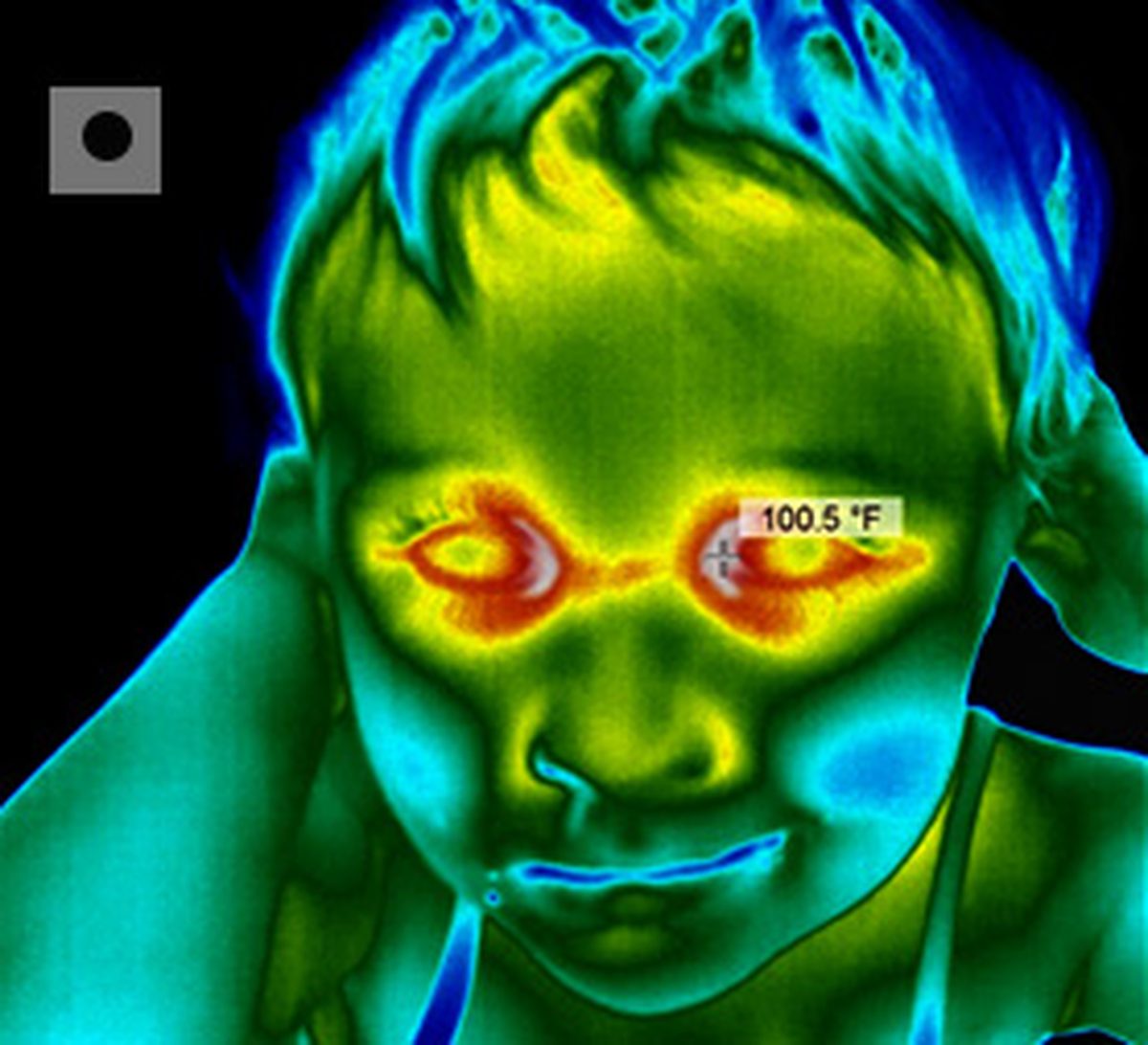
It feels like a contradiction. Your forehead is burning, the thermometer says 39 degrees, yet you are wrapped in a blanket shaking with cold. If the body is already hot, why is it shivering?
The answer is that your body is not confused. It is executing a deliberate plan. A fever is not your body overheating by accident.
It is your brain's thermostat choosing a higher temperature. The shivering is how your body climbs to it.
What a fever actually is
A fever is a raised body temperature set by your own brain. Deep in the brain sits the hypothalamus, a small region that works as the body's thermostat. It holds the normal target at around 36.8°C, according to BBC Science Focus magazine.
When immune cells detect an infection, they release signaling molecules called pyrogens. These molecules tell the hypothalamus to raise the set point. The set point is the temperature the brain aims for.
The thermostat itself moves, from its usual setting to something like 39 or 40°C. Your actual body temperature has not changed yet. So relative to the new target, you are now running cold.
This is the key difference between a fever and simply overheating. On a hot day or during hard exercise, your body temperature rises but the thermostat stays at 36.8°C. So you feel hot and your body sweats to cool down.
In a fever, the thermostat moves first, so you feel cold and your body works to warm up.
Why you feel cold even though you are hot
Once the hypothalamus raises the target, everything below that target reads as "too cold." Your skin may be warmer than usual in absolute terms. But your brain compares it against the new, higher set point and concludes you are freezing.
Two things happen at once. First, the hypothalamus orders blood vessels near the skin to narrow. This process is called vasoconstriction.
Less warm blood reaches the surface, heat loss drops, and your skin genuinely feels cold to the touch.
Second, the shivering begins.
That is why the chills often arrive before the fever peaks. While the body is still climbing toward the new set point, the shivering and cold feeling persist. Once the target is reached, the shivering usually stops.
The person may feel warm or flushed instead of cold.
How shivering generates heat
Shivering is rapid, involuntary muscle contraction, and it is an efficient furnace. Involuntary means you cannot control it. The posterior region of the hypothalamus contains the primary motor center that drives it, according to The Hindu's science desk.
When core temperature falls below about 37.1°C relative to the target, the hypothalamus ramps up muscle tone through descending nerve pathways.
The contractions come at 10 to 20 per second. Small groups of muscles fire out of sync so the body shakes without producing coordinated movement. The big muscle groups of the trunk and proximal legs produce most of the heat.
The arms contribute relatively little.
The energy output is remarkable. Studies cited by The Hindu found that shivering can produce as much as 42.5 calories per hour. That is almost seven times a resting person's normal metabolism at room temperature.
Metabolism is the rate at which your body burns energy.
Physiology references note the heat production is throttled at about five times the total metabolic rate. Either way, it is an enormous burst of warmth produced in seconds.
Why the higher temperature helps fight infection
The body does not raise its temperature for fun. A hotter environment makes life harder for many pathogens. Pathogens are germs that cause disease.
Higher temperatures can slow bacterial reproduction and speed up parts of the immune response. White blood cells, the immune system's front-line fighters, become more active as temperature rises. The body increases production of protective proteins, according to BBC Science Focus.
In short, the fever is a weapon, and the shivering is the cost of deploying it.
This also explains why suppressing every fever is not always the goal. The fever is doing a job. Fever-reducing medicines relieve discomfort.
But doctors generally reserve them for high or prolonged fevers rather than every mild temperature rise.
What happens when the fever breaks
Once the infection is under control, the pyrogen signals fade. The hypothalamus lowers the set point back to normal. Now the situation reverses.
Your body temperature is above the target, so the brain switches on cooling.
Blood vessels near the skin widen, letting heat escape. Sweat glands activate. This is the drenching sweat many people remember as the fever "breaking.
" It is the mirror image of the shivering phase. The same thermostat drives the body downward instead of upward.
That cycle, chills on the way up and sweating on the way down, is the complete signature of a fever doing its work.
This article is for general information only, not medical advice. Shivering with a fever is usually routine. But persistent or severe shaking, especially with confusion, breathing difficulty, chest pain, or extreme weakness, warrants prompt medical attention.
Frequently asked questions
Should I bundle up or cool down when shivering with a fever?
A light blanket is fine for comfort while you shiver. Your body is actively trying to warm up. Once the fever peaks and the chills pass, remove extra layers.
Avoid aggressive cooling like ice baths. They fight what the body is doing and can cause more violent shivering.
Why do I shiver only at the start of a fever?
The shivering is the climb, not the summit. It runs while your body temperature is below the new set point. Once you reach the target, the furnace switches off.
You typically feel hot rather than cold until the fever breaks.
Do fever-reducing medicines stop the shivering?
They can, by lowering the hypothalamus's set point back toward normal. With the target reduced, the body no longer needs to generate extra heat, so the shivering eases. That is also why the medicine often brings on sweating as the body dumps the now-excess heat.
Outlook
You shiver with a fever because your brain raised the temperature target and your body is rushing to meet it. The cold feeling comes from vasoconstriction. The shaking comes from muscles generating heat at up to seven times the resting rate.
The whole performance serves the immune system. It is a good idea to see a doctor if a fever runs very high, lasts more than a few days, or comes with severe symptoms. Those patterns need more than a blanket and rest.
Tags: fever, shivering, immune system, body temperature, health explainer
Rive News is a research desk covering everyday science and health questions with sourced, plain-language explainers.
Latest in Health
- Why your foot falls asleep and tingles when it wakes up
- Why do we get dizzy when standing up too fast
- Why hiccups happen and how to stop them
- Brain freeze: why cold drinks make your head hurt
Subscribe for one everyday-science explainer in your inbox each morning.
Corrections: spotted an error? Rive News reviews every report. Every factual claim traces to a named source listed above; copyright 2026 Rive News.
Related stories

ADHD linked to fourfold dementia risk in Pitt study of 187,000 adults
Adults with ADHD face four times the risk of dementia, a University of Pittsburgh study of 187,000 adults published in JAMA Psychiatry

Why Do Athletes Get Cramps Despite Drinking Water?
Muscle cramps strike even well-hydrated athletes because sweat drains electrolytes that plain water cannot replace. Here is why water alone

Do bananas actually prevent muscle cramps?
A medium banana has 422 mg of potassium, but the evidence says it cannot stop cramps. Here is what the research shows, and what actually