
Why Do We Get Brain Freeze From Cold Drinks?
This article is for general information only, not medical advice.
Key takeaways
- Brain freeze, or sphenopalatine ganglioneuralgia, is a rapid-onset headache caused by cold hitting blood vessels at the back of the throat.
- The cold makes two key arteries constrict and then rebound, and the trigeminal nerve relays the signal as pain in the forehead.
- It fades within seconds. Pressing your warm tongue to the roof of your mouth speeds relief.
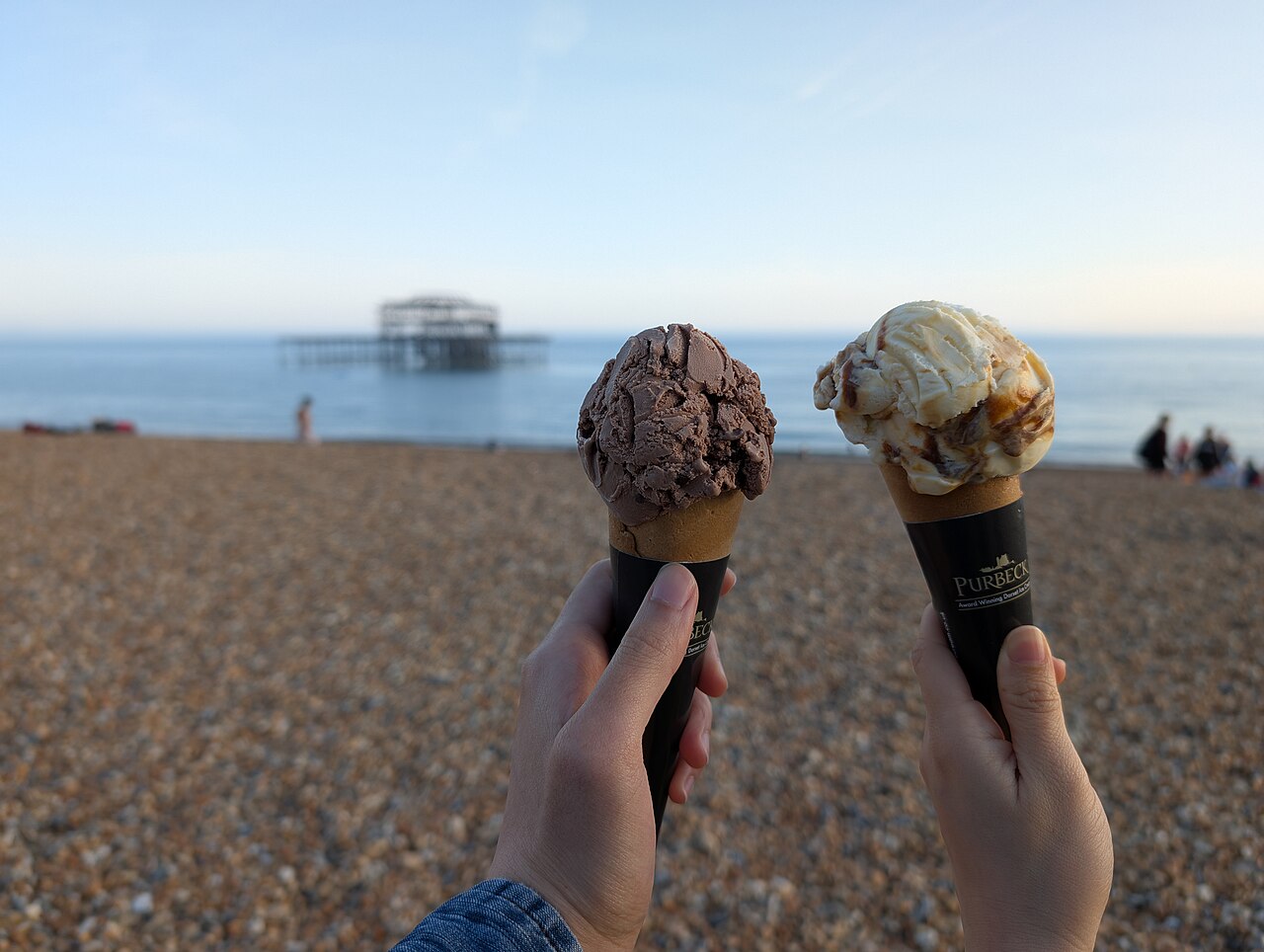
Image Credits: Wikimedia Commons
Brain freeze is the stabbing forehead pain that hits seconds after gulping an ice-cold drink or biting ice cream too fast. Its scientific name is sphenopalatine ganglioneuralgia, and despite the drama, it is harmless and usually gone within half a minute.
It is not the brain freezing. The brain cannot feel pain at all. The ache is a case of mistaken identity: cold-sensitive blood vessels at the back of the throat send a distress signal that the brain reads as pain in the forehead.
This article explains brain freeze: the blood-vessel mechanism, why the pain lands in the forehead, how to stop it fast, and why headache scientists take it seriously.
What happens in the throat
"Brain freeze is really a type of headache that is rapid in onset, but rapidly resolved as well," said Dwayne Godwin, a neuroscientist at Wake Forest Baptist Medical Center.
Gulping something very cold drops the temperature at the back of the throat, right where two major arteries meet: the internal carotid artery, which feeds blood to the brain, and the anterior cerebral artery, where brain tissue begins, Godwin explains.
The mouth is highly vascular, meaning it has lots of blood vessels, which is why body temperature is taken under the tongue. But a fast gulp does not give the mouth time to warm the cold on the way down. The throat takes the full thermal hit in a fraction of a second.
Why the pain lands in the forehead
The sudden cold makes those arteries constrict, a reflex meant to protect the body's core temperature, and then they rebound and widen, rushing blood through. That rebound sends a pain signal up the trigeminal nerve, whose upper branch reaches into the midface and forehead, according to Wojtek Mydlarz, an assistant professor of head and neck surgery at Johns Hopkins.
The brain itself has no pain receptors, Godwin notes. The signal is picked up by receptors in the meninges, the brain's outer covering, where the two arteries meet, and the brain interprets the vascular commotion as pain.
Because the trigeminal nerve also serves the face, the brain misattributes the throat's cold emergency to the forehead. It is referred pain, the same kind of mix-up behind arm pain during a heart attack. Your body is excellent at detecting that something changed and mediocre at saying where.

Image Credits: Wikimedia Commons
How to stop it fast
Stop the cold input first. Pause the drink or set the ice cream down, because without new cold arriving, the vessels normalize within seconds.
Press your tongue, which is warm and full of blood vessels, against the roof of your mouth. Rewarming the palate directly helps the blood vessels stabilize faster, and it is the most cited trick in the headache literature.
Sipping something lukewarm works on the same principle. Cupping warm hands over the forehead or temples can ease the sensation for some people, though the throat is where the real action is.
The simplest prevention is pacing. Smaller sips and slower bites keep the temperature at the back of the throat from plunging in the first place, which is why brain freeze is a rite of summer rather than a winter complaint. The same pacing logic helps with why standing up fast makes you dizzy: the body handles gradual changes far better than sudden ones.
Why scientists take it seriously
Brain freeze is a headache researchers can switch on and off without harming anyone. "We can't easily give people migraines or a cluster headache, but we can easily induce brain freeze without any long-term problems," Godwin said. Studying it teaches headache mechanisms that could lead to better treatments for patients.
That makes the ice-cream headache a genuine laboratory tool rather than a party trick. The constriction-rebound sequence in the throat arteries mirrors vascular events suspected in migraines, so each brain freeze is a small, ethical experiment in how head pain starts and stops.
People prone to migraines report brain freeze more often, suggesting a shared vascular sensitivity, though researchers are still mapping exactly how the two connect.
Frequently asked questions
Is brain freeze dangerous?
No. It is unpleasant but harmless, and it resolves on its own within seconds to about a minute. There is no evidence it causes any lasting damage.
Why do some people get it more than others?
Migraine-prone people report it more often, which points to shared vascular sensitivity. Drinking speed matters too: fast gulpers freeze more than slow sippers.
Can you get brain freeze from cold air?
Rarely. It needs rapid cooling at the back of the throat, which usually requires swallowing something very cold very fast. Cold air alone seldom drops the temperature fast enough.
Does pressing your tongue to the roof of your mouth work?
For most people, yes. The tongue's warmth rewarms the palate and helps the blood vessels stabilize faster, cutting the episode short.
Why does it feel like it's in the forehead?
The trigeminal nerve carries the signal, and its upper branch serves the midface and forehead. The brain misreads the throat's distress call as forehead pain, a classic case of referred pain.
The bottom line
Brain freeze is your body slamming the brakes on a gulp it considers too cold. Slow down, warm the palate, and the whole episode is over before your drink melts. Why you shiver when you already feel hot is another case of the body overreacting to a temperature signal.
Rive News is the in-house research desk behind these explainers. It reads the sources so you don't have to.
Latest in Health
- Why standing up fast makes you dizzy
- Why your stomach growls when you're hungry
- Why you shiver when you already feel hot with fever
- Why knuckles crack when you bend them
Subscribe to the Rive News newsletter for one health explainer in your inbox every morning.
Corrections: we fix errors promptly; write to the research desk. © 2026 Rive News. Reporting standards: every claim is sourced; no invented quotes, statistics, or experts.
Related stories

ADHD linked to fourfold dementia risk in Pitt study of 187,000 adults
Adults with ADHD face four times the risk of dementia, a University of Pittsburgh study of 187,000 adults published in JAMA Psychiatry found

Why Do Athletes Get Cramps Despite Drinking Water?
Muscle cramps strike even well-hydrated athletes because sweat drains electrolytes that plain water cannot replace. Here is why water alone

Do bananas actually prevent muscle cramps?
A medium banana has 422 mg of potassium, but the evidence says it cannot stop cramps. Here is what the research shows, and what actually hel