
Why knuckles crack and what makes the sound
Key takeaways
- The pop comes from a gas bubble forming inside the joint's lubricating fluid, not from bones grinding or cartilage snapping.
- Pulling the joint apart drops the pressure, dissolved gases come out of solution (leave the fluid), and the rapid bubble formation makes the sound.
- Imaging studies resolved a decades-long dispute in favor of bubble formation; a 60-year self-experiment found no link to arthritis.
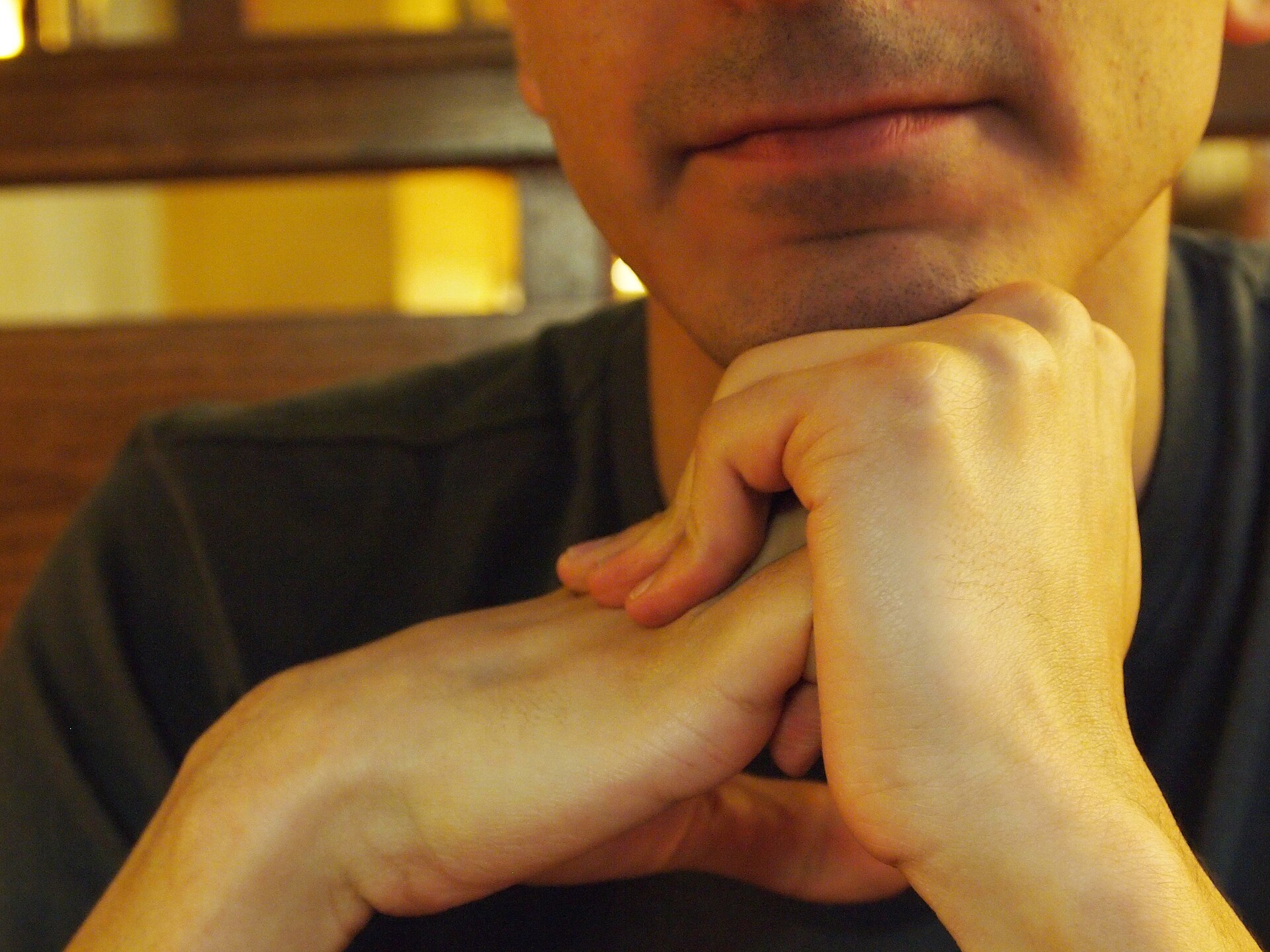
Knuckle cracking is one of the most studied small mysteries in anatomy. The joints involved are synovial joints (joints with lubricating fluid), the knuckle joints of the fingers, each enclosed by a capsule filled with synovial fluid, a slippery liquid that lubricates the bone ends. When you pull, bend, or press a knuckle, something inside that sealed capsule changes, and the result is the familiar pop.
This article explains what makes the sound, including the two rival theories scientists argued over for decades, the imaging experiments that settled the question, and what research says about whether cracking harms your joints.
This article is for general information only, not medical advice.
The mechanism: pressure drops, a bubble forms
Stretching a joint pulls the bone ends slightly apart and stretches the surrounding capsule. As the capsule's volume increases, its internal pressure drops. Gases dissolved in the synovial fluid, mostly carbon dioxide and nitrogen, cannot stay dissolved at the lower pressure, so they come out of solution and form a gas-filled cavity, essentially a bubble, inside the fluid.
That rapid formation is what you hear. The process has a technical name: tribonucleation, where opposing surfaces resist separation until a critical point, then separate quickly and create a vapor cavity. The key finding from modern research is about timing: the sound is produced when the bubble forms, not when it collapses.
Two theories, seventy years apart
The bubble theory is the older one. In 1947, two British scientists proposed that joints click when low pressure triggers a bubble to pop into existence inside the joint space. For decades that explanation stood.
Then in the 1970s, a second group of British researchers challenged it. They argued the sound came not from the bubble forming, but from it collapsing afterward, a process called cavitation.
The collapse theory became the benchmark explanation, even though, as the Naked Scientists later noted, scientists had no direct observations to support either theory. Both were educated guesses about something nobody had actually seen.
The imaging studies that settled it
The first direct look came in 2015. University of Alberta researcher Gregory Kawchuk and his colleagues put a volunteer's hand inside an MRI scanner and filmed the inside of his knuckles as they tugged on each finger to make it crack, capturing 3 images per second. The team nicknamed it the "Pull My Finger Study," and their volunteer was, in Kawchuk's words, the "Wayne Gretzky of finger-cracking," able to crack all ten fingers on demand.
What they saw was unambiguous: the crack coincided with the abrupt appearance of a dark void, a bubble of gas, inside the finger joint. "The bubble is gas that was dissolved in the joint fluid but comes out of solution when the pressure drops as the joint is stretched," Kawchuk said, adding that it hangs around for quite a while afterward and slowly redissolves, which is why the joint cannot be cracked again right away. The findings were published in PLOS ONE.
Later that year, a University of California, Davis team led by radiologist Dr. Robert Boutin used ultrasound, which captures far more frames per second than MRI, to pin down the sequence more precisely. Their scans showed the cracking noise occurring a split-second before a visible burst of gas appeared as a bright flash on the sonogram (the ultrasound image).
"It looks like fireworks going off in the joint," Boutin said, presenting the work at the Radiological Society of North America meeting in Chicago.
One puzzle remained: the sound registered about 10 milliseconds before the bubble became visible. Dr. Richard Thompson, a medical imaging specialist at the University of Alberta not involved in the ultrasound study, suggested the bubbles likely begin developing when you hear the pop but only become visible once fully formed.
Either way, the 1970s collapse theory was done: the sound tracks bubble formation.
Why you cannot crack the same knuckle twice in a row
The bubble sticks around. After forming, the gas takes roughly 20 to 30 minutes to redissolve into the synovial fluid.
Until it does, stretching the joint again will not produce another pop. This refractory period (recovery time) is itself evidence for the formation theory: if the sound came from bubbles bursting, as the older hypothesis held, there would be nothing stopping an immediate encore.
This also explains why the habit feels relieving but not repeatable. The sensation of release comes with the pressure change; the joint then needs its rest before the next one.
Does cracking your knuckles cause harm?
Between 25 and 54 percent of people crack their knuckles, and the warning that it causes arthritis is one of medicine's most durable folk beliefs. The evidence does not support it.
The most famous test was personal. Donald Unger cracked the knuckles of his left hand at least twice a day for 60 years while leaving his right hand alone, then compared them and found no difference.
His self-experiment, published in Arthritis & Rheumatism in 1998, won him the 2009 Ig Nobel Prize in Medicine. A 1990 radiographic study by Lederer and colleagues also found no increased risk of osteoarthritis among habitual crackers compared with non-crackers.
That said, aggressive or forceful cracking that causes pain, swelling, or reduced grip is a different matter from the ordinary habit. Pain is the body's signal to stop.
The research clears routine cracking, not yanking a joint into genuine injury. For context on other strange-but-normal body noises, see why your stomach growls when you are hungry.
FAQ
What exactly is the sound when knuckles crack?
It is the sound of a gas bubble rapidly forming inside the synovial fluid of the joint. Stretching the joint drops the internal pressure, dissolved gases come out of solution, and the cavity's sudden formation produces the pop.
Is the popping sound bones rubbing together?
No. Researchers agree the sound is caused by gas dynamics in the joint fluid, not by bones grinding or cartilage snapping. Imaging studies have shown the bubble appearing at the exact moment of the sound.
Why does cracking feel good?
The pop coincides with a sudden pressure change inside the joint capsule, which many people experience as relief or release. The effect is temporary and the joint needs 20 to 30 minutes before it can crack again.
Can cracking knuckles make them bigger?
No evidence supports that. Studies comparing habitual crackers with non-crackers, including a 60-year one-handed self-experiment, found no differences in joint size or arthritis.
Should I worry if my joints crack on their own?
Painless, incidental popping during movement is common and usually harmless. See a doctor if cracking comes with pain, swelling, locking, or reduced range of motion, since those can signal injury or joint disease.
The bottom line
Knuckles crack because stretching the joint drops the pressure inside its capsule, dissolved gases rush out of the synovial fluid, and the bubble's rapid formation makes the sound. MRI and ultrasound studies confirmed the 1947 formation theory and retired the 1970s collapse theory. And decades of research, including one man's 60-year experiment on his own hands, give no reason to believe the habit damages your joints.
---
Topics: joints, knuckle cracking, anatomy, health myths
Rive News is a research desk publishing evidence-checked explainers on everyday questions.
Latest in Health
- Why your stomach growls when you are hungry
- Why your foot falls asleep and tingles when it wakes
- Why you shiver when you already have a fever
Get one evidence-checked explainer like this in your inbox each week. Subscribe for the weekly roundup.
Rive News applies a standards desk: claims carry sources, corrections are published with timestamps, and no story is invented. Copyright 2026.
Related stories

ADHD linked to fourfold dementia risk in Pitt study of 187,000 adults
Adults with ADHD face four times the risk of dementia, a University of Pittsburgh study of 187,000 adults published in JAMA Psychiatry

Why Do Athletes Get Cramps Despite Drinking Water?
Muscle cramps strike even well-hydrated athletes because sweat drains electrolytes that plain water cannot replace. Here is why water alone

Do bananas actually prevent muscle cramps?
A medium banana has 422 mg of potassium, but the evidence says it cannot stop cramps. Here is what the research shows, and what actually