
Why your nose gets stuffy when you lie down
By Rive News / Research desk | Rive News / Published October 28, 2026 at 9:00 AM PKT
This article is for general information only and is not medical advice; talk to a clinician about any symptoms.
Key takeaways
- Lying down lets blood pool in the nasal tissues, which swell and narrow the airway even without a cold.
- Gravity also stops helping mucus drain, so it collects in the sinuses instead of clearing down the throat.
- The nasal cycle means one nostril is usually more blocked than the other, and lying on one side makes the lower one worse.
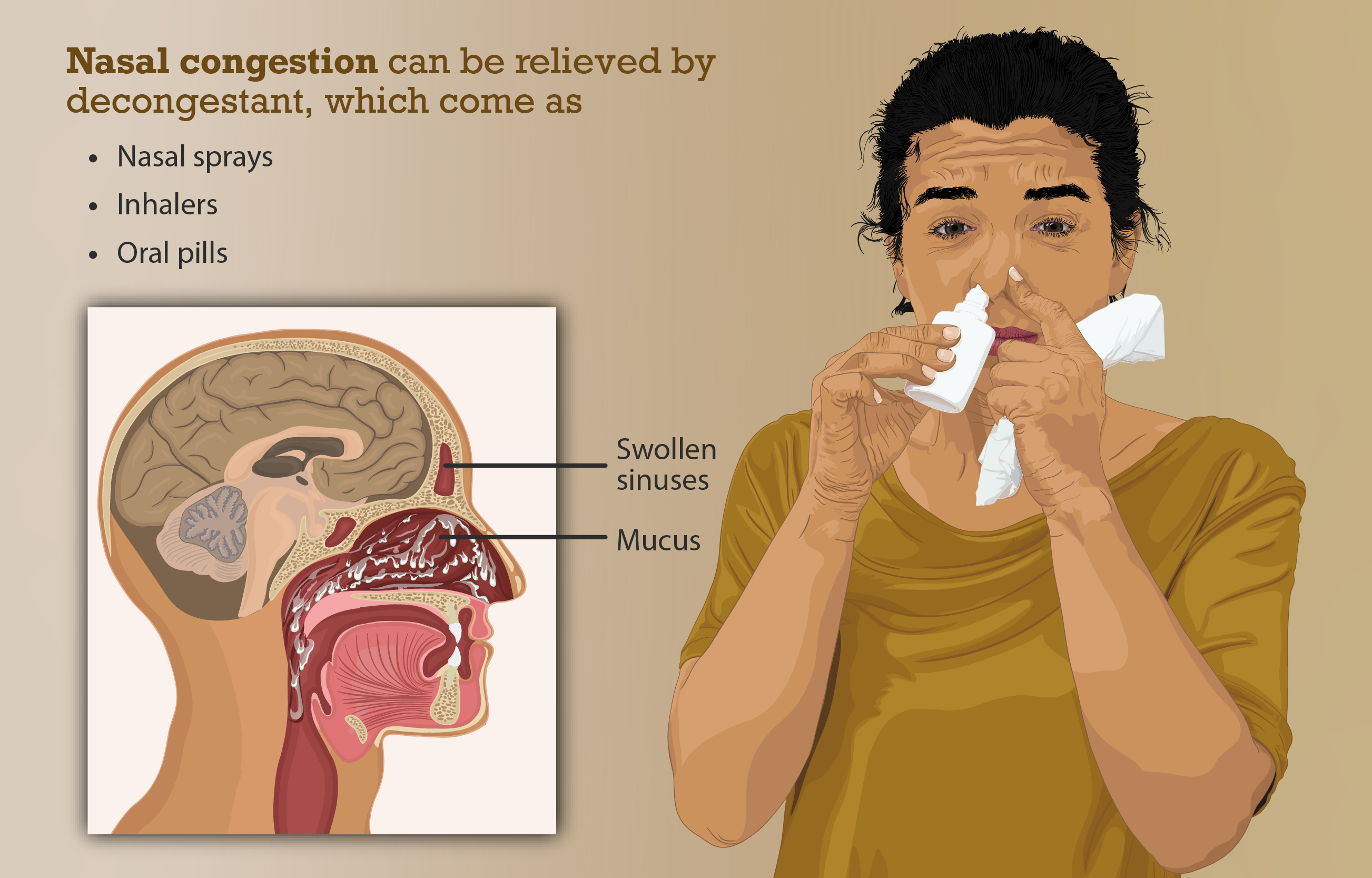
[An illustration of a person suffering from nasal congestion, with the nose and sinuses affected.] Photograph: nasal congestion illustration
Image Credits: Wikimedia Commons
Nasal congestion is the feeling that air cannot pass freely through the nose. It is often blamed on mucus, but mucus is only part of the story. Much of the blocked feeling comes from swollen tissue inside the nose, and lying down makes that swelling worse.
This article explains why lying down stuffs up the nose, including blood flow, mucus drainage, the nasal cycle, and the bedroom factors that add to the problem.
Blood flow is the main driver
The inside of the nose is lined with soft, blood-rich tissue wrapped around bony structures called turbinates. These turbinates warm and humidify the air you breathe. They also swell and shrink as blood flow through them changes.
When you stand, gravity helps drain blood from the head and neck back toward the heart. That keeps the volume of blood in the nasal vessels relatively low, and the airway stays open.
When you lie flat, that gravitational help disappears. Blood pools more easily in the veins of the head and neck, pressure rises in the nasal vessels, and the turbinates swell.
Dr. Rohit Udaya Prasad, lead and senior consultant in ENT at KIMS Hospitals in Bengaluru, put it directly in an interview with OnlyMyHealth: the blockage happens because of gravity-related changes in blood flow, with more blood pooling in the upper body and head, including the vessels inside the nose, causing the tissues to swell slightly and narrow the airway, even without infection or allergy.
A 2023 study published in the journal Life found the same pattern in measurements. Moving from sitting to lying on the back or stomach slightly swelled the tissues inside the nose and reduced the space available for air. The effect appeared even in healthy people with no cold or allergy, and lying on the stomach caused the greatest reduction in airflow.
Mucus stops draining
Mucus is the sticky fluid that traps dust, germs, and particles before they reach the lungs. During the day, you swallow a large amount of it without noticing, and gravity helps it slide down the throat and clear the nasal passages.
Cleveland Clinic specialists note that lying down removes that help. Mucus cannot drain as effectively, so it pools in the sinuses and adds to the stuffed-up feeling. This is why a cold often feels manageable during the day and worse at night: the same amount of mucus is present, but the drainage route is less effective.
Inflammation makes the pooling worse. A cold, an allergy, nasal polyps, or a deviated septum can all inflame the sinus lining and increase mucus production. Cleveland Clinic's Dr.
Limage notes that people with sinus inflammation often feel worse lying down because the mucus cannot drain.
The nasal cycle explains one-sided blockage
Most people notice that one nostril blocks more than the other when they lie down, and that the blocked side switches if they roll over. This is the nasal cycle at work.
The nasal cycle is a normal process in which the lining of one nostril swells while the other opens, alternating roughly every 2 to 4 hours under the control of the autonomic nervous system. It gives each side periodic rest and keeps overall airflow steady.
During the day, you rarely notice it. At night, when you are still and breathing through a narrower airway, the blocked side feels much more obvious.
Sleeping on one side adds gravity to the cycle. The lower nostril fills with blood and congests, while the upper nostril drains and opens. That is why rolling over often seems to move the blockage from one side to the other within minutes.
The nervous system shifts at night
The autonomic nervous system also changes as you settle into sleep. During the day, sympathetic activity tends to be higher, tightening blood vessels and helping keep nasal passages open. As you prepare for rest, parasympathetic activity becomes dominant, widening blood vessels instead.
That widening, combined with blood pooling from lying flat, maximizes blood flow to the nasal lining. The result is the familiar pattern: you lie down feeling fine, and within minutes the nose closes up. It is a normal physiological shift, not a sign that you caught something in the last hour.
Bedroom factors that add to it

[A bedroom, where dust mites in bedding and dry air can add to night-time congestion.] Photograph: sleeping room photo
Image Credits: Wikimedia Commons
Allergies in the bedroom can turn a mild positional effect into a miserable night. Dust mites in pillows and bedding, pet dander on sheets, and mould in a damp room all trigger inflammation in the nasal lining. The longer you lie in that environment, the more the tissues swell.
Dry indoor air works the other way. Heating and air conditioning strip moisture from the air, drying the nasal membranes.
The membranes respond by producing more mucus, which thickens and clears less easily. The Times of India report on night-time congestion lists dry air, dust mites, and hidden allergies alongside gravity as the main contributors.
Acid reflux is another overlooked factor. Cleveland Clinic specialists note that stomach acid can irritate the throat and sinuses at night, triggering inflammation and mucus. Lying flat makes reflux more likely, since gravity no longer holds stomach contents down.
What tends to help
Raising the head of the bed uses gravity in your favour. Snorple's guide suggests elevating the head of the bed by 4 to 6 inches, rather than just adding pillows, which can bend the neck and narrow the airway further. Sleeping on your side with the clearer nostril facing up lets the upper turbinate drain.
Saline irrigation before bed flushes secretions and reduces swelling temporarily, which can cover the first hours of sleep. A humidifier keeps bedroom air from drying the membranes, and washing bedding regularly reduces dust mite exposure. Nasal strips pull the nostrils open mechanically and can improve airflow for some people.
These steps ease the symptom. They do not diagnose the cause. Congestion that stays on one side for weeks, congestion with facial pain, fever, or bloody discharge, or congestion that keeps returning deserves a clinician's assessment rather than another night of home measures.
Why does only one nostril block when I lie down?
The nasal cycle means one side is always more swollen than the other, switching every 2 to 4 hours. Lying on one side adds gravity: the lower nostril fills and blocks, while the upper one drains and opens. Rolling over reverses the pattern.
Why does my nose clear up when I stand in the morning?
Standing restores gravity's help. Blood drains from the nasal vessels, the turbinates shrink, and mucus starts clearing down the throat again. That is why a nose that felt sealed shut in bed can feel normal within minutes of getting up.
Is a stuffy nose at night always a cold or allergy?
No. Positional swelling happens in healthy people too, as the 2023 Life study showed. Colds and allergies make it worse by adding inflammation and mucus, but gravity and blood flow alone are enough to cause the feeling.
Does sleeping on my stomach make it worse?
The 2023 study found that lying on the stomach caused the greatest reduction in nasal airflow among the positions tested. Sleeping on your side or with the head raised tends to be easier on the airway.
The bottom line
Your nose gets stuffy when you lie down mainly because gravity stops helping. Blood pools in the nasal tissues, the turbinates swell, and mucus stops draining the way it does during the day. The nasal cycle and the nightly shift in nervous system activity add to the effect, which is why one side usually blocks more than the other.
Raising the head of the bed, sleeping on your side, keeping bedroom air moist, and reducing dust mite exposure can all ease the symptom. If congestion is one-sided for weeks, painful, or keeps coming back, it is worth getting it checked rather than assuming position alone explains it.
Tags: nasal congestion, sleep, allergies, sinuses
Rive News is a research desk that writes explainers from public sources and clinical guidance.
Related
- Why do you get a runny nose in cold weather?
- Why does your nose run in cold weather?
- Why spicy food makes your nose run
- Why do you sneeze in bursts of three or more?
Subscribe to the Rive News newsletter for one practical explainer each week.
Standards: facts are drawn from the public sources listed above; no claim here is based on unpublished testing.
Related stories
ADHD linked to fourfold dementia risk in Pitt study of 187,000 adults
Adults with ADHD face four times the risk of dementia, a University of Pittsburgh study of 187,000 adults published in JAMA Psychiatry

Why Do Athletes Get Cramps Despite Drinking Water?
Muscle cramps strike even well-hydrated athletes because sweat drains electrolytes that plain water cannot replace. Here is why water alone

Do bananas actually prevent muscle cramps?
A medium banana has 422 mg of potassium, but the evidence says it cannot stop cramps. Here is what the research shows, and what actually