
Sneeze in bursts: why three or more happen
By Rive News / Research desk | Rive News / Published October 26, 2026 at 9:00 AM PKT
Key takeaways
- A burst usually means the first sneeze did not fully clear the irritant from your nose.
- Allergies lengthen bursts because the allergen keeps arriving while you sneeze.
- Bright light can trigger sneezes on its own through the photic sneeze reflex, or ACHOO syndrome.
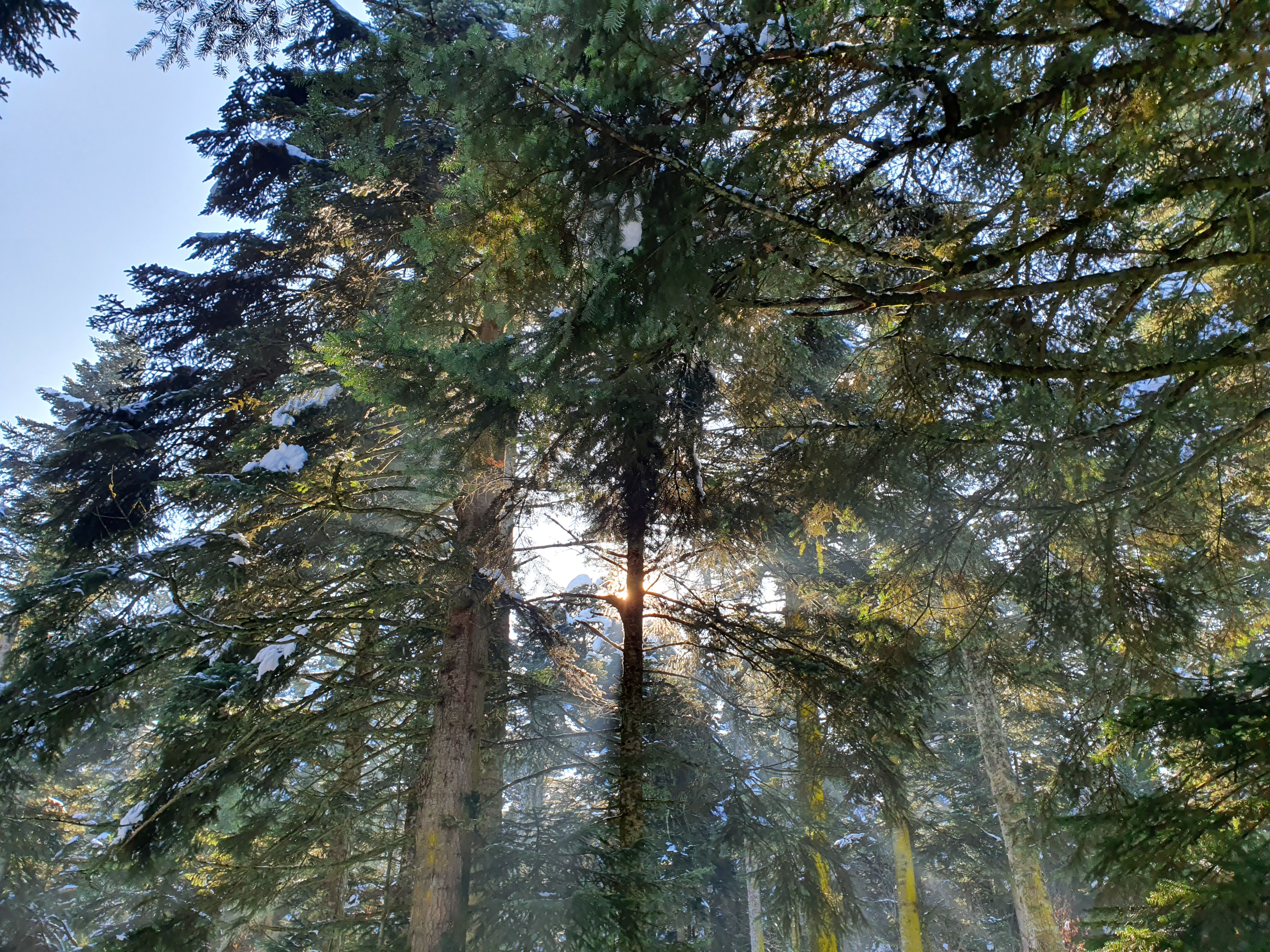
[Bright sunlight streaming through trees, the kind of sudden light change that can trigger a sneeze.] Photograph: Wikimedia Commons contributor
Image Credits: Wikimedia Commons
A sneeze is your nose's way of ejecting something it does not want. When one sneeze does not finish the job, the body simply runs the same reflex again, and again, until the irritant is gone or the signal fades. This article explains why sneezes come in bursts of three or more, including the uncleared-irritant explanation, the allergy effect, and the photic sneeze reflex that makes bright light a trigger.
This article is for general information only and is not medical advice; talk to a clinician about any symptoms.
What a sneeze actually does
A sneeze starts when sensory nerve fibres in the nasal lining detect an intruder, such as dust, pollen, or a virus. Those fibres belong to the trigeminal nerve, the large cranial nerve that carries sensation from the face. The signal travels to the brainstem, which coordinates a deep breath, a brief throat closure, and a forceful blast of air out of the nose and mouth.
Biology Insights reports that researchers identified neuromedin B as the essential chemical messenger in this relay. In mice engineered to lack neuromedin B or its receptor, irritants stopped triggering sneezes entirely. Only about 17 percent of trigeminal nerve fibres in the nasal passages belong to this sneeze-specific pathway, which helps explain why not every nasal sensation becomes a sneeze.
The blast is fast. A commonly cited figure puts sneeze airspeed at up to 100 miles per hour, and Biology Insights cites measurements of about 4.5 metres per second for the exhaled air in the studies it describes. Either way, the point of the blast is clearance, and clearance is where bursts begin.
Why one sneeze is often not enough
The simplest explanation for a burst is also the most common. The first sneeze loosens the irritant without removing it, moving it from one spot in the nose to another while it still touches sensitive nerve endings. The nerve keeps firing, so the brain queues up another sneeze.
Health quotes Hascaolovici on exactly this point, saying people often sneeze many times in a row if the first sneeze does not clear their nasal passages well enough. A second or third sneeze is the body's way of making sure irritants safely leave the nose. Some people settle into a regular pattern this way, becoming habitual double or triple sneezers because their reflex reliably needs two or three rounds to finish.
There is also a neurological reason bursts repeat. Biology Insights reports that research on neural firing during sneezing found certain neurons firing in rapid, high-frequency bursts as a sneeze builds. A fraction of expiratory neurons activate only during these bursts, giving the sneeze circuit a built-in tendency toward repetitive firing once it starts.
The body, in other words, is wired to repeat, not to stop at one.
Why allergies make bursts longer
Allergies stretch bursts because the trigger never leaves. Pollen, dust-mite waste, animal dander, and mould spores arrive continuously from the air, so each sneeze clears one load while the next is already landing. Biology Insights notes that people with allergies tend to sneeze in longer fits than people with colds for this reason, since the allergen is being continuously inhaled and never fully cleared.
A cold works differently. Early in a cold, the nasal lining is inflamed and hypersensitive, so its sneeze threshold drops and ordinary dust or perfume can set it off. As the cold progresses and mucus changes, the pattern usually shifts.
Allergy bursts, by contrast, track exposure, which is why they often follow a season, a room, or a pet, and ease when the exposure ends.
This distinction matters for anyone trying to read their own pattern. Sneezes that cluster in spring, or only in a dusty room, point toward an ongoing exposure. Sneezes that arrive with a sore throat and fatigue and fade over days point toward a cold.
Either way, a burst on its own is not a diagnosis, and persistent or worsening symptoms deserve a clinician's attention.
The photic sneeze reflex: sneezing at sunlight
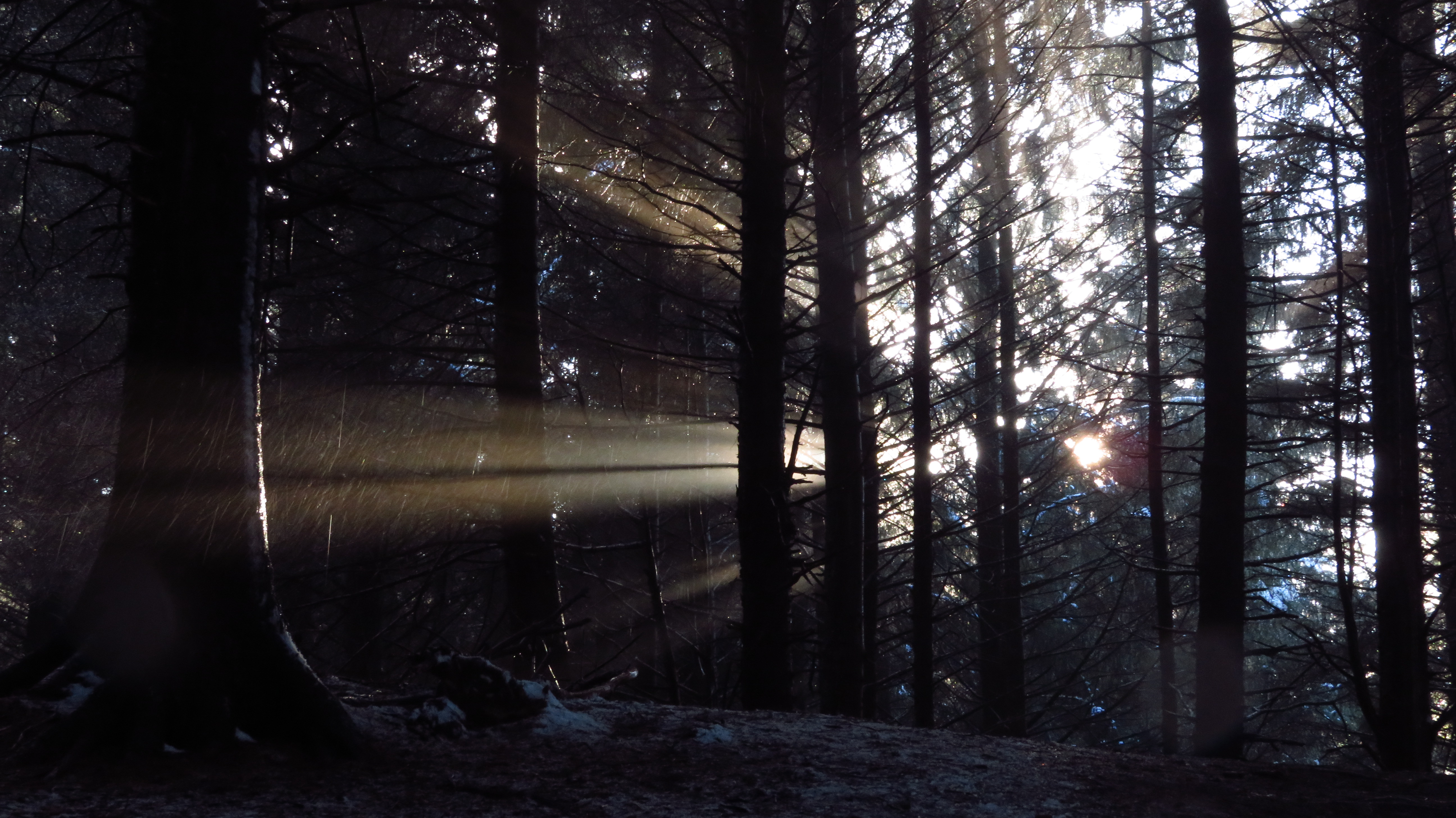
[Shafts of sunlight through trees in Macclesfield Forest.] Photograph: Wikimedia Commons contributor
Image Credits: Wikimedia Commons
Some bursts have nothing to do with anything in the nose. The photic sneeze reflex, also called ACHOO syndrome, makes a person sneeze when suddenly exposed to bright light, especially sunlight. ACHOO stands for Autosomal Dominant Compelling Helio-Ophthalmic Outburst, a name that describes both its inheritance pattern and its trigger.
Cleveland Clinic allergist Dylan Timberlake, MD, explains the mechanism as cross-talk between nerve circuits around the eyes and nose. A bright stimulus activates a sneeze pathway in the brain even though nothing is irritating the nose. As Timberlake puts it, the circuits convince the brain a sneeze is needed, even though it is not.
The reaction is typically immediate and short-lived, ending after one or a few sneezes until the next exposure.
How common is it? Estimates vary widely. Discover Magazine cites neurologist Louis Ptacek of the UCSF Weill Institute for Neurosciences, who puts the figure at about 10 percent of the general population, with some estimates as high as 30 percent.
Other summaries put the range at 18 to 35 percent. The spread reflects different study methods, but all agree the reflex is common, not rare.
The trigger is the change in light, not light itself. Walking out of a dark building into sun, driving out of a tunnel, or facing a camera flash are classic triggers. That is why a photic sneezer's bursts often come in daylight and stop indoors.
Sunglasses can help, and the reflex is usually harmless, though a sneeze at the wheel deserves caution.
When a burst is not just a burst
Most sneeze bursts need no action beyond a tissue. Sneezing is a protective reflex, and holding one in is a bad idea, since Health notes that trapped pressure can injure eardrums or blood vessels. Letting the burst run its course is the safer choice.
A few patterns are worth raising with a clinician. Sneezing that never stops, that comes with facial pain, bloody discharge, or a lost sense of smell, or that follows a head injury, is different from an ordinary burst. The same applies to sneezing that disrupts sleep night after night.
This article cannot sort those cases out, and it is not trying to.
Frequently asked questions
Why do I always sneeze three times?
You probably need three rounds to clear the irritant. The first sneeze loosens it, the second moves it, and the third ejects it, and the sneeze circuit is wired to repeat until the signal stops.
Is sneezing in bursts a sign of allergies?
It can be, especially if bursts cluster in a season or a place. Allergies lengthen bursts because the allergen keeps arriving, but colds, dust, and bright light can all produce bursts too.
What is the photic sneeze reflex?
It is an inherited reflex, also called ACHOO syndrome, in which sudden bright light triggers sneezing through cross-talk between the optic and trigeminal nerves. Estimates put it at roughly 10 to 35 percent of people.
Should I hold in a sneeze?
No. Health reports that experts agree it is best to let a sneeze happen, since trapped pressure can rupture eardrums or blood vessels in the eyes or brain.
The bottom line
Sneeze bursts are usually a sign the job is unfinished. One sneeze loosens an irritant, the next moves it, and the next clears it, while allergies and bright light can each keep the reflex firing. Knowing which pattern fits yours, a stubborn particle, a season-long exposure, or a step into sunlight, turns an odd habit into something understandable.
Tags: sneezing, allergies, human body
Rive News is a research desk that writes plain-English explainers from public sources, with no invented experts or first-hand claims.
Related
- Why do you get a runny nose in cold weather?
- Why do we get brain freeze from cold drinks?
- Why do you get goosebumps when cold or scared?
- Cold vs flu: what the difference means for your week
Subscribe for one practical health explainer each week.
Rive News publishes explainers from public sources; corrections are welcomed and noted on the article.
Related stories
ADHD linked to fourfold dementia risk in Pitt study of 187,000 adults
Adults with ADHD face four times the risk of dementia, a University of Pittsburgh study of 187,000 adults published in JAMA Psychiatry

Why Do Athletes Get Cramps Despite Drinking Water?
Muscle cramps strike even well-hydrated athletes because sweat drains electrolytes that plain water cannot replace. Here is why water alone

Do bananas actually prevent muscle cramps?
A medium banana has 422 mg of potassium, but the evidence says it cannot stop cramps. Here is what the research shows, and what actually