
Why people get motion sickness in the back seat often
By Rive News / Research desk | Rive News / Published October 27, 2026 at 9:00 AM PKT
This article is for general information only and is not medical advice; talk to a clinician about any symptoms.
Key takeaways
- Motion sickness comes from a mismatch between what the inner ear feels and what the eyes report, and the brain treats that mismatch as a warning signal.
- The back seat makes the mismatch worse through a blocked view of the road, stronger sway at the rear of the car, and no control over what happens next.
- Looking at the distant horizon, sitting in the middle rear seat, and avoiding reading or screens during the ride reduce the clash for many people.
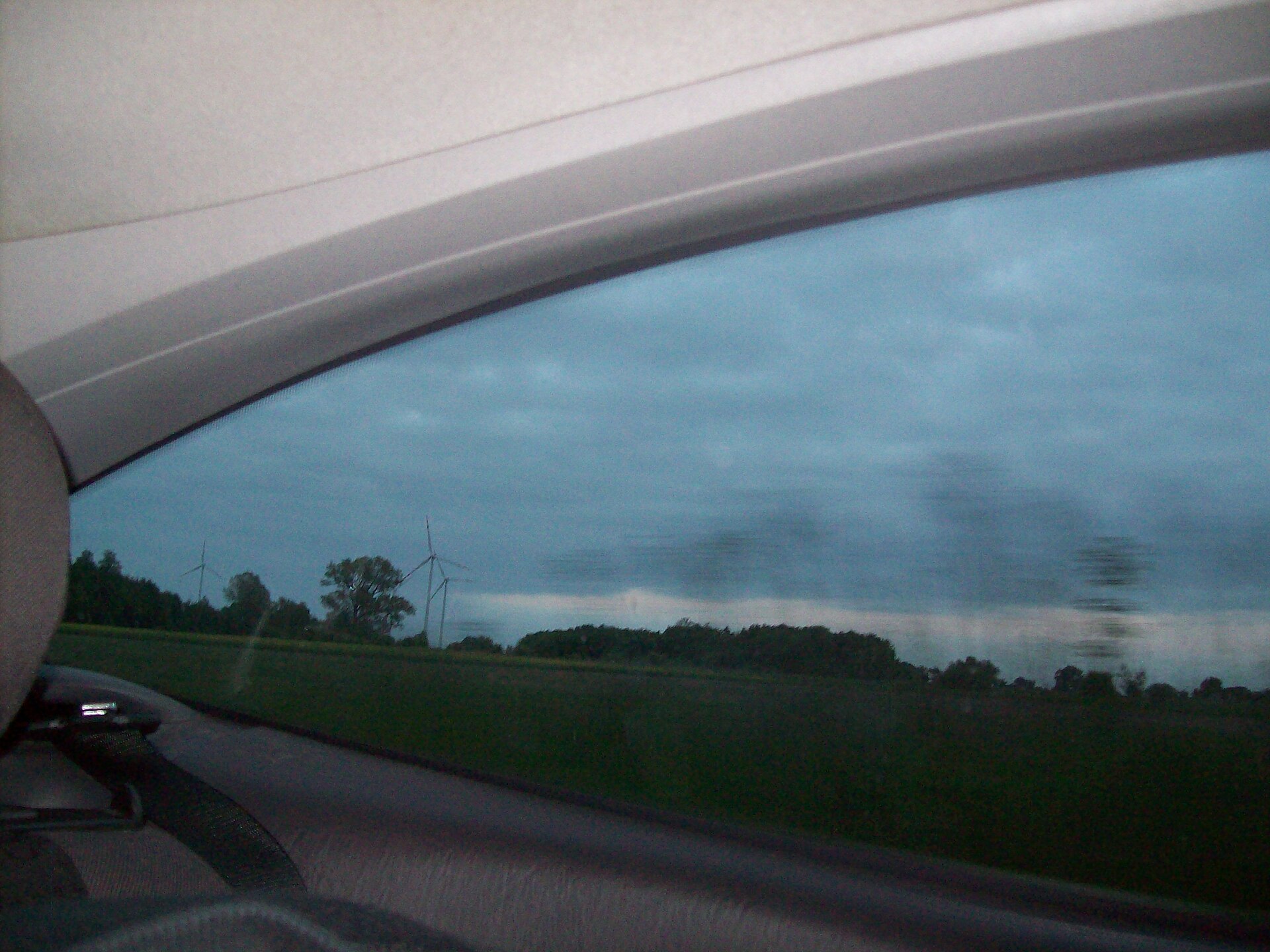
The back seat of a car viewed from the side. Photograph: the car back seat scene
Image Credits: Wikimedia Commons
Motion sickness in the back seat is a clash between senses that normally agree. The inner ear, through the vestibular system, reports that the body is turning, accelerating, or braking.
The eyes, if they are fixed on a book, a phone, or the back of a front seat, report that nothing is moving. The brain cannot reconcile those two reports, and nausea, sweating, and dizziness follow.
This article explains why people get motion sickness in the back seat, including how the balance system works, why the rear of a car is worse than the front, who is most affected, and which simple changes help most often.
How the balance system reports movement
The vestibular system sits in the inner ear and senses head movement and gravity. Three fluid-filled canals detect rotation, while two small organs detect linear acceleration and tilt. Together they tell the brain whether the head is turning, speeding up, slowing down, or tilting, even with the eyes closed.
Vision adds a second report. When a person looks at the road ahead, the eyes confirm the turns and stops that the inner ear feels, and the two systems agree.
When the eyes look at a still object inside the car, they report stillness while the inner ear reports movement. That disagreement is called sensory conflict, and it is the leading explanation for motion sickness.
The brain's response to that conflict looks like a defence mechanism. One long-standing idea is that the brain interprets unexplained sensory mismatch as a possible sign of poisoning, because many toxins disturb the balance system. Nausea and vomiting would then be a protective response, aimed at expelling a suspected toxin, even though no toxin is present in a car.
Why the back seat is worse than the front
The first back-seat problem is the view. Front passengers can see the road ahead, the horizon, and the driver's next move.
Back-seat passengers often see only the back of a headrest or a front seat, especially in taller vehicles or when the passenger is short. Without a stable outside reference, the brain has little visual evidence to match the inner ear's report.
The second problem is motion itself. The rear of a car sits farther from the vehicle's centre of rotation, so it swings more during turns and bounces more over bumps.
Think of a seesaw: the end farther from the pivot moves more than the middle. A back-seat passenger therefore receives stronger vestibular signals than a front passenger on the same road, which widens the gap between what is felt and what is seen.
The third problem is passivity. Drivers rarely get motion sick, because they anticipate every turn, brake, and acceleration before it happens.
Front passengers get some of that anticipation from watching the road and the driver. Back-seat passengers get the least warning, so each movement arrives as a surprise, and the brain must constantly correct for motion it did not predict.
Reading, screens, and stuffy air
Reading or using a phone in the back seat locks the eyes onto a near, still object. That makes the sensory conflict as large as it can be: the eyes say still, the inner ear says moving, and the object itself moves with the car so it never provides a stable outside reference. That is why reading in the back is a classic trigger, even for people who can read in the front without trouble.
Looking out of a side window at nearby objects can also confuse the brain. Close roadside objects rush past quickly, which gives a strong but chaotic motion signal.
Looking at the distant horizon, or at distant stable objects, gives a steadier signal that matches the car's overall movement better. That is why the horizon is the standard advice for passengers who feel ill.
Air and comfort add to the effect. A stuffy rear cabin, strong smells, heat, tiredness, and dehydration do not cause motion sickness on their own, but they lower the threshold at which symptoms appear. Anxiety works the same way: worrying about becoming ill can bring symptoms on earlier, which then confirms the worry and makes the next journey harder.
Who is most affected
Children aged 2 to 12 are among the most affected groups, and many outgrow the worst of it as their balance systems mature. Women are also reported as more susceptible than men in many studies, and people with migraine or inner ear disorders tend to be more prone. Susceptibility often runs in families, which suggests that differences in how the brain weights visual and vestibular signals are partly inherited.
That variation explains why one passenger can read happily in the back while another feels ill within minutes on the same road. The road and the car are the same, but the threshold for sensory conflict differs. Repeated exposure can raise that threshold for some people, a process called habituation, which is why frequent travellers and pilots often report fewer symptoms over time.
It also explains why symptoms vary by journey. A smooth motorway drive with a clear horizon may cause no trouble, while a winding road with frequent braking, in a stuffy car, with a phone in hand, can trigger symptoms quickly. The trigger is the combination of conflict, motion, and context, not any single factor alone.
What helps most often
The simplest change is where the eyes look. Avoid reading or looking at a phone while the vehicle is moving, and look outside at the horizon or at distant, relatively stable objects instead.
As a clinician quoted by Hindustan Times put it in advice to passengers, "The simplest preventive measure is to avoid reading or looking at a phone while the vehicle is moving. Instead, looking outside at the horizon or at distant, relatively stable objects can help the brain reconcile visual information with the movement detected by the inner ear."
Seat choice is the next change. The front passenger seat gives the best view and the least sway, so it is the first choice for people who are prone to sickness. If the back seat is unavoidable, the middle rear seat usually helps, because it offers a view forward between the front seats and sits closer to the car's centre, where sway is smaller.
Keeping the head relatively still, keeping air flowing, and taking breaks on long journeys also help. A cool, ventilated cabin with a clear view forward is a better setting than a hot, stuffy one with the windows closed. For people whose symptoms are frequent or severe, a clinician can discuss whether a motion sickness medicine is suitable, since some of those medicines cause drowsiness and may not suit everyone.
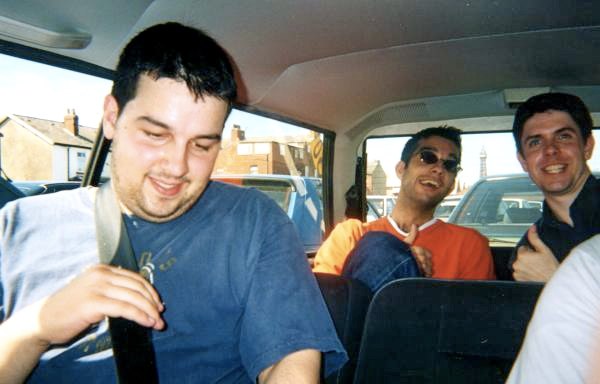
Passengers sit in the back seat of a car. Photograph: the back seat passengers scene
Image Credits: Wikimedia Commons
For context on how the balance system produces other odd sensations, the related guide on why we get dizzy standing up fast covers a different balance mismatch, and the guide on why we get brain freeze shows how a fast sensory change can produce a strong, short-lived symptom. Both are useful reminders that the balance and sensory systems react quickly to conflicting signals.
The bottom line
People get motion sickness in the back seat because the inner ear and the eyes disagree, and the back seat widens that disagreement. A blocked view removes the visual anchor, the rear of the car sways more, and a passive passenger cannot anticipate the next turn. Looking at the horizon, choosing the best available seat, keeping air moving, and putting screens away during the ride reduce the clash for most people, and frequent or severe symptoms are worth raising with a clinician.
Tags: motion sickness, balance, travel health
The Rive News research desk writes plain-English explainers from published research and public sources, with claims tied to named studies where the evidence matters.
Related
- Why we get dizzy when standing up too fast
- Why we get brain freeze from cold drinks
- Why athletes get cramps despite drinking water
Subscribe for one research-backed health explainer each week.
Rive News standards: claims are attributed to public sources, and no invented study, quote, or statistic appears in this article.
Related stories
ADHD linked to fourfold dementia risk in Pitt study of 187,000 adults
Adults with ADHD face four times the risk of dementia, a University of Pittsburgh study of 187,000 adults published in JAMA Psychiatry

Why Do Athletes Get Cramps Despite Drinking Water?
Muscle cramps strike even well-hydrated athletes because sweat drains electrolytes that plain water cannot replace. Here is why water alone

Do bananas actually prevent muscle cramps?
A medium banana has 422 mg of potassium, but the evidence says it cannot stop cramps. Here is what the research shows, and what actually