
Why do some people sneeze when looking at bright light?
Key takeaways
- The photic sneeze reflex makes up to 1 in 3 people sneeze at sudden bright light, usually when moving from dark to bright.
- It is an inherited trait: a child has about a 50% chance of having it if one parent does.
- The trigger is the change in light intensity, not the light itself, likely from crossed signals between the optic and trigeminal nerves.
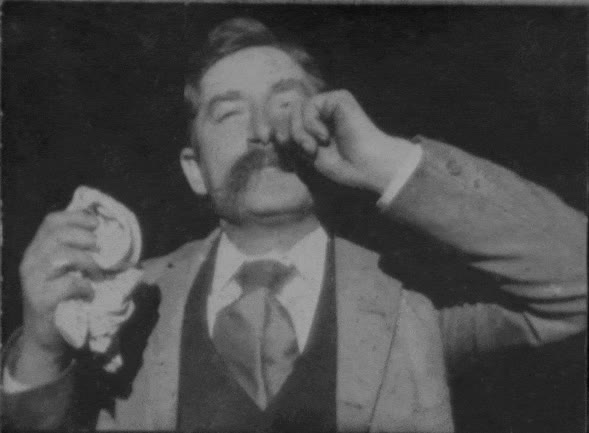
Step out of a dark cinema into afternoon sun and some people sneeze, once, twice, sometimes in a fit. It has nothing to do with dust or pollen. It is a reflex wired into their genetics, and it has a name that scientists clearly had fun inventing: autosomal dominant compelling helio-ophthalmic outburst syndrome, or ACHOO.
This article explains what the photic sneeze reflex is, how common it is, the inheritance pattern, what scientists think causes it, and how people manage it. This is general information, not medical advice.
What the reflex is
The photic sneeze reflex is an involuntary sneeze triggered by sudden exposure to bright light, most often sunlight. It typically strikes when moving from darkness to light: leaving a tunnel, turning on the lights in a dark room, or stepping outside on a bright day. People often feel a tingling or itchy sensation in the nose first, like a sneeze building.
Some sneeze once. Others sneeze repeatedly and cannot stop.
It is not a disease, and for most people it is a mild quirk. But severity varies. For some, bright light triggers only an occasional sneeze.
For others, it sets off forceful, repeated sneezing that can be genuinely disruptive, especially while driving.
The phenomenon is ancient.
In the fourth century BC, Aristotle asked why people are more apt to sneeze after looking at the sun.
More than two thousand years later, researchers are still refining the answer.
How common it is
Estimates vary by study, but the reflex is common. A widely cited figure puts it at 18 to 35% of the population, meaning roughly one in three people at the upper end.
Population studies back that up. A 1995 study of about 370 patients at an eye clinic in Alabama found that 33% experienced photic sneezing. A 2019 study in China covering about 3,400 people found around 25% with the reaction.
A 2017 German study reported an even higher prevalence of 57%. The numbers shift with how researchers ask the question, but the picture is consistent: this is a large minority trait, not a rare oddity.
One pattern shows up repeatedly: it often runs in families, and many people do not realize they have it until someone points out that not everyone sneezes in sunlight.
The genetics: a 50% inheritance chance
The photic sneeze reflex follows an autosomal dominant inheritance pattern. In plain terms, if one parent has the reflex, each child has about a 50% chance of inheriting it, according to the National Center for Biotechnology Information.
The family evidence is old and charming. In 1984, researcher Peroutka documented his own family in the New England Journal of Medicine. He had noticed his four-week-old daughter invariably sneezing twice when carried into bright sunlight.
The reflex was present in Peroutka himself, his father, and his brother. It was absent in his mother and wife.
That clean pattern supported the dominant-inheritance model.
The specific genes are still being untangled. Researchers do not believe a single gene causes it. A 2010 study by the genetic testing company 23andMe found two variants linked to photic sneezing: rs10427255 near the ZEB2 gene and rs11856995 near NR2F2.
A 2019 Chinese population study found several additional genetic variants associated with the reflex, supporting the idea that multiple genes combine to produce the trait.
What scientists think causes it
The exact mechanism is not fully understood, but the leading theory involves crossed wires in the nervous system. Sneezing is controlled by the trigeminal nerve, the fifth cranial nerve, which carries sensation from the face and detects irritation in the nose. In people with the reflex, a sudden burst of activity in the optic nerve (from bright light) appears to spill over and activate the nearby trigeminal pathways.
The brain misreads the signal as nasal irritation and fires off a sneeze.
One detail matters: the trigger is the change in light intensity, not any particular color or wavelength. David Lang, chairman of allergy and clinical immunology at the Cleveland Clinic, told Live Science it is caused by a change in light intensity.
That is why the dark-to-bright transition is the classic trigger. Staring at a steady bright light you are already adapted to does less.
A related theory involves the pupils. Sudden bright light makes the pupils constrict hard, sending a strong nerve signal that in some people may accidentally excite neighboring pathways, including ones linked to nasal mucus secretion. The result feels like an irritant, and the sneeze follows.
Neurologist and geneticist Louis Ptacek of the University of California, San Francisco, put the benign nature of it simply.
> "It's not a disease," he told IFLScience. "Some people find it annoying, but some people like it to some extent. They'll say, 'It helps me get a sneeze out.'"
Living with it and staying safe
There is no cure and no drug treatment. Antihistamines, which work on allergies, do not affect this reflex. Management is about reducing sudden bright-light exposure, especially where a sneezing fit could be dangerous.
Sunglasses are the main defense. A sun hat, a car sun visor, and being mindful of the time of day all help. Doctors flag the real risk plainly: the reflex itself is harmless, but an uncontrollable sneezing fit while driving, operating machinery, or flying can be dangerous.
Photic sneezing has even been discussed as a risk factor for combat pilots.
There is one odd trick with some evidence behind it. A 2019 Australian study suggested that pressing a finger horizontally against the philtrum, the groove under the middle of the nose (like drawing a mustache on yourself), may suppress the sneeze. The pressure may override the trigeminal irritation or interfere with the nerve signals that trigger the reflex.

Frequently asked questions
Can I use bright light to force out a stuck sneeze?
Sometimes. If your nose already feels tingly, glancing at a bright light can tip the reflex over the edge for people who have it. Roughly one in four people can encourage a sneeze this way.
It does not work for everyone.
Is photic sneezing the same as a sun allergy?
No. A sun allergy involves an immune reaction in the skin. The photic sneeze reflex is a nerve reflex with no immune component, which is why antihistamines do not help it.
Should I see a doctor about it?
For most people, no treatment is needed. Consider mentioning it to a doctor if sneezing fits are severe, disrupt your work, or create safety risks while driving. This article is general information, not medical advice.
Do children have it too?
Yes. The reflex is congenital, present from birth, and the Peroutka family study famously documented it in a four-week-old infant. Children with an affected parent have the same roughly 50% inheritance chance.
Outlook
The photic sneeze reflex is a common, inherited, harmless quirk of neural wiring, noticed by Aristotle and still not fully mapped. If you have it, sunglasses are your best tool, the philtrum trick is worth trying, and the main thing to respect is timing: keep the sneezing away from the highway. It is a good idea to talk to a doctor if fits are severe or interfere with driving or work.
Topics: genetics, nervous system, eyes, human body
By Rive News, Research desk | Rive News. Rive News covers health and the human body with reporting grounded in peer-reviewed research. This article is for general information, not medical advice.
Latest in Health
- Why do fingers wrinkle in water like prunes
- Why do we get eye floaters and what are they
- Why do wounds itch when they are healing
- Why does skin get ashy in cold weather
Get one human-body explainer in your inbox every morning. Subscribe to the Rive News newsletter.
Related stories

ADHD linked to fourfold dementia risk in Pitt study of 187,000 adults
Adults with ADHD face four times the risk of dementia, a University of Pittsburgh study of 187,000 adults published in JAMA Psychiatry

Why Do Athletes Get Cramps Despite Drinking Water?
Muscle cramps strike even well-hydrated athletes because sweat drains electrolytes that plain water cannot replace. Here is why water alone

Do bananas actually prevent muscle cramps?
A medium banana has 422 mg of potassium, but the evidence says it cannot stop cramps. Here is what the research shows, and what actually