
How to stop grinding your teeth at night: practical steps
By Rive News / Research desk | Rive News / Published October 24, 2026 at 9:00 AM PKT
Key takeaways
- Nighttime grinding (sleep bruxism) affects around 8% of adults and is driven by stress, sleep disruption, and stimulants.
- No single trick reliably stops it, so the goal is to protect the teeth with a night guard while reducing triggers.
- The most effective daytime fixes are cutting evening caffeine and alcohol, managing stress, and keeping a steady sleep schedule.
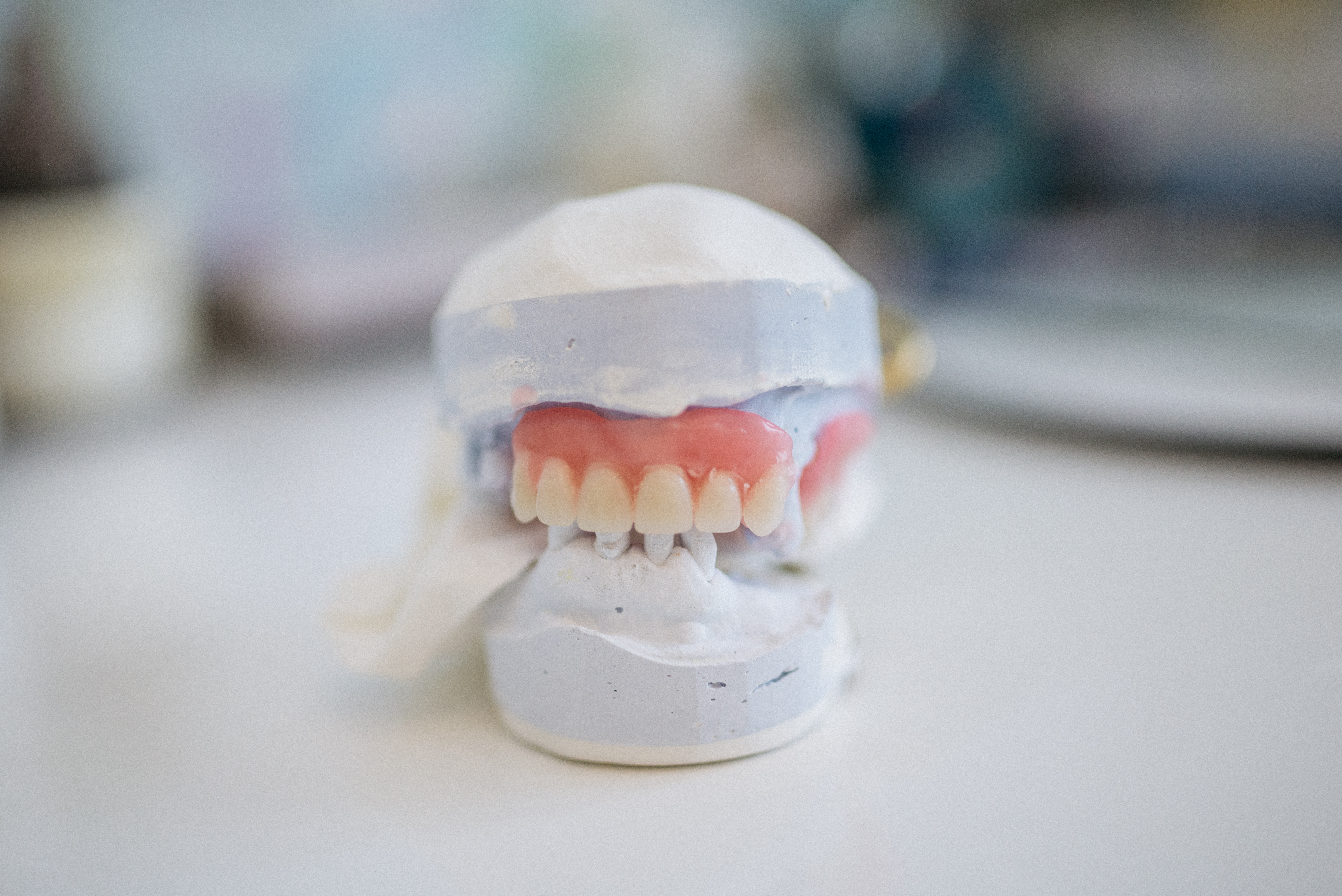
[A dental model showing teeth and gum structure, the kind dentists use to explain grinding damage.] Photograph: a dental teaching model
Image Credits: Wikimedia Commons
This article is for general information only and is not medical advice; talk to a clinician about any symptoms.
Waking up with a sore jaw, a dull headache, or teeth that feel tender is the classic signature of sleep bruxism: grinding or clenching your teeth while you sleep. This article explains what sleep bruxism is, why it happens, the daytime fixes for stress and caffeine that most mouthguard pitches skip, how night guards work, and when to get professional help.
What is sleep bruxism?
Bruxism is the medical term for clenching, grinding, or gnashing the teeth. When it happens during sleep, it is called sleep bruxism, and it counts as a sleep-related movement disorder. The episodes involve bursts of activity in the jaw-closing muscles, usually clustered around brief arousals from sleep.
It is common. A case review in the medical literature puts adult prevalence around 8%, while a 2025 scoping review in Nature and Science of Sleep reported 21% of adults by some assessment criteria and 12.8% by self-report. Rates are highest in childhood and decline with age, dropping to about 3% in adults over 65. Many people grind mildly and never notice; a dentist spots it from wear patterns on the enamel.
The damage adds up over time. Long-standing forceful grinding can wear enamel, crack fillings and crowns, strain the jaw joint, and contribute to tension headaches, according to Mayo Clinic and NHS guidance summarized by Acibadem International. Severity depends on force, frequency, and duration, not on how loud the grinding sounds.
Why does it happen?
There is no single cause, which is why there is no single cure. Stress and anxiety are the most common triggers. Sleep disruption plays a big role too: grinding episodes cluster around micro-arousals, and fragmented sleep makes them more likely.
Stimulants are an underappreciated driver. Caffeine, alcohol, and nicotine, especially in the evening, increase the likelihood of grinding. Colgate's bruxism guide advises avoiding caffeine and alcohol for this reason, and the NHS and Mayo Clinic guidance echoed by Acibadem lists limiting all three stimulants as a core lifestyle step.
Other contributors include certain medications, misaligned teeth, and sleep disorders such as sleep apnea. Snoring or suspected apnea deserves a medical assessment on its own, and grinding that persists despite a guard is one reason clinicians look for an underlying driver. For a sense of how medication side effects show up in muscle symptoms, see medications that cause muscle cramps.
Daytime fixes: stress, caffeine, and jaw habits
Since you cannot consciously control your jaw while asleep, the daytime half of the strategy matters more than most product pages admit. These are the fixes with the broadest professional support.
Cut evening stimulants first. Stop caffeine by early afternoon, and limit alcohol and nicotine in the evening. This is the simplest change with the most consistent backing across Colgate, Oral-B, the NHS, and the Mayo Clinic.
Manage stress deliberately. Because stress is a primary trigger, relaxation techniques belong in the routine: deep breathing, meditation, yoga, or counseling. Oral-B specifically lists meditation, deep breathing exercises, and yoga, and notes that professional counseling can help when stress is the main driver.
Train your jaw during the day. Make a conscious effort to notice clenching while you concentrate or work.
Practice keeping your lips together and your teeth slightly apart, which trains the jaw muscles toward a relaxed resting position. Avoid chewing non-food items like pens or constant gum-chewing, since both raise jaw muscle activity.
Keep a steady sleep schedule. Regular bedtimes, a comfortable sleep environment, and a wind-down routine reduce the arousals that grinding episodes cluster around. A warm bath, gentle stretching, or reading before bed all signal the body to downshift.
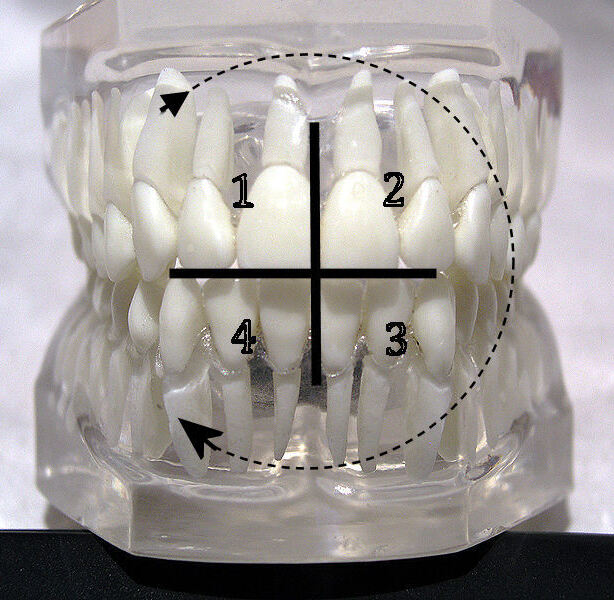
[A dental model with FDI notation, the charting system dentists use to record grinding wear tooth by tooth.] Photograph: a dental study model
Image Credits: Wikimedia Commons
None of these is a guaranteed off switch. The honest framing from clinical guidance is that there is no single method that reliably stops sleep grinding, so the aim is to protect the teeth while reducing triggers. That is where the night guard comes in.
Night guards and what they do
A dentist-fitted night guard, also called a bite plate or occlusal splint, is the standard protective device. It creates a physical barrier between the upper and lower teeth, absorbing grinding force and shielding enamel, fillings, and crowns from wear.
A guard does not necessarily stop the grinding itself. It stops the damage. That distinction matters: people who expect the device to cure the habit can be disappointed, while people who use it as protection while working on triggers get the real benefit.
Over-the-counter guards exist, but a custom-fitted one from a dentist fits better and distributes force more evenly. Your dentist will also check for underlying issues, such as bite misalignment or signs of sleep apnea, that a boil-and-bite guard cannot address.
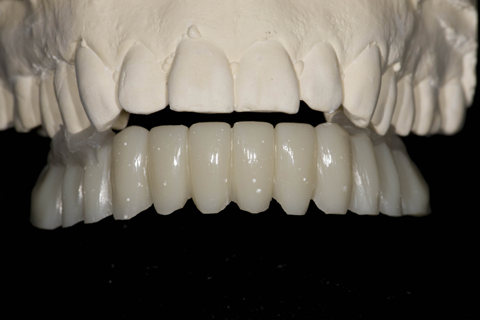
[A close-up of composite teeth; the chewing surfaces shown here are exactly what grinding wears down.] Photograph: composite dental teeth
Image Credits: Wikimedia Commons
When to get professional help
See a dentist if you wake with jaw soreness or headaches, notice flattened or chipped teeth, or if a partner hears grinding. Early assessment prevents the slow accumulation of damage.
Get evaluated sooner if grinding continues despite a guard and sensible habits. Severe cases need a clinical look for underlying drivers such as sleep apnea, reflux, or a medication side effect, and the dentist may repair damaged teeth or discuss options the Mayo Clinic lists, including behavioral therapy. Decisions about muscle relaxants or botulinum toxin injections rest with the treating team, not with self-treatment.
Lingering pain deserves attention on its own. When a muscle cramp won't go away covers how to read pain that persists, and why knuckles crack is a lighter look at another joint sound people worry about.
FAQ
Is teeth grinding harmful?
Mild, occasional grinding is usually benign, especially in children, where it often fades on its own. Chronic forceful grinding can wear enamel, crack restorations, strain the jaw joint, and feed tension headaches. A dentist judges severity from wear patterns.
Does stress really cause nighttime grinding?
Stress is one of the strongest and most consistent triggers, though it is rarely the only factor. That is why stress management shows up in every major guideline alongside stimulant reduction and sleep hygiene.
Will a night guard stop me from grinding?
Not necessarily. It protects your teeth from the grinding, which is its main job. Reducing triggers through the daytime fixes is what lowers the grinding itself.
Do children need treatment for grinding?
Often no. Prevalence peaks in childhood and usually resolves as the nervous system matures. Pediatric dentists monitor growth and protect enamel if wear appears, involving pediatric care when needed.
The bottom line
You cannot willpower your way out of sleep bruxism, but you can shrink it. Cut evening caffeine and alcohol, take stress seriously, keep a steady sleep schedule, and let a dentist-fitted guard protect your teeth while the habits do their work.
If grinding persists despite all of that, or if you snore heavily or wake unrefreshed, get assessed. The grinding may be a sign of something underneath that deserves its own treatment.
Topics: bruxism, teeth grinding, sleep
Written by the Rive News research desk, which produces plain-English explainers built on documented sources.
Related
- When a Muscle Cramp Won't Go Away: What It Means and When to Worry
- Medications That Cause Muscle Cramps: The Complete Side-Effect List
- Why Your Stomach Growls When You Are Hungry: The Science
- Why knuckles crack and what makes the sound
Want more plain-English explainers like this? Subscribe to the Rive News newsletter for one clear idea every morning.
Rive News standards: every factual claim traces to a cited public source; corrections are published promptly.
Related stories
ADHD linked to fourfold dementia risk in Pitt study of 187,000 adults
Adults with ADHD face four times the risk of dementia, a University of Pittsburgh study of 187,000 adults published in JAMA Psychiatry

Why Do Athletes Get Cramps Despite Drinking Water?
Muscle cramps strike even well-hydrated athletes because sweat drains electrolytes that plain water cannot replace. Here is why water alone

Do bananas actually prevent muscle cramps?
A medium banana has 422 mg of potassium, but the evidence says it cannot stop cramps. Here is what the research shows, and what actually