
Why Does Your Voice Sound Different on Recordings
Key takeaways
- You hear your own voice through two routes at once: air conduction and bone conduction through your skull.
- Bone conduction adds low frequencies, so the voice in your head sounds deeper and fuller than the one others hear.
- A recording captures only the air-conducted sound, which is why playback sounds higher, thinner, and unfamiliar.
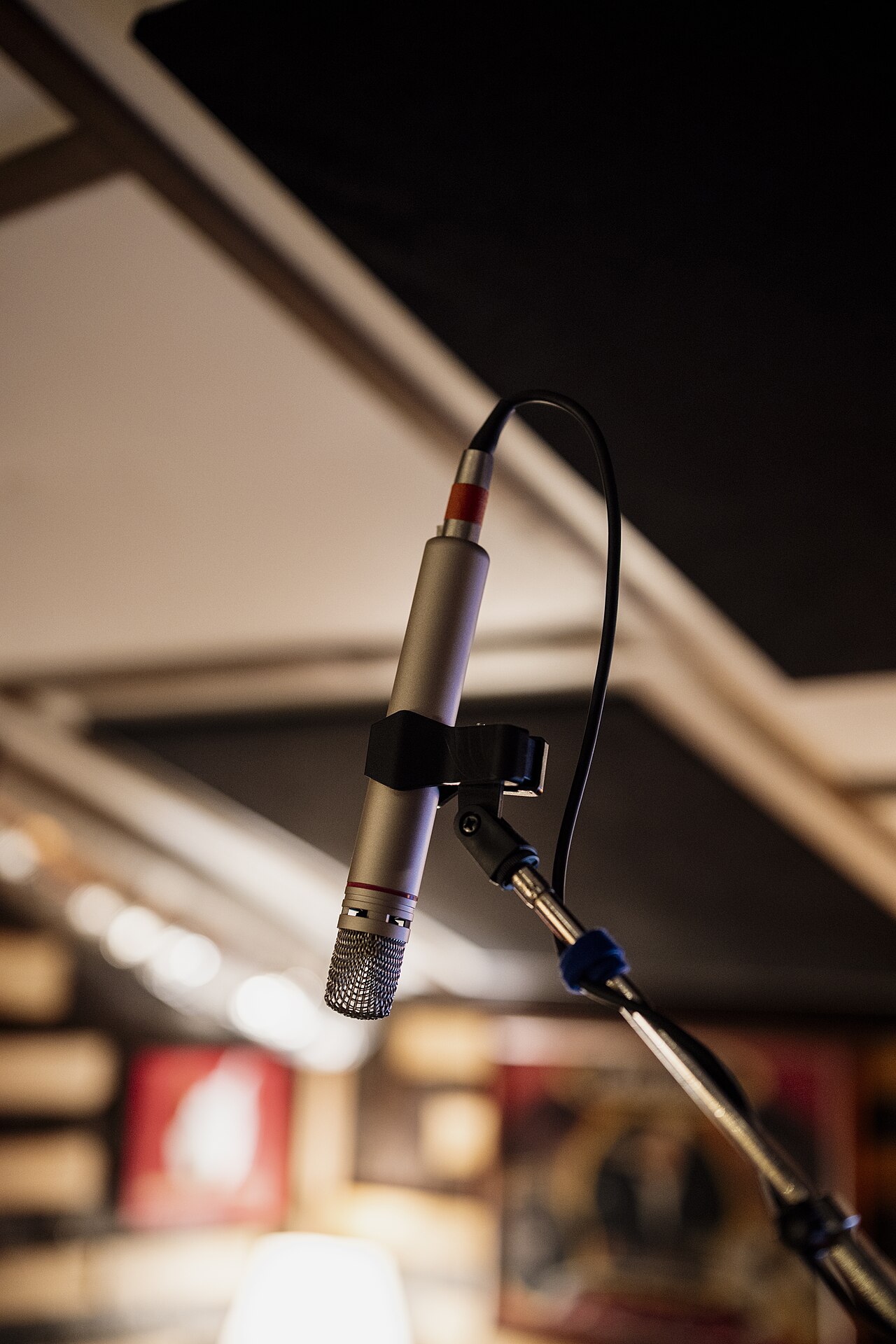
Your voice on a recording sounds higher, thinner, or simply not like you. The reaction is nearly universal, and it has a clear physical explanation. When you speak, you hear yourself through two routes at the same time.
A recording captures only one of them. This article explains why your voice sounds different on recordings, including the two hearing pathways, the role of bone conduction, what research has found, why the mismatch feels so strange, and how to get used to the voice everyone else hears.
This article is for general information, not medical advice. If you notice a sudden change in your voice, hoarseness lasting more than a few weeks, or hearing problems, talk to a clinician.
Two pathways carry your voice to your ears
When you speak, sound reaches your inner ear by two routes. The first is air conduction. Sound waves travel through the air, into the ear canal, across the eardrum and the small middle-ear bones, and into the cochlea.
This is how you hear other people. It is also how a microphone captures your voice.
The second route is bone conduction. Vibrations from your vocal folds and the resonating structures of your head travel directly through the bones of your skull to the cochlea, partly bypassing the outer and middle ear. According to the American Speech-Language-Hearing Association (ASHA), sound reaches the inner ear through both air and bone pathways, and bone conduction can make a person perceive their own voice differently from how others hear it.
You cannot switch bone conduction off. It runs constantly while you speak, and you normally cannot tell the two routes apart. They blend into one voice: the voice you have heard in your head your whole life.
A recording removes the bone-conducted part. What is left is the air-conducted signal alone, which is close to what other people hear when you talk.
Bone conduction adds the low end
Bone is better than air at transmitting lower frequencies. That single fact explains most of the difference. Because your skull conducts lower frequencies well, you perceive your own voice as lower and fuller than others do.
A recording of your voice frequently sounds higher than you expect, as the Wikipedia article on bone conduction explains.
Researchers have described bone conduction as having a low-pass filtering effect. Lower-frequency components get emphasized relative to the purely air-conducted signal. That is why the voice in your head can sound rich and warm while the same voice on playback sounds thin.
A 2010 study by Sabine Reinfeldt, Per Ostli, Bo Hakansson, and Stefan Stenfelt examined air and bone conduction during vocalization. It found that the bone-conducted component was particularly influential across frequencies around 1 to 2 kHz for many phonemes. In plain terms, bone conduction does not just add bass.
It shapes the middle range of speech sounds too, the range that carries much of what makes a voice recognizable.
The result is a mismatch between two versions of the same voice. One version has the extra low-frequency content. The other does not.
Neither version is wrong. They are simply the same sound heard through different routes.
Your brain built an expectation
The discomfort you feel is not only about physics. It is also about expectation. Your brain has spent years building a personal sound identity from the voice you hear in your head.
When a recording removes the bone-conducted component, the brain receives information that does not match its stored version. The gap between what you expect and what you hear reads as strange, even upsetting.
Research published in the journal Perception has explored this effect, showing that people often struggle to recognize their own voices when hearing recordings because their usual internal sound experience is missing. Research published in Royal Society Open Science found that adding bone-conduction filtering to recordings improved people's ability to identify their own voices. That result supports a specific point: bone-conducted sound contributes to vocal self-recognition.
This is also why other people's recorded voices sound normal to you. You have always heard them through air conduction only, so the recording matches your stored version. Your own voice is the only one you have ever heard with the extra bone-conducted layer, so it is the only one that seems to change.
The microphone is not the main culprit
It is tempting to blame the microphone. Phone microphones do color sound, and room acoustics, recording distance, and audio processing all play a part. A phone microphone may capture certain frequencies differently from a professional setup.
A room with hard walls adds reflections that a deadened studio does not.
But the microphone is not the main reason your voice sounds different. A high-quality studio recording still sounds unfamiliar to most people the first time they hear it. The missing bone conduction explains the bulk of the gap.
The microphone explains the smaller differences between one recording and another.
If you record yourself often, you may notice that the effect fades. That is not because the microphone improved. It is because your brain updated its stored version of your voice.
Repeated exposure teaches the brain that the air-conducted version is also you. Podcasters, teachers, and anyone who hears their own recordings regularly usually report that the shock wears off, even if a trace of strangeness remains.
Bone conduction beyond your voice
The same pathway that shapes your voice has practical uses. Bone-conduction headphones send sound through the skull, which is why they work even when the ear canal is blocked. Audiologists compare hearing through bone conduction with hearing through the ear canal to identify problems in the middle ear.
If hearing is markedly better through bone conduction than through the ear canal, a problem with the ear canal, eardrum, or the small middle-ear bones may be suspected.
History offers a vivid example. The first bone conduction hearing aids were invented in the 15th century. Italian physician Girolamo Cardano realized that when a rod was placed between someone's teeth and attached to a musical instrument, the person could hear the music despite hearing loss.
Ludwig van Beethoven is famously rumored to have used the same principle as his hearing deteriorated, by placing one end of a rod in his mouth and resting the other end on the rim of his piano.
Musicians still use a version of this trick. After a tuning fork starts vibrating, placing it in the mouth with the stem between the back teeth lets the player keep hearing the note through bone conduction while both hands stay free to tune the instrument. The body is a working part of the hearing system, not just a container for the ears.
Getting used to the real voice
You cannot hear your own external voice the way others do while you are speaking. Bone conduction is always part of the live experience. What you can do is close the gap between expectation and reality.
Start by listening to short recordings on purpose. Read a paragraph aloud, play it back, and listen without judging. Repeat the exercise a few times a week.
Most people find the shock fades after several sessions. You are training the brain to accept a second version of your voice as normal.
Their stored version is the one the recording captures.
A few recording habits help too. Speak at a natural distance from the microphone rather than crowding it. Record in a quiet room with soft surfaces, which reduces harsh reflections.
Keep the volume consistent instead of drifting louder and softer. None of these steps restores bone conduction, but each one makes the recording a cleaner version of the voice others know.
Your speaking voice is fine. The recording is not an error to correct. It is a truer sample of what leaves your mouth.
When a voice change deserves attention
A recording that sounds unfamiliar is normal. A voice that changes suddenly is a different matter. Seek medical advice if you notice hoarseness lasting more than three weeks, pain when speaking, trouble swallowing, a lump in the neck, or a sudden loss of voice with no cold to explain it.
Hearing changes deserve the same attention. If one ear hears much less than the other, if you notice ringing that does not stop, or if sounds seem muffled after an illness or injury, a clinician or audiologist can check what is happening. Bone conduction testing is one of the tools they use, and it is painless.
These checks matter because most voice and hearing problems are easiest to treat early. A recording that sounds odd is a curiosity. A voice that will not come back is a symptom.
Knowing the difference keeps a normal quirk from turning into a missed warning sign. If you notice odd body signals in other situations, our explainers on why you get a runny nose in cold weather and why your joints crack follow the same approach.
FAQ
Why does my voice sound higher on a recording?
Bone conduction adds low frequencies to the voice you hear in your head. A recording removes that layer, so the playback sounds higher and thinner than the version you know.
Do other people hear my voice the way I hear it on recordings?
Close to it. Other people hear your voice through air conduction only, which is what a recording captures. Small differences from microphone quality and room acoustics remain, but the recording is much closer to their experience than your internal version.
Can I train myself to like my recorded voice?
Yes, for most people. Repeated listening updates the brain's stored version of your voice. Podcasters and teachers usually find the discomfort fades after several sessions of deliberate playback.
Does everyone dislike their recorded voice?
Not everyone, but the reaction is very common. People who hear recordings of themselves often report the same surprise. The effect is strongest the first few times, then it usually softens.
Outlook
Your recorded voice sounds different because you have been hearing a private mix all your life: air conduction plus bone conduction. A recording strips out the bone-conducted layer and hands you the version everyone else has always heard. The mismatch feels wrong, but the recording is the more accurate sample.
Listen to it a few times, let your brain update its expectations, and the stranger on the playback starts to sound like you. If a real change in your voice or hearing appears, get it checked rather than blaming the microphone.
Tags: voice, hearing, recording, human body
Latest in Health
- Why do you get a runny nose in cold weather
- Why do your joints crack, and does cracking your knuckles cause harm
- Why do you feel tired after eating a big meal
Subscribe for one clear health explainer in your inbox each week.
Related stories

ADHD linked to fourfold dementia risk in Pitt study of 187,000 adults
Adults with ADHD face four times the risk of dementia, a University of Pittsburgh study of 187,000 adults published in JAMA Psychiatry

Why Do Athletes Get Cramps Despite Drinking Water?
Muscle cramps strike even well-hydrated athletes because sweat drains electrolytes that plain water cannot replace. Here is why water alone

Do bananas actually prevent muscle cramps?
A medium banana has 422 mg of potassium, but the evidence says it cannot stop cramps. Here is what the research shows, and what actually