
Why your voice sounds different when you catch a cold
By Rive News / Research desk | Rive News / Published October 27, 2026 at 9:00 AM PKT
Key takeaways
- Swollen vocal cords vibrate unevenly, which turns a clear voice hoarse, raspy, or faint.
- Congestion, mucus, and coughing change the sound further by altering airflow and resonance.
- Most acute cases clear in under two weeks, and hoarseness lasting longer deserves a clinician's look.
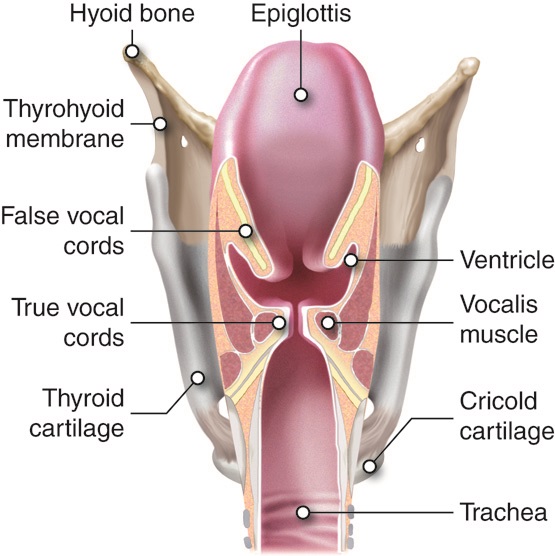
[A labelled diagram of the larynx and vocal cords.] Photograph: Wikimedia Commons contributor
Image Credits: Wikimedia Commons
A sick voice is a voice whose sound has changed because the parts that make it are swollen, dry, or coated in mucus. The change can range from a slight rasp to a whisper, and it often arrives a day or two into a cold.
The usual cause is laryngitis, an inflammation of the voice box. This article explains the sick voice, including how your voice is made, why illness changes the sound, other reasons a sick voice sounds strange, and what helps while you recover.
This article is for general information only and is not medical advice; talk to a clinician about any symptoms.
How your voice is made
Sound starts with air from the lungs. That air travels up the windpipe and through the larynx, the voice box that sits at the top of the windpipe.
Inside the larynx are the vocal cords, two folds of mucous membrane covering muscle and cartilage. When they are healthy, they open and close smoothly, and the air passing over them makes them vibrate.
That vibration is only the raw sound. The throat, mouth, tongue, and lips shape it into recognisable speech, and the nose and sinuses add resonance, the warm fullness that makes a voice sound like its owner.
Anything that changes the cords, the airflow, or the resonance changes the voice. A cold can change all three at once, which is why the effect sounds so dramatic.
Why illness changes the sound
The Mayo Clinic explains the core mechanism plainly: with laryngitis, the vocal cords become inflamed or irritated, which makes them swell and distorts the sounds produced by air passing over them. The result is a hoarse voice, and in some cases a voice that becomes almost undetectable.
Swollen cords do not meet cleanly. Instead of vibrating in a smooth, even wave, they vibrate unevenly, and some air escapes without making sound at all.
That leaked air is what listeners hear as breathiness. The uneven vibration adds roughness, which listeners hear as a rasp or croak.
Dryness makes it worse. A cold dries the throat lining, and thick mucus coats the cords instead of lubricating them. Sticky cords move sluggishly, so pitch drops and the voice sounds lower and rougher than usual.
Coughing adds its own damage. Each hard cough slams the cords together, and repeated coughing through a cold can keep them swollen long after the fever fades. Live Science quotes Stacey Silvers explaining that laryngitis is inflammation of the vocal cords, and that this swelling leads to changes in the voice or complete loss of voice.
Most cases are viral. The same viruses that cause colds and flu are the most common triggers, according to the Mayo Clinic, and most acute cases last less than a couple of weeks.
Other reasons a sick voice sounds strange
Congestion changes resonance even when the cords are fine. A blocked nose removes the nasal resonance that normally warms speech, which is why a cold can make someone sound as if they are talking through a blocked tunnel.
Postnasal drip irritates the throat from above. Mucus running down the back of the throat keeps the area raw and triggers throat clearing, which itself batters the cords.
Fever and dehydration dry the whole system. Less fluid means less lubrication for the cords, and a dry throat produces a thinner, scratchier sound.
Some people also strain their voices while sick. Talking loudly over a cough, or whispering for hours to spare the throat, both tire the cords. Whispering is not rest; it forces air through a narrow gap and can irritate the cords further.
Chronic causes sit in the background. Smoking, reflux, and long-term voice overuse can inflame the larynx without any infection, and a cold can tip an already irritated voice box into obvious hoarseness.
Singers, teachers, and call-centre workers notice the change first. People who use their voices heavily for work are among the groups most commonly affected by laryngitis, and small changes in cord function show up fast in a trained voice. A related explainer on another common throat sensation covers why we get brain freeze from cold drinks.
What helps while you recover
Resting the voice is the single most repeated piece of advice in medical guides. The Mayo Clinic notes that strenuous use of the voice during acute laryngitis can damage the vocal cords, so quiet days protect recovery.
Fluids keep mucus thin. Water and other non-caffeinated drinks help the throat lining stay moist, while caffeine and alcohol dry it further.
Humid air can soothe irritation. A steamy shower or a humidifier adds moisture to inhaled air, which helps dry, raw cords move more freely.
Throat lozenges and honey in warm drinks ease soreness for many people. They do not cure the inflammation, but they can make talking and swallowing more comfortable while the body heals.
Avoid whispering as a substitute for rest. Short, quiet, normal-volume speech strains the cords less than a forced whisper, and silence is better than either when the voice is nearly gone.
Watch the calendar. The Mayo Clinic advises making an appointment with a doctor if laryngitis symptoms last more than two weeks. Hoarseness that lingers past that point can signal something other than a passing virus.
Seek care sooner for breathing trouble, difficulty swallowing, coughing up blood, or a high fever. Those signs point to conditions beyond a simple cold, and they need prompt assessment.
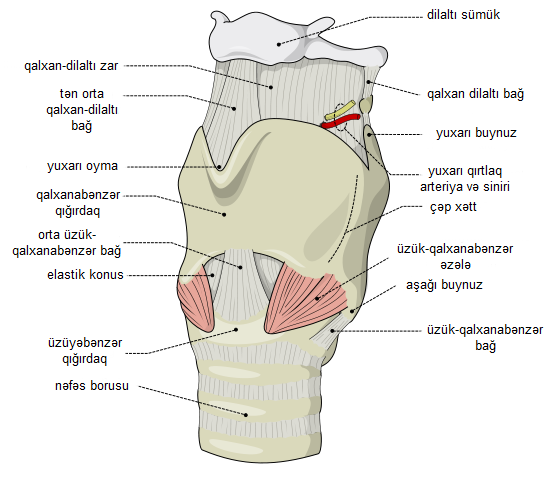
[A side-view diagram of the external larynx.] Photograph: Wikimedia Commons contributor
Image Credits: Wikimedia Commons
Frequently asked questions
Why does my voice sound lower when I am sick?
Swollen cords vibrate more slowly than healthy ones, and slower vibration means lower pitch. Thick mucus and dryness add to the effect, so the voice often sounds deeper and rougher until the swelling fades.
Is whispering better than talking when I have laryngitis?
No, whispering forces air through a tight gap and can irritate swollen cords further. Rest the voice when possible, and use short bursts of quiet, normal speech rather than a sustained whisper.
How long does a hoarse voice from a cold usually last?
Most acute cases last less than two weeks, according to the Mayo Clinic. Symptoms often appear within hours or days of a cold and improve steadily, though heavy coughing can stretch recovery.
Why do I sound nasal even after my throat feels better?
Congestion changes resonance by blocking the nose and sinuses, which normally add warmth to speech. The nasal sound fades as congestion clears, even if the cords themselves have already recovered.
Can a cold permanently damage my voice?
A single uncomplicated cold rarely causes lasting damage, but repeated strain during illness can prolong hoarseness. Hoarseness lasting more than two weeks deserves a clinician's examination to rule out other causes.
The bottom line
A sick voice sounds different because swollen vocal cords vibrate unevenly, while congestion and coughing change airflow and resonance on top. Most cases follow a cold and clear within two weeks.
Rest the voice, keep fluids up, and avoid whispering through the worst days. If hoarseness lingers beyond two weeks, or breathing and swallowing become difficult, get it checked rather than waiting it out. Readers curious about other body quirks can also explore what causes ringing in your ears after a concert.
Tags: voice, colds, laryngitis
The Rive News research desk writes plain-English explainers from published sources, with every key claim traceable to a named guide or institution.
Related
- Why Do We Get Brain Freeze From Cold Drinks?
- What causes ringing in your ears after a concert?
- Why Do Athletes Get Cramps Despite Drinking Water?
Subscribe to the Rive News newsletter for one practical health explainer each week.
Rive News publishes explainers based on public sources; corrections are noted promptly when a source is updated.
Related stories
ADHD linked to fourfold dementia risk in Pitt study of 187,000 adults
Adults with ADHD face four times the risk of dementia, a University of Pittsburgh study of 187,000 adults published in JAMA Psychiatry

Why Do Athletes Get Cramps Despite Drinking Water?
Muscle cramps strike even well-hydrated athletes because sweat drains electrolytes that plain water cannot replace. Here is why water alone

Do bananas actually prevent muscle cramps?
A medium banana has 422 mg of potassium, but the evidence says it cannot stop cramps. Here is what the research shows, and what actually