
Why you wake up just before your alarm sounds
By Rive News / Research desk | Rive News / Published October 29, 2026 at 9:00 AM PKT
Key takeaways
- Waking just before your alarm usually means your body clock has learned your regular rise time and started the waking process early.
- A morning rise in cortisol, a rise in body temperature, and a fall in melatonin all help shift you from deep sleep into lighter sleep.
- Expectation also plays a role, since a small study found a hormone rise before an expected early wake time but not before a surprise one.
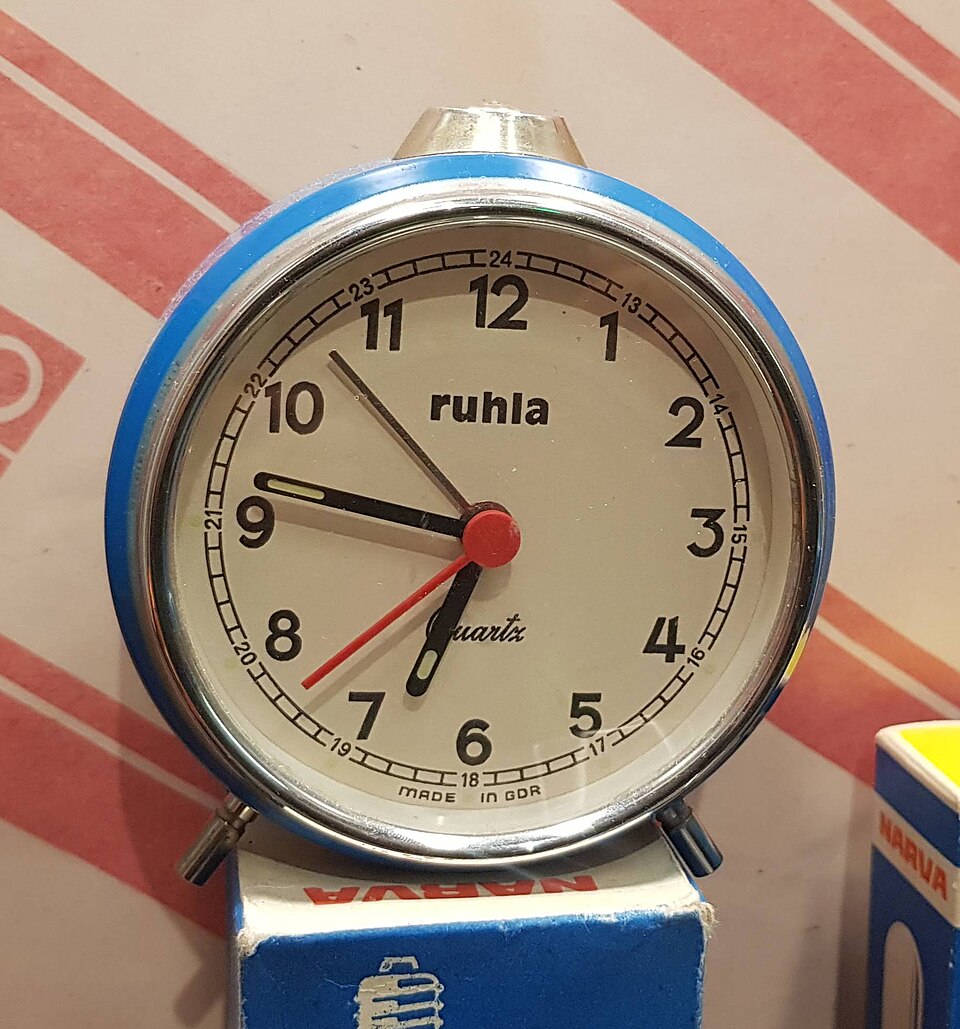
[A Ruhla alarm clock.] Photograph: a Ruhla alarm clock
Image Credits: Wikimedia Commons
Waking up just before your alarm means opening your eyes minutes before the sound you set, often feeling oddly alert. It is not a trick your mind plays after the fact. In many cases it is your internal clock running its normal morning routine slightly ahead of schedule.
The effect has a plain explanation. Your body keeps a roughly 24 hour rhythm that predicts when you usually rise, and it starts preparing before that time. This article explains that rhythm, the hormones involved, what a small study found about expectation, and when early waking means something else.
What your body clock does before morning
Deep in the brain sits a small cluster of nerve cells called the suprachiasmatic nucleus. It acts as the master clock for daily rhythms, according to MedicalXpress. It uses light as its main cue to line up your internal day with the outside world.
That clock runs a cycle of about 24 hours, known as a circadian rhythm. It shapes sleep, alertness, body temperature, blood pressure, and hormone production across the day. When your bedtime and rise time stay steady, the clock learns the pattern and starts to anticipate waking.
For people with very consistent rise times and morning light exposure, the preparation starts well before the alarm sounds. Body temperature rises, melatonin falls, and cortisol begins to climb, as described by MedicalXpress. Melatonin is the hormone linked with sleepiness, so its fall is part of the shift toward waking.
By the time the alarm is due, the body is already moving toward wakefulness. Think of it as a gradual warm-up rather than a sudden switch. That warm-up is why the alarm sometimes feels redundant on a good morning.
The cortisol awakening response
One named part of this warm-up is the cortisol awakening response. Cortisol is often called the stress hormone, but in the morning it acts more like a waking signal. Levels spike as you wake, and the rise is thought to help prepare you for the day.
The response does not start at the moment of waking. It builds in the period before it, alongside the temperature rise and the lighter sleep stages that come late in the night. Sleep gets lighter in the final part of the night in any case, which makes a gentle waking easier.
This is also why the same alarm can feel brutal on one morning and unneeded on the next. If your clock is lined up with your schedule, the warm-up finishes near your rise time. If your schedule shifted, the alarm can catch you in a deeper stage, and the grogginess that follows is known as sleep inertia.
What expectation adds to the picture
Routine alone does not explain every case, because people also wake early before big days. A small study tested whether expecting an early wake changes the body during sleep. Psychreg describes how volunteers were told on some nights that they could sleep until 9 in the morning, but on one of those nights they were woken at 6 in the morning anyway.
Those who expected the early call showed a rise in adrenocorticotropic hormone, usually shortened to ACTH, in the hour or so before it. Those woken by surprise showed no such rise until they were already awake. That result points to expectation doing real work, not just the time on the clock.
Quirk Lab Science adds a caution that belongs in any honest account of this study. The key study had only 15 participants and appeared as a short communication. It measured hormonal anticipation rather than actual spontaneous waking, so it supports a piece of the story rather than settling it.
Russell Foster, head of the Sleep and Circadian Neuroscience Institute at the University of Oxford, called the wider phenomenon "a genuine phenomenon", according to a June 2023 New York Times account summarized by Psychreg. The same account noted that there is little research on how common the experience is or why it happens.
How common is early waking
The numbers we have come from one older survey. A 1997 telephone survey of 269 adults, published in the journal Sleep, found that over half said they never use an alarm clock or always wake before it. Another 24 percent said they sometimes wake before it, according to Psychreg.
The same research team tested 15 people who said they regularly wake themselves. Five woke within 10 minutes of their chosen time on all three nights, five did so on two nights, and four of the remaining five managed it once. Those are small numbers, and they describe people who already believed they could wake themselves.
Age and a consistent amount of sleep each night were linked with the ability in that survey. A consistent wake-up time was not, which complicates the simple advice to keep a fixed schedule. The picture is therefore mixed: routine helps the clock, but it is not the whole story.
It is also worth remembering a simple bias in how we notice this. Mornings when you wake just before the alarm are memorable, while mornings when the alarm wakes you are forgettable. That gap can make the effect feel more precise than it is.
When early waking is not a good sign
Waking before your alarm and feeling rested points to a clock that is working well. Waking before your alarm and feeling groggy or restless points somewhere else. Poor sleep quality, stress, or an irregular schedule can all produce early waking that feels bad rather than smooth.
Stress and anxiety can raise cortisol at the wrong times, which makes it harder to stay asleep or triggers early waking. An irregular sleep pattern can confuse the same rhythms, leaving you drowsy and less able to concentrate during the day. In those cases the alarm is not the problem, and the waking is not a sign of a finely tuned clock.
A regular bedtime and rise time, plus morning light, remain the most supported ways to line the clock up. Keeping the same pattern on weekends helps too, since a large weekend shift works against the rhythm built during the week.
This article is for general information only and is not medical advice; talk to a clinician about any symptoms.
[A digital alarm clock photographed in Glasgow.] Photograph: a digital alarm clock
Image Credits: Wikimedia Commons
Frequently asked questions
Can you train yourself to wake without an alarm?
A consistent schedule strengthens the circadian ramp that makes waking near a fixed time easier, and that part is well supported. Whether intention alone produces reliable waking at a chosen time has not been demonstrated, so a backup alarm stays sensible.
Does your body clock know your exact alarm time?
No, not exactly. The clock keeps a stable daily rhythm and learns your usual rise time in a coarse way. It cannot read your alarm setting, and the precision people feel comes partly from remembering the hits and forgetting the misses.
Why do you wake early before an important day?
Anticipation appears to shift the pre-waking hormone rise earlier, as the small ACTH study suggests. Stress about oversleeping can add to that effect, keeping part of the brain more alert through the night.
Is waking before your alarm a sign of good sleep?
It can be, when you wake feeling rested and alert. If you wake early and feel tired, restless, or unable to fall back asleep, it more likely reflects poor sleep quality or stress than a well-tuned clock.
The bottom line
Waking just before your alarm usually means your body clock anticipated your regular rise time and started its morning routine early. Cortisol climbs, temperature rises, and melatonin falls, moving you into lighter sleep before the sound.
Expectation can push that process earlier still, though the evidence for it rests on small studies. Keep a steady schedule and get morning light, and treat repeated groggy early waking as a reason to look at your sleep habits rather than celebrate your clock.
Tags: sleep, circadian rhythm, alarm clock
Rive News is a research desk that explains everyday questions using published sources, with no individual author persona behind its articles.
Related
- How to fall back asleep after waking at 3am
- Why your foot falls asleep and tingles when it wakes
- Why you feel dizzy when you stand up too fast
Subscribe for one plain-English explainer like this in your inbox each morning.
Rive News follows a standards note: facts are sourced from public pages, claims carry attribution, and corrections are made openly when a source is corrected.
Related stories
ADHD linked to fourfold dementia risk in Pitt study of 187,000 adults
Adults with ADHD face four times the risk of dementia, a University of Pittsburgh study of 187,000 adults published in JAMA Psychiatry

Why Do Athletes Get Cramps Despite Drinking Water?
Muscle cramps strike even well-hydrated athletes because sweat drains electrolytes that plain water cannot replace. Here is why water alone

Do bananas actually prevent muscle cramps?
A medium banana has 422 mg of potassium, but the evidence says it cannot stop cramps. Here is what the research shows, and what actually