
Wounds Itch When They Are Healing: Why It Happens
Key takeaways
- Healing wounds itch because histamine and regrowing nerves send itch signals to the brain.
- Itch peaks during the repair stages, when new skin and collagen form under the scab.
- Scratching can tear new cells, reopen the wound, and invite infection, so hands-off relief works better.
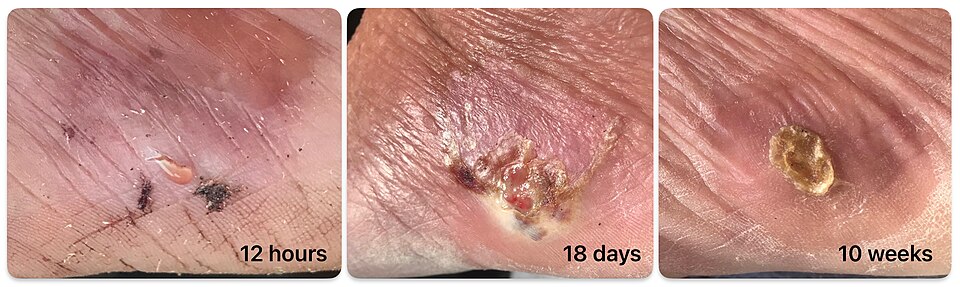
There is an old saying that a wound that itches is a wound that is healing. That piece of folklore holds up. Research over the years has shown that wounds, both big and small, tend to itch when they are healing, according to Healthline.
The itch is not a sign that something is wrong. It is a side effect of the repair crew at work. Immune chemicals, regrowing nerves, and new skin cells all send signals that the brain reads as itch.
This article explains why wounds itch when they are healing, including the four stages of repair, the chemicals behind the itch, and how to ease it without scratching.
What an itch is telling the brain
Itch starts with nerve fibers in the skin. Itch-specific nerve fibers tell the central nervous system that something irritates the skin at a certain spot. The brain answers with the urge to scratch.
A healing wound trips those fibers in several ways. Sensitive nerves beneath the skin react to irritation, whether from a bug crawling on the skin or from a healing cut. During repair, those nerves signal the spinal cord that the skin is being stimulated, and the brain perceives those signals as itchy.
The signals are partly a false alarm. The wound is not under attack. The tissue is rebuilding, and the rebuilding itself stimulates the nerves.
The brain reads construction noise as an itch.
Scratching feels good for a second because it floods the area with a stronger signal. Scratching a wounded area or picking at a scab can tear new skin cells that the body is producing to heal the wound, and it can reinjure the wound and set back healing.
The four stages of wound healing
Most wounds, large and small, go through a four-step healing process. Itch can appear in any stage, but it clusters in the middle two, when inflammation and rebuilding run hottest.
Stage one is the bleeding stage, also called hemostasis. This is the point that the injury occurs. The body responds with an outpouring of blood, lymphatic fluid, and clotting to stop the loss of blood.
A clot forms and starts to seal the wound.
Stage two is the defensive or inflammatory stage. It starts right after the injury and typically lasts up to six days. The body sends white blood cells to combat harmful bacteria at the wound site.
Swelling starts, and the skin begins repair.
Stage three is the proliferative stage, also known as the granulation or tissue-regrowth stage. It commonly lasts one to four weeks. This is where you can see the signs of repair: scabs protecting the new skin cells that are growing.
Collagen cells expand and new skin begins to grow on the wound.
Stage four is the scarring stage, also called maturation or remodeling. It can last from three weeks to four years. During this stage, the scab falls off as the new tissue gains strength and flexibility, and collagen fibers form scars.
Nerve endings can stay hypersensitive during this long remodeling, which can keep some itch alive.
Histamine and the chemical itch
Histamine is the best-known itch chemical in a healing wound. The body releases histamine in response to injury. Histamine supports skin cell regrowth and is crucial to the healing process, according to Healthline.
But it can cause a reaction, including itching, similar to an allergy.
Histamine widens blood vessels and makes them more permeable. That lets immune cells and nutrients flood the wound site. The same action stimulates nearby nerve fibers.
The brain reads that stimulation as itch.
Histamine is not alone. Immune cells release a host of chemicals, such as interleukins and cytokines, linked to itching. A key player is interleukin-31, or IL-31, produced by dendritic cells in healing wounds.
IL-31 directly activates itch-sensing neurons, and in studies, mice lacking IL-31 showed no wound-induced itch, according to ScienceABC.
These molecules peak during the cell regeneration phase. IL-31 levels peak around day 5, exactly when wound itch tends to be most intense. That timing explains why itch often spikes a few days after the injury, not on day one.
Other inflammatory chemicals join in. Prostaglandins, cytokines, and growth factors all add to the sensation. That redundancy explains why antihistamines alone rarely erase healing itch fully.
They block one piece of a complex puzzle.
Nerves regrowing under the scab
Nerves also drive the itch. As a wound heals, nerve fibers regrow to reestablish sensation in the damaged skin. That regeneration can provoke itchiness or tingling.
Nerves send mixed signals that the brain misreads as itch.
New skin growth adds a mechanical layer. As collagen cells expand and new skin begins to grow on the wound, a scab forms. When a scab is dry and crusty, it stimulates an itchy sensation.
Dry skin around the wound can make it worse. Scabs start moist and supple, then dry out as healing goes on. A stiff scab can tug at the dry skin around it, which adds another itch trigger.
Sweat glands blocked by bacterial growth can add to the feeling.
One popular claim does not hold up. Itching is not caused by the skin around the wound contracting, according to ScienceABC. Research points to inflammatory chemicals, particularly IL-31, as the primary cause of wound itch, not mechanical stretching.
Why scratching sets healing back
Scratching a healing wound is risky for a clear reason. The new tissue under the scab is fragile. A fingernail can tear it open in one pass.
That reopens the wound and restarts the clock on healing.
Picking at a scab carries the same risk. The scab is a natural bandage. Tearing it off exposes the wound to dirt, harsh sunlight, and other irritants, and it raises the risk of infection.
A wound that is scratched open can also scar more visibly.
Infection is the deeper worry. Broken skin lets bacteria in. If itching comes with spreading redness, warmth, swelling, pus, or fever, the wound may be infected.
Those signs call for prompt medical attention, not more scratching.
Stitches deserve the same hands-off rule. Stitches itch for the same reasons: histamine and new nerve connections during the inflammation and repair stages. Scratching can tear delicate new tissue, reopen the incision, and delay healing.
How to ease the itch without scratching
Start with gentle cleaning. Wash the wound with warm water and a mild soap, and be gentle so you do not damage new skin growth. Cleaning can ease some itch and irritation on its own.
Keep the area moisturized. Dry skin around a scab itches more, so a plain moisturizer on the surrounding skin can help. Do not smear creams into an open wound unless a clinician has advised it.
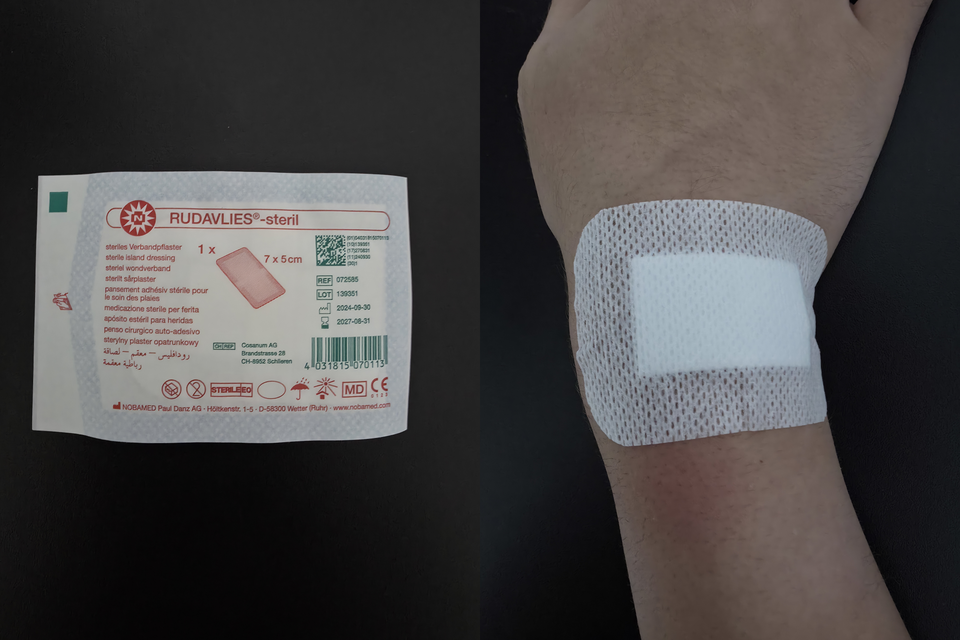
Cover the wound with a sterile dressing. A covering protects the area and helps you avoid scratching and touching the healing tissue. It also keeps dirt and clothing friction away from the scab.
A cold compress can calm itch. Apply it for no longer than 20 minutes to reduce inflammation and itch. A clean cloth wrapped around ice or a cold pack works.
Do not press hard on a fresh wound.
Wear loose, breathable clothing over the area. Tight fabric rubs the scab and traps sweat, both of which worsen itch. Loose clothing limits irritation and lets the area stay dry.
Talk to a doctor about over-the-counter options. An anti-itch medication with cortisone may help some people, but it is not right for every wound. A clinician can weigh the positives and negatives for your case.
Do not apply antibiotic ointments or steroids to an open wound on your own guess.
Distraction helps more than it sounds. Itch grows louder when you focus on it. A walk, a task, or a cold compress can break the loop long enough for the urge to fade.
When an itchy wound needs care
Most wound itch fades on its own. Healthline notes that the itch is typically gone in four weeks or less, though that depends on the size and depth of the wound. After about a month, if a wound has not healed properly or the itching persists, have a doctor inspect the area.
Seek care sooner if you suspect infection. Spreading redness, increasing pain, warmth, swelling, pus, red streaks moving away from the wound, or fever are warning signs. A wound that keeps reopening, or one that grows larger instead of smaller, also needs a look.
People with diabetes, poor circulation, or a weakened immune system should get wounds checked earlier. Their wounds can heal more slowly and infect more easily. What looks like a small itch in those cases can hide a slower repair process.
Deep wounds, animal bites, and wounds with embedded dirt or debris need prompt care from the start. Do not wait out the itch on those. Tetanus status also matters for dirty wounds, and a clinician can check it.
Frequently asked questions
Does an itching wound always mean it is healing?
Often, yes. Itch is a normal part of repair. But itch alone does not prove healing, and itch with spreading redness, pus, or fever can mean infection.
Look at the whole picture, not the itch alone.
Can I put antihistamines on a healing wound?
Oral antihistamines may ease itch for some people, but they block only part of the itch chemistry. Topical products on an open wound need a clinician's advice. Ask a doctor before applying anything to broken skin.
How long will the itch last?
It often peaks around day 5, then eases over the next few weeks. Most wound itch is gone within four weeks. Deeper wounds and the long remodeling stage can itch longer.
Should I let a scab fall off on its own?
Yes. A scab protects new skin while it grows. Let it fall off naturally when the tissue beneath is ready.
Picking it off early reopens the wound and can worsen scarring.
Outlook
Wounds itch when they heal because repair is noisy work. Histamine and other immune chemicals flood the site, nerves regrow, and new skin forms under the scab. The brain reads all of that activity as itch.
The best response is patience plus protection. Keep the wound clean and covered, keep the surrounding skin moisturized, and use a cold compress when the urge spikes. It is a good idea to see a doctor if itch comes with signs of infection, or if a wound has not healed after about a month.
This article is for general information, not medical advice. For advice about your own wound, see a doctor.
Tags: wound healing, itching, scabs, skin repair
Latest in Health
- Why Eye Floaters Appear With Age
- Why Teeth Feel Fuzzy in the Morning
- Why Skin Gets Ashy in Cold Weather
- Why Sleep Lines Fade by Noon
Subscribe to the Rive News newsletter for one useful explainer each morning.
Related stories

ADHD linked to fourfold dementia risk in Pitt study of 187,000 adults
Adults with ADHD face four times the risk of dementia, a University of Pittsburgh study of 187,000 adults published in JAMA Psychiatry

Why Do Athletes Get Cramps Despite Drinking Water?
Muscle cramps strike even well-hydrated athletes because sweat drains electrolytes that plain water cannot replace. Here is why water alone

Do bananas actually prevent muscle cramps?
A medium banana has 422 mg of potassium, but the evidence says it cannot stop cramps. Here is what the research shows, and what actually