
Why children tell tall tales and what parents should know
By Rive News / Research desk | Rive News / Published October 29, 2026 at 9:00 AM PKT
Key takeaways
- Tall tales in young children are usually storytelling and wishful thinking, not calculated deception.
- Lying takes two growing skills: theory of mind and executive function, which is why it appears gradually from about age 2.
- By ages 4 to 5, making up stories is normal, according to the American Academy of Child and Adolescent Psychiatry, because children still blur fantasy and reality.
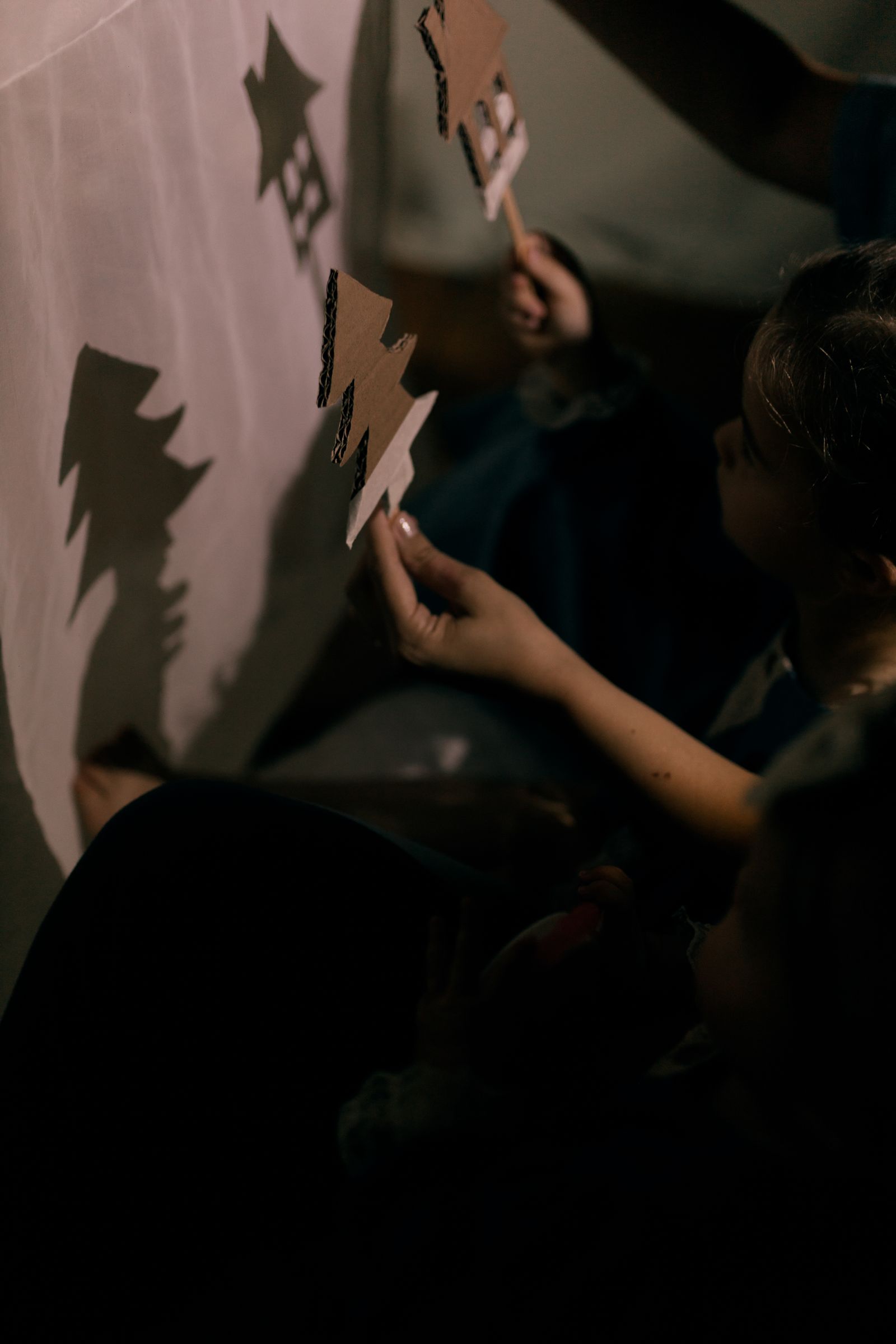
[Children craft shadow puppets, inventing characters and stories as they play.] Photograph: children creating shadow puppet stories
Image Credits: Pexels
A four-year-old announces that they have a pet dinosaur. Another insists that their friend is a real princess. A third tells you, with total confidence, that their father said they could have cake before dinner.
Adults hear lies. Young children are often doing something else: telling stories, wishing aloud, and testing what happens when words change the world. Understanding which of those is happening changes how you should respond.
Tall tales are not the same as lies
The American Academy of Child and Adolescent Psychiatry draws the line clearly. Young children aged 4 to 5 often make up stories and tell tall tales, and this is normal activity because they enjoy hearing stories and making up stories for fun.
These children may blur the distinction between reality and fantasy. That blurring is the point. A child who says they have a pet dinosaur is not usually trying to deceive you.
They are playing with an idea, and the idea feels vivid enough to say out loud.
The University of Illinois Chicago's guidance on young children lying makes the same distinction. Children under five do not have a firm grasp of right and wrong, and they still confuse reality with fantasy and engage in magical thinking.
Monsters and fairies still inhabit their world. A tall tale is what that world sounds like when it is described to an adult.
Why lying needs a growing brain
Deliberate lying is harder than it looks, and that is why it develops slowly. Psychologist Kang Lee of the University of Toronto, whose research National Geographic summarises, identifies two ingredients a child needs before a lie is possible.
The first is theory of mind: understanding what is in someone else's mind, what they know and what they do not know. A child who cannot model your knowledge cannot tailor a story to fool you.
The second is executive function: the power to plan ahead and curb unwanted actions. As Lee puts it, a child has to inhibit the truth to tell a lie, holding the real story back while delivering the invented one.
That combination explains the age pattern Lee's research found. Among verbal two-year-olds, about 30 percent try to mislead their parents at some point. At age 3, about 50 percent regularly try it.
Fibbing is common among about 80 percent of four-year-olds and is seen in nearly all healthy five- to seven-year-olds.
Those numbers do not mean children get worse with age. They mean the brain skills behind both lying and honesty are maturing, and children practise them on each other and on adults.
The ages of tall tales
At around two, a child's first lies are simple and easy to spot. A face covered in chocolate accompanies the claim that no chocolate was eaten. The child has not yet mastered full command of their actions, and may blurt out the truth or start giggling when questioned.
Lee's research found that when pressed, the majority of very young children eventually confess. Fewer than half of three-year-olds do, likely because their brains are starting to develop the mental ability needed to tell a believable tale and to judge when they have not.
Around age 4, lies become secondary, in the sense that children begin to consider who they are telling the lie to. Instead of blaming a cow for eating the cookies, a four-year-old might blame a brother, because that is more believable to an adult.
By ages 4 to 6, lying also becomes socially motivated. Children start telling white lies to avoid hurting someone's feelings or to keep social harmony, such as saying they like a gift they do not. Those lies are more convincing because the child now understands social norms and other people's expectations.
Why children tell tall tales, motive by motive
Not every tall tale has the same motive, and the motive matters more than the tale itself.
Wishful thinking is the most common in young children. A child who says their father allowed cake before dinner may be expressing a wish so strongly that it comes out as a fact. The UIC guidance suggests answering matter-of-factly: acknowledge the wish, then state the rule.
Avoiding punishment is the next motive, and it appears as soon as a child connects an action with a consequence. A child caught doing something forbidden may deny it, not from malice but from a wish to escape trouble.
Seeking approval drives the boasts of older children. Exaggerating an achievement or inventing an adventure can be a bid for admiration, or for a place in a peer group that values daring stories.
Protecting others appears later still. A child may cover for a sibling or friend, choosing loyalty over accuracy. That motive is worth noticing, because it shows the child weighing two values against each other, not simply ignoring truth.
How to respond without shutting down imagination
The response that works for a deliberate lie does not work for a tall tale, and mixing them up causes trouble. Punishing a four-year-old's dinosaur as if it were a fraud teaches the child to hide imagination, not to value truth.
For wishful tales, respond to the wish and the fact separately. The UIC guidance gives the shape of it: "I know you wish that were true, but we don't eat sweets before dinner." The child hears that wishes are allowed and rules still stand.
For denials after a misdeed, do not set a trap by asking a question you already know the answer to. A child who is asked "Did you do it?" will very likely deny it, and then the conversation becomes about the lie instead of the behaviour.
State what happened calmly, state the limit, and help the child understand what went wrong. If you respond with anger and shame, the child pays more attention to your reaction than to the lesson.
For repeated, deliberate lying in an older child, talk about truthfulness, honesty, and trust directly. The AACAP advises parents to respond to isolated instances by talking with the youngster about the importance of those values, rather than treating a single lie as a character verdict.

[Two children watch a puppet show, a setting where invented stories are expected and enjoyed.] Photograph: children watching a puppet show
Image Credits: Pexels
When tall tales are worth a closer look
Most tall tales need no intervention beyond a calm response. A few patterns are worth professional attention, and they are patterns, not single stories.
Lying that is frequent, elaborate, and used to cover serious or harmful behaviour deserves a conversation with a paediatrician or child mental health professional. So does lying that seems driven by fear, such as a child who lies constantly to avoid harsh punishment at home or bullying elsewhere.
Age matters here too. A five-year-old's dinosaur is ordinary. A ten-year-old who lies fluently about school, money, or safety, and shows no concern when caught, is a different situation, and it deserves adult attention rather than dismissal.
The question to ask is not "Is my child lying?" but "What is this story doing for my child?" The answer usually points to the right response.
Frequently asked questions
Is it normal for a 4-year-old to tell tall tales?
Yes. The American Academy of Child and Adolescent Psychiatry notes that children aged 4 to 5 often make up stories and tell tall tales, and that this is normal because they enjoy stories and still blur fantasy and reality.
Does lying early mean my child will be dishonest later?
No. Research by Kang Lee shows lying emerges gradually with theory of mind and executive function, and children who lie earlier tend to have stronger versions of those skills, not weaker morals.
Should I punish my child for a tall tale?
Not for wishful storytelling. Reserve consequences for deliberate deception about real behaviour, and keep the focus on the behaviour and on honesty, not on shaming the child.
Why do children get better at lying as they grow?
Because the prefrontal cortex and related networks mature, improving self-control, working memory, and the ability to model what another person knows. Better lies are a side effect of a more capable brain.
The bottom line
Children tell tall tales because young brains are learning to imagine, to model other minds, and to hold back the truth, all at once. In a four-year-old, a dinosaur is usually a story, not a scam.
Treat the story for what it is, answer the wish behind it, and save serious conversations about honesty for the deliberate lies that come later. The imagination you protect now is the same faculty that will one day tell the truth well.
Tags: children, child development, lying
The Rive News research desk covers everyday science and parenting questions, checking claims against published sources before writing.
Related
- Why children invent imaginary friends and what it means
- Why children lie and how parents should respond calmly
- Why children need routines to feel safe and calm
- Why toddlers say no to everything
Subscribe for one clear, sourced answer to an everyday question in your inbox each morning.
Rive News publishes explainers checked against public sources; corrections are welcomed and noted on the article.
Related stories

Why babies cry more in the evening: the witching hour explained
The witching hour is the fussy evening stretch most newborns hit daily. Why overtiredness, cluster feeding, and overstimulation stack up
When Do Babies Start Sleeping Through the Night by Month?
Most babies sleep through the night between 3 and 6 months, with regressions at 4 and 8 to 10 months. See the month-by-month table

Why Your Baby Wakes Up the Second You Put Them Down
Newborns wake when put down as the startle reflex, light sleep, and lost warmth hit at once. It is normal and peaks early, fading