
How to help a shy child join group play, step by step
By Rive News / Research desk | Rive News / Published October 27, 2026 at 9:00 AM PKT
Key takeaways
- Watching from the edge is a normal stage of play, not a failure to join in.
- Parallel play, playing beside others with similar toys, is the bridge into group play.
- Small defined roles and one familiar playmate lower the pressure far more than pushing a child into a big group.
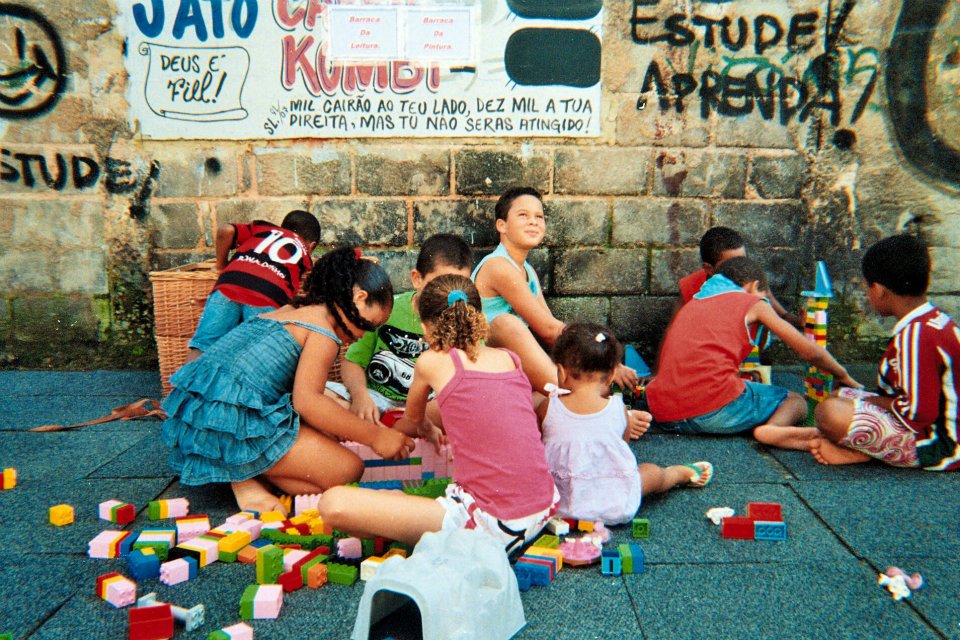
Children building together with blocks, sharing space and materials at their own pace. Photograph: Frontierofficial
Image Credits: Wikimedia Commons
A shy child at the edge of a playground is not necessarily unhappy. Many children watch a game carefully before they join it, learning the rules, the players, and the rhythm before stepping in.
That watching has a name in child development: onlooker play. It is a normal stage, and it often comes before a child feels ready to take part.
This article explains how to help a shy child join group play, including why watching counts as progress, how parallel play bridges the gap, what roles and routines help most, and what to avoid.
Watching is not failing
Children move through stages of social play. In onlooker play, typically seen around ages 2.5 to 3.5, a child watches others play and may comment or ask questions without joining directly.
Adults sometimes read this as loneliness or fear. Research summaries of these stages note that onlooker play is a normal developmental stage, and children in it are often figuring out social rules before having a go themselves.
A child who knows who is digging, who is pouring, and who has the trucks has done real social learning. That knowledge makes the eventual step in much easier than a cold entrance.
Start beside, not inside
Parallel play is the next bridge. In this stage, children play beside rather than with others, using similar toys but without trying to change how the others play.
Rubin and colleagues suggested in 1976 that "those who play beside others may desire the company of other children but may not yet have the skills required to play in an associative or cooperative manner". A child in parallel play wants company; the shared activity is simply not there yet.
Set this up deliberately. Place a shy child at a table or sandpit edge with their own materials, close enough to see and hear the group. Over time, children in parallel play begin to share, comment, and invite, and the step into joint play grows out of that comfort.
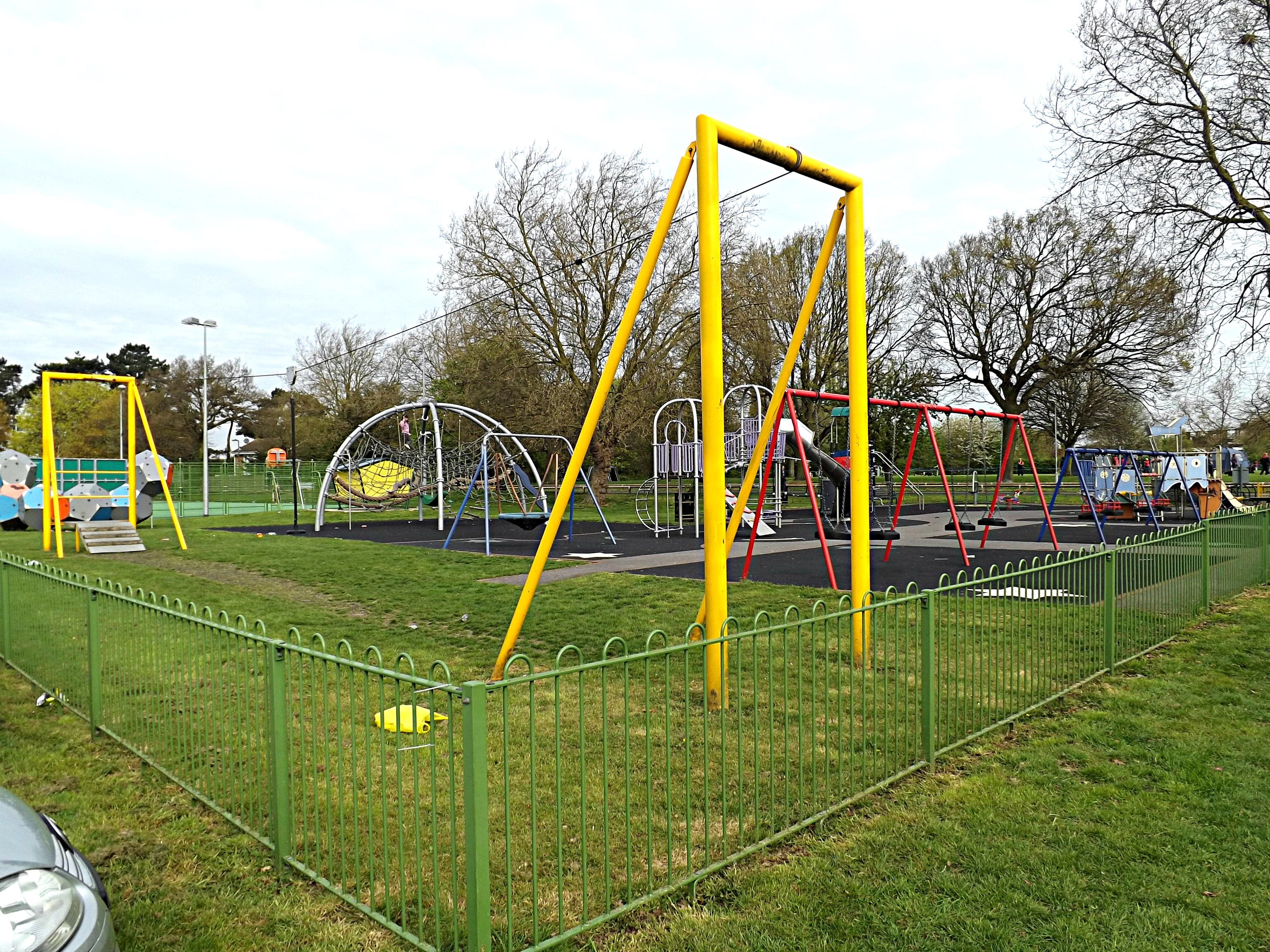
A children's playground, where group play happens at its own pace. Photograph: a children's playground
Image Credits: Wikimedia Commons
Give the child a job
A defined role lowers the hardest part of joining: not knowing what to do. In a national survey of 275 Norwegian teachers, allocating defined roles or tasks during groupwork was used by 74.5% of respondents for shy students.
The role can be small. Handing out materials, holding the scorecard, watering plants, or being the one who starts the music gives the child a reason to be in the group that does not depend on talking first.
Nonverbal encouragement helps too. In the same survey, 91.3% of teachers reported using nonverbal signs, such as small hints, comments, or a touch on the shoulder, to encourage a shy student to take part.
Rehearse the entrance
Children often imagine joining a group as a grand entrance, which feels terrifying. Teach a quieter version instead: watch for a minute, understand the game, then start a similar action alongside the group.
Role-play the moment at home. Practice walking up, watching, and saying one simple line, such as asking for a turn or offering a block. Rehearsing in a safe setting makes the real moment feel familiar rather than new.
Keep the script short. One line the child has already said out loud at home is far easier to say at the playground than a speech invented on the spot.
Keep groups small and familiar
Big groups overwhelm shy children more than small ones do. Start with one-on-one playdates, ideally at home, where the child feels secure and the activity is planned.
A familiar playmate changes the whole equation. Pairing a quieter child with a kind, steady peer gives them a safe base inside the group and a model for how interaction works.
Arrive early to parties and playdates when possible. Walking into an empty room and watching it fill is much easier than walking into a full, noisy one.
What not to do
Do not push a shy child into the middle of a group and tell them to go play. Forced entry raises anxiety and can make the next attempt harder, not easier.
Do not label the child in front of others. Calling a child shy in earshot of peers can turn a passing temperament into an identity they feel they must live up to.
Do not spotlight them either. Asking a quiet child to perform, answer first, or lead the game in front of everyone puts the pressure exactly where it hurts most.
When to seek more help
Most shy children grow more confident with time, practice, and low-pressure chances to play. Steady progress, even slow progress, is a good sign.
If a child shows persistent distress around peers, avoids all social contact, or the difficulty is getting worse rather than better over months, talk to their teacher or pediatrician. They can tell whether extra support would help and what kind fits.
Frequently asked questions
Is my child shy or just slow to warm up?
Many children described as shy are simply slow to warm up: they observe first and join once a situation feels safe. Temperament varies widely, and watching before joining is a normal pattern, not a problem on its own.
Should I force my child to join group play?
No. Gentle steps such as parallel play, a small role, and a familiar playmate build confidence, while forced entry tends to raise anxiety. Progress measured in small steps lasts longer than one pushed moment.
How long does it take a shy child to join in?
There is no fixed timeline. Some children need minutes of watching, others need weeks of parallel play first. Consistent, low-pressure chances matter more than speed.
What if my child only plays with one friend?
One strong friendship is a good foundation, not a failure. A trusted friend can become the bridge into wider group play, since the child enters the group alongside someone safe.
The bottom line
Helping a shy child join group play is a sequence, not a single push: let them watch, let them play beside the group, give them a small job, and rehearse the entrance at home. Each step lowers the pressure of the next one.
Start this week with one small move: a short playdate with one familiar child and a planned activity. Confidence built that way tends to carry into the playground on its own.
Tags: shyness, play, parenting
Rive News is a research desk covering everyday science, home, health, and money topics in plain language.
Related
- How to Help a Shy Child Make Friends
- What is parallel play and why it matters
- What is parallel play in toddlers?
- What Is the Best Way to Praise a Child So It Builds Confidence
Subscribe for one plain-language explainer each morning.
Rive News publishes research-desk explainers; corrections are noted on the article page.
Related stories
Why babies cry more in the evening: the witching hour explained
The witching hour is the fussy evening stretch most newborns hit daily. Why overtiredness, cluster feeding, and overstimulation stack up
When Do Babies Start Sleeping Through the Night by Month?
Most babies sleep through the night between 3 and 6 months, with regressions at 4 and 8 to 10 months. See the month-by-month table

Why Your Baby Wakes Up the Second You Put Them Down
Newborns wake when put down as the startle reflex, light sleep, and lost warmth hit at once. It is normal and peaks early, fading