
Why kids cover ears at loud sounds
By Rive News / Research desk | Rive News / Published October 26, 2026 at 9:00 AM PKT
Key takeaways
- Young children hear more than they can filter, so sudden loud sounds feel stronger to them than to adults.
- Temporary sound sensitivity most often appears between 18 months and 3 years, then fades.
- Covering ears is a practical coping move, not misbehaviour, and it deserves a calm response.

[A young girl covers her ears as an aircraft passes by.] Photograph: NATO E-3A Component
Image Credits: Wikimedia Commons
A child who claps hands over their ears at a vacuum cleaner, a hand dryer, or a siren is usually doing something sensible. Their hearing works well, but their brain's sound filter is still under construction, so a sudden noise arrives at full strength. This article explains why kids cover their ears at loud sounds, the developmental window when it peaks, and how to tell normal sensitivity from something worth raising with a clinician.
Young ears hear more than young brains can handle
Toddlers hear better than adults in one important sense: they notice more. Paediatric nurse Elizabeth Dick told Romper that toddlers hear better than adults, so it is not abnormal for a typically developing toddler to be more sensitive to noises that may not seem loud to an adult or older child. The problem is not the ears, it is what happens next.
A young brain is still learning to filter sound. Fauquier ENT explains that the auditory system matures faster than emotional regulation, so toddlers can hear and notice more detail without yet having the ability to understand or cope with unexpected sounds. An adult brain quietly files a vacuum cleaner under background noise.
A toddler brain has not finished building that filing system.
Awareness also arrives before tolerance. Fauquier ENT notes that as children grow, they often become more aware of sounds before they become comfortable with them. A child who ignored the blender at 12 months may flinch at it at 2 years, not because their hearing worsened, but because their awareness sharpened first.
The filter catches up later.
Why sudden sounds are the worst
Predictability is the key difference. A child who bangs a toy drum expects the noise, so their nervous system stays calm. A hand dryer that roars without warning gives no such preparation.
Red Door Pediatric describes this as a collapse of two defences at once: the volume control fails, and the surprise registers as a threat, triggering a fight-or-flight response.
That is why the classic triggers are sudden, loud, and out of the child's control. Fauquier ENT lists vacuum cleaners, blenders, flushing toilets, hand dryers, loud voices, sirens, and barking dogs. A fire alarm or a balloon popping combines all three qualities at once, which is why those sounds produce the strongest reactions.
Covering the ears is the child's solution. It turns the volume down by a useful amount, it gives the child something to do with their hands, and it signals distress to nearby adults. It is a coping strategy, not defiance, and treating it as one keeps the child calmer than scolding ever will.
The normal window: 18 months to 3 years
Temporary sound sensitivity most commonly appears between 18 months and 3 years of age, according to Fauquier ENT, a period of rapid brain growth and sensory integration. The pattern typically fluctuates, with some days better than others, and it often fades as quickly as it arrived. This is the same developmental logic as a brief picky-eating phase or a sudden fear of new situations: a system mid-construction behaves unevenly.
Romper's experts make the same reassuring point from the other side. Paediatric nurse Elizabeth Dick told Romper that toddlers cover and play with their ears for many benign reasons, including learning how their body works and how it interacts with the environment. A toddler preoccupied with a body part is not automatically a toddler in trouble.
The phase also explains why a child can love loud music yet hate the vacuum. Music they control is predictable and chosen. A vacuum is neither.
Judging sensitivity by the loudest sound a child tolerates misses the point entirely, since control and surprise matter more than decibels.
What helps in the moment
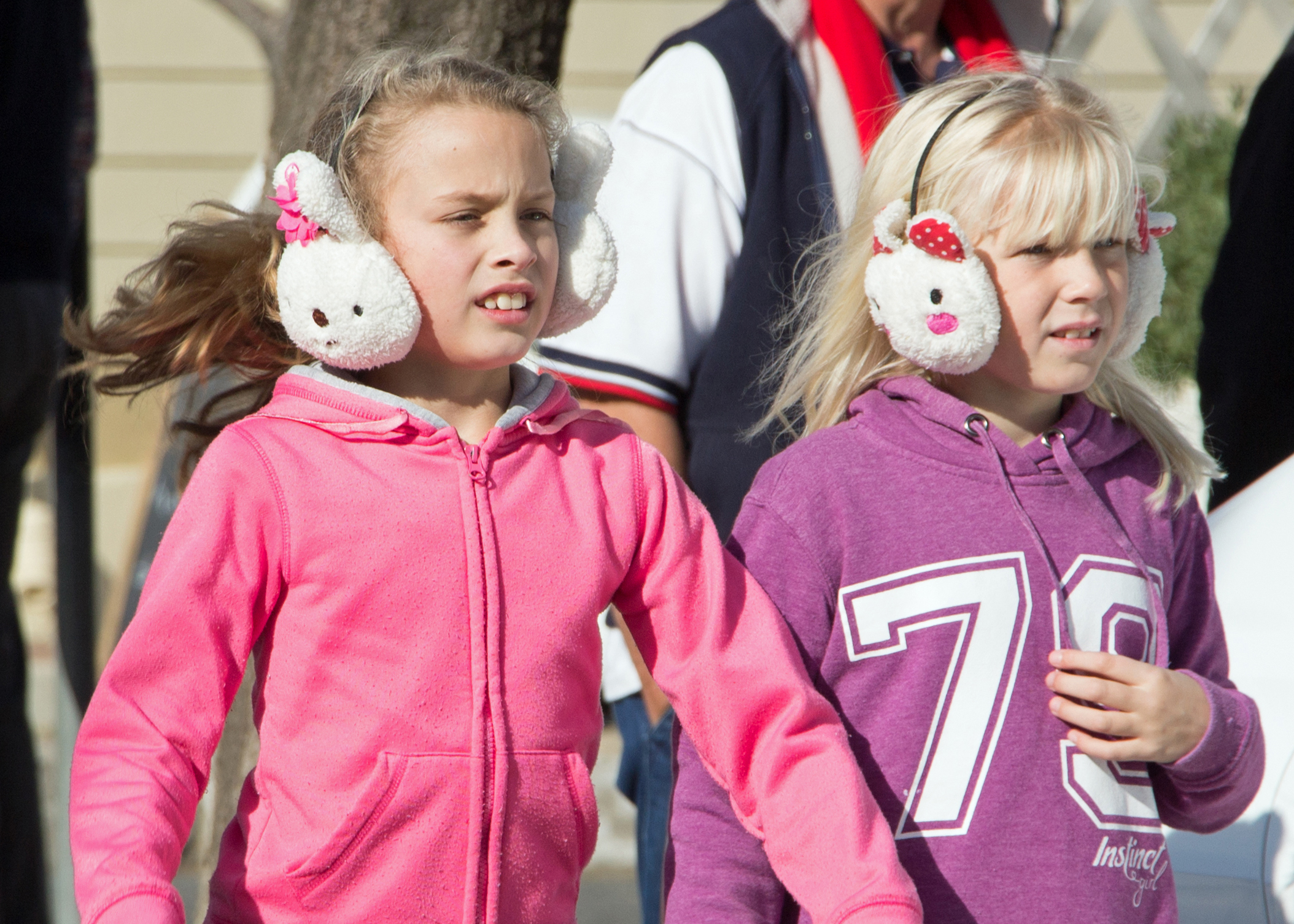
[Girls wearing earmuffs.] Photograph: Wikimedia Commons contributor
Image Credits: Wikimedia Commons
Warning helps more than shielding. Telling a child the vacuum is about to start, then counting down together, turns a surprise into an expected event. Letting them watch from another room, or press the start button themselves, adds control.
Both reduce the threat response without removing the sound entirely.
Ear defenders are a practical tool for genuinely loud situations, such as fireworks or a concert. DrSensory notes that small studies found ear defenders improved sound-related behaviour and lowered stress arousal in autistic children, while audiology guidance advises against hearing protection when sound levels are safe. The sensible rule is simple: use defenders for loud events, not for everyday household noise.
Gradual exposure helps over time, but only at the child's pace. A vacuum heard from the next room, then the doorway, then the same room, builds tolerance in steps. Forcing a distressed child to endure a sound teaches them that their signals do not work, which makes the next reaction bigger, not smaller.
When to ask a clinician
Most ear-covering is developmental and temporary. A few patterns deserve a professional conversation. Romper quotes paediatrician Whitney Casares, MD, who advises that if a child starts consistently covering their ears without any obvious explanation, it makes sense to have them evaluated by their paediatrician.
Keeping a simple log of when it happens, and what happened just before, gives the clinician useful information.
Persistent sensitivity is a different picture from a passing phase. DrSensory explains that hyperacusis, everyday sound registering as too loud or painful, is a neurological difference in how the brain processes sound, not a behavioural choice. It can occur with autism, where adverse responses to specific sounds are among the sensory reactivity examples in the DSM-5, though a diagnosis does not require it.
Pain, escalating avoidance, or sensitivity that stops a child attending school or leaving the house are all reasons to raise it with a doctor.
Ear-covering alongside other signs, such as pulling at the ears, fever, or discharge, points a different way again, toward an ear infection or ear pain rather than sensitivity. This article is general information, not a diagnostic guide, and a clinician can sort out which picture fits a particular child.
Frequently asked questions
Is it normal for toddlers to cover their ears?
Yes, in most cases. Temporary sound sensitivity commonly appears between 18 months and 3 years, as hearing awareness develops faster than the brain's sound filter.
Why does my child hate the vacuum but love loud music?
Control and surprise matter more than volume. Music they choose is predictable, while a vacuum starts suddenly and without their control.
Do ear defenders help children with sound sensitivity?
They help for genuinely loud events such as fireworks. Audiology guidance advises against them for everyday safe sound levels.
When should I talk to a paediatrician about ear covering?
If covering is consistent without an obvious trigger, causes pain, escalates, or stops your child attending school or leaving the house, raise it with their paediatrician.
The bottom line
Kids cover their ears because their hearing outruns their filter. Between 18 months and 3 years, sudden sounds hit a brain that is still learning to sort signal from noise, and small hands over small ears are the most practical volume control available. Warn before loud sounds, give the child some control, and keep notes if the pattern persists, so a clinician has something concrete to work with if it ever needs a closer look.
Tags: child development, sensory development, toddlers
Rive News is a research desk that writes plain-English explainers from public sources, with no invented experts or first-hand claims.
Related
- Why do you blank on names but remember faces?
- Why do we get goosebumps when cold or scared?
- Why do ears ring after a loud concert, explained
- How does background noise affect concentration and focus?
Subscribe for one practical parenting explainer each week.
Rive News publishes explainers from public sources; corrections are welcomed and noted on the article.
Related stories

Why babies cry more in the evening: the witching hour explained
The witching hour is the fussy evening stretch most newborns hit daily. Why overtiredness, cluster feeding, and overstimulation stack up
When Do Babies Start Sleeping Through the Night by Month?
Most babies sleep through the night between 3 and 6 months, with regressions at 4 and 8 to 10 months. See the month-by-month table

Why Your Baby Wakes Up the Second You Put Them Down
Newborns wake when put down as the startle reflex, light sleep, and lost warmth hit at once. It is normal and peaks early, fading