
Why do ears ring after a loud concert, explained
Key takeaways
- The post-concert ring is tinnitus, usually a temporary threshold shift caused by overworked inner-ear hair cells.
- Rock concerts reach 95 to 115 dB, a level the CDC says can cost you hearing in minutes.
- The ringing often fades within hours or days, but repeated loud nights can cause lasting damage.
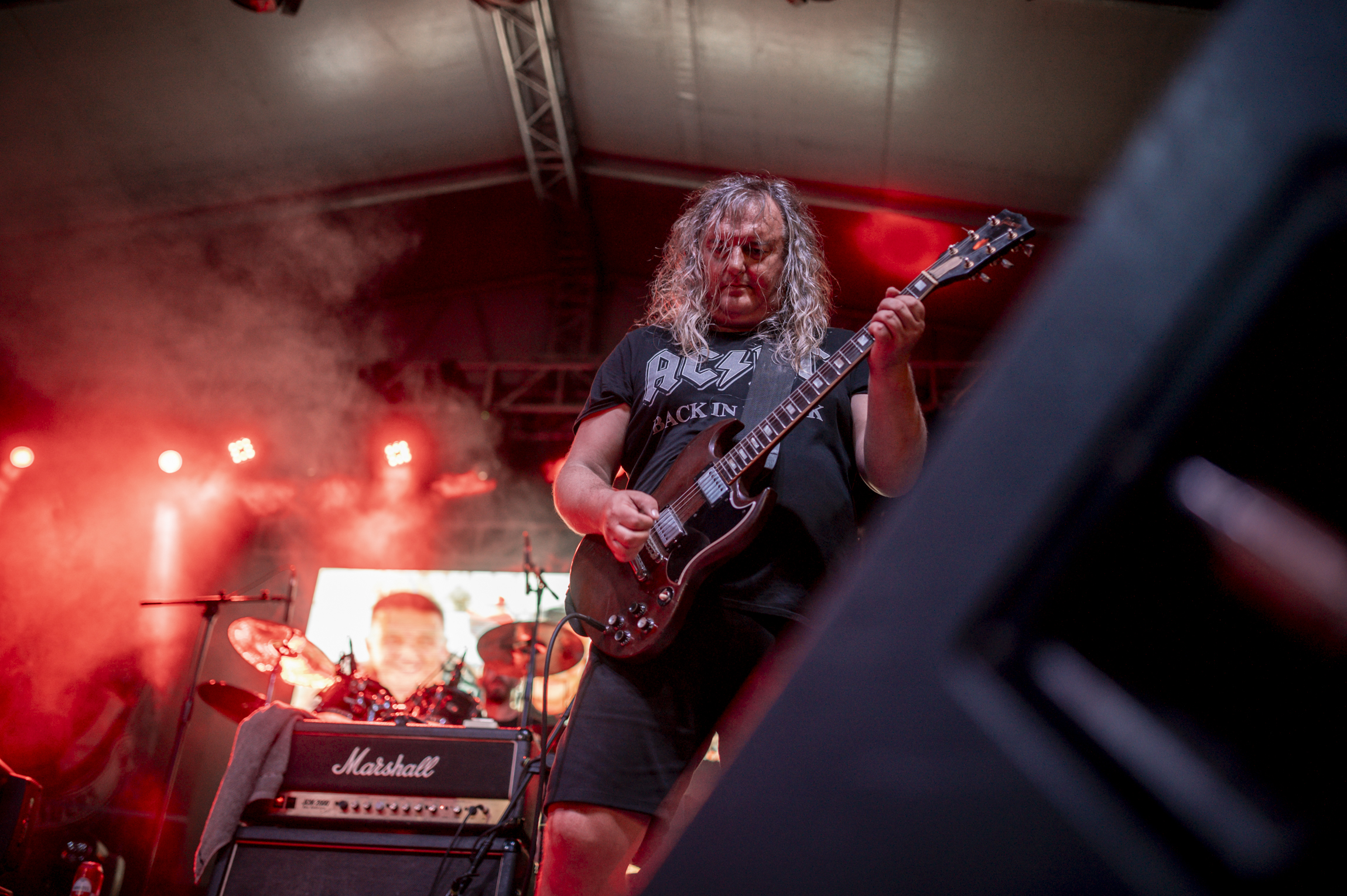
That high-pitched whine on the drive home has a name: tinnitus. It is the answer to why do ears ring after a loud concert, and it is not a sound in the room. It is a sound your own auditory system produces after being pushed past its comfort zone.
Doctors describe the common version as a temporary threshold shift, which is a measurable short-term change in hearing after loud noise exposure. In plain terms, your normal hearing threshold gets worse for a while, so you hear less well than usual and a phantom ring fills the gap.
This article explains what that ringing is, why a loud concert triggers it, how long it usually lasts, when it signals something more serious, and what actually protects your ears at the next show.
What that ringing actually is
Tinnitus is the medical word for hearing ringing, buzzing, or roaring that comes from inside the ears or the head rather than from the world around you. The National Institute on Deafness and Other Communication Disorders (NIDCD) notes it can appear in one ear or both, and it may fade with time or continue off and on through a person's life.
After a concert, the ringing is usually temporary. The hair cells of your inner ear, which convert sound vibrations into signals your brain understands, get overworked by the sheer intensity of the noise. Hearing specialists call the result a temporary threshold shift.
A temporary threshold shift brings a small cluster of symptoms. After loud noise you may notice a feeling of fullness in the ears, ringing or buzzing in one or both ears, muffled hearing, and even a slight sense of being off balance. All of these are the auditory system's way of saying it needs a break.
The idea is easier to grasp if you compare it with another body quirk. Just as fingers wrinkle in water as a short-term response to the environment, the ringing is a short-term response to an environment that was simply too loud.
Why ears ring after a loud concert: the inner-ear story
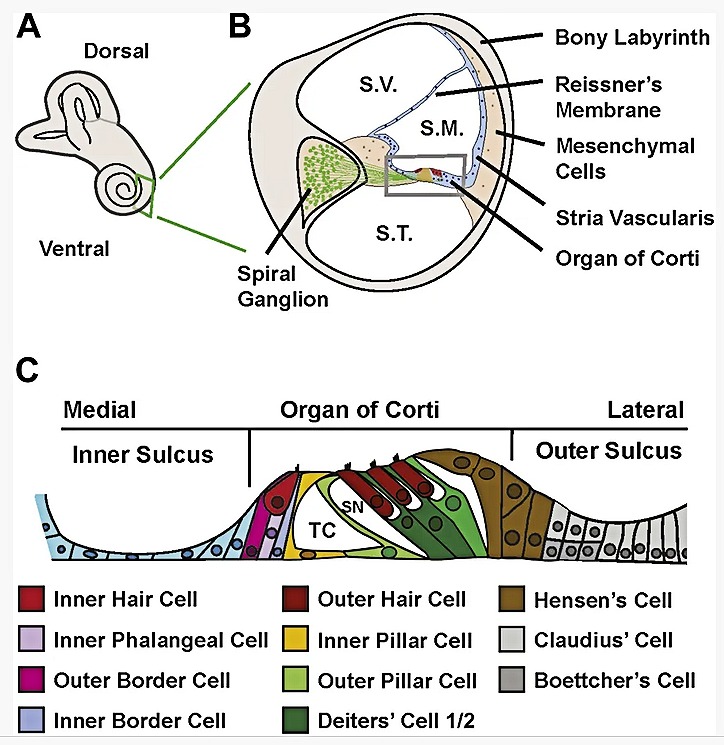
To see what a concert does to you, it helps to know how hearing works. Sound waves travel down the ear canal and vibrate the eardrum. Three tiny middle-ear bones pass those vibrations into the fluid-filled cochlea of the inner ear.
Inside the cochlea sits the basilar membrane, and riding on it are thousands of sensory hair cells. As the membrane moves, microscopic projections on top of the hair cells bend against an overlying structure.
That bending opens channels that create an electrical signal, which the auditory nerve carries to the brain. The NIDCD lays out this chain step by step in its noise-induced hearing loss guide.
A concert overloads this chain. The CDC puts rock concerts, parties, and nightclubs at 95 to 115 dB, and warns that you can lose some of your hearing after just a few minutes at that level.
Standing near the speakers is worse. Audiologist Steve DeMari, director of business development and education at CaptionCall, notes levels there can reach 110 decibels. "That's extremely loud," he said.
At that intensity, the tiny hair cells get temporarily damaged by the force of the sound. That is the direct cause of the muffled hearing and the ringing that follows.
The NIDCD adds an uncomfortable detail: unlike the hair cells of birds and amphibians, human hair cells do not grow back. Once they are gone, they are gone for good.
Loudness and time multiply each other. The NIDCD explains that long or repeated exposure to sounds at or above 85 dBA can cause hearing loss, and the louder the sound, the shorter the time it takes for damage to happen. A two-hour show at 100 dB and a few minutes pressed against a stage speaker can both leave the same whine behind.
This multiplying effect is why distance matters. The CDC advises moving away from the speakers, because it is even louder near them. A few rows back, the same show hits your ears far less hard.
How long the ringing usually lasts
For most people, the ringing is gone by morning. The NIDCD reports that temporary hearing loss from loud noise often disappears 16 to 48 hours after exposure. Hearing specialists describe a similar window: symptoms usually resolve within a few hours, though longer or more intense exposure can stretch the recovery to days or even weeks.
"When they say temporary, they truly do mean temporary," DeMari said. A single loud night is unlikely to cause permanent damage on its own. The auditory system recovers, the threshold shift reverses, and the ringing fades with it.
Still, recovery is not the whole story. The NIDCD cautions that recent research suggests that even when hearing seems to return to normal, there may be residual long-term damage. Each loud episode can leave a small residue that a standard hearing test does not catch.
A small 2023 study of bartenders found that 75 percent experienced a temporary threshold shift greater than five decibels after exposure to loud music at work. In practical terms, quiet sounds had to be five or more decibels louder than usual before those workers could hear them.
The pattern repeats across loud environments, not just music venues. It is the same class of phenomenon as goosebumps when you are cold or scared: an automatic, short-lived bodily response. The difference is that the ear's response carries a cumulative cost.
When ringing means more than a loud night
Occasional ringing after a show is common. Ringing that keeps coming back, or that lingers for weeks, deserves more attention.
According to a review of threshold shifts in the journal Otology and Neurotology, frequent temporary threshold shifts can turn into a permanent threshold shift. In other words, repeated loud exposure can permanently damage the hair cells and lead to lasting hearing loss.
The warning signs are straightforward. If the ringing does not fade within a few weeks, hearing specialists advise checking in with an audiologist, an ear-nose-and-throat doctor, or another hearing professional. Ringing in only one ear that will not quit, or ringing paired with a noticeable drop in hearing, is worth getting evaluated rather than waiting out.
It is worth repeating the NIDCD's central reassurance: noise-induced hearing loss is the one type of hearing loss that is completely preventable. Understanding which noises are hazardous, wearing earplugs at loud events, and moving away from the source when you cannot turn it down will protect your hearing for life.
This article is for general information, not medical advice. If ringing persists, affects your sleep or concentration, or arrives with hearing loss, dizziness, or ear pain, talk to a qualified health professional rather than self-diagnosing.
Protecting your ears without ruining the show
The simplest protection is also the cheapest: earplugs. The CDC points out that the band on stage is wearing them too. Foam plugs cost almost nothing, and musician-grade plugs lower the volume evenly so the music still sounds like music, only safer.
Distance is the second lever. Sound intensity drops fast as you move away from the source, so stepping back from the speaker stacks makes a real difference. Taking short breaks in quieter areas, like the lobby or the back of the venue, gives your ears recovery time during a long night.
Volume discipline matters beyond concerts too. The CDC lists headphones at maximum volume at 96 to 110 dB, with damage possible in just a few minutes.
None of this requires giving up live music. It only requires treating loud sound the way you would treat any other strong stimulus: enjoyable in doses, harmful without limits.
The ringing after a concert is your ears filing a report. It is smart to read it.
How long should ear ringing last after a concert?
Most episodes fade within a few hours, and temporary hearing loss typically clears 16 to 48 hours after exposure, per the NIDCD. If the ringing is still there after a few weeks, get your hearing checked.
Does ringing ears mean my hearing is damaged?
A single episode usually reflects a temporary threshold shift, not permanent damage. But the NIDCD notes some residual harm can remain, and repeated episodes are what turn temporary shifts into lasting hearing loss.
Why does only one ear ring sometimes?
Tinnitus can occur in one ear or both, according to the NIDCD. Asymmetry often comes down to position: the ear facing the speaker stack takes the harder hit. The CDC notes that sound is even louder near the speakers, so where you stood explains a lot.
Will earplugs ruin how the music sounds?
No. Basic foam plugs lower everything a little, and the CDC notes the performers on stage wear protection themselves. Musician-style earplugs reduce volume evenly across pitches, so the mix stays balanced at a safer level.
Outlook
The ringing after a loud concert is tinnitus, and in most cases it is a temporary threshold shift that fades within hours or days. It happens because sound at 95 to 115 dB overworks the hair cells of the inner ear, and those cells deserve the recovery time.
The takeaway is that the occasional ring is a warning, not a verdict. One loud night rarely causes permanent harm, but the damage adds up and human hair cells do not regenerate.
If the ringing does not fade within a few weeks, or it comes with hearing loss or dizziness, see an audiologist or hearing specialist. Next time you head to a show, toss earplugs in your pocket before you leave.
Tags: tinnitus, concert hearing, noise exposure, ear health, temporary threshold shift
Latest in Health
- Why do we get goosebumps when cold or scared?
- Why do fingers wrinkle in water like prunes?
- Why does your nose run in cold weather?
- Why do we cry emotional tears vs onion tears differently?
Subscribe to the Rive News newsletter for one plain-English health explainer every morning.
Related stories

ADHD linked to fourfold dementia risk in Pitt study of 187,000 adults
Adults with ADHD face four times the risk of dementia, a University of Pittsburgh study of 187,000 adults published in JAMA Psychiatry

Why Do Athletes Get Cramps Despite Drinking Water?
Muscle cramps strike even well-hydrated athletes because sweat drains electrolytes that plain water cannot replace. Here is why water alone

Do bananas actually prevent muscle cramps?
A medium banana has 422 mg of potassium, but the evidence says it cannot stop cramps. Here is what the research shows, and what actually