
Why Do Babies Cry More With Mum Than With Strangers?
Key takeaways
- Babies cry most around the person they feel safest with, because they trust that person to respond.
- A Harvard study found babies are irrationally fussy through the first 12 months, with crying peaking in intensity around week 12.
- A mother's brain lights up within a second of hearing a cry, making her biologically tuned to react fast.
Babies do not distribute their tears evenly. A baby can sit quietly with a grandparent, a friend, or a neighbor, then wail the moment mum walks through the door.
Parents often read this as a verdict on their parenting. The research points the other way: the crying is a sign of trust, not failure.
This article takes a closer look at why babies cry more with mum than with strangers, including the safe-haven role of the mother, the brain and hormone changes behind her fast response, and why strangers get the calm version.
Why a baby saves the loudest cries for mum
A baby knows its mother before it is born. From the womb, it hears her voice and learns her scent across roughly nine months of pregnancy, according to parenting research summarized by SOS Parent. At birth, she is the only person the baby fully recognizes.
That familiarity sets up a simple equation. The baby associates mum with feeding, warmth, and rescue.
So when something feels wrong, it saves its most urgent signal for the person most likely to fix it. With a stranger, the baby does not know whether crying will help, so it often holds back or freezes instead.
This is why experts describe the mother as the baby's "safe haven." The term comes from attachment theory, which holds that infants use a trusted caregiver as a base they return to when alarmed. Crying at mum is the baby returning to base.
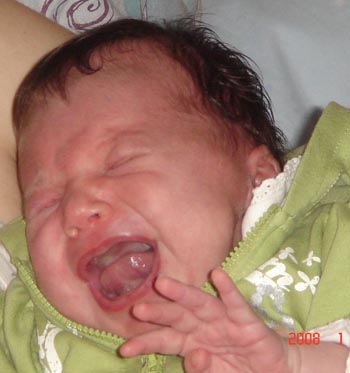
A crying infant. Photograph: Brazzouk/Wikimedia Commons
How the safe-haven bond works
Attachment researchers describe a loop. The baby signals distress.
The caregiver responds. The baby learns that the signal works. Over hundreds of repetitions, the baby builds a working model: with this person, crying gets results.
Mums run more repetitions of that loop than anyone else in the early months. If she is nursing or on maternity leave, she may spend more hours with the baby than any other person, as The Mummy Bubble notes. More time together means more answered cries, which means a stronger expectation that crying will be answered again.
This also explains a painful asymmetry. A father can do half the parenting and still get less crying.
It is not a scorecard. It is biology plus exposure: the baby maps its most urgent needs onto the person who has met them most often.
The Harvard University study cited by The Mummy Bubble adds a further layer. It concluded that babies are irrationally fussy through their first 12 months, with crying growing in intensity and frequency over the first 12 weeks. In other words, the peak of mum-directed wailing arrives just as the bond is still forming.
The biology behind the faster response
The mother's side of the equation is just as physical. Generation Mindful summarizes brain-imaging research showing that a mother's brain lights up within a second of hearing her baby cry, in areas linked to empathy, compassion, and alarm. Hearing a baby cry activates a physiological response that she cannot easily control.
Oxytocin plays a central role. The hormone is released in large quantities during labor and continues to be released during breastfeeding and cuddling. Research summarized in the same article shows that oxytocin makes mothers more sensitive to their babies' cries, and that the response time to a crying baby is almost twice as fast as for most other sounds.
When a mother then comforts the baby, her own reward and pleasure areas light up. Her brain physically rewards the act of calming the child.
This creates a fast feedback loop: cry, respond, reward, repeat. Strangers do not have this loop, so they often respond more slowly or less completely, which teaches the baby that crying at them is less useful.
The baby also has reflexes that push it toward mum. The Moro reflex makes newborns throw out their limbs and pull them back when they feel unsupported, an instinct to cling to the parent. Everything in the newborn toolkit points at one target.
Why strangers get the calm version
If crying is communication, strangers are an unfamiliar audience. A baby that does not know someone tends to watch, go quiet, or look away rather than escalate. That is not happiness; it is caution.
Developmental timing makes this visible. Fear of strangers typically starts at 5 to 6 months and becomes more intense at 7 to 10 months of age, according to parenting guidance published by Calendar UK.
By three months, babies can already tell their mother's face from a stranger's. So the calm-baby-with-strangers effect often strengthens exactly when stranger awareness peaks.
There is a second mechanism at work with non-mum caregivers: novelty. With dad, a grandparent, or a friend, the baby is busy processing an unfamiliar voice, face, or way of being held.
Curiosity competes with distress. SOS Parent describes relatives as objects of curiosity for the baby, who is studying how the new world works while mum remains the link between life in the womb and life outside it.
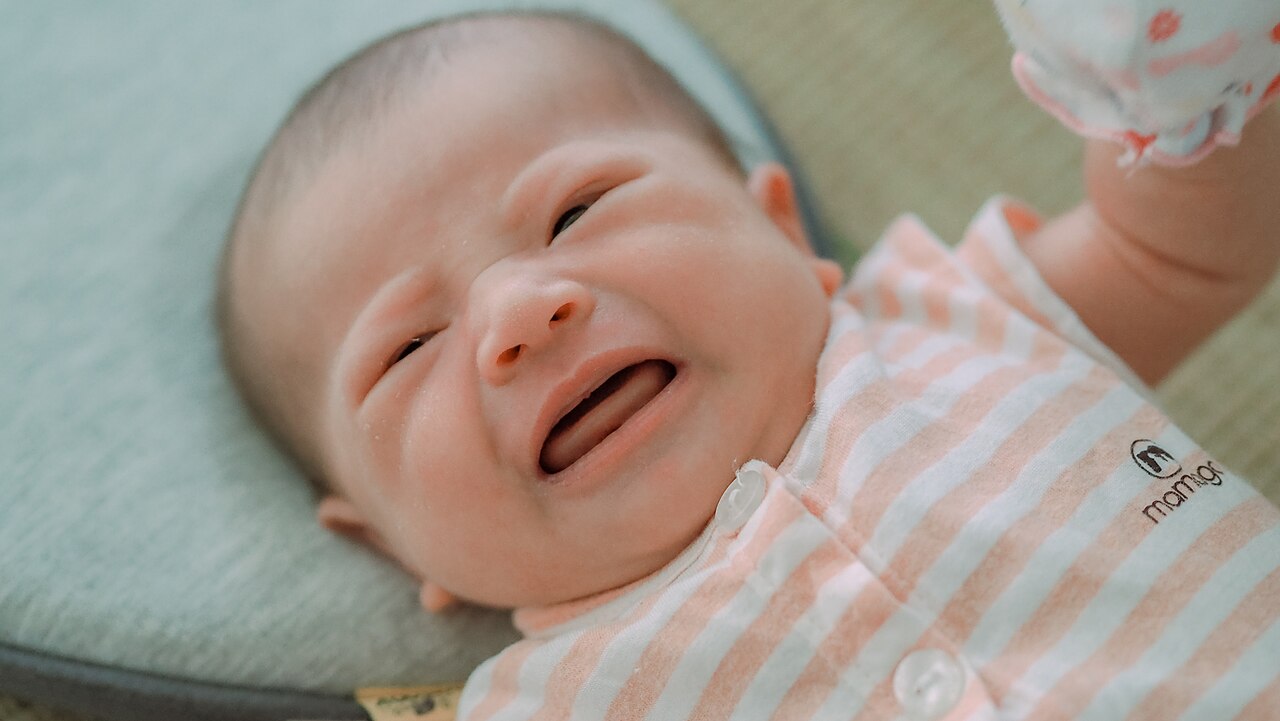
A crying infant mid-cry. Photograph: KAI Productions/Wikimedia Commons
None of this means dads or other caregivers are doing something wrong. It means the baby has sorted the people in its life by reliability, and mum sits at the top of the list.
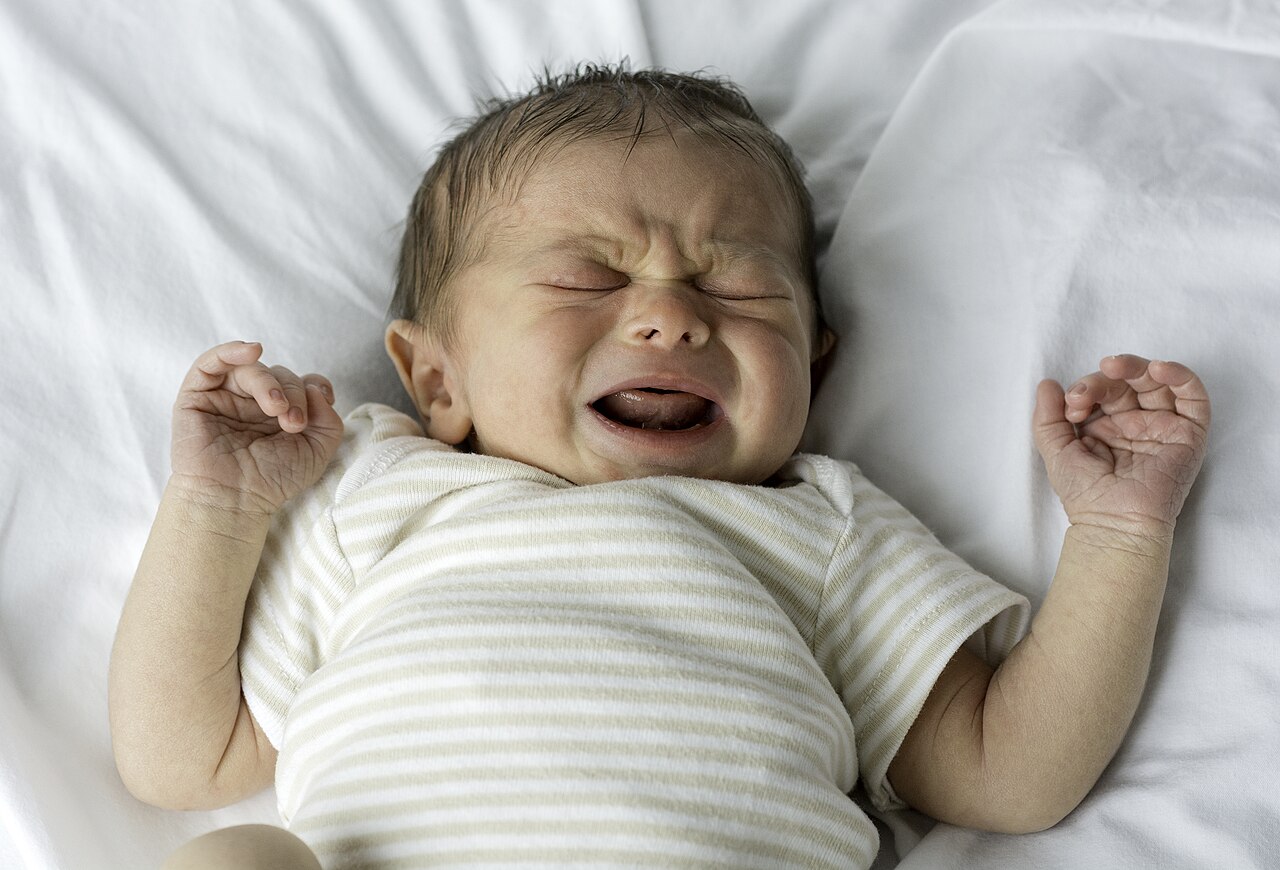
A crying newborn. Photograph: Evan-Amos/Wikimedia Commons
When the crying feels personal
It can sting when a baby who was fine all day melts down at the sight of mum. Reframing helps.
The baby is not saying you are bad at this. It is saying you are the one person it trusts completely.
There are practical things that reduce the sting.
First, expect the evening surge: many babies cry more in the late afternoon and evening, a pattern sometimes called the witching hour.
Second, check the basics before the story. Hunger, tiredness, a wet diaper, and overstimulation cover most episodes.
Third, trade off when you can. A different caregiver holding the baby while mum rests can break the cycle, since the baby may settle faster with someone it does not associate with feeding.
The baby's preference is also worth keeping in perspective. The same attachment system that makes a baby cry at mum also makes it light up at her smile. The loud tears and the big grins are two sides of one bond.
For a related look at how young children sort the world around them, see why toddlers label every animal a dog.
Frequently asked questions
Is it normal for a baby to cry more with mum than dad?
Yes. It is one of the most commonly reported patterns in early parenting.
The baby associates mum with feeding and comfort, responds to her faster, and trusts her to answer. Dads and partners often get less crying for the same reason: the baby has mapped its urgent needs onto one person.
Does a baby crying for mum mean the dad is doing something wrong?
No. The pattern follows time spent together and the feeding relationship, not parenting quality.
A baby can be securely attached to two parents and still cry hardest at the primary one. Partners can help by giving mum breaks, since the baby often settles more easily with someone else in the room.
At what age does stranger anxiety peak?
Fear of strangers typically appears around 5 to 6 months and peaks between 7 and 10 months, according to pediatric guidance summarized by Calendar UK. Most children outgrow the intense phase well before their second birthday, though shy temperaments can extend it.
Can a baby recognize its mother's voice before birth?
Yes. Babies hear in the womb from about the third trimester and learn to recognize their mother's voice and scent across the roughly nine months of pregnancy. That prenatal familiarity is part of why the newborn prefers her from day one.
The bottom line
Babies cry more with mum than with strangers because she is the person they trust most. Nine months of prenatal familiarity, a faster biological response wired by oxytocin, and hundreds of answered cries teach the baby that mum is the safe haven where distress gets solved. The loudest tears are a compliment dressed as a complaint.
If you are the mum in this story, the crying is evidence that you are doing the central thing right: being the person your baby believes will always come. For more on how the senses shape early bonding, read about why music gives you goosebumps and how cats purr at the vet even when scared.
Latest in Parenting
- Why do toddlers call every animal a dog?
- Why do you get goosebumps from music?
- Why do cats purr at the vet even when they are scared?
Subscribe for one clear explainer every morning.
Image Credits: Wikimedia Commons / Brazzouk, KAI Productions, Evan-Amos
Related stories
Why babies cry more in the evening: the witching hour explained
The witching hour is the fussy evening stretch most newborns hit daily. Why overtiredness, cluster feeding, and overstimulation stack up
When Do Babies Start Sleeping Through the Night by Month?
Most babies sleep through the night between 3 and 6 months, with regressions at 4 and 8 to 10 months. See the month-by-month table
Why Your Baby Wakes Up the Second You Put Them Down
Newborns wake when put down as the startle reflex, light sleep, and lost warmth hit at once. It is normal and peaks early, fading