
Why Do Cats Chatter at Birds? Predatory Instinct Explained
Key takeaways
- Cat chattering is a rapid jaw tremor triggered when a cat sees prey it cannot reach through glass.
- The leading explanation mixes predatory excitement with frustration at a hunt blocked mid-sequence.
- The sound is normal in most cats and only needs attention if it comes with pacing or over-grooming.
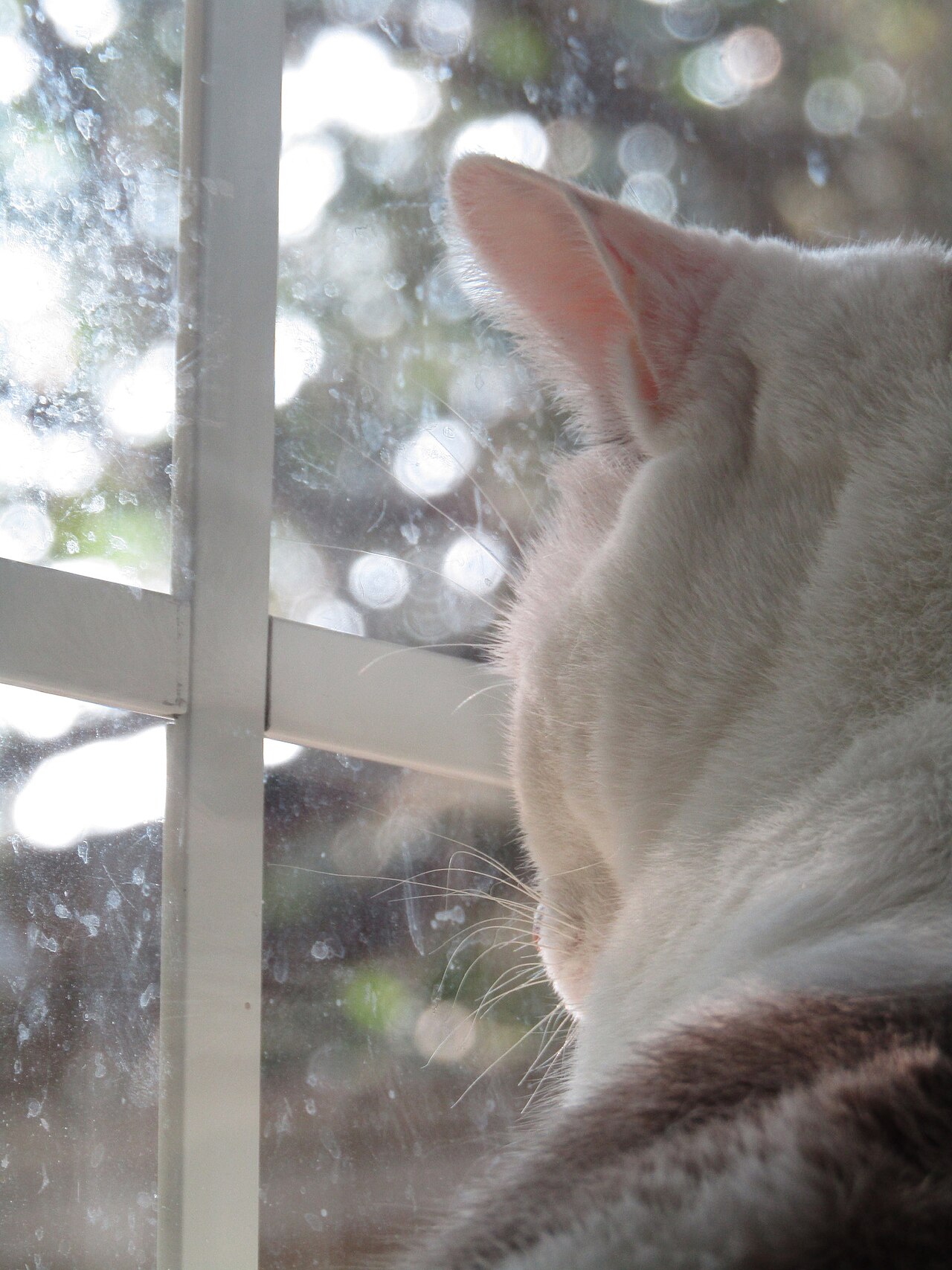
Image Credits: Wikimedia Commons / Roc0ast3r, NotFromSerbia (CC0)
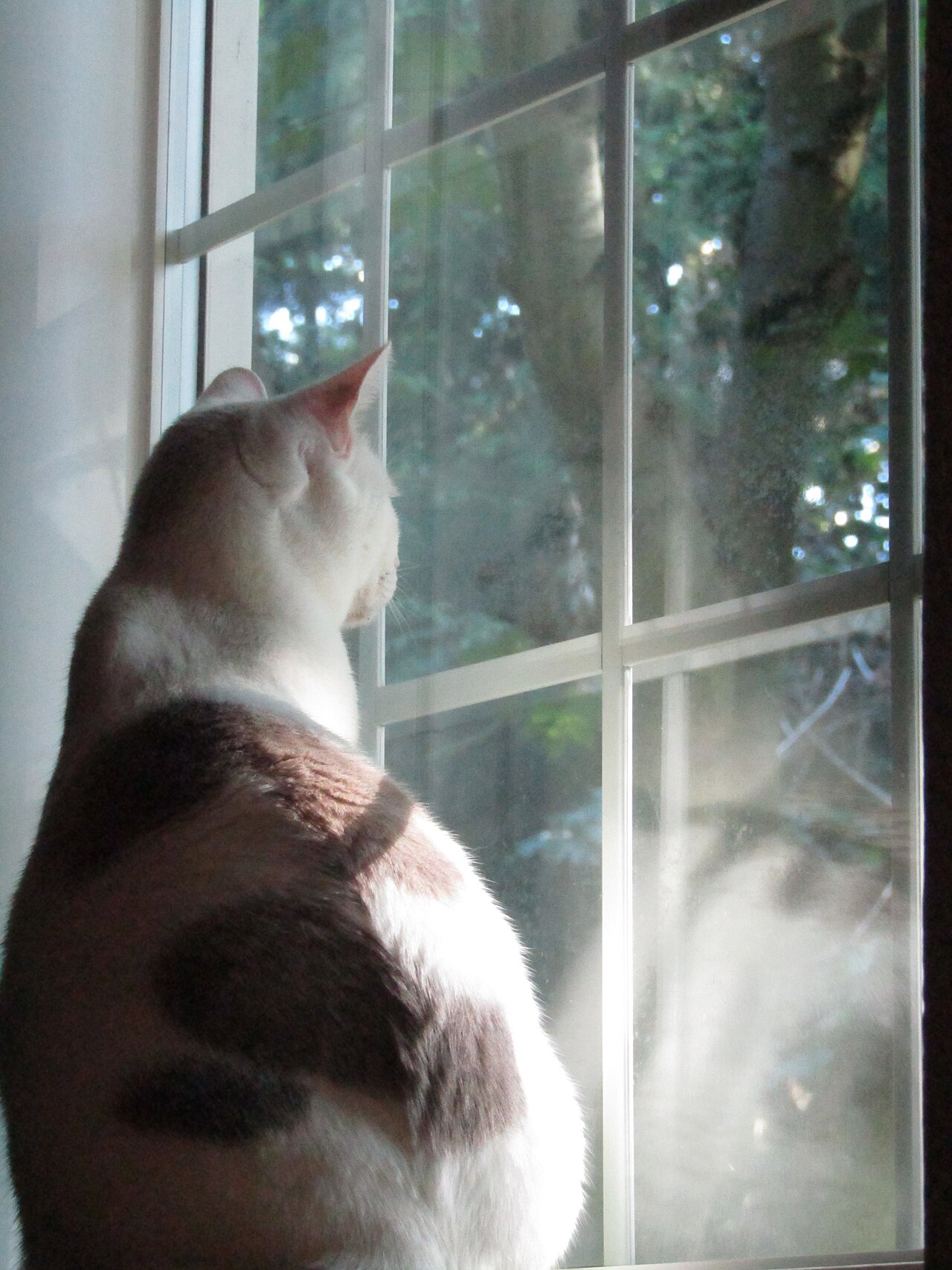
If you share a home with a cat, you have probably heard it: a staccato clicking or chattering from the jaw when a bird lands on the windowsill or a squirrel crosses the lawn. The cat freezes, pupils widen, and its teeth rattle together in a sound that is part chirp, part machine gun. It is one of the strangest noises a domestic cat makes, and it happens almost exclusively when prey is visible but unreachable.
This article explains the chattering sound, weighs the two leading explanations (frustration versus excitement), describes what is happening in the jaw itself, and covers when the behavior deserves attention.
The frustration theory: a hunt cut short
The most widely discussed explanation starts with the hunting sequence hardwired into every cat. Wild cats and their domestic cousins follow the same chain: orient toward movement, stalk, chase, grab, and deliver a killing bite with the canine teeth. Even a well-fed indoor cat that has never hunted carries these neural pathways, and the sight of fluttering wings switches them on.
The trouble arrives at the windowpane. The cat can complete the first two steps (orient and stalk) but cannot finish the sequence.
Behavioral writers call this an interrupted or frustrated behavioral loop: the body is primed to lunge and bite, yet the glass makes the final act impossible. The chattering, in this reading, is leftover energy finding an outlet, a pressure valve for an instinct with nowhere to go.
Marilyn Krieger, a certified cat behaviorist in San Francisco, describes the chattering as a sign of irritation when a barrier separates the cat from its prey, as reported by The Garden Magazine. The idea also shows up in the standard list of cat behaviors: when a cat can see prey but cannot pursue it because of a window or door, the resulting chattering may act as a way of venting frustration and relieving stress, according to Cats.com.
This theory matches what many owners observe. The chattering often comes with a tense body, a flicking tail tip, and an abrupt dash away afterward, as though the cat is shaking off a moment of high arousal.
It is a different flavor of attention from the mild curiosity behind why dogs tilt their heads when you talk, and that contrast alone shows how powerfully the predator sequence grips the feline brain.
The excitement theory: joy in the watching
Not every expert reads the sound as frustration. A second camp sees the chattering as excitement, the audible form of a brain in full predatory reward mode.
Marci Koski, a certified feline behavior and training consultant and owner of Feline Behavior Solutions in the Pacific Northwest, told Chewy that cats are intensely excited when they see a bird or squirrel and want to get their mitts on it, adding that the excited energy can result in the chattering sound. In the same Chewy report, Ingrid Johnson, a certified cat behavior consultant and owner of Fundamentally Feline in Atlanta, noted that wild counterparts like cheetahs and mountain lions also chirp or chatter, suggesting the behavior is ancient and shared across the cat family.
The excitement reading has a useful comparison. One behavior consultant compared the sound to a human mouth watering at the sight of dessert before the first bite.
The teeth snapping together, Johnson explained as reported by Chewy, is the closest the cat can get to having the prey in its mouth and quickly biting down on it. Johnson has also described indoor cats as watching "kitty cat TV" through the window, engaged and entertained rather than distressed.
Vicki Jo Harrison, president of The International Cat Association, adds that hunting instincts simply take over when cats see birds through a window, as reported by The Garden Magazine. In that view, the chatter is involuntary, a reflex fired by excitement rather than a complaint about the glass.
Both theories may be partly right. Instinct triggers the sequence; the blocked ending adds a frustrated edge. How much of each depends on the individual cat.
What the chattering jaw actually does
Strip away the theories and the sound itself is simple mechanics. The cat opens and closes its jaw very rapidly, teeth clicking or clacking, sometimes with a faint chirp layered on top. The movement closely resembles the quick bite-and-release motion a cat uses to dispatch small prey with its canines.
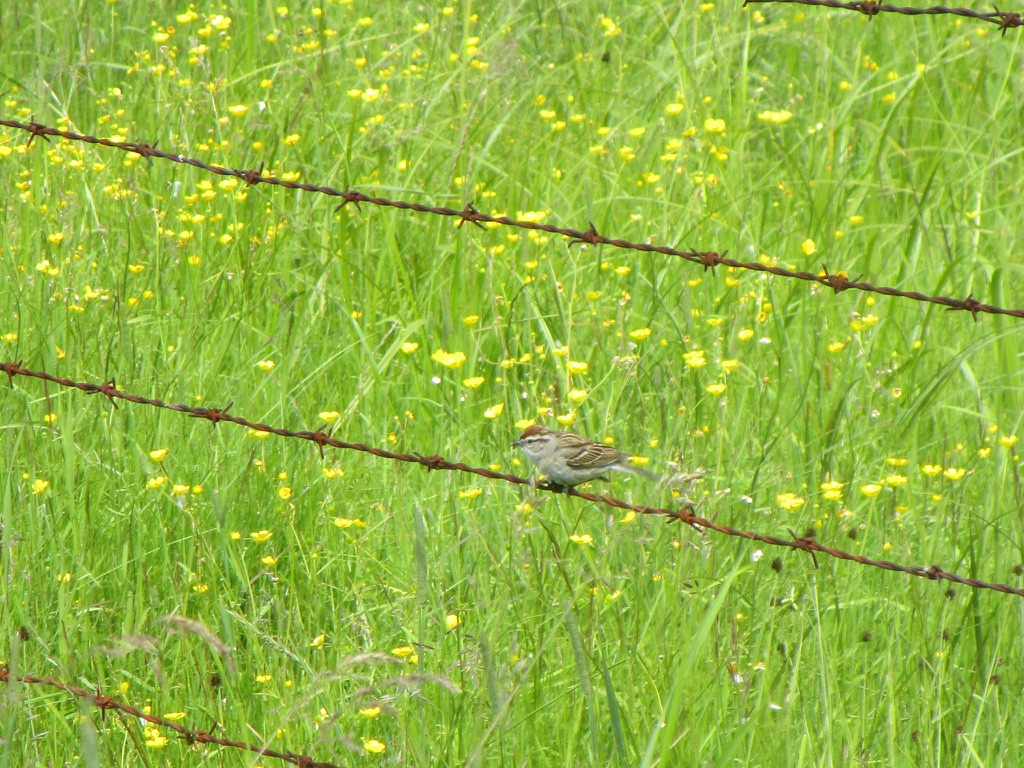
Behavior writers note that cats chirp only when separated from prey by a barrier. A cat that is actually hunting stays silent, because noise would give away its position. The chattering appears only when the hunt is already impossible, which supports the idea that it is a rehearsal of the kill bite without a target.
Sound production varies between cats. Some make a sharp kek-kek-kek chatter; others chirp softly or trill.
Kittens often start chirping at prey they can see before they have any hunting skill at all, and the behavior tends to peak in younger, high-energy cats. It usually does not hurt the cat or damage the teeth, since the jaw is moving the way it was built to move.
Should you worry about it?
For most cats, chattering at birds is healthy. It is a sign of an engaged mind and intact instincts, and many behavior consultants treat it as enrichment in itself. An indoor cat that spends its afternoons watching birds is using its senses the way evolution built them to be used.
Attention is warranted when the behavior comes with stress signals. If the chattering is followed by pacing, frantic meowing, tail lashing, over-grooming, or redirected swats at people or other pets, the cat may be tipping from engaged to genuinely agitated. Repeated exposure to unreachable prey without any outlet can keep the arousal level high, and some cats cope poorly with that.
The practical fix is to give the hunting sequence an ending. Short play sessions with a feather wand or a toy that the cat can catch and "kill" let the predatory loop run to completion.
After a satisfying play session, most cats settle instead of pacing. You can also move feeders away from favorite windows during peak bird hours, or frost the lower half of the glass, to lower the dose of unreachable temptation.
One thing not to do is punish the sound. Chattering is not a behavior problem; it is biology.
Scolding a cat for clicking its teeth at a sparrow teaches it nothing except that the window area feels unsafe, and the frustration that drives the sound will simply leak out somewhere else. A gentler path is watching for why your cat bites gently then licks, another leftover hunting signal that is normal in moderate doses.
Do all cats chatter?
No. Some cats chirp, some chatter silently, and some watch birds in total silence. The tendency varies by individual temperament, and no one type of chatter is more "correct" than another.
Is chattering at birds a sign my cat is unhappy?
Not usually. Most experts read it as excitement or focused arousal. Worry only if it pairs with pacing, over-grooming, aggression, or appetite changes.
Will my cat chatter at other animals too?
Yes. Squirrels, mice, lizards, and even fluttering insects can trigger the same response. Anything small and fast that fits the prey template can set it off.
Can I stop my cat from chattering?
You can reduce the trigger by limiting window access during busy bird hours, but there is no need to stop the sound itself. Redirect the energy into play sessions instead.
Do big cats chatter like this?
Chirping and chattering have been observed in wild cats including cheetahs and mountain lions, according to feline behavior consultants. The behavior predates domestication by a long way.
The bottom line
Cat chattering at birds is the sound of a hunter whose hunt got stuck at the glass. The best-supported explanation blends excitement at the sight of prey with frustration at being unable to complete the sequence, and the rapid jaw movement mimics the kill bite that never lands. It is normal, it is ancient, and it needs no correction.
The smart move for owners is to read it as a signal: this cat has energy to hunt, so give it something safe to catch. A feather wand and ten minutes of play turn a frustrated watcher into a satisfied predator, which is the closest an indoor cat gets to the real thing.
Latest in Pets
- Why do dogs tilt their heads when you talk?
- Why does your cat bite you gently, then lick?
- Why babies love peekaboo at a certain age
Subscribe to the Rive News newsletter for one curious explainer every morning.
Related stories
Why Does My Dog Eat Grass and Vomit?
A UC Davis study of 1,571 owners found grass eating is normal dog behavior, not self-medication: only 10% were ill first. What the science
Why Does My Dog Stare at Me While I Eat?
Dogs stare at you while you eat because it has worked before, and mutual gaze raises bonding hormones. Learn the reinforcement science
Foods toxic to dogs: the list, with reasons
Chocolate, xylitol, grapes, onions: common foods can harm dogs. Learn what makes each one toxic, the warning signs, and what to do if your