
Why your cat bites you gently then licks you
By Rive News | Research desk | Rive News | Published October 11, 2026 at 09:00 AM PKT
Key takeaways
- A gentle bite followed by a lick is usually a love bite: soft, controlled mouthing that never breaks skin, paired with grooming licks that mean your cat trusts you.
- Cats groom up to 30 percent of their waking hours, and mother cats lick and nibble kittens, so treating you the same way folds you into the family grooming circle.
- Watch for tail twitching, ears flattening, and a sudden freeze: those mean overstimulation, so stop petting calmly and never punish the bite.
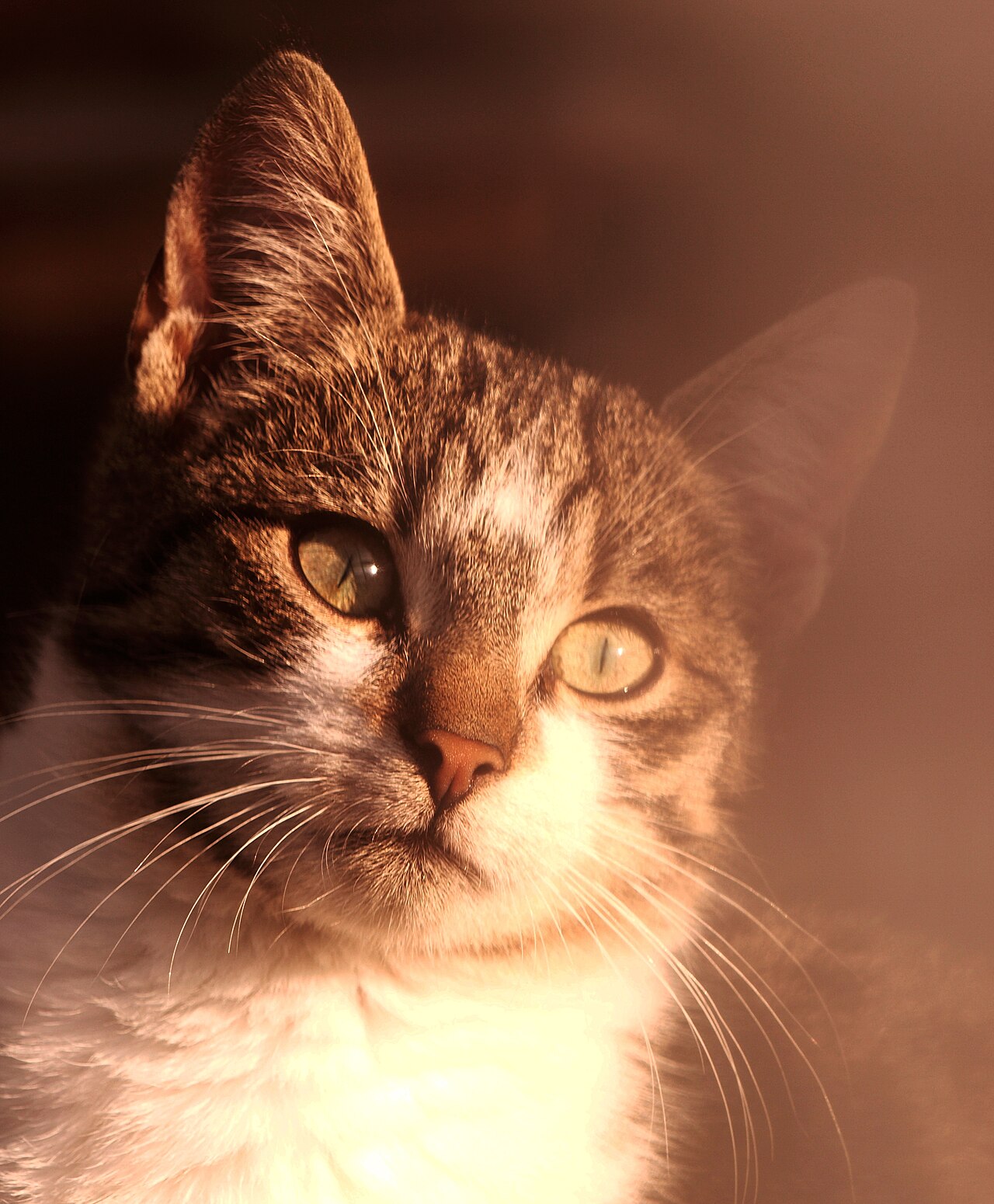
A relaxed cat in sunlight. Calm, comfortable cats are the ones most likely to give gentle love bites during quiet moments together.
Image Credits: Wikimedia Commons
A gentle nip followed by a lick is one of the strangest things a cat can do to you. Behavior writers call the behavior a love bite: a soft mouthing that stops well short of a real bite, often paired with licking because the lick is grooming and the nip is part of the same ritual.
This article explains what love bites are, why cats bite then lick (affection, grooming, and overstimulation), how to tell it is not aggression, and what to do when it happens.
What a love bite actually is
A love bite is a gentle nibble that does not break the skin. HowStuffWorks writer Nico Avelle describes the standard version: teeth graze without puncturing, the bite is inhibited, and the cat stays relaxed through the whole exchange.
The habit likely survives from kittenhood. Avelle notes that love bites may be leftover behavior from when kittens nibbled on littermates during grooming sessions, a routine that never fully switched off in adulthood.
A soft bite also shows how much control your cat has. Lady N Pet's behavior breakdown points out that a gentle bite means the cat is fully in charge of its jaw pressure and is choosing not to hurt you, which reads as trust rather than threat.
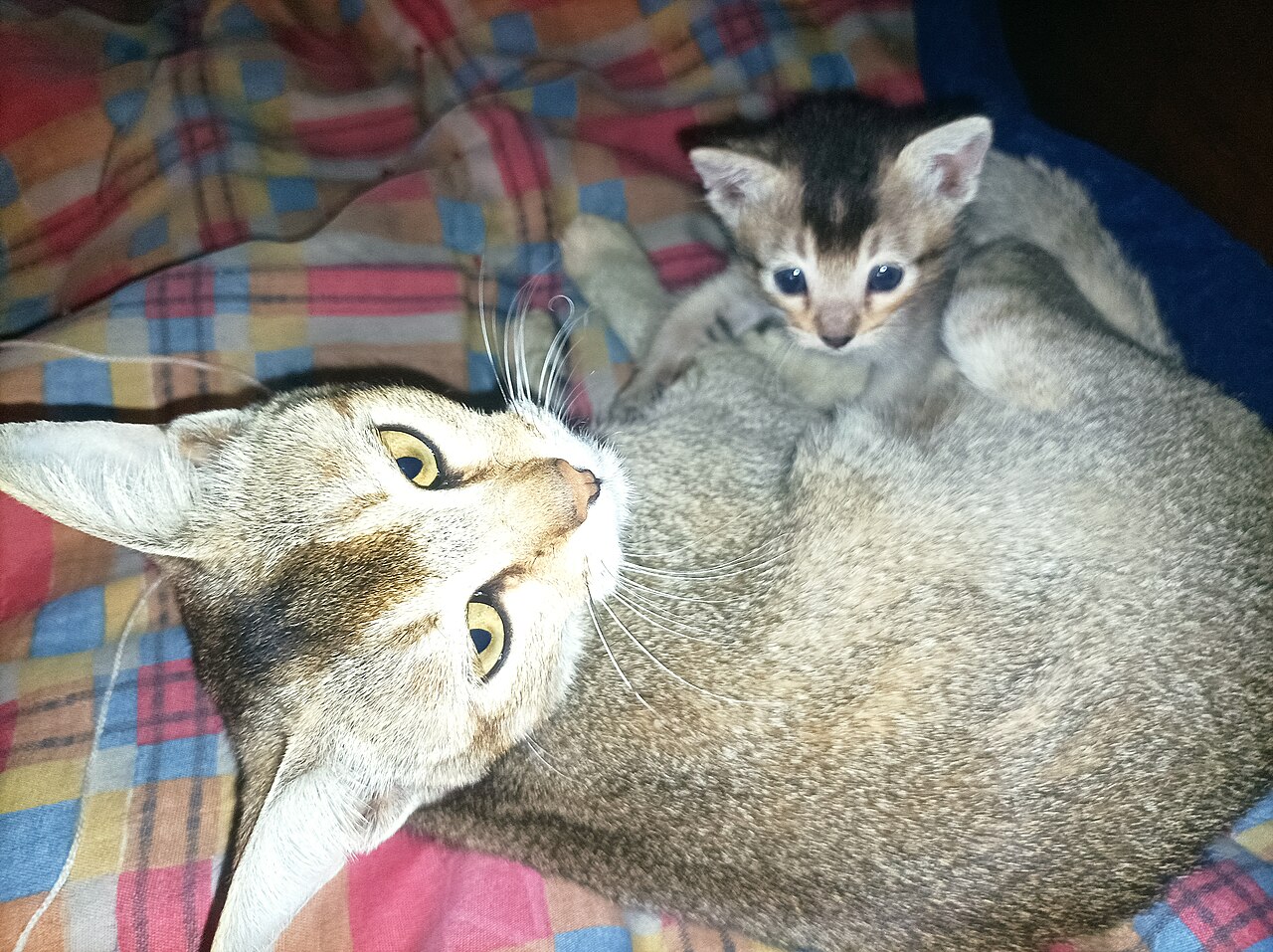
A mother cat rests with her newborn kitten. Love bites are thought to trace back to the way mother cats lick and nibble their kittens.
Image Credits: Wikimedia Commons
Why cats bite then lick: affection and grooming
The lick is the easy half of the sequence to explain. Licking is grooming, and cats direct grooming at the creatures they count as family. Meowingtons' explainer on the topic describes it as allogrooming: social grooming among trusted companions that strengthens bonds inside a group, extended from other cats to you.
Affection is the most common motive behind the pairing. When a cat is purring on your lap and slips in a soft nibble between licks, the body language says contentment, not conflict. Many owners describe the sequence as the cat's version of a hug with teeth, and the evidence supports that reading.
There is also a practical grooming angle. The Garden Magazine's 2026 piece on feline grooming habits reports that cats can spend up to 30 percent of their waking hours tending to their fur. When a cat applies that same routine to your hand, it is treating you as part of the social unit worth maintaining.
Grooming is one of several ways cats carry kittenhood into adult life. Kneading is another holdover from nursing, and purring started as a kitten-to-mother signal. The love bite sits in the same category: baby behaviors repurposed for the people cats love.
The overstimulation twist
The same bite can mean something else depending on the moment. During a petting session, a gentle bite after several minutes of stroking is often the cat saying it has had enough, a pattern behaviorists call petting-induced aggression.
Repeated stroking can flip from pleasant to irritating for cats with sensitive skin. HowStuffWorks frames it plainly: the bite during petting is usually communication, not an attack, and translates roughly to "that's enough, thanks."
The sequence sometimes runs in reverse here: lick, light nip, then a harder bite if the petting continues. A veterinary behavior guide published by Veterinary Practice News lists the escalation signals in order: the eyes narrow, the cat glances at the petting hand, the ears swivel sideways and flatten, and the tail tip starts twitching. Spotting those signs early is the whole trick to avoiding the bite.
Stress outside the petting session can lower the threshold too. A recent move, a loud household, or a new animal in the home can leave a cat with less patience for touch, which is one reason introductions matter: see our guide on introducing a new cat for keeping the peace during transitions.
How to tell it is not aggression
Context is everything, so read the whole cat, not just the teeth. A love bite arrives with a relaxed body, slow blinking or half-closed eyes, and often purring. Aggression brings a different toolkit: hissing, growling, flattened ears, and a swishing or puffed tail.
The Humane Society of Huron Valley's feline behavior handout on petting-induced aggression names the specific warning signs to memorize: dilating eyes, ears tilting sideways or flat against the head, tail thumping or swaying, the cat flipping its head back to watch your hand, and the body twitching or leaning away. Any of those means the interaction should end, not escalate.
Skin damage is the clearest line. Avelle's HowStuffWorks piece draws it explicitly: love bites do not break the skin, but a bite that draws blood or comes with scratching could indicate pain, fear, or irritation and deserves a veterinary visit to rule out medical causes.
One more distinction matters. If the licking itself crosses into fur removal or sores, that is no longer affection grooming. A 2026 write-up of a well-known study of 21 cats referred for so-called psychogenic hair loss found that 16 had an underlying medical problem and only 2 were purely behavioral, so compulsive licking is a vet conversation, not a behavior quirk.
Reading body language accurately pays off across species. Our piece on why dogs tilt their heads makes the same point: small physical cues carry the real message once you know how to watch for them.
What to do when it happens
Do nothing dramatic. If the bite is gentle and the cat is relaxed, you can simply let it finish its grooming ritual, because that is all it is.
If the bite came during petting and the warning signs were there, stop petting calmly and withdraw your hand slowly. Pulling away fast can trigger a chase response, while freezing or moving slowly keeps the moment low-stakes.
Never punish the bite. The Humane Society handout is blunt on this: yelling or hitting teaches the cat that you are scary and damages the bond, and a punished cat is more likely to bite harder next time because the earlier warnings stopped working.
You can also prevent repeats. Keep petting sessions short and end on a good note before the warning signs appear, reward calm behavior with a treat, and redirect mouthy play toward toys rather than hands. Over time, the cat learns that gentle interaction continues and hard biting ends it.
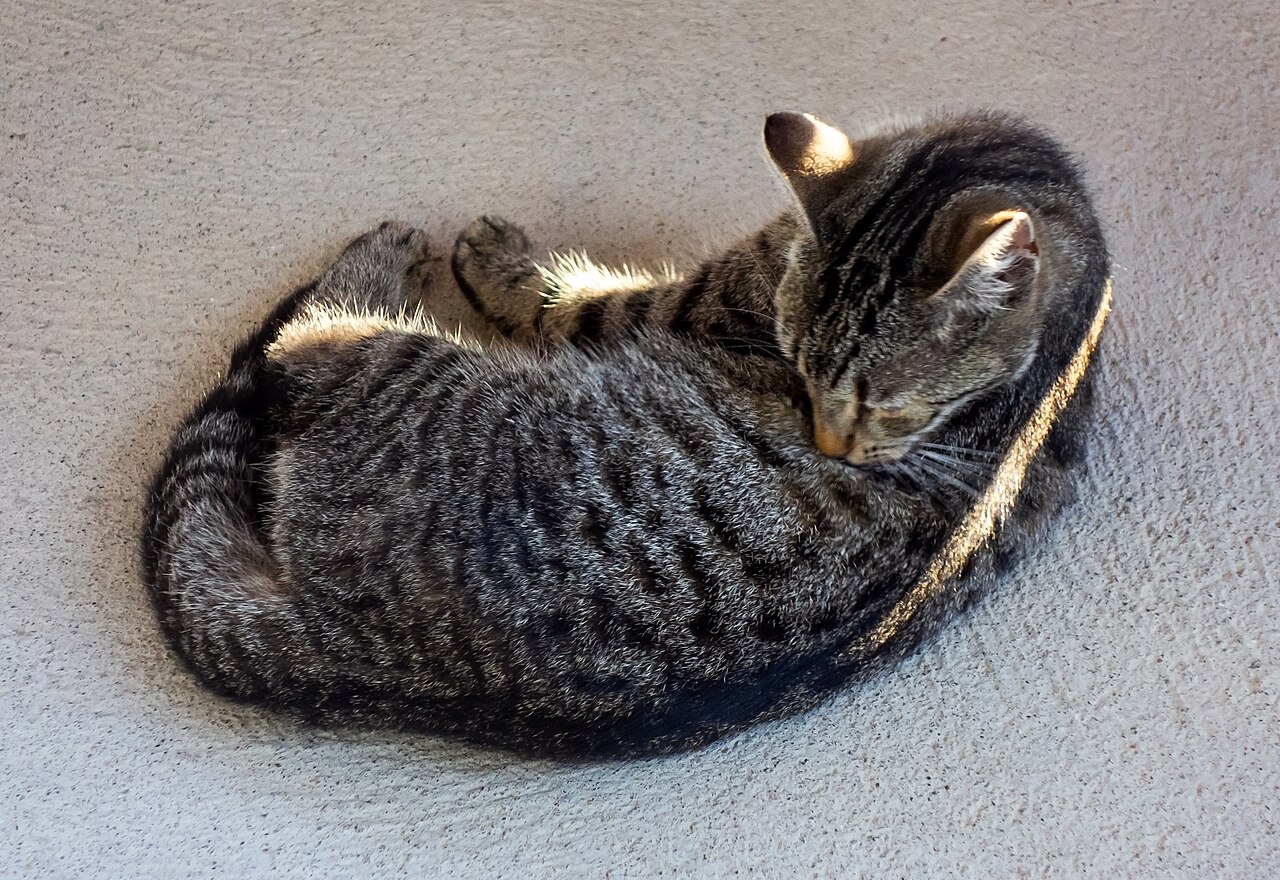
A tabby curled up grooming itself. Grooming takes up a large share of a cat's day, and cats sometimes extend the habit to the people they trust.
Image Credits: Wikimedia Commons
Frequently asked questions
Is it normal for a cat to bite me gently then lick me?
Yes, it is normal. The sequence is widely documented as affectionate grooming behavior, sometimes called love bites, and it usually means the cat feels comfortable and bonded with you.
Why does my cat bite me gently out of nowhere?
Most of the time it is not out of nowhere. The cat was likely relaxed and content, and the nibble was social grooming. If it happens during petting, check for warning signs like a twitching tail, which point to overstimulation instead.
What should I do when my cat bites me during petting?
Stop petting calmly, withdraw your hand slowly, and give the cat space. Watch for the early signals next time, such as ears flattening or the tail tip twitching, and end the session before they appear.
Should I let my cat bite me gently?
A love bite that never breaks skin is harmless for most people, so letting it happen is a personal choice. If the bites ever get harder or start breaking skin, redirect the cat to toys and see a vet to rule out pain or illness.
The bottom line
A gentle bite followed by a lick is usually your cat including you in its grooming circle, which is a compliment. The next time it happens, check the body language: relaxed and purring means affection, while a twitching tail and flattened ears mean the petting session is over. Learning that difference turns a confusing habit into a readable conversation.
Rive News's research desk covers pet behavior and care, working from veterinary sources and published behavior studies.
Latest in Pets
- Why cats knead with their paws
- Why cats purr and what it means
- How to introduce a new cat to your home cat
Get one practical pet-care explainer like this in your inbox every morning. Subscribe to the newsletter.
© 2026 Rive News. All rights reserved.
Related stories

Why Does My Dog Eat Grass and Vomit?
A UC Davis study of 1,571 owners found grass eating is normal dog behavior, not self-medication: only 10% were ill first. What the science r

Why Does My Dog Stare at Me While I Eat?
Dogs stare at you while you eat because it has worked before, and mutual gaze raises bonding hormones. Learn the reinforcement science and w

Foods toxic to dogs: the list, with reasons
Chocolate, xylitol, grapes, onions: common foods can harm dogs. Learn what makes each one toxic, the warning signs, and what to do if your d