
Why Cats Drink from Faucets but Ignore Their Water Bowl
Key takeaways
- Cats descend from desert wildcats that learned to distrust still water, which could be stagnant or contaminated.
- Cats see still water poorly but hear dripping water well, so a faucet is easier to find and trust.
- Moving the water bowl away from the food bowl and using a pet fountain usually gets cats drinking more.
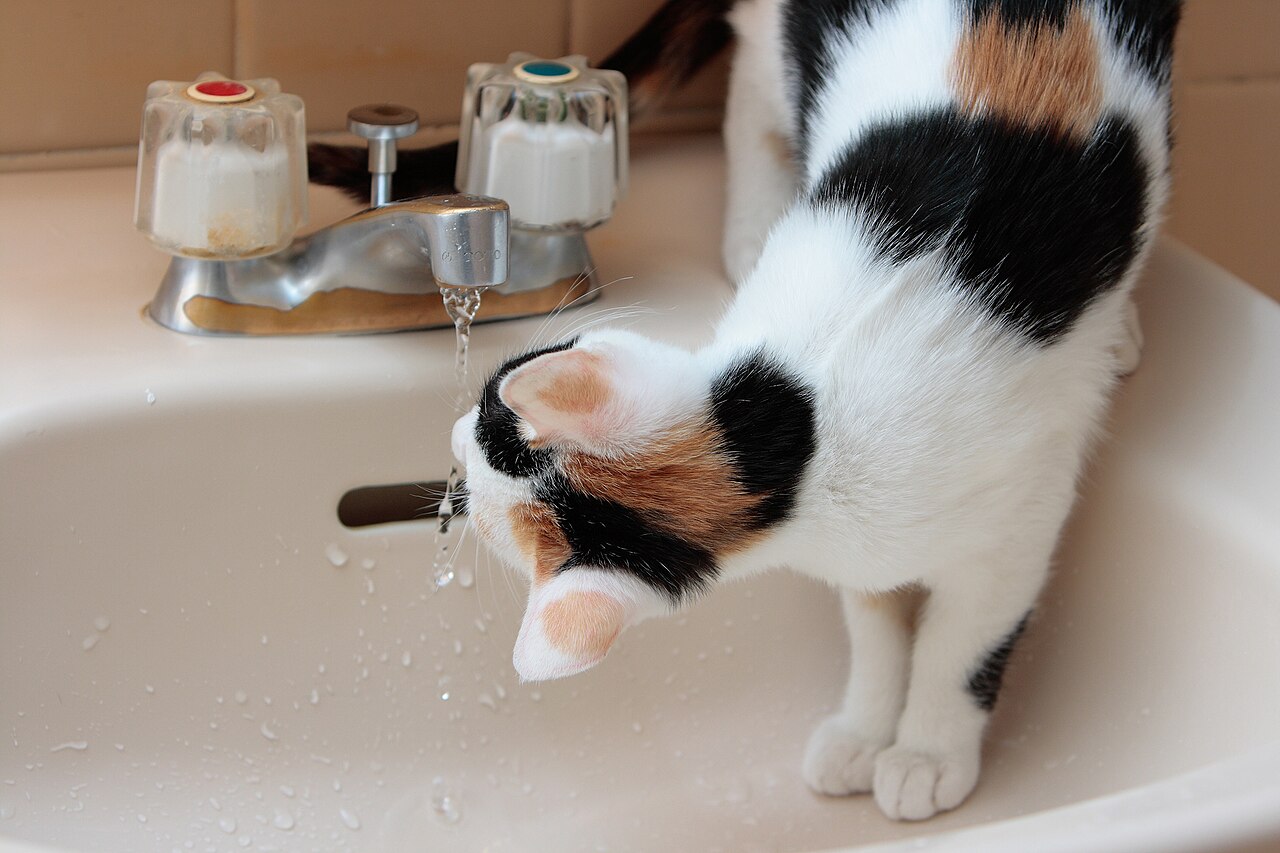
Image Credits: Wikimedia Commons / MiNe
A desert animal in your kitchen
Your cat is not being dramatic. It is following instincts shaped by its ancestors, the African wildcat (Felis lybica), which evolved to survive in arid environments where water was scarce and still pools were often contaminated.
In the wild, moving water meant fresh rainfall or a spring. Still water meant risk.
That bias survived domestication. Modern pet cats still produce highly concentrated urine and relatively dry stools, water-saving traits documented by the Cornell Feline Health Center, according to iHeartCats' 2026 review. They still read a silent bowl of still water as suspicious and a dripping tap as safe.
This article explains why cats prefer faucets, including the sensory reasons a bowl is hard for a cat to trust, the food-bowl contamination instinct, and what actually works to get your cat drinking enough water.
Still water is hard for a cat to judge
Cats have excellent night vision but poor close-up focus. A cat may genuinely struggle to see the surface of still water in a bowl, especially in dim light.
Dr. Deb Greco, an internal medicine specialist quoted by Vetstreet, explains that cats cannot see still water well, and the problem is worse because a cat sitting at a bowl may feel vulnerable, with its back to the room.
Hearing solves what sight cannot. A cat's acute hearing picks up the drip and trickle of a faucet from another room.
As Greco puts it, the sound of the "drip, drip, drip" attracts them, and the stream is cooler and more oxygenated, which improves the taste. Moving water also shimmers and ripples, giving the cat visual cues that a flat bowl surface never provides.
Bowl placement adds another problem: whisker stress. Narrow bowls force the cat's sensitive whiskers against the rim, which many cats dislike. Wide, shallow bowls avoid that irritation, but they do not fix the still-water problem itself.
The contamination instinct
The most interesting reason is evolutionary. In the wild, a cat would never drink next to its kill. Water near dead prey could carry bacteria, so cats learned to separate eating from drinking.
Mieshelle Nagelschneider, cat behaviorist and host of My Cat From Hell, writes that cats instinctively prefer water located away from their dead prey, which in the home means their food bowl.
Nagelschneider recommends moving the water bowl at least 10 feet from the food, ideally against an opposite wall, or the cat may keep reading its water as contaminated by its "kill." The fix is free and immediate, and many owners report it works within days.
Water freshness matters too. A bowl left sitting for hours can develop a film, absorb kitchen odors, or lose oxygen, and cats notice. A faucet delivers water that is cold, aerated, and visibly flowing, which signals purity in a cat's sensory world.
Should you let your cat drink from the tap?
Tap water is generally safe for cats in the same way it is safe for people, but the faucet habit has downsides. It offers no way to monitor how much the cat drinks, and sudden changes in drinking can signal illness. In homes with hard or mineral-heavy water, extra mineral load may matter for cats prone to urinary tract issues, according to the American Animal Hospital Association, cited by iHeartCats.
The practical upgrade is a pet water fountain. A fountain gives the cat the moving water it craves while keeping intake visible and filtering the water. Most cats take to a fountain faster than to a still bowl, and it removes the need to leave a tap running.
Keep the bowl clean regardless. Wash it daily, refresh the water at least once a day, and try ceramic or stainless steel instead of plastic, which can harbor odors and bacteria. Place water in more than one room, always away from food and litter boxes.
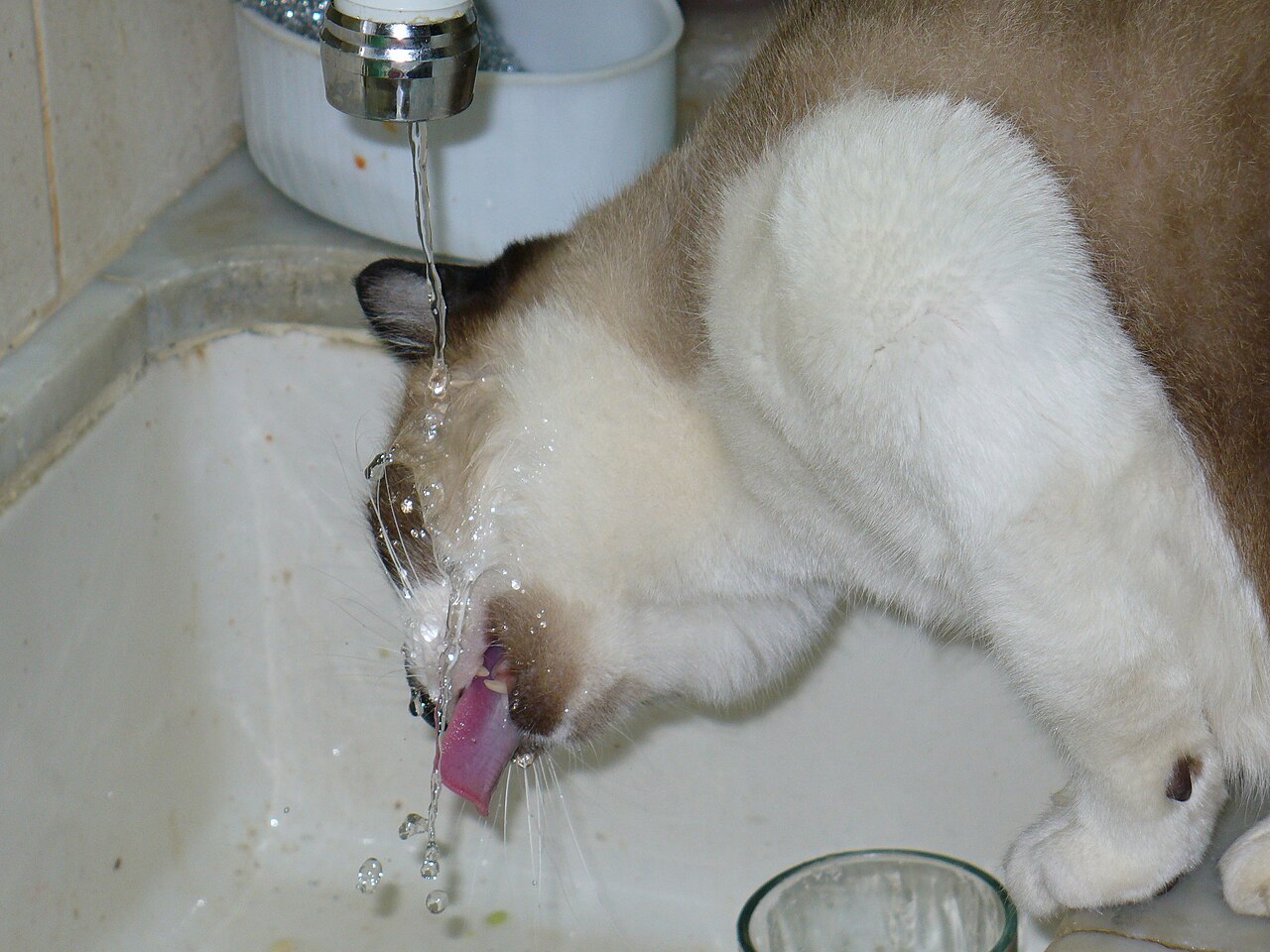
Image Credits: Wikimedia Commons / Yuval Y
Watch for real drinking problems
The faucet preference is normal, but it can hide genuine hydration issues. Cats on dry food get far less moisture from their diet than their desert ancestry expects, since they evolved to extract most of their water from prey.
As veterinarian Dr. Sarah Wooten notes, feeding dry food asks cats to drink more independently than their instincts plan for.
Increased thirst can signal diabetes, kidney disease, or hyperthyroidism, all common in older cats. Decreased drinking can point to mouth pain or nausea. If your cat's faucet habit suddenly changes in either direction, or you notice more frequent urination, weight loss, or lethargy, schedule a vet visit rather than blaming the bowl.
Wet food is the simplest hydration boost. Canned food is roughly 70 to 80 percent water by weight, and mixing some into the diet can do more for hydration than any fountain.
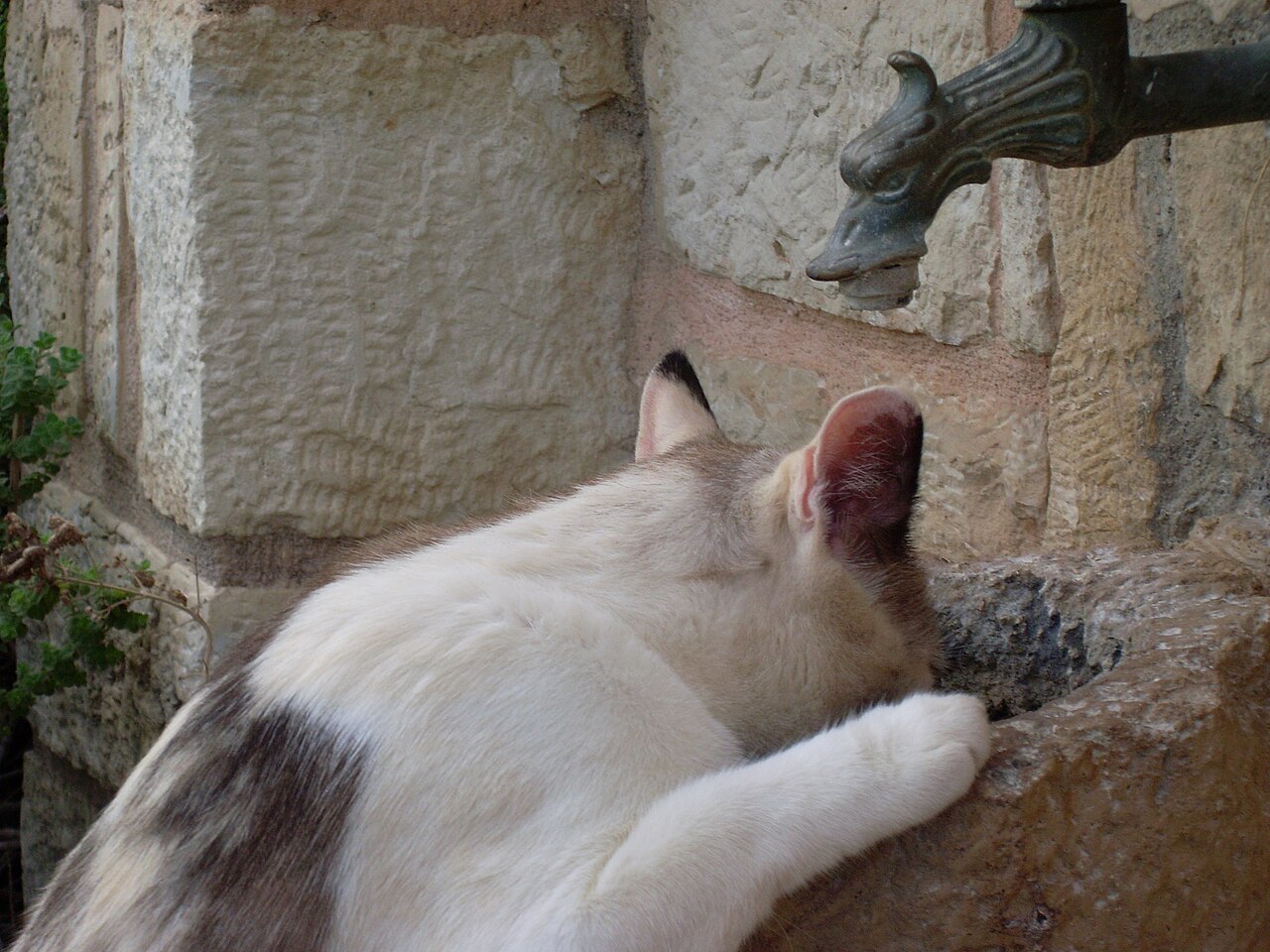
Image Credits: Wikimedia Commons / TrainSimFan
Is it okay for my cat to drink from the faucet?
Yes, tap water is generally safe for cats. The main downsides are that you cannot monitor intake and hard water adds mineral load. A pet water fountain gives the cat moving water with filtration and measurable intake.
Why does my cat ignore its water bowl completely?
Usually a mix of instinct and presentation. The bowl may sit too close to the food, the water may be stale, or the cat may simply struggle to see and trust still water. Try moving the bowl 10 feet from food and refreshing water daily.
Do cat water fountains actually work?
Yes. Fountains recreate the sound, motion, and aeration of running water that cats instinctively trust, while filtering the water. Many cats that ignore bowls drink readily from fountains.
How much water should a cat drink per day?
A typical guideline is about 3.5 to 4.5 ounces of water per 5 pounds of body weight daily, from all sources including wet food. The exact number varies with diet and health, so ask your vet if you are concerned.
The bottom line
Cats drink from faucets because their desert ancestors taught them that moving water is safe and still water is suspect. Poor close-up vision, superb hearing, and an instinct to drink far from food all push the cat toward the tap. Move the water bowl away from the food, consider a pet fountain, and let the instincts that made the cat healthy in the wild keep it hydrated at home.
Latest in Pets
Get one practical pet-care tip in your inbox each week. Subscribe to the Rive News newsletter.
Related stories
Why Does My Dog Eat Grass and Vomit?
A UC Davis study of 1,571 owners found grass eating is normal dog behavior, not self-medication: only 10% were ill first. What the science
Why Does My Dog Stare at Me While I Eat?
Dogs stare at you while you eat because it has worked before, and mutual gaze raises bonding hormones. Learn the reinforcement science
Foods toxic to dogs: the list, with reasons
Chocolate, xylitol, grapes, onions: common foods can harm dogs. Learn what makes each one toxic, the warning signs, and what to do if your