
Why Do Dogs Lick Their Lips When You Talk to Them?
Key takeaways
- Lip licking is a calming signal: a small appeasement gesture dogs use to reduce tension and signal they are not a threat.
- A 2017 study of 116 dogs confirmed that dogs direct lip licks at humans as appeasement, especially after tense or intense moments.
- Quick tongue flicks during conversation are usually social, but frequent licking with no trigger can mean nausea or reflux and deserves a vet check.
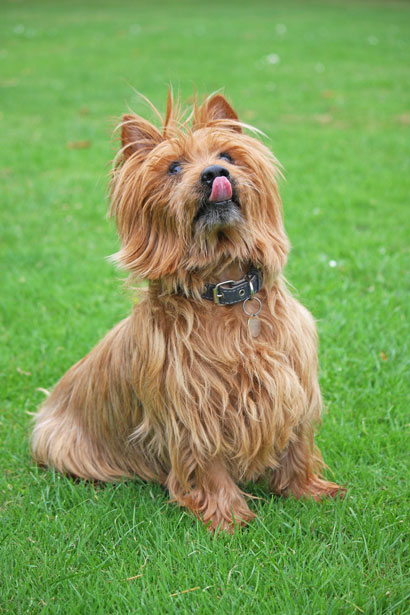
You lean down, look your dog in the eye, and start talking. Mid-sentence, the dog flicks its tongue across its lips. There is no food around.
No treat on offer. Just a quick, deliberate lick, and then it happens again.
Dogs do this constantly, and owners read it in wildly different ways: guilt, hunger, anticipation, affection. The science points somewhere more interesting. Lip licking is a piece of canine diplomacy, a calming signal dogs use to keep interactions peaceful.
This article takes a closer look at why dogs lick their lips when you talk to them, including the science of calming signals, what the lick is saying in conversation, and when lip licking signals something physical instead.
The calming signal: a quick language lesson
The term "calming signals" was coined by Norwegian dog trainer Turid Rugaas, who documented roughly 30 of them in her book On Talking Terms with Dogs: Calming Signals. They are small, deliberate movements dogs use to reduce tension in themselves or in the animals and people around them. The classic set includes lip licking, yawning, turning the head away, lifting a paw, and sniffing the ground.
Lip licking is one of the most common. As the Crossbones Dog behavior guide explains, dogs naturally exhibit these behaviors when feeling stressed and trying to diffuse a situation. The dog is not licking because there is food nearby.
It is performing a self-soothing action, the way a person might exhale slowly before a difficult conversation.
The signals evolved as social tools. In a group, a dog that licks its lips is often signaling non-threat, telling another dog, or a person, that it is not looking for conflict. Dogs direct these signals at humans just as readily as at other dogs, which is why they show up mid-conversation.
What science says: the 116-dog study
Rugaas developed the calming-signal idea from years of working as a behavioral consultant, but it gained scientific backing in 2017. A study by Dr. Angelika Firnkes of Ludwig Maximilians University Munich and colleagues put 116 dogs over the age of 13 months, each accompanied by its owner, through a standardized behavioral test with humans giving social cues.
The results, reported by Companion Animal Psychology, showed for the first time that dogs use at least two appeasement gestures, the lip lick and the look away, to appease their human social companions. Both signals occurred more frequently during friendly interactions after an initial threatening situation, supporting the idea that these behaviors signal peace and conflict avoidance.
There is also an honest scientific debate running alongside. The study's authors noted room for research into whether these behaviors are true signals or partly physiological stress responses, since lip licking also appears in stress reactions to human threat in earlier studies. Either way, the practical reading is the same: a lip lick during your conversation is your dog managing tension, not misbehaving.
Why it happens specifically when you talk
Human conversation hits several of the dog's mild-stress buttons at once. Direct eye contact held for more than a few seconds, a hand reaching over the head, a louder or more intense voice, leaning over the dog, these are all normal parts of talking to a pet, and all of them read as social pressure to a dog. The lip lick is the dog's way of answering: I am not a threat, and I would like this to stay peaceful.
Common conversation triggers include a raised voice, a scolding tone, excited high-pitched talking, and close face-to-face contact. A dog that licks its nose the moment you raise your voice is responding to tone, notes TimesPets. A dog that licks its lips when a child runs toward it is reading the approach as pressure.
A dog that does it repeatedly during a training session may be saying the session has gone on too long or the ask is too hard.
The lick is not necessarily a sign of distress. It is more like a negotiation. The dog is looking for a response that indicates you are not looking to aggress.
This is why the recommended human response is to soften: look away briefly, lower your posture, keep your voice even. You are completing the negotiation.
The other signals that travel with lip licking
Lip licks rarely appear alone. They belong to a cluster of appeasement gestures, and reading the cluster is more reliable than reading one flick of the tongue.
Looking away. Often paired with the lip lick. The dog briefly averts its gaze, the canine equivalent of saying "no conflict here."
Yawning. A wide, slow yawn in the middle of an interaction is usually self-calming, not boredom.
Turning the head. A small turn of the head away from you softens the social pressure of face-to-face contact.
Paw lift. A front paw held slightly off the ground can signal uncertainty or a desire to de-escalate.
When you see lip licking plus one or two of these, the message is clear: your dog wants the interaction to stay calm. Adjusting your approach, giving space, or simply softening your tone, usually resolves it.
When lip licking is physical, not social
Not every lip lick is a message. Lip licking that is frequent, intense, or happens without any obvious social trigger can point to the body rather than the mood. Nausea is the most common physical cause.
A dog with an unsettled stomach licks its lips much the way a person swallows repeatedly before being sick.
A dog that licks its lips obsessively at night, paces, and seems unable to settle may be experiencing acid reflux, which TimesPets describes as a real and underdiagnosed condition in dogs that causes discomfort when the stomach is empty. Other physical causes include dental pain, something stuck in the mouth, or an object irritating the gums.
The dividing line is context. Social lip licking clusters around interactions: talking, training, meeting strangers, being hugged. Physical lip licking happens on its own, sometimes with gulping, retching, grass eating, or drooling.
If the licking is intense, focused, mostly happens at night or on an empty stomach, or comes with other symptoms, have a vet check the dog's gut and mouth before assuming it is behavioral.
What to do when your dog licks its lips at you
First, do not punish the signal. A dog that is corrected for showing discomfort does not become less uncomfortable. It learns to suppress the signal, which removes your early warning system.
Second, read it as information. If your dog licks its lips when you talk, ask what part of the interaction might feel like pressure. Are you leaning over the dog?
Staring directly into its eyes? Using a loud or tense voice? Small adjustments usually end the licking.
Third, reward calm communication. When the dog settles, keep your energy low and let the interaction stay easy. Over time, the dog learns that conversations with you are safe, and the licking fades on its own.
FAQ
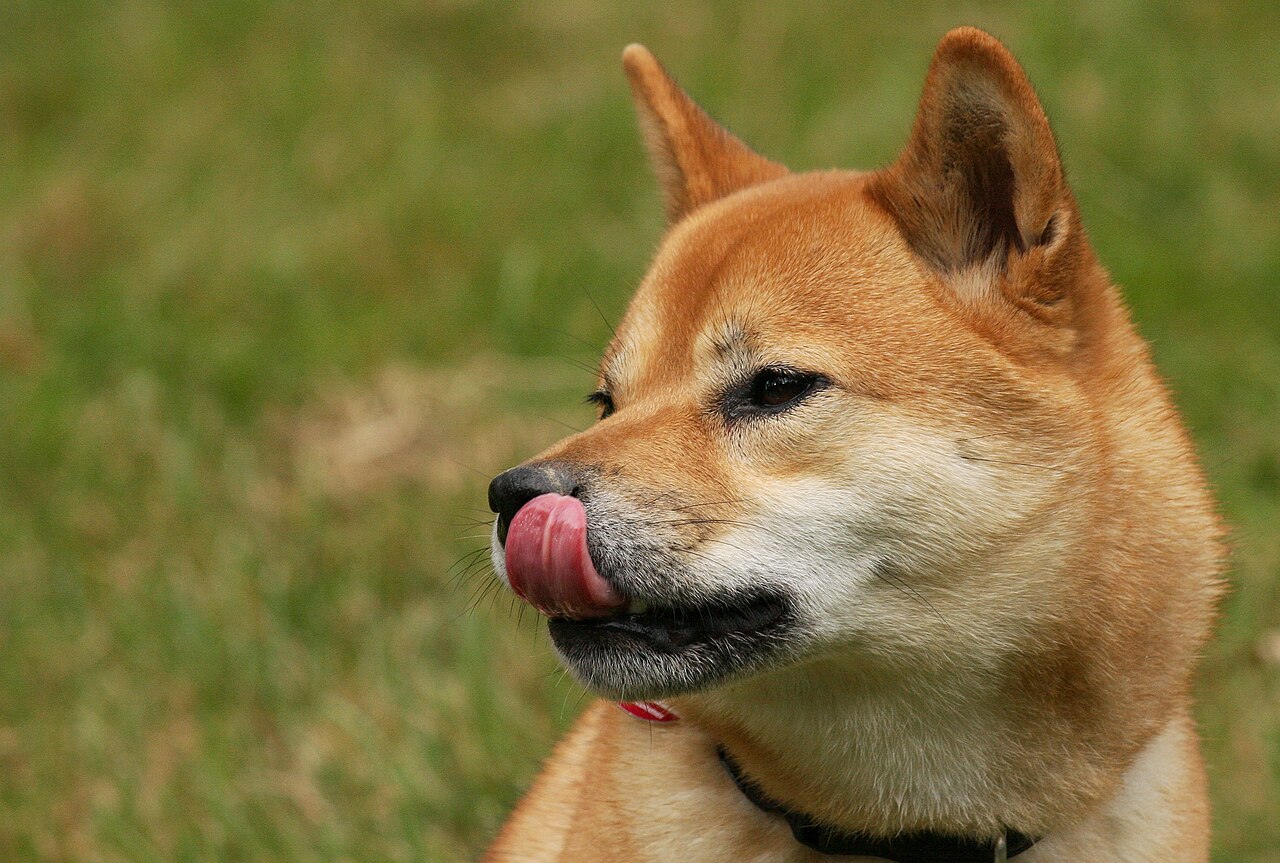
Why does my dog lick his lips when I talk to him?
It is most likely a calming signal, an appeasement gesture dogs use to reduce social tension. Your voice, eye contact, or posture may be registering as mild pressure, and the dog is signaling that it wants to keep things peaceful.
Is lip licking in dogs always a sign of stress?
No. It can be a normal social signal during friendly interactions too. The 2017 Firnkes study found lip licking increased during friendly greetings after tense moments, suggesting it is part of how dogs manage social situations, not just a stress alarm.
Should I stop talking to my dog if it licks its lips?
No. Just soften your approach: ease up on direct eye contact, lower your voice, and avoid leaning over the dog. Most dogs settle quickly once the pressure drops.
When should lip licking worry me?
If the licking is frequent, happens without any social trigger, or comes with gulping, drooling, grass eating, pacing, or loss of appetite, see a vet. Nausea and acid reflux are common physical causes.
Does my dog feel guilty when it licks its lips?
Probably not in the human sense. The lick is an appeasement gesture, not a confession. It means the dog senses tension and wants to defuse it, which is a social skill, not an admission.
The bottom line
When your dog licks its lips while you talk, it is speaking the oldest diplomatic language in the dog world. The flick of the tongue says: I am no threat, let us keep this calm. Science backs the reading, from Turid Rugaas's 30 documented calming signals to the 2017 study of 116 dogs that confirmed appeasement gestures aimed at humans.
Answer with softness rather than frustration, and the licking usually fades. And if the licks keep coming with no one talking, let a vet rule out the body before you blame the mind.
Latest in Pets
- Why do cats sleep in boxes even with a bed nearby?
- Why do parrots copy human speech?
- Why do our hands shake when we are nervous?
Sign up for our newsletter for one practical pet-care answer in your inbox each week.
Image Credits: Wikimedia Commons (free license)
Related stories
Why Does My Dog Eat Grass and Vomit?
A UC Davis study of 1,571 owners found grass eating is normal dog behavior, not self-medication: only 10% were ill first. What the science
Why Does My Dog Stare at Me While I Eat?
Dogs stare at you while you eat because it has worked before, and mutual gaze raises bonding hormones. Learn the reinforcement science
Foods toxic to dogs: the list, with reasons
Chocolate, xylitol, grapes, onions: common foods can harm dogs. Learn what makes each one toxic, the warning signs, and what to do if your