
Why cats sleep in boxes even with a bed nearby
By Rive News / Research desk | Rive News / Published October 29, 2026 at 9:00 AM PKT
Key takeaways
- Boxes give cats warmth, enclosure, and control over what they can see.
- Utrecht shelter cats with hiding boxes recovered faster, with lower stress scores on days 3 and 4.
- A sturdy box with a soft blanket in a quiet corner usually beats an expensive open bed.
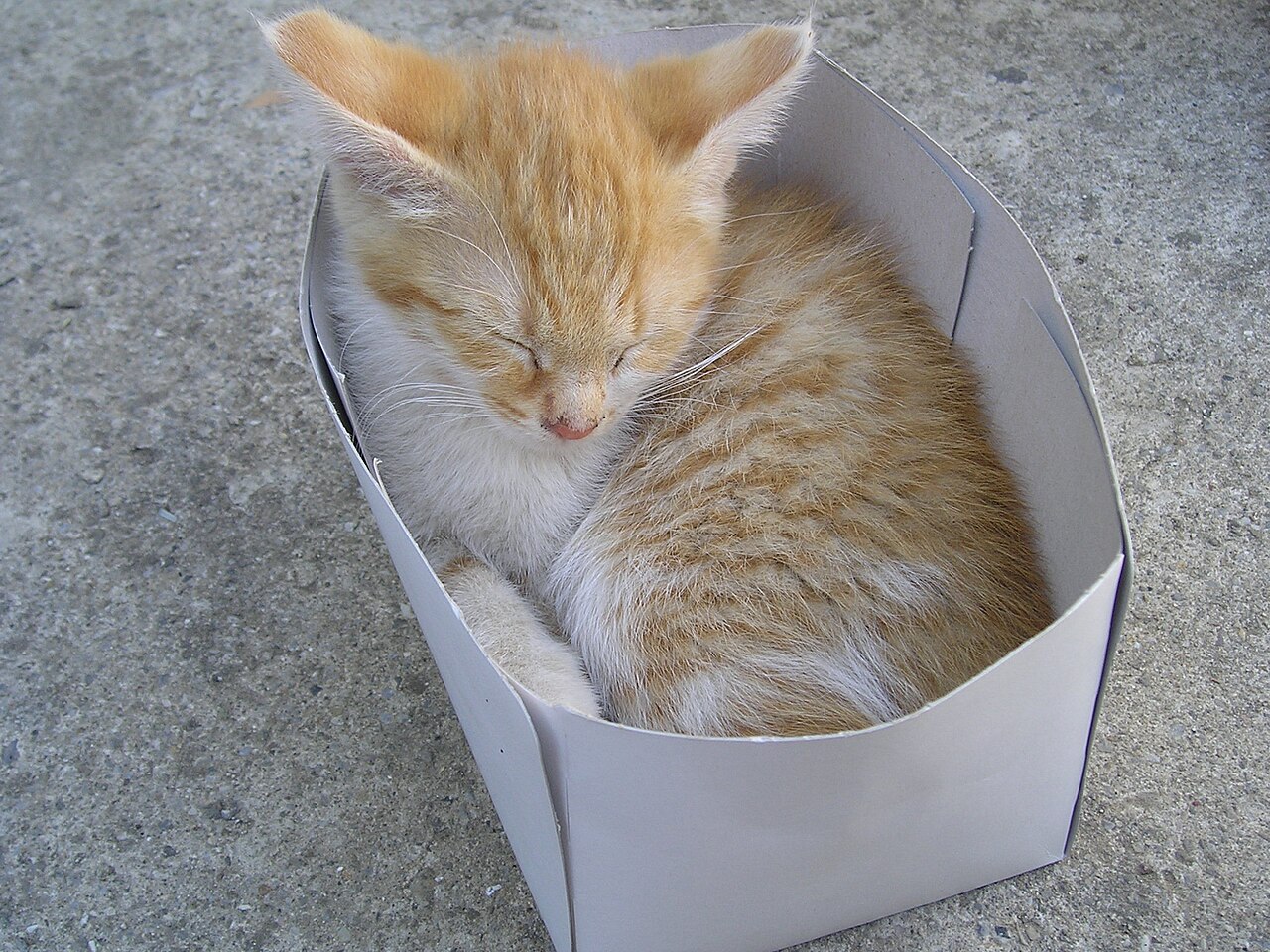
A cat that ignores an expensive bed for a cardboard box is not being ungrateful. The box does three jobs that an open bed does poorly. It holds warmth, it blocks the view from the sides and behind, and it lets the cat watch a single opening.
That combination matches how cats rest. Cats are both predators and prey animals in evolutionary terms, even when they live safely indoors. A resting cat wants to conserve heat, stay hidden, and still notice a threat or a chance to play.
This article explains box sleeping, including warmth, security, the Utrecht shelter research, why tight fits appeal, and how to make a box safe and inviting.
A box is a warm, enclosed den
Cats run warmer than people. A healthy cat's normal body temperature is about 100.5 to 102.5 degrees Fahrenheit, and cats prefer surroundings warmer than most living rooms. The thermoneutral zone reported for cats, where they do not need extra energy to stay warm or cool, is often given as 86 to 97 degrees Fahrenheit.
Most homes sit near 72 degrees Fahrenheit, well below that range. A cat resting in an open bed loses heat to the air on all sides. A cat curled inside a box loses less heat, because the cardboard walls trap warm air and cut drafts.
Corrugated cardboard helps in a specific way. Its layered structure holds air pockets, which slow heat loss, and the material is breathable enough not to feel clammy like plastic or metal. A box also lifts a cat slightly off a cold floor and reduces airflow around the body.
Curling tight adds to the effect. A cat that tucks its paws, wraps its tail, and presses its sides against the box walls reduces the surface area exposed to cold air. That is the same logic behind a cat sleeping in a sunbeam, except the box works after sunset and on cloudy days.
Security matters as much as warmth
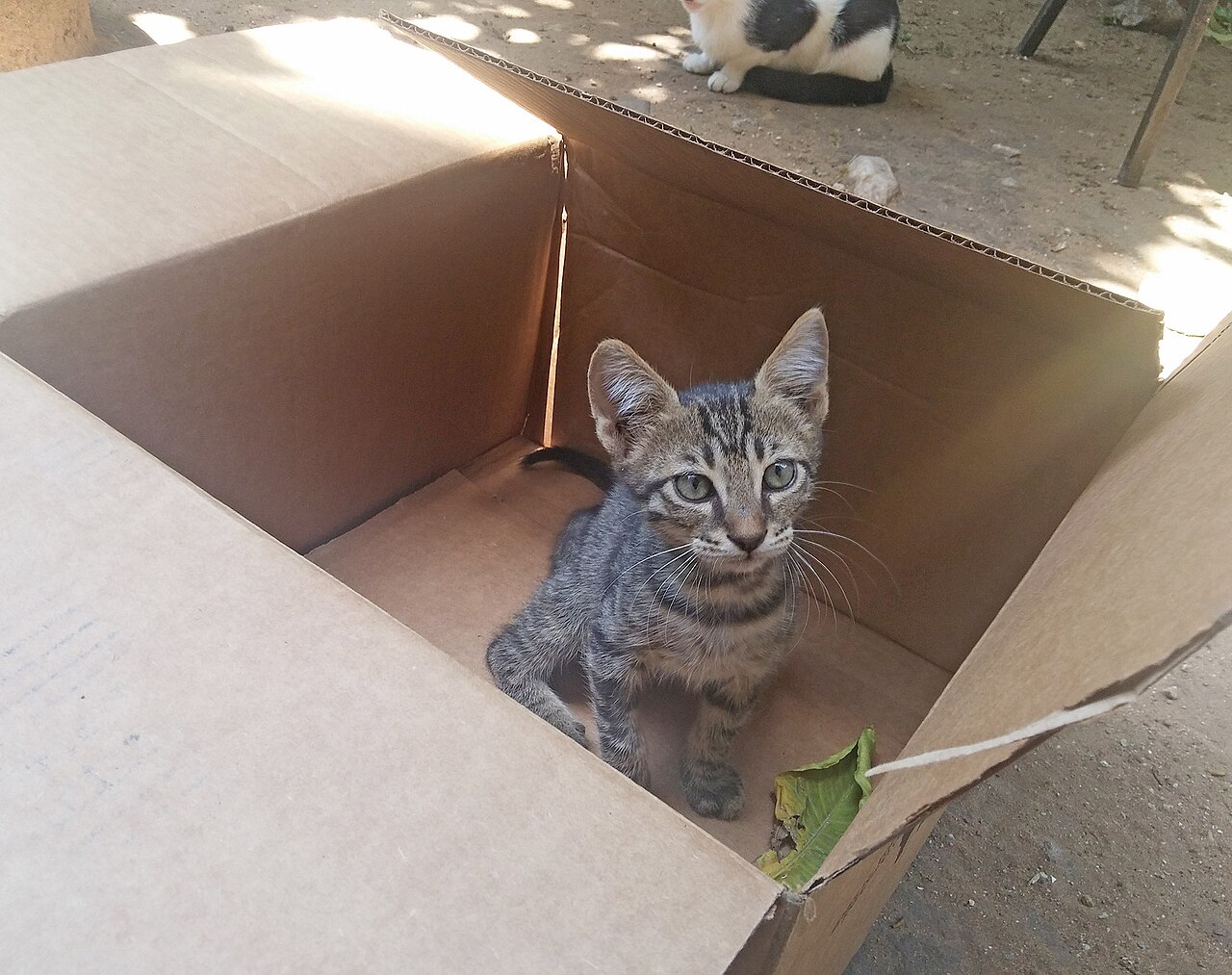
A box gives a cat control over visibility. The walls block the view from the sides and behind, and the rim or flaps cut off the view from above. The cat only has to watch the opening in front, which is a much easier job than watching a whole room.
That control matters for a species that hides when stressed. Lead researcher Claudia Vinke, quoted in reporting on the Utrecht study, put it simply.
She said, "Hiding is a behavioral strategy of the species to cope with environmental changes and stressors."
A new home, a visitor, a loud noise, or a change in routine can all raise stress. A box offers a retreat that does not require the cat to leave the room or the family entirely. The cat can stay close while still feeling protected.
Open beds, however soft, do not offer that retreat. A plush bed in the middle of a room leaves a cat exposed on all sides. A cat may use it when the house is quiet, then move to a box when activity rises.
That shift is not rejection of the bed. It is a choice based on the moment.
What the Utrecht shelter study found
The strongest evidence for the stress benefit comes from shelter research, not from cute videos. Researchers from the Faculty of Veterinary Medicine at Utrecht University studied newly arrived cats in a Dutch animal shelter to test whether a hiding box reduced stress.
The study, published in Applied Animal Behaviour Science, divided 19 newly arrived cats into two groups. Ten cats had a hiding box, and nine did not. Researchers assessed stress over 14 days using the Kessler and Turner Cat-Stress-Score, a behavioral scoring system.
The results were clear on the early days. A significant difference was found between the groups in mean stress score on observation days 3 and 4, with the hiding box group lower, at a significance level of p less than 0.01. Both groups reached a similar stress level by day 14, but the hiding box group reached that level around day 3.
In plain terms, cats with boxes recovered faster in a new environment. They did not simply prefer boxes. The boxes helped them cope with the stress of arrival, at least in the short term.
Later research on shelter cats has supported the same direction. A randomized trial on hiding boxes and body weight, also in Dutch shelter cats, found that cats with a hiding box showed a significantly faster decrease in behavioral stress, reaching a lower stress steady state seven days earlier than cats without a box.
Those studies were done in shelters, where stress is high and novelty is intense. They do not prove that every pet cat needs a box to be happy. They do show that hiding opportunities are a real welfare tool, not just a quirk.
Why a too-small box still wins
Cats often choose boxes that look far too small, squeezing in with their sides spilling over the edges. That choice looks uncomfortable to people, but it makes sense if contact is the goal.
A snug box gives steady pressure on the sides of the body. That pressure can feel calming, in the same way a tight blanket can feel calming to a person. A large, open box gives warmth and enclosure, but it does not give the same sense of being held by the walls.
A small box also reduces the number of directions a cat must monitor. A cat that fills the box has its back and sides covered by cardboard, not by open air. The only task left is watching the front.
Cats also like to test spaces. A kitten that climbs into a tiny box, a sink, a drawer, or a shopping bag is exploring a boundary. The exploration itself is rewarding, even if the cat leaves after a few minutes.
That is why buying a bigger, softer bed rarely changes the habit. A bigger bed is more comfortable by human standards, but it is less enclosed by feline standards. The box wins on the criteria the cat is actually using.
What a good box looks like
A good cat box is sturdy, dry, and easy to enter. A box with one side cut low for entry works well, especially for older cats or kittens. A box that collapses under weight, or that has sharp staples and tape, should be replaced.
Place the box in a quiet corner, away from foot traffic, loud appliances, and direct drafts. A box near a warm wall or a sunny spot is more attractive, but it should not block a fire exit or sit on a radiator.
Add a soft blanket or a worn T-shirt for scent and insulation. The blanket should be washable, because boxes and bedding collect fur and dust. Replace a box that becomes damp, chewed through, or soiled, and check it for tape, plastic, or small parts a cat could swallow.
Give the cat more than one option if space allows. A box in a quiet room and a bed in a social room lets the cat choose by mood. A cat that has both will often use both, at different times of day.
Never trap a cat in a box, close the flaps, or use a box as punishment. A box works because the cat chooses it and can leave it. Removing that choice turns a retreat into a cage.
When hiding needs a closer look
Box sleeping is usually normal. A change in hiding behavior can still be a useful signal. A cat that suddenly hides far more than usual, eats less, avoids the litter tray, or shows lasting changes in energy may be stressed or unwell.
New stressors include a move, a new pet, a new baby, building work, or a change in the owner's hours. Those changes can increase the need for a retreat, and a box can help while the cat adjusts.
Persistent symptoms deserve a vet visit. If a cat hides constantly, stops eating for more than a day, vomits repeatedly, or shows pain, lethargy, or breathing changes, seek veterinary advice promptly. This article gives general information only and does not diagnose any condition.
A vet can check for illness, pain, or anxiety, and can advise on enrichment, hiding places, and routine changes that fit the individual cat. A box is a helpful tool, but it is not a substitute for medical care when a cat is unwell.
The bottom line
Cats sleep in boxes even with a bed nearby because boxes offer what open beds do not. They hold warmth, block the view from most directions, and give a cat control over a single opening.
The Utrecht shelter study adds weight to that explanation. Cats with hiding boxes showed lower stress scores on days 3 and 4 and recovered faster in a new environment than cats without boxes.
Keep the box. Add a blanket, place it in a quiet corner, and let the cat choose. The expensive bed may still get used on quiet days, but the box will win whenever warmth, security, and control matter most.
Frequently asked questions
Why does my cat prefer a box to its expensive bed?
A box offers warmth, enclosure, and control over visibility, while an open bed leaves a cat exposed on all sides. Cats choose by those criteria, not by price or softness.
Do boxes actually reduce stress in cats?
Shelter research suggests yes, at least in the short term. Utrecht researchers found cats with hiding boxes had lower stress scores on days 3 and 4 and reached recovery around day 3, while cats without boxes took until day 14 to reach the same level.
Why do cats squeeze into boxes that are too small?
A snug fit gives steady contact on the sides, covers the back and flanks, and leaves only the front to watch. That combination can feel safer and warmer than a large, open space.
Should I worry if my cat hides in a box all day?
Occasional box sleeping is normal, but a sudden, lasting increase in hiding, especially with appetite or litter changes, deserves a vet visit. Persistent symptoms should not be treated as just a preference.
Tags: cats, cat behavior, boxes, pets
The Rive News research desk writes plain-language explainers from published sources, with no invented experts or first-hand claims.
Related
- Why cats sit in boxes, even tiny ones
- Why cats sleep in small boxes: safety, warmth, and habit
- Why cats hide when visitors come over
- Why cats sleep so much and when it is too much
Subscribe for one plain-language pet behavior explainer each week.
Rive News standards: every factual claim is tied to a named public source, and corrections are noted on the article.
Related stories

Why Does My Dog Eat Grass and Vomit?
A UC Davis study of 1,571 owners found grass eating is normal dog behavior, not self-medication: only 10% were ill first. What the science

Why Does My Dog Stare at Me While I Eat?
Dogs stare at you while you eat because it has worked before, and mutual gaze raises bonding hormones. Learn the reinforcement science

Foods toxic to dogs: the list, with reasons
Chocolate, xylitol, grapes, onions: common foods can harm dogs. Learn what makes each one toxic, the warning signs, and what to do if your