
Why Do Cats Sit in Boxes, Even Tiny Ones?
Key takeaways
- Cats sit in boxes for warmth, safety, and a sense of concealment, even when the box is too small to hold them.
- A Utrecht University study found shelter cats given boxes showed less stress and adapted faster than cats without boxes.
- Boxes also suit a hunting instinct, since a hidden cat can watch and wait for prey.
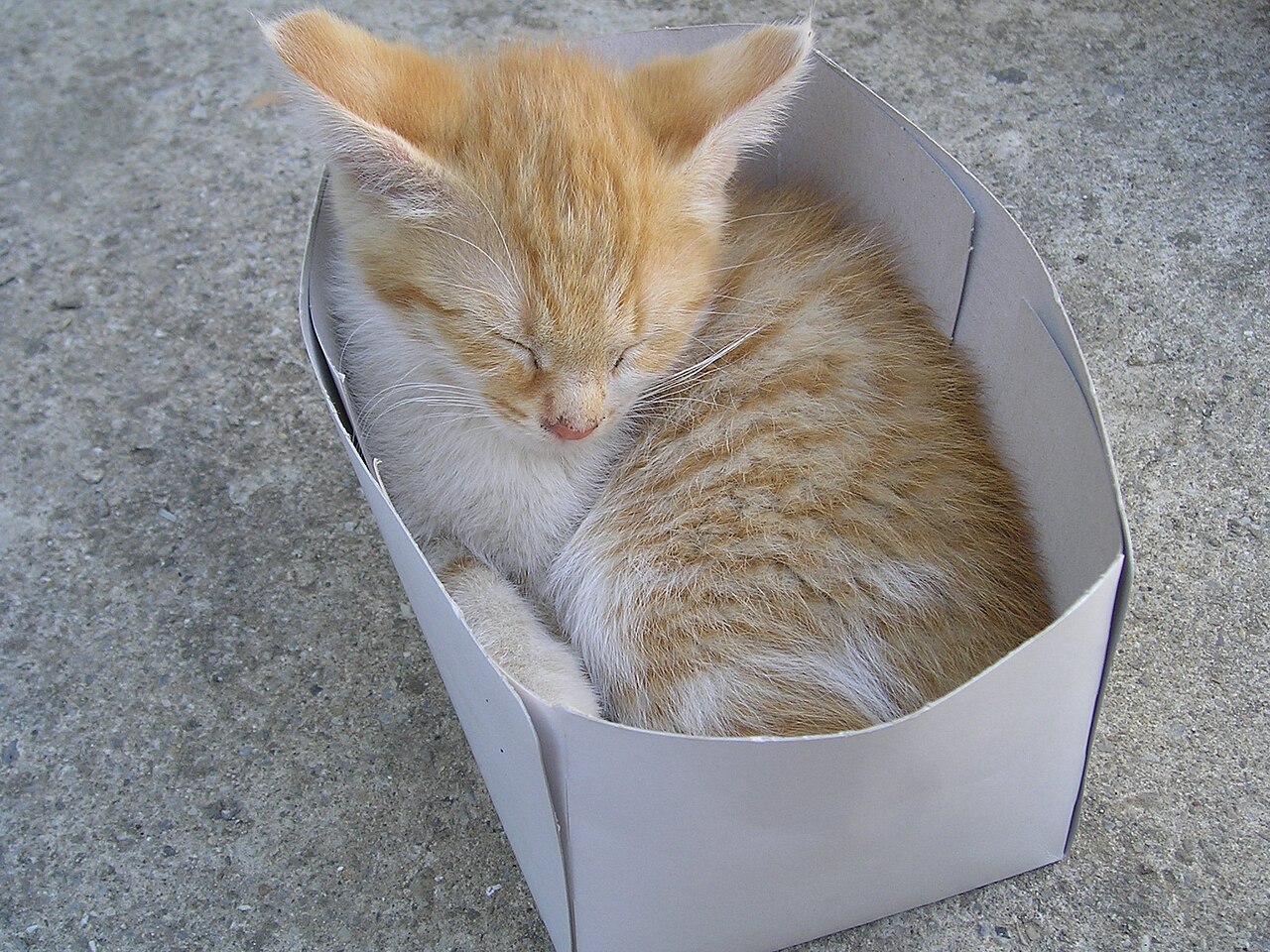
A cat will ignore a soft bed and climb into the box it came in. It will squeeze into a box that is plainly too small, and sit there with its sides spilling over the edges.
This article explains why cats sit in boxes, even tiny ones, including warmth, safety, pressure, and hunting instinct. It also covers what the research shows, and how owners can use the habit.
The short answer
Boxes give cats several things at once. They are warm, they hide the cat, they press gently against its sides, and they offer a place to watch the world from cover.
No single reason explains every cat. A nervous shelter cat may want safety, while a relaxed house cat may want warmth.
A playful cat may want a hiding spot for ambushes.
Researchers agree on one point: the behavior is normal. Cats seek enclosed spaces across breeds, ages, and living situations.
Safety and stress relief
Safety is the best-supported reason. Boxes give cats a place to retreat, and retreat lowers stress.
Claudia Vinke of Utrecht University in the Netherlands studied shelter cats and their stress. Her team gave hiding boxes to some newly arrived cats and left others without them. The cats with boxes had far less stress hormones in their blood.
The boxed cats also settled in faster. They grew familiar with their surroundings sooner, seemed less panicked, and interacted more with people. The study was small, with 19 cats, but its finding has held up in later discussions of shelter enrichment.
The paper concluded that a hiding box helps a cat cope with stressors in a new shelter environment during the first weeks after arrival. Shelters now treat boxes as basic enrichment, not clutter.
House cats feel the same pull even without a stressor. Cats are poor at resolving conflicts, and a box gives them a way to vanish from a tense moment. A cat that wants to disappear after a scolding, a loud guest, or a new pet will often head for the nearest box.
Warmth
Warmth is the second big reason. Cats run warmer than people, and they like their surroundings warmer too.
The National Research Council puts the thermoneutral zone for a domestic cat at 86 to 97 degrees Fahrenheit. That is the range where a cat spends no extra energy staying warm or cooling down. It sits about 20 degrees above the comfort zone most humans prefer.
Cardboard helps a cat reach that warmth. Corrugated cardboard traps air between its layers, which makes it a good insulator. A box holds body heat better than an open floor or a thin bed.
This also explains why cats curl up tight in boxes. A curled posture loses less heat than a stretched one. The box forces the curl, and the curl keeps the cat warm.
Cat researcher Mikel Delgado, then a postdoctoral fellow at the School of Veterinary Medicine at UC Davis, told Inverse that insulation is one likely reason cats like boxes. A cat's body heat stays close in a box, and the cardboard holds it there.
Pressure and comfort
A third reason is pressure. Cats seem to like the feeling of walls pressing gently against their sides.
Veterinarian Nicholas Dodman, writing in The Conversation, compared it to swaddling. Kittens once snuggled against their mother and littermates, feeling warmth and steady contact. A box recreates some of that contact.
Dodman suggested that close contact with a box may release endorphins, the body's own morphine-like substances, which cause pleasure and reduce stress. He and Temple Grandin studied a related effect called lateral side pressure, and found that the drug naltrexone, which blocks endorphins, reversed the calming effect of gentle squeezing in pigs.
Boxes also serve as nests. Mother cats seek small, discrete spots to give birth and shelter kittens. Small spaces sit deep in the feline behavioral range, and they stay appealing long after kittenhood.
The hunting instinct
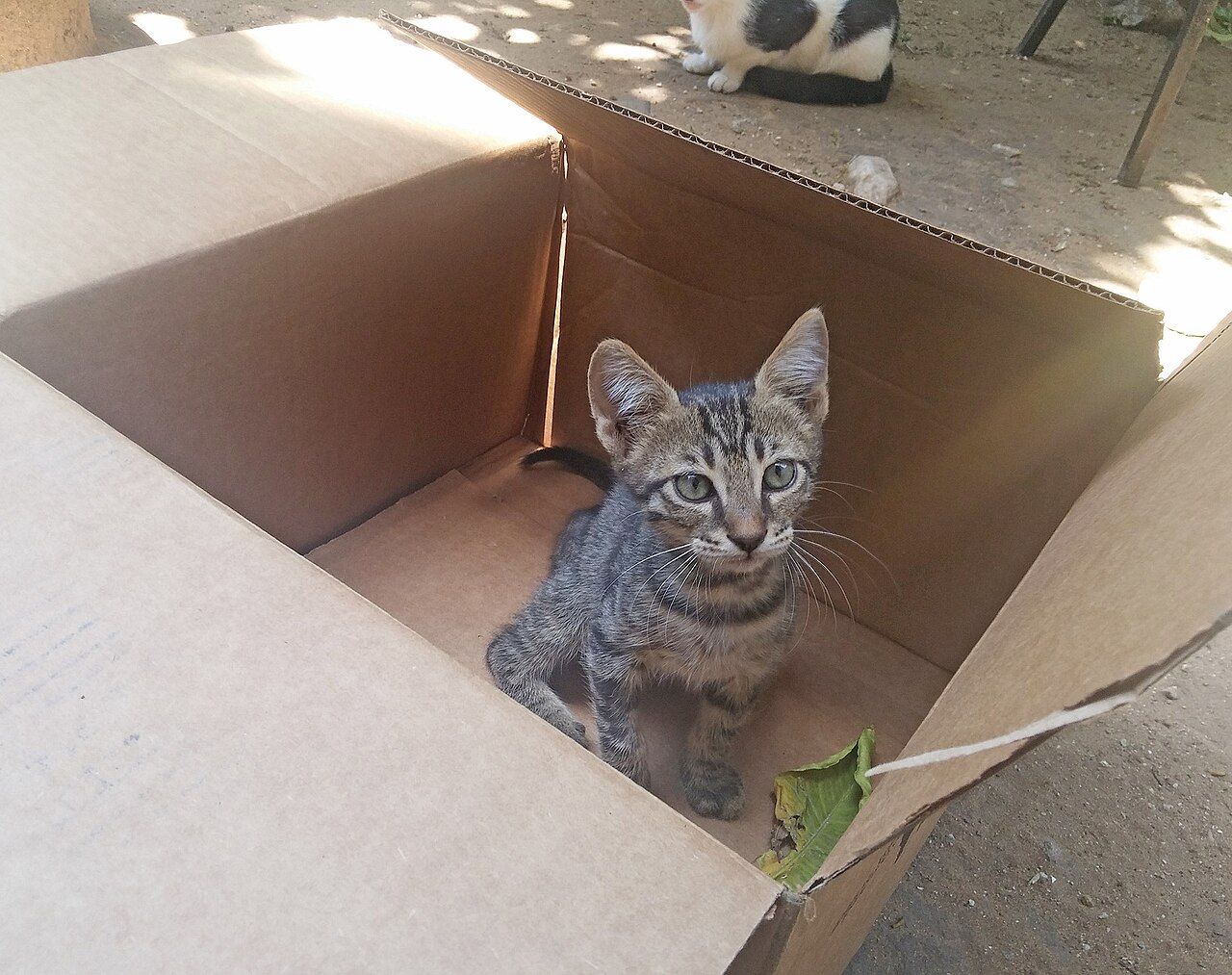
Boxes also serve a predator's purpose. Cats are ambush hunters, and a box is cover.
Delgado told Inverse that a box may give a cat a sense of concealment while it waits to see if a mouse or small prey item comes along. The cat likes the option of stalking from behind cover, even if the target is a toy or a human ankle.
Wildlife biologist Imogene Cancellare, then studying snow leopard genetics at the University of Delaware, agreed. She described it as an "I can see you but you can't see me" setup, plus general weirdness.
Big cats show the same pattern. Susan Bass, public relations director at Big Cat Rescue in Florida, told Inverse that big cats like to curl up in tiny spaces and explore their environment. She added that they seem to like dark, hidden areas where they can be alone, since they are solitary animals.
Why tiny boxes still work
The puzzle is not why cats like boxes, but why they pick boxes that cannot hold them. A cat draped over a shoe box is not hidden, warm, or comfortable in any obvious way.
Part of the answer is that partial cover still counts. Research on cats and concealment suggests that even a box that hides only part of the body gives a sense of security. The cat feels hidden even when it is not.
Novelty plays a role too. Delgado told Inverse that a new box changes the cat's environment, and indoor cats know every inch of their territory. A new object invites investigation, and the investigation often ends with sitting.
The tape-square test backs this up. People drew squares of tape on floors, and cats sat inside the outlines. Dodman called the taped square a poor substitute for a real box, but said it still gave a sense of security that open space could not.
Cats also sleep a lot, up to 20 hours a day, and they do much of it in warm, enclosed spots. A box that is too small for a full sprawl still works for a curled nap. Like dogs that dream and twitch in their sleep, cats do their deepest resting in spots that feel safe.
What owners should do
Anyone searching for cat sitting in box meaning will find the same answer: comfort, warmth, and safety.
The simplest move is to leave boxes out. A plain cardboard box costs nothing and gives the cat a retreat it will actually use.
Place boxes in quiet corners, and add one in an elevated spot if possible. Dodman noted that hideyholes in high places are even better, since height adds security and a view of the room.
Do not force a cat into a box, and do not use the box as a trap for vet trips. The carrier already carries negative associations for many cats, and a comfort box should stay separate from it.
Watch for changes in box use. A cat that suddenly hides all day may be ill, stressed, or in pain, and that change is worth a vet visit. Normal box sitting comes with normal eating, grooming, and play.
Owners can also rotate boxes. A fresh box every week or two renews the novelty that drew the cat in the first place. Cutting a doorway in the side makes the box more inviting for shy cats.
Frequently asked questions
Do cats prefer cardboard over other materials?
Cardboard wins on warmth and texture. It insulates well, holds its shape, and gives claws something to grip.
Cats will also sit in baskets, sinks, bags, and laundry piles. The shape matters more than the material, but cardboard is hard to beat for warmth.
Why does my cat ignore an expensive bed for a box?
Beds are often open and exposed. A box offers walls, warmth, and concealment in one package.
The bed may also smell new or sit in a busy spot. Moving the bed to a quiet corner, or placing a box beside it, often helps.
Is it safe for cats to chew cardboard?
Light chewing is normal. Cardboard is not toxic, and many cats chew boxes as part of play.
Remove boxes with tape, staples, glue, or printed coatings the cat keeps chewing. Plain, clean cardboard is the safest choice.
Should every cat have a box?
Yes, as enrichment. Shelter studies show boxes reduce stress in new arrivals, and house cats use them for rest and play.
One box per cat is a good rule. Cats that share a home may want separate retreats.
The bottom line
Cats sit in boxes, even tiny ones, because boxes offer warmth, safety, gentle pressure, and a hunter's cover. Research from Utrecht University supports the stress-relief effect, and feline biology explains the rest.
Owners do not need to solve the mystery. A clean cardboard box in a quiet corner is cheap enrichment that most cats will use daily. Like rabbits that thump their back feet to send a signal, a cat in a box is showing a behavior with real roots.
Tags: cats, cat behavior, boxes, pet care
Latest in Pets
- Why Do Cats Groom Themselves for Hours
- Why Do Dogs Eat Poop: Causes, Risks, and Fixes
- Why Do Parrots Mimic Human Speech: Syrinx, Brain, and Flock
- Why Does My Rabbit Thump Its Back Feet: Meanings and Fixes
Subscribe for weekly pet behavior explainers in plain English.
Related stories

Why Does My Dog Eat Grass and Vomit?
A UC Davis study of 1,571 owners found grass eating is normal dog behavior, not self-medication: only 10% were ill first. What the science

Why Does My Dog Stare at Me While I Eat?
Dogs stare at you while you eat because it has worked before, and mutual gaze raises bonding hormones. Learn the reinforcement science

Foods toxic to dogs: the list, with reasons
Chocolate, xylitol, grapes, onions: common foods can harm dogs. Learn what makes each one toxic, the warning signs, and what to do if your