
Why Do Cats Groom Themselves for Hours Each Day?
Key takeaways
- Cats groom for hours because grooming cleans, cools, and calms them at the same time.
- The tongue carries hundreds of tiny spines that comb fur and spread skin oils.
- Grooming that causes bald patches, or grooming that stops, is a reason to call a vet.
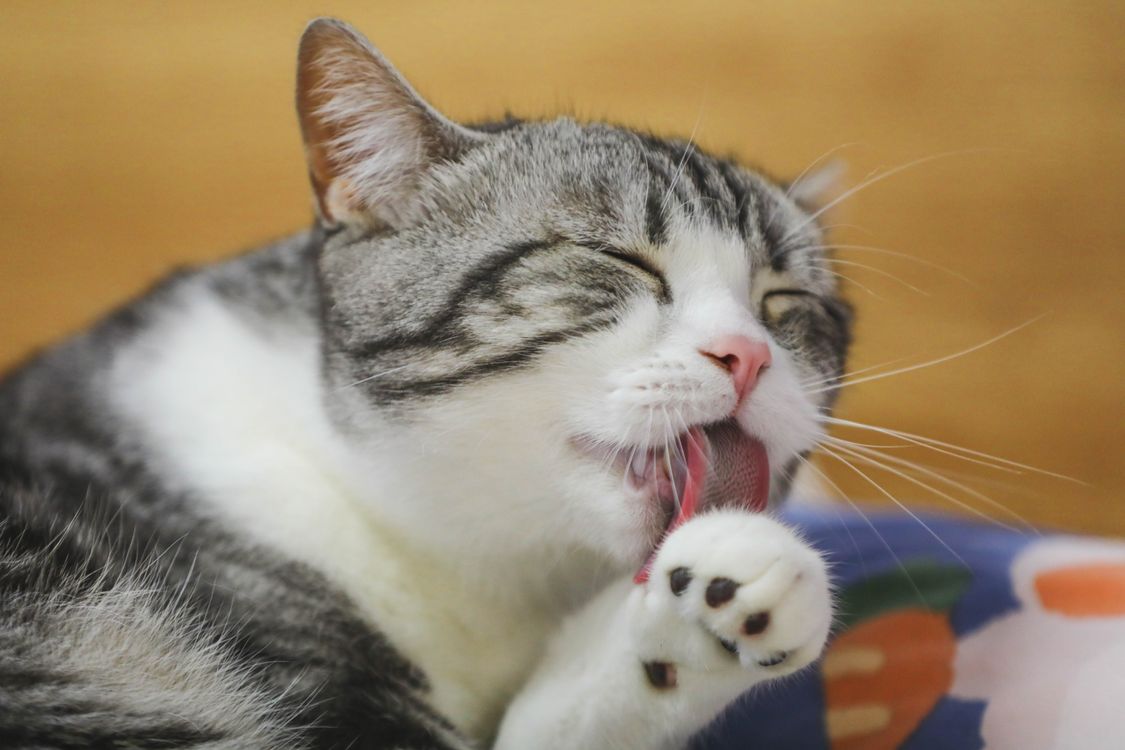
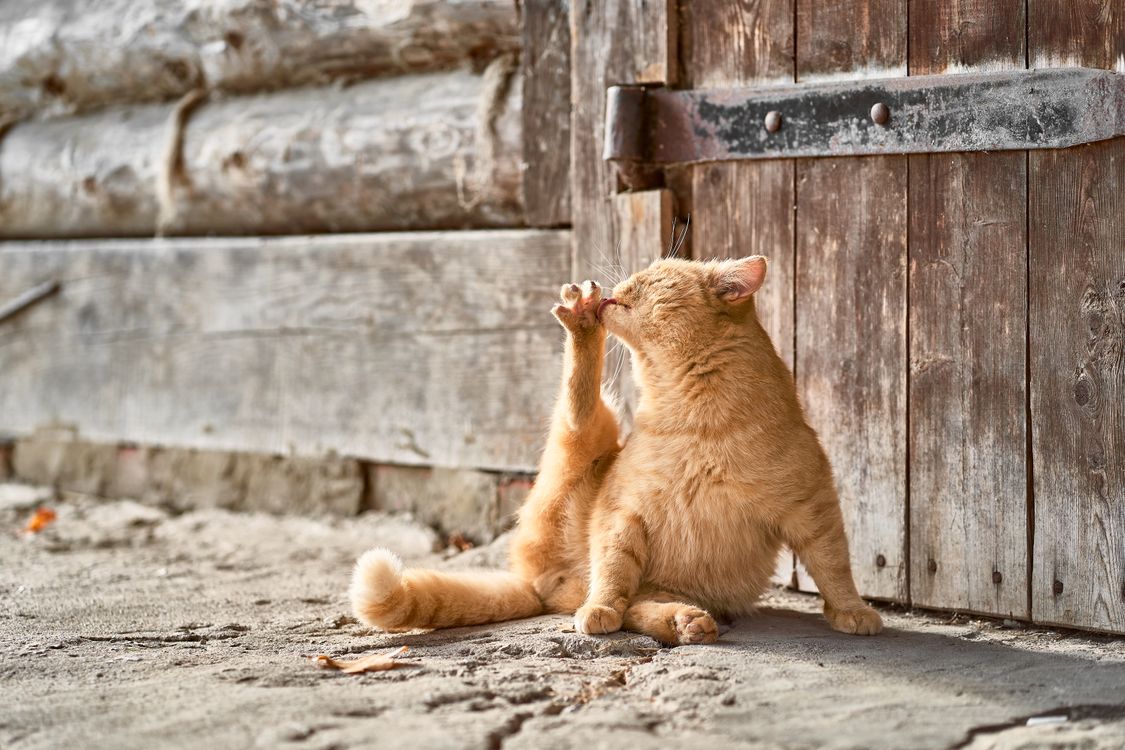
A cat can spend what looks like an entire afternoon licking itself. Paw, face, shoulder, side, tail, then back to the paw. The session looks obsessive to a human.
To the cat, it is maintenance, climate control, and stress relief in one routine.
The time involved is real. Domestic cats sleep an average of 14 hours each day, and they spend up to a quarter of their waking hours grooming their fur, according to a 2018 study published in the journal Proceedings of the National Academy of Sciences, cited by Live Science. Other estimates run higher.
Hill's Pet notes that most cats spend between 30 and 50 percent of their day grooming themselves. Either way, grooming is a major part of a cat's daily budget.
This article explains what the tongue actually does, why grooming serves so many jobs at once, how kittens learn the routine, and when grooming becomes too much or too little.
This article is for general information, not medical advice.
What the tongue actually does
A cat's tongue is a tool, not just a wet surface. It carries hundreds of sharp, hollow, backward-facing spines called papillae. The spines are made of keratin, the same substance that hair and claws are made of, according to the 2018 study cited by Live Science.
Because of the spines' hooklike shape, they behave like Velcro. As the tongue glides over fur, the keratin spines catch on tangles and debris.
That combing action does the first job of grooming: cleaning. Regular maintenance removes debris stuck to the fur and helps prevent matting. Matted hair can cause discomfort and can leave the skin underneath irritated and inflamed, posing a risk of infection, according to 4 Paws Veterinary Care in Wynantskill, New York, cited by Live Science.
"Cats lick themselves to help keep their coats clean and healthy," Kristyn Vitale, an assistant professor of animal health and behavior at Unity College in Maine, told Live Science. "It is important that cats groom themselves because it helps to maintain the health of their fur. " The quote is simple, and it covers the core job.
The tongue also spreads oils. Cats have small protrusions on their tongues called papillae that remove debris from their coats and distribute important natural oils, according to the Animal Humane Society. Those oils keep the fur soft and help waterproof it.
The mechanics matter because cats cannot ask for a brush. The tongue is the brush, the comb, and the washcloth. When the tool works well, the cat rarely needs help.
When it stops working, the coat shows it fast.
Other pet quirks have the same mix of instinct and mechanism. Dogs dream and twitch in their sleep, dogs get the zoomies after a bath, and parrots mimic human speech all look odd until the cause is clear.
Why grooming does so many jobs at once
Grooming looks like one behavior, but it serves several systems at the same time. Hill's Pet lists the reasons cats groom beyond cleanliness: to regulate body temperature, to keep the coat clean and smooth by distributing natural skin oils, to stimulate circulation, to cool down through evaporation of saliva, to eliminate parasites, infection, and allergies, and to prevent hairballs.
Temperature control is a big one. Cats do not sweat the way humans do. Licking spreads saliva over the fur, and evaporation cools the skin.
Grooming can release excess body heat through the tongue, according to the Animal Humane Society.
Parasite and debris control is the third job. Grooming removes loose fur, dirt, and small irritants. It also helps the cat notice problems early.
Then there is the calming effect. Cats groom to self-soothe. Grooming can act as displacement behavior: if a cat feels embarrassed, anxious, or as though it is in a conflict, it may lick to calm itself, according to Hill's Pet.
The act of licking is soothing in itself.
That multi-job design explains the hours. A cat is not spending a quarter of its waking time on vanity. It is cleaning, cooling, circulating, checking, and calming in a single routine.
How kittens learn to groom
Grooming starts at birth, with help. Mothers lick their kittens to clean them, provoke urination and suckling, provide comfort, and strengthen their bond, according to Hill's Pet. Licking the genital region stimulates very young kittens to urinate and defecate, since they cannot do it on their own, according to Vitale in Live Science.
Kittens start grooming themselves early. At 4 weeks of age, kittens begin grooming themselves, and shortly thereafter start grooming their mother and littermates, according to Hill's Pet. That mutual grooming is called allogrooming, and it continues into adulthood.
Allogrooming is social glue. Cats may engage in allogrooming with other cats as well as other social partners, such as dogs and humans, Vitale said in Live Science. Friendly behaviors like allogrooming are thought to strengthen the relationship between the individuals involved.
The learning window matters. Cats taken away from their mothers too early may not know how to properly clean themselves, according to Hill's Pet. Those cats may need more help from their owners, including regular brushing.
Adult cats keep the social side of grooming. Vitale noted in Live Science that cats often groom one another before or after play, and that the interaction may shift to play wrestling and chasing before the cats settle down to sleep next to one another.
When grooming becomes too much
Long grooming is normal. Grooming that damages the coat is not. The line is visible: bald patches, broken skin, or licking that takes over other activities.
If a cat licks, bites, or nibbles itself incessantly, and the owner notices hair loss or skin lesions, it may be time for a vet visit, according to Hill's Pet.
Overgrooming has both medical and emotional causes. It could indicate a neurological disorder, flea infestation, parasites, or a psychological disorder, according to Hill's Pet. Stress often causes cats to develop compulsive disorders like excessive grooming early in life.
Events like moving, home remodeling, a new pet or family member, separation anxiety, and lack of stimulation can trigger these behaviors.
The mechanism is a loop. Self-grooming soothes and calms the cat, so the cat wants to do it every time it faces a conflict. If the behavior is not addressed, it can result in self-inflicted injury.
Psychogenic alopecia, or fur plucking, is one common outcome. It includes hair thinning, balding, and skin infections, according to Hill's Pet.
Cats may also groom as a stress-relieving behavior that tips into overgrooming, Vitale said in Live Science. Sometimes this can turn into overgrooming, in which the cat licks itself so much that patches of fur go missing. That may be a sign of a behavioral or medical issue.
The key word is patches. A cat that grooms for hours but keeps a full coat is fine. A cat with missing fur is not.
Owners can watch for the pattern. Overgrooming often targets spots the cat can reach easily: the belly, legs, flanks, and chest. The cat may groom in private, so bald patches may be the first sign the owner sees.
When grooming stops
The opposite problem is just as important. A cat that stops grooming may be ill. Regular self-grooming helps a cat look and feel good, but if the cat becomes ill, it may stop cleaning itself, according to Hill's Pet.
That change could be a sign of arthritis, pain, or dental problems.
Watch for the signs of undergrooming. Hill's Pet lists a harsh or greasy coat, small mats of fur on the body or tail, staining on the paws, foul smell, and food particles on the face after meals. Any of those signs, combined with less grooming, deserves a vet visit.
Older or heavier cats may need help with hard-to-reach areas, such as their backs, bellies, and sanitary zones, according to the Animal Humane Society. A simple brush or comb is a great way to help a cat stay clean, and it is also a way to bond. Brushing stimulates the skin and blood circulation, and removes fleas and ticks, according to Hill's Pet.
Pain is a common hidden cause. A cat with a sore mouth may avoid grooming because the tongue hurts. A cat with arthritis may avoid twisting to reach its back.
A cat with obesity may not be able to reach at all.
Owners should not force a cat to groom. Start by brushing daily, gently, and let the cat set the pace. When the cat starts grooming on its own, try not to interrupt it.
How much help a healthy cat needs
Most cats do not need help grooming from their caretakers, according to the Animal Humane Society. A healthy adult cat with a full coat and a steady routine is doing the job itself. The owner's role is to watch, not to intervene.
Frequently asked questions
How many hours a day do cats groom?
Estimates vary. A 2018 study found cats spend up to a quarter of their waking hours grooming, while Hill's Pet puts the range at 30 to 50 percent of the day. Cats also sleep about 14 hours a day.
Is it normal for cats to groom after eating?
Yes. Grooming after meals is a normal part of the routine. The cat cleans its face and paws, settles its stomach, and shifts from feeding to rest.
Why does my cat groom me?
Mutual grooming, or allogrooming, builds social bonds. Cats groom other cats, dogs, and humans they trust. A cat that licks your arm or face is treating you as a social partner.
Why does my cat groom right after being scared?
Grooming is a displacement behavior. If a cat feels anxious or caught in a conflict, it may lick to calm itself. A short grooming session after a startling event is a normal reset.
When should I take my cat to the vet about grooming?
Call the vet if you see bald patches, broken skin, hair loss, or skin lesions from licking. Also call if the cat stops grooming, or if the coat turns harsh, greasy, matted, or smelly.
The bottom line
Cats groom themselves for hours because grooming is several jobs in one routine. The tongue combs the fur, spreads oils, cools the skin, stimulates circulation, and calms the cat. Most long grooming sessions are healthy.
The warning signs are bald patches, broken skin, or a cat that suddenly stops grooming. Watch the coat, note changes, and bring the pattern to the vet if anything shifts.
Tags: cats, cat grooming, cat behavior, pet care
Latest in Pets
- Why Do Cats Sit in Boxes Even Tiny Ones?
- Why Do Dogs Dream and Twitch in Their Sleep?
- Why Does My Dog Get the Zoomies After a Bath?
- Why Do Parrots Mimic Human Speech?
Subscribe for weekly pet behavior explainers in your inbox.
Related stories

Why Does My Dog Eat Grass and Vomit?
A UC Davis study of 1,571 owners found grass eating is normal dog behavior, not self-medication: only 10% were ill first. What the science

Why Does My Dog Stare at Me While I Eat?
Dogs stare at you while you eat because it has worked before, and mutual gaze raises bonding hormones. Learn the reinforcement science

Foods toxic to dogs: the list, with reasons
Chocolate, xylitol, grapes, onions: common foods can harm dogs. Learn what makes each one toxic, the warning signs, and what to do if your