
Why Do Dogs Dream and Twitch in Their Sleep?
Key takeaways
- Dogs dream during REM sleep, and twitching is the body leaking small pieces of the dream.
- Dogs reach REM in about 20 minutes, far faster than the roughly 90 minutes humans need.
- Brief, intermittent twitches are normal, while rigid, violent, or waking movements need a vet.
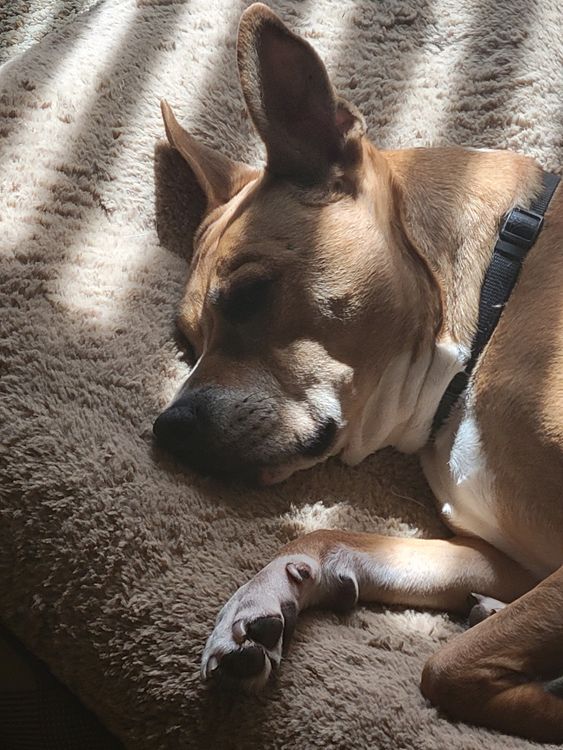
A sleeping dog can look like it is running. The legs paddle, the paws twitch, the mouth moves, and a muffled bark escapes. The eyes stay closed.
The dog is still asleep.
The explanation is simple. Dogs dream, and twitching is part of dreaming. The brain replays the day while the body rests, and small movements leak through.
The twitch is not a malfunction.
This article explains how dog sleep cycles work, why twitches happen, why puppies and seniors twitch more, how to tell a dream from a seizure, and whether owners should ever wake a twitching dog.
This article is for general information, not medical advice.
How dog sleep cycles work
Dogs go through sleep stages much like humans do. They cycle through non-rapid eye movement (NREM) sleep and rapid eye movement (REM) sleep. REM is the stage when most dreams occur, and during REM the brain becomes highly active even though the body stays mostly still.
Scientists have studied and measured the sleeping brain of dogs, and dogs go through the stages of sleep much like humans do, according to Amber Karwacki, DVM, a veterinarian at Heart+Paw, in Reader's Digest.
The timing differs. Dogs hit REM much faster than people do. It takes dogs only 20 minutes to get there, and it is about 90 minutes for humans, according to Reader's Digest.
"During the REM phase, brain waves are irregular and fast," says Paola Cuevas, DVM, a veterinarian and animal behaviorist at PetKeen, in Reader's Digest. "Our observations of dogs' movement and vocalization during their REM sleep let us conclude that they have dreams. " The brain activity and the body movements line up.
The dog is not just twitching at random. It is acting out pieces of a dream.
Dogs may also "talk" in their sleep with muffled barks, and act out their dreams by moving their legs in the same manner humans do when dreaming, according to Reader's Digest. The legs paddle as if running. The face twitches as if sniffing.
The vocal cords produce soft sounds.
Sleep is one of several dog behaviors with a clear mechanism. Dogs howl at sirens, dogs get the zoomies after a bath, and dogs eating poop each look strange until the cause is clear.
Why twitches leak through
During REM sleep, the body is supposed to stay still. A part of the brainstem called the pons helps enforce that stillness. It works like a set of switches that turn muscle movement off during dreaming.
The system is good, but it is not perfect.
The pons has two "off" switches that regulate movement during the sleep cycle, according to PetMD, cited by Mental Floss. "If either or both of these 'off' switches is not fully developed or has grown weak due to the aging process, then the muscles are not completely turned off and during dreaming, the animal will start to move," Stanley Coren, a neuropsychological researcher and former psychology professor at the University of British Columbia, told PetMD. "How much movement occurs depends upon how effective or ineffective these 'off' switches are," Coren said.
That explanation covers the age pattern. Puppies and senior dogs can jerk or twitch more than adult dogs thanks to how their brains are developing or have developed, according to Purina. In puppies, the off-switches are still maturing.
In seniors, they may have weakened with age.
The leak is usually small. A paw flicks. A toe wiggles.
An ear twitches. The movements last seconds and then stop. The dog stays asleep, and the sleep cycle continues.
What dogs dream about
Nobody can watch a dog's dream directly. Experts do not know for sure what dogs dream about, but it is probably similar to human dream themes: a mashup of daytime reality infused with other memories, according to Reader's Digest.
"Owners' knowledge of their dogs' habits, behavior and favorite activities points toward the direction that dogs dream about stuff they experience in their lives, things they enjoy and things they fear," says Cuevas in Reader's Digest. A dog that spent the day at the park may dream about running. A dog that fears storms may dream about thunder.
The dream content follows the dog's real life.
Purina agrees. There is scientific evidence that dogs dream about similar things that humans do, such as their day-to-day life and people, places, and things they are emotionally attached to, according to Purina.
Dream length varies with size. Larger breeds tend to have longer, less frequent dreams, while smaller breeds dream often, but for shorter lengths of time, according to Purina.
What normal twitching looks like
Normal sleep twitching has a recognizable shape. The movements are short, jerky, and intermittent. They affect one part of the body at a time: a leg, a tail, a face.
The dog stays relaxed.
"Some [dogs] manifest dreaming with twitching, paddling, or kicks of the legs. These movements are often brief (less than 30 seconds) and intermittent," Jerry Klein, the American Kennel Club's chief veterinary officer, said on the AKC website, cited by Mental Floss. The 30-second figure is a useful rule of thumb.
A twitch that lasts a few seconds and stops is a dream. A twitch that runs on and on is something else.
Purina lists the normal signs: short, jerky movements in the legs, tails, or faces; quiet vocalizations like barks and whimpers; rapid eye movement even though the eyes are closed; and normal breathing that can become shorter and quicker during active dreaming. Those signs together describe a dog in REM sleep.
Other pets show their own sleep quirks. Cats sit in boxes even when the box looks far too small, and dogs get the zoomies after a bath. Sleep twitching belongs in the same category: a normal behavior that looks odd until the mechanism is clear.
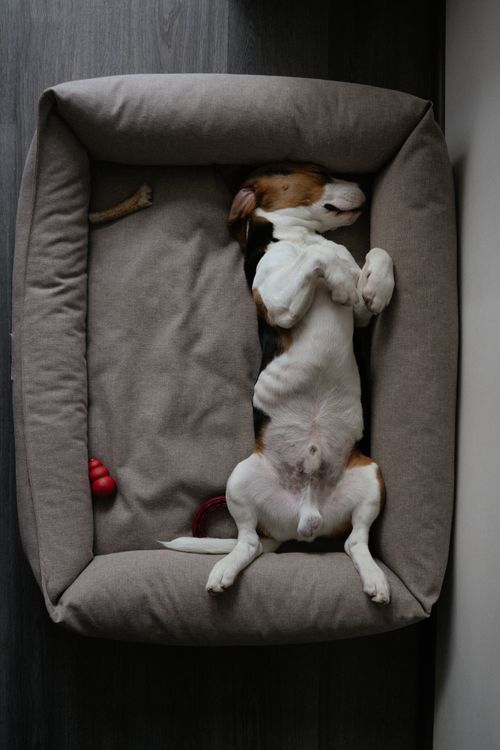
Twitching versus seizures
The important distinction is between dreaming and a seizure. The two can look alike at first glance. The differences are clear once you know what to check: timing, stiffness, duration, and consciousness.
Twitching occurs when a dog is sleeping. Seizures happen when dogs are awake and their eyes are open, according to Reader's Digest. That timing rule alone separates most cases.
Stiffness is the second difference. "Seizing dogs' limbs, on the other hand, tend to be rigid and stiffer, with more violent movement," Klein said on the AKC website, cited by Mental Floss. Dream twitches are loose and jerky.
Seizure movements are stiff and forceful.
Duration is the third difference. Dream twitches are brief and intermittent, often less than 30 seconds. Seizures run longer and do not pause in the same way.
A seizure usually lasts a couple of minutes, and it is not painful, according to Reader's Digest.
Other symptoms separate the two. If a dog is violently and uncontrollably shaking, drooling, or loses consciousness or bladder control, Purina advises calling a veterinarian immediately. "If the dog twitches while awake, it could be anything from a metabolic issue to a neurologic issue," says Randall Cannon, DVM, a veterinarian at Cannon Veterinary Services in Orlando, Florida, in Reader's Digest.
If a dog has never had a seizure before, or if a seizure lasts more than five minutes, Reader's Digest advises calling a vet right away. Owners should stay close, keep the dog from hurting itself, and take notes. A short video helps the vet assess the problem.
Should you wake a twitching dog?
No. Let sleeping dogs lie. Waking a dog from a dream can startle it, and a startled dog may bite before it realizes the dream was not real.
"I lean into the old adage 'Let sleeping dogs lie' when it comes to waking dogs up," says Kelly Diehl, a veterinarian and senior director of science communication at Morris Animal Foundation, in Reader's Digest. "It's better to let the episode pass. " The advice is direct.
The twitch will end on its own.
Startling a dog out of sleep can trigger an aggressive response in many dogs, putting the owner at risk of a dog bite, Diehl said in Reader's Digest. Children should be told not to hug or kiss a sleeping dog, especially one that is twitching.
Experts are not fully sure whether dogs even have nightmares, according to Reader's Digest. Waking a dog to rescue it from a bad dream may cause more harm than the dream itself.
If the twitching is keeping the owner awake, the fix is a better sleeping setup, not waking the dog. Reader's Digest suggests a comfortable dog bed in the bedroom or in another quiet area where the dog will not be disturbed.
There is one narrow exception. Diehl admits that on rare occasions she has ignored her own advice when her dogs had a particularly active sleep cycle. She wakes them safely by softly calling their name a few times from across the room, without touching or getting too close, according to Reader's Digest.
How to support healthy dog sleep
Dogs need solid sleep for a healthy mind and body. Purina recommends a comfortable and consistent place to sleep, a routine, mental and physical stimulation during the day, no large meals close to bedtime, and limited water close to bedtime.
If twitching increases suddenly, document it. Purina advises keeping a log of how long the twitching lasts, when it occurs, and the conditions around it. Note any other symptoms, and write down any environmental, behavioral, or dietary changes.
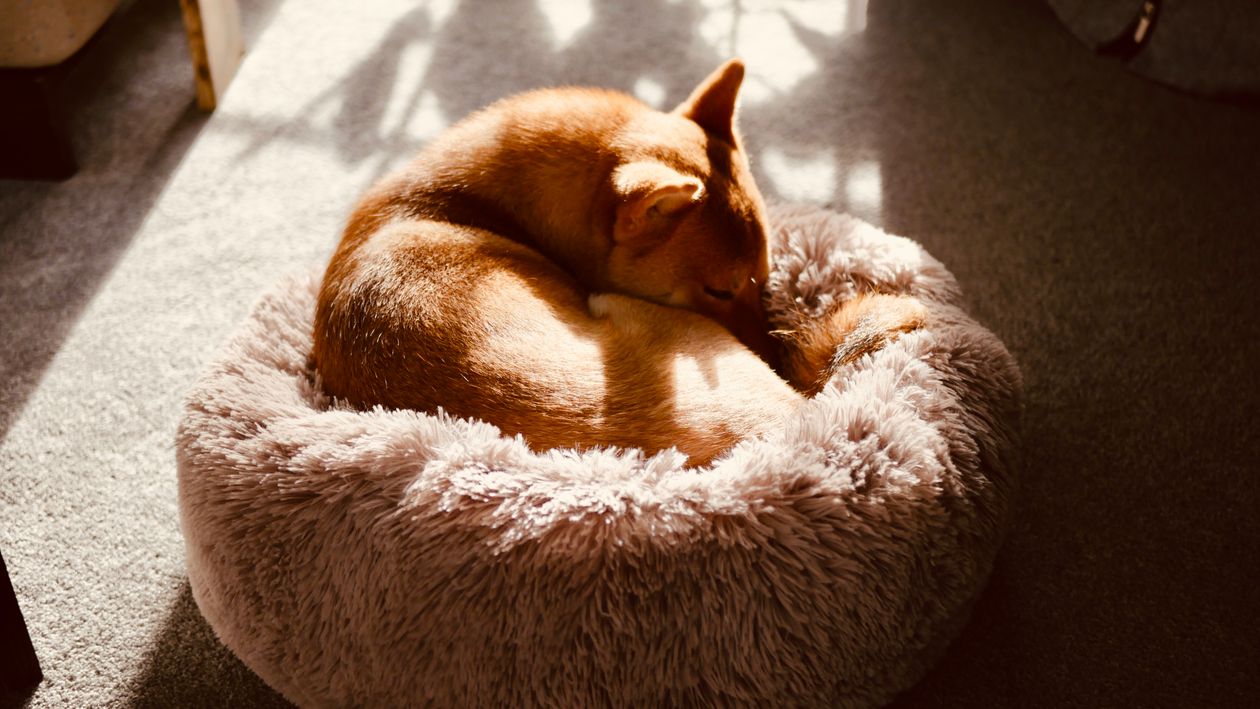
Frequently asked questions
Is it normal for dogs to bark or whimper in their sleep?
Yes. Dogs may make quiet vocalizations like barks and whimpers during REM sleep. Those sounds are fragments of dreams, similar to the leg paddling.
Brief, quiet sounds with a relaxed body are normal.
How can I tell if my dog is having a seizure instead of dreaming?
Check timing, stiffness, and duration. Dreaming happens during sleep, with loose, brief, intermittent movements under 30 seconds. Seizures tend to happen while awake, with rigid, violent movement, drooling, loss of consciousness, or loss of bladder control.
Should I wake my dog if it looks like it is having a nightmare?
No. Experts are not fully sure dogs have nightmares, and waking a dog abruptly can trigger a bite. Let the episode pass.
The bottom line
Dogs dream and twitch because REM sleep is active in the brain while the body mostly rests. Small movements leak past the pons, the brainstem system that normally keeps muscles still during dreams. Brief, loose, intermittent twitches in a relaxed dog are normal.
Rigid, violent, prolonged, or waking movements are not, and they deserve a vet visit. Leave the dreaming dog alone, and let the dream finish.
Tags: dogs, dog sleep, dog dreams, pet care
Latest in Pets
- Why Does My Dog Get the Zoomies After a Bath?
- Why Do Dogs Howl at Sirens?
- Why Do Cats Groom Themselves for Hours?
- Why Do Dogs Eat Poop?
Subscribe for weekly pet behavior explainers in your inbox.
Related stories

Why Does My Dog Eat Grass and Vomit?
A UC Davis study of 1,571 owners found grass eating is normal dog behavior, not self-medication: only 10% were ill first. What the science

Why Does My Dog Stare at Me While I Eat?
Dogs stare at you while you eat because it has worked before, and mutual gaze raises bonding hormones. Learn the reinforcement science

Foods toxic to dogs: the list, with reasons
Chocolate, xylitol, grapes, onions: common foods can harm dogs. Learn what makes each one toxic, the warning signs, and what to do if your