
Why Do Parrots Mimic Human Speech: Syrinx, Brain, and Flock
Key takeaways
- Parrots mimic speech with a syrinx, a sound organ at the base of the windpipe, plus a flexible tongue and beak.
- Their brains hold a song system with a core and an outer shell, and the shell is unique to parrots.
- Pet parrots treat their human household as a flock, and they copy its sounds to belong.
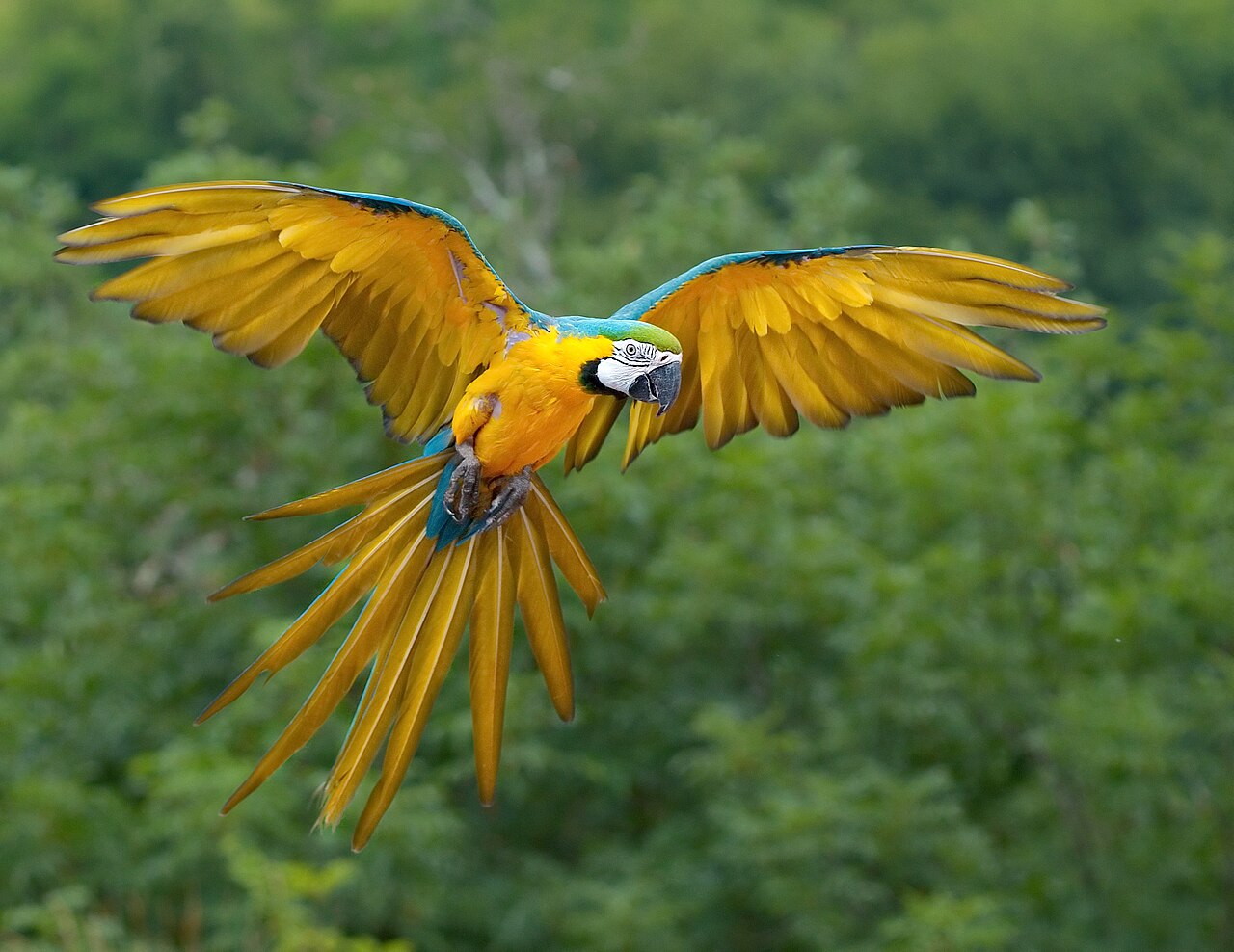
A parrot can greet a visitor with hello, copy a phone ring, and repeat a phrase it heard yesterday. It does all this without vocal cords, and without understanding language the way people do.
This article explains why parrots mimic human speech, including the syrinx, the brain's song system, and the flock instinct. It also covers what parrots do and do not understand, and which species talk best.
The short answer
Parrots combine the right hardware with the right wiring and the right motive. Their sound organ, the syrinx, makes a wide range of sounds.
Their brains hold dedicated vocal-learning circuits. Their social instinct pushes them to copy their group.
Take away any one of those three parts, and the mimicry fades. Songbirds have vocal learning but lack the parrot's extra brain shell.
Primates have complex brains but lack the vocal-learning circuits. Parrots have all three.
The hardware: the syrinx
Humans make sound with the larynx, the voice box at the top of the windpipe. Birds do not use a larynx for vocalizing. They use a syrinx.
The syrinx sits deep in the chest, at the base of the windpipe where it splits into the two bronchi leading to the lungs. Muscles around the syrinx vibrate to produce sound, and parrots control those muscles with remarkable precision.
The syrinx gives birds two advantages. It uses nearly all of the air passing through it to create sound, which makes it more efficient than a human larynx. It also lets many birds control the two sides of the organ separately, so they can produce two frequencies at once.
A parrot shapes those sounds with its tongue and beak. The parrot tongue is unusually muscular and dexterous, and it works with the beak the way human lips and tongue shape vowels. The result is a voice that can copy human words, phone rings, dog barks, and microwave beeps.
The wiring: core and shell
The syrinx explains how a parrot makes sounds. The brain explains how it learns them.
Parrots belong to a rare group called vocal learners. Most birds produce calls from instinct, but vocal learners pick up new sounds from their surroundings and copy them. Parrots, songbirds, and hummingbirds all belong to this group.
All vocal-learning birds have brain areas called cores that control vocal learning. Parrots add something extra: shells, areas of the brain around the cores that also activate when speech pathways engage. Research led by Mukta Chakraborty at Duke University highlighted this core-and-shell structure, and a 2015 study in PLOS ONE identified the shell as a key reason parrots out-mimic other vocal learners.
The shell supports open-ended learning. A parrot can keep learning new sounds through its whole life, not only during a short critical period in youth. That is why an older parrot can still pick up a new phrase.
The same genes that code for vocal learning in parrots also show up in their movement centers. ScienceABC notes that this overlap may explain why some parrots bob and duck to music, as if they are dancing to the beat.
The motive: the flock
Biology gives parrots the tools. Social life gives them the reason to use those tools.
Parrots are obligate social birds. In the wild, they live in large, complex flocks, and they use contact calls, unique vocal signatures, to identify each other and hold the group together.
When a parrot lives with people, its social instinct stays intact but its flock changes. The human owner and other household pets become the bird's flock. Because parrots are wired to mirror the sounds of their social group, they start to copy the dominant sounds of the house: human speech.
Mimicry is a form of social bonding. By repeating an owner's words and tones, a parrot signals membership in the family unit. A bird that says hello when a person enters the room, or barks when the family dog is near, is joining the household conversation on its own terms.
Social feedback speeds the learning. A parrot that gets attention, laughter, or a treat for a sound will repeat that sound.
A sound that gets no reaction fades. Owners often train parrots by accident, rewarding the words they find funniest.
How parrots learn a word
A young parrot learns much like a human child picks up words. It listens to a model, attempts a copy, listens to the result, and adjusts.
The model can be a parent, a flockmate, or a human. Repetition and social feedback drive the process. The more a parrot hears a sound, and the more attention it gets for producing it, the faster it refines the noise into a recognizable word.
Comfort matters. Parrots must feel safe and trusting before they start to speak.
A stressed, bored, or lonely bird often goes quiet. Repetition of words, paired with treats and calm attention, opens up a parrot's willingness to chat.
Not all parrots talk. Grey parrots, Amazon parrots, parakeets, and cockatoos are among the species that mimic human speech.
Other birds can also copy human sounds, including starlings, lyrebirds, mockingbirds, and hill mynas. Individual birds vary widely, and some never speak at all.
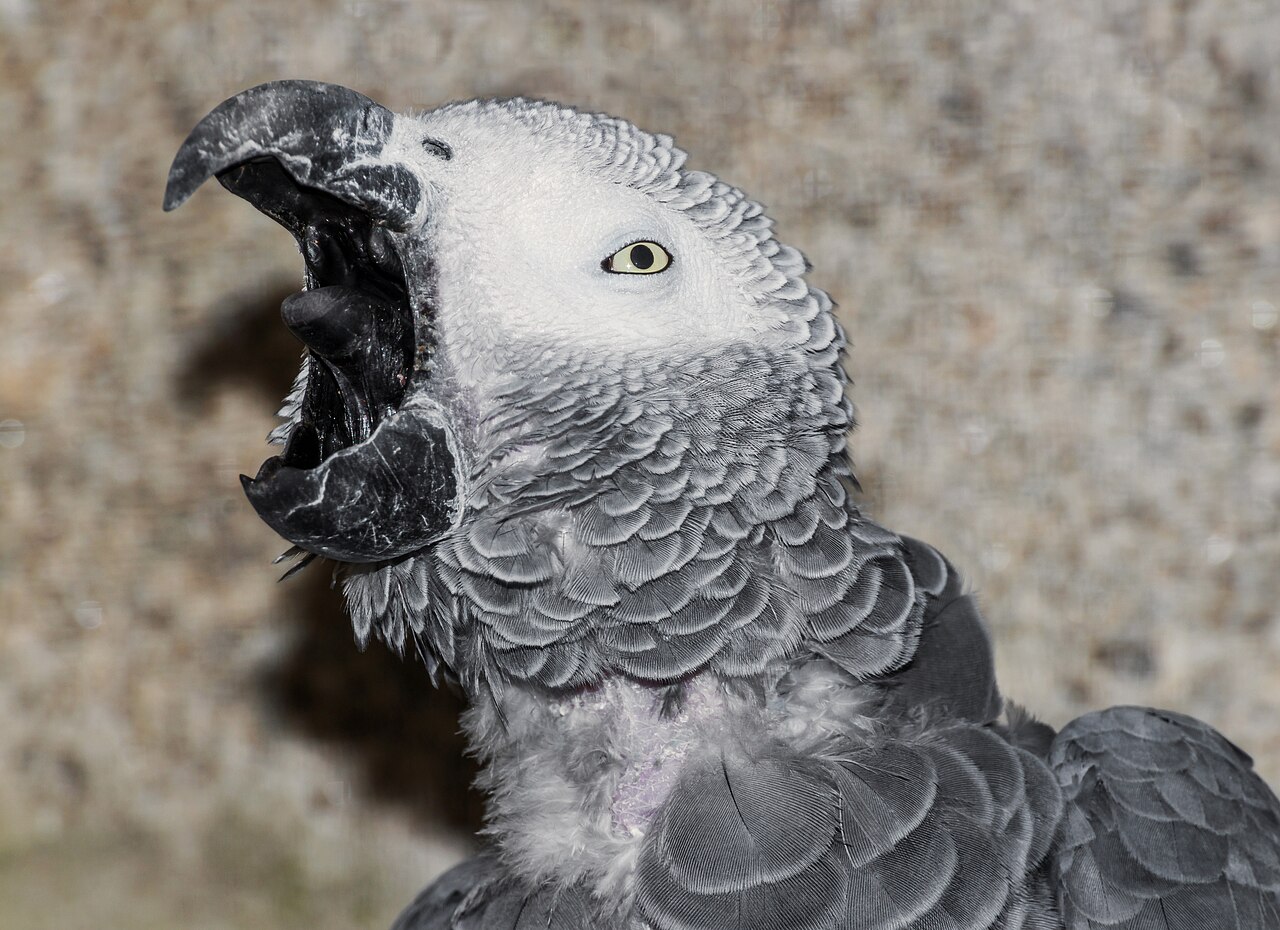
Alex, Puck, and the limits of understanding
The famous question is whether parrots understand what they say. The honest answer is that they understand associations, not language.
Dr. Irene Pepperberg began her landmark work with Alex, an African Grey parrot, in 1977. Over 30 years, Alex showed he could link words to concepts such as color, shape, matter, and zero.
Pepperberg, an animal cognition scientist and Harvard professor, raised Alex in captivity for 29 years until his death in 2007. His work shifted how scientists viewed bird intelligence.
Puck, a budgerigar, set a different kind of record. In 1994, Puck entered the Guinness World Records for the largest human vocabulary of any bird, with 1,728 words. Puck could even form original sentences, which suggested a level of processing that surprised researchers.
Most pet parrots sit far below Alex and Puck. They learn that a sound brings a result.
A parrot that says hello when someone walks in has learned that the sound fits that event. A parrot that says cracker and gets a treat has learned the link between the word and the reward.
The Times of India puts it plainly: most parrots associate an utterance with an event, not with a meaning. A parrot repeating "I love you" does not feel the emotion behind the phrase. It repeats something it learned through tone and regularity, because the phrase matters as an interaction.
That gap does not make the feat small. Wild parrots use specific sounds to name their offspring, and captive parrots may use human names to get the attention of specific people.
Yellow-naped Amazon parrots in Costa Rica even develop regional dialects, and birds at dialect borders can speak both. Mimicry is social skill, not party trick.
Why primates cannot do the same
Parrots raise an obvious question: if a bird can talk, why cannot a chimpanzee? The answer sits in the brain, not the throat.
Researchers rebuilt the vocal tracts of macaque monkeys with X-ray data and simulated them. The physical structure should allow thousands of different words. Yet monkeys stay limited to screeches and hoots.
The missing piece is neural control. Great apes lack the vocal-learning circuits that parrots have. Their brains cannot fine-tune the mouth, tongue, and voice box the way a parrot's brain fine-tunes the syrinx, tongue, and beak.
Genetics plays a part too. The FOXP2 gene, linked to speech and language in humans, carries two amino-acid changes in the human version that are missing in chimps and other apes. The gene is present in apes, but subtly different, and that difference is one of several steps toward human speech.
What owners should know
A talking parrot is a long commitment. Parrots often live 50 to 80 years, and their intelligence needs constant stimulation and social contact.
A bird that stops vocalizing, or that starts screaming, may be socially isolated or distressed. Talking is social behavior, and silence can be a warning sign.
Owners who want a talking parrot should focus on bonding first. Short, calm sessions work better than long drills.
Repeating a word at the same time of day, with a treat for effort, builds the habit. Patience matters more than vocabulary size.
Owners should also keep expectations honest. A parrot that never speaks is not broken.
Some birds prefer whistles, clicks, and household sounds over words, and those sounds count as mimicry too. Like cats that sit in boxes, even tiny ones, a parrot's behavior makes sense once its instincts are clear.
Frequently asked questions
Which parrot species talk best?
African grey parrots, Amazon parrots, and budgerigars are the best-known talkers. Cockatoos and parakeets can also learn words.
Individual variation is large. A motivated, social bird of a talkative species may still stay quiet, while a quiet species may surprise its owner.
At what age do parrots start talking?
Most talking parrots start in their first year or two, once they feel safe and bonded. Some start later.
Older parrots can still learn new sounds, thanks to open-ended learning. A bird that starts late is not unusual.
Do parrots copy sounds other than speech?
Yes. Parrots copy phone rings, microwave beeps, dog barks, doorbells, and laughter.
They copy whatever sounds matter in their household. A parrot in a noisy home may build a wide sound library before it says a single word.
Can two parrots teach each other to talk?
They can teach each other sounds, but the sounds are usually parrot calls, not human words. A pair of parrots will copy each other's contact calls.
A human voice still works best for human words. The bird copies the flock it spends the most time with.
The bottom line
Parrots mimic human speech because they have a syrinx that makes rich sounds, a brain with a unique shell for vocal learning, and a flock instinct that pushes them to copy their group. Pet parrots treat their household as that flock.
They do not understand language the way people do, but they do learn associations, contexts, and social cues. That is a real form of communication, and it explains why a parrot's hello feels like a greeting. Like rabbits that thump their back feet to warn their warren, a parrot talks to stay connected to its group.
Tags: parrots, bird behavior, mimicry, pet birds
Latest in Pets
- Why Do Cats Sit in Boxes, Even Tiny Ones?
- Why Does My Rabbit Thump Its Back Feet: Meanings and Fixes
- Why Do Betta Fish Flare Their Gills at Reflections
- Why Do Dogs Howl at Sirens: Instinct, Sound, and Training
Subscribe for weekly pet behavior explainers in plain English.
Related stories

Why Does My Dog Eat Grass and Vomit?
A UC Davis study of 1,571 owners found grass eating is normal dog behavior, not self-medication: only 10% were ill first. What the science

Why Does My Dog Stare at Me While I Eat?
Dogs stare at you while you eat because it has worked before, and mutual gaze raises bonding hormones. Learn the reinforcement science

Foods toxic to dogs: the list, with reasons
Chocolate, xylitol, grapes, onions: common foods can harm dogs. Learn what makes each one toxic, the warning signs, and what to do if your