
Do goldfish really have 3-second memories: the myth explained
Key takeaways
- Goldfish do not have a 3-second memory. Tests show they remember learned tasks for weeks or months.
- MythBusters tested this in 2004. Their goldfish learned an obstacle course and still remembered it a month later.
- A fish that remembers needs good care: a bigger tank, clean water, and things to explore.
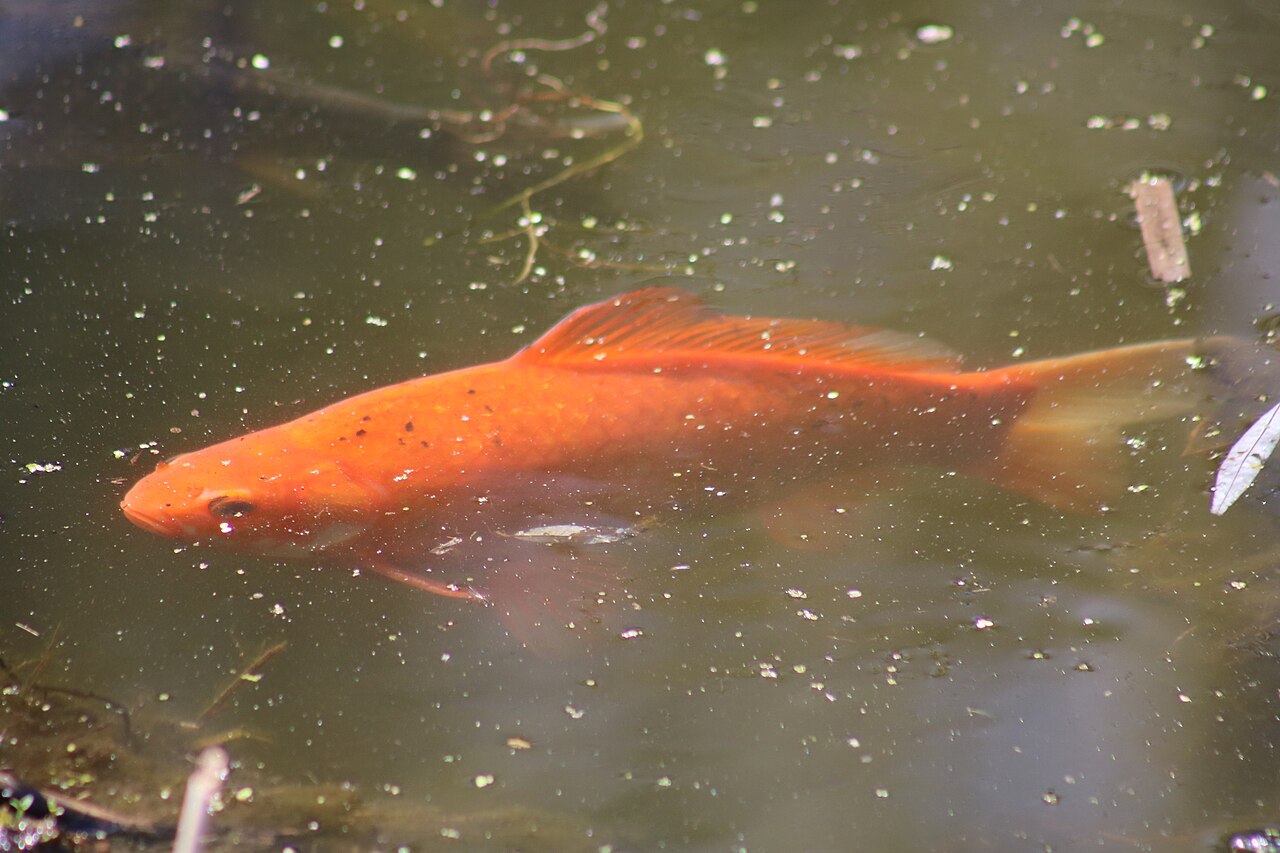
A goldfish swims through a planted aquarium. Tests show these fish remember far more than the famous 3-second myth claims.
Image Credits: Wikimedia Commons
Everyone has heard it: goldfish have a 3-second memory. People ask "why do goldfish have such short memories" as if science already settled the matter. It comes up at parties, in cartoons, and even in magazine columns.
The idea paints goldfish as tiny amnesiacs, always surprised by the same plastic castle in their bowl.
It is not true. Many tests show goldfish can learn tasks, tell colors apart, and remember what they learned for weeks or months.
This article explains where the 3-second myth came from, what the tests really showed, how long goldfish memories truly last, and what this means for goldfish care.
Where did the 3-second memory myth come from?
Nobody knows exactly when the 3-second claim started. It does not come from any study of fish brains. It is a joke that slowly turned into accepted truth.
The myth got a big boost from pop culture. It spread so widely that Time Magazine even featured the claim in its "numbers" section at one point, according to the MythBusters wiki about the goldfish memory episode.
The myth may also stick around because it is comforting. Dr. Culum Brown is a behavioral ecologist. He studies how fish think and behave. He has suggested the myth helps people feel better about keeping fish in tiny bowls.
A fish that cannot remember its surroundings is easier not to feel guilty about. That is his idea, not a proven historical fact, but it sounds right.
The number itself helps too. Three seconds sounds exact enough to be scientific, and short enough to be funny. An exact number makes a false fact feel true.
What the tests really showed
In 2004, the TV show MythBusters tested the myth directly. The episode "Sinking Titanic/Goldfish Memory/Trombone Explosion" aired on February 22, 2004. One of its three myths was simple: a goldfish's memory lasts only three seconds.
Jamie Hyneman trained goldfish to recognize color patterns, then to swim an underwater obstacle course. Then came the memory test.
More than a month after the training, the fish swam the same course again. They remembered it and finished it easily, with no help.
The verdict was Busted. The episode even had a funny control group: Adam Savage's fish could not take the test because a broken filter had left them underfed. The fish that actually trained remembered just fine.
The MythBusters test was entertainment, not a peer-reviewed study. But real researchers have run the same kind of tests with stricter controls.
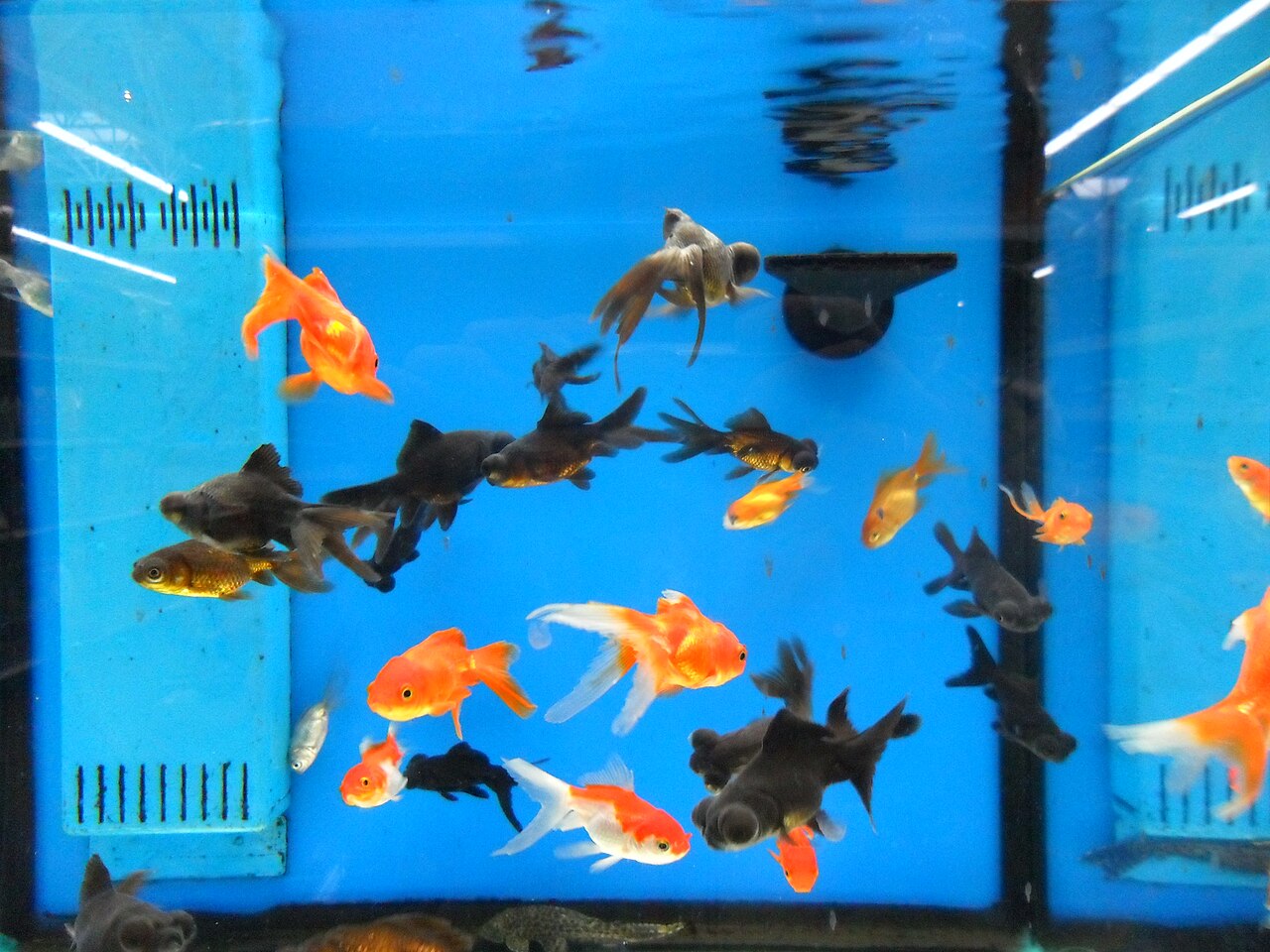
Researchers use color cues and feeding rewards to test what goldfish can learn and remember.
Image Credits: Wikimedia Commons
In a 1994 University of Plymouth study, eight goldfish learned to press a lever to get food. The researchers then limited the food so the lever only gave food during one hour each day.
The fish adapted. They pressed the lever more during the hour when food was available. This showed they could learn and anticipate a daily feeding schedule.
Another test checked longer memory. Goldfish learned to tell apart smells of different amino acids. Each smell was linked to a different result. When tested again later, they still remembered the difference after at least three months, as reported by ScienceBlog.
Five months later, in the open sea
One test gave an even more striking result. Researchers at the Technion Institute of Technology in Israel trained young fish to connect a sound from a loudspeaker with feeding time. Each time the sound played, the fish came back for food.
After a month of training, the fish were released into the sea. Five months later, the sound was played again. The adult fish came back, according to a Firstpost column about the test.
The scientists chose five months as the endpoint. They did not stop because memory failed. Five months was simply the goal they set out to test.
How long goldfish memories really last
The honest answer: nobody has found the limit. Researchers keep testing longer periods, and goldfish keep passing.
Weeks to months is the safe, proven range. The MythBusters fish remembered an obstacle course for over a month. The Plymouth fish learned a daily feeding schedule. A separate smell test showed memory lasting at least three months.
The Technion fish remembered a sound-and-food link for five months.
Those are lower limits, not maximums. Each test stopped at a chosen endpoint. Memory could stretch even further than any of these tests showed.
Fish also remember more than tricks. Goldfish can tell colors apart, recognize individual people, and learn feeding routines.
Dr. Culum Brown is a Macquarie University professor. He has studied fish intelligence for more than 25 years. He said plainly in coverage published by ScienceBlog: "Despite what everybody thinks, they're actually really intelligent."
One more thing worth knowing: goldfish also remember bad experiences. A study at Queen's University Belfast showed goldfish would avoid part of their tank where they had received mild electric shocks in the previous 24 hours. They remembered where the pain happened and stayed away.
That result breaks the old joke in both directions. Goldfish are not forgetful, and they are not unfeeling. Memory and feeling go together in these fish, just like in any animal that learns.
What this means for goldfish care
If goldfish remember for months, the classic bare fishbowl looks cruel in a new way. A remembering animal stuck in an empty bowl is not a joke. It is a welfare problem.
The research points toward richer environments. Goldfish in tanks with plants, varied surfaces, and room to explore show better learning and memory than fish in bare containers.
A stimulating environment is not a luxury for them. It is how their brains stay active.
Feeding routines matter too. Goldfish learn when food comes and can recognize the person who feeds them. So a steady routine helps them feel secure.
Irregular feeding in a chaotic setup is exactly the kind of stress a memory-forming animal notices.
Tank size matters most of all. A goldfish that can learn a three-dimensional obstacle course and keep a months-long schedule needs space to use that brain. Cramped bowls block normal swimming. Poor water quality damages the nervous system directly.
None of this needs fancy equipment. A larger tank, clean filtered water, live plants, and a steady feeding routine cover the basics. Dogs that follow their owners around get attention for their attachment behaviors, but goldfish form their own quieter version of recognition and routine with the people who feed them.
And if you share your home with dogs as well, remember that pet safety runs both ways: many everyday foods are dangerous for pets, so check our list of foods toxic to dogs and why before sharing snacks near the tank area. Small pets notice more than we give them credit for, whether it is why dogs tilt their heads when you talk or why dogs sometimes eat grass and vomit.
Do goldfish recognize their owners?
Yes. Goldfish learn to recognize the specific people who feed them, using sight and smell. Many owners say their fish swim to the surface when a familiar person comes close. Research confirms goldfish tell people apart and expect feeding from familiar caretakers.
How long can goldfish remember things?
Tests prove weeks to months. The MythBusters fish remembered an obstacle course for over a month. Plymouth University fish kept a daily feeding schedule across three months. Fish trained at the Technion Institute of Technology in Israel remembered a sound-food link for five months.
Is the 3-second memory thing completely made up?
Pretty much, yes. No study has ever found a 3-second memory limit in goldfish. The number seems to be a joke that spread until it sounded like science. Every controlled test of goldfish memory has found memory measured in weeks or months, not seconds.
Can goldfish learn tricks?
Yes. Goldfish have been trained to swim through hoops, push levers, find their way through mazes and obstacle courses, and tell colors apart. Training works with food rewards and short, repeated sessions. They do learn, but more slowly than a dog, so patience matters.
Do goldfish get bored?
The evidence says they can. Fish in bare, unchanging tanks show less learning and more stress behavior than fish in enriched tanks with plants, hiding spots, and varied routines. Given their proven memory, a boring tank is a long, dull life.
The bottom line
Goldfish do not have 3-second memories. They learn tasks, keep schedules, recognize people, and remember both rewards and painful experiences for months. The myth survived because it was funny and convenient, not because anyone ever tested it.
The practical next step is simple: if you keep goldfish, give them a better world. A bigger tank with plants, clean water, and a steady feeding routine is the least a thinking animal deserves. Watch them for a week in a better setup, and you will see the myth disappear on its own.
---
The Rive News research desk writes evidence-based explainers on pets and everyday science.
Latest in Pets
- Do dogs really follow their owners everywhere?
- Foods toxic to dogs: the full list and reasons
- Why dogs tilt their heads when you talk
- Why dogs eat grass and vomit
Subscribe to our pets newsletter for one evidence-based animal explainer every week.
Copyright 2026 Rive News. All rights reserved.
Related stories

Why Does My Dog Eat Grass and Vomit?
A UC Davis study of 1,571 owners found grass eating is normal dog behavior, not self-medication: only 10% were ill first. What the science

Why Does My Dog Stare at Me While I Eat?
Dogs stare at you while you eat because it has worked before, and mutual gaze raises bonding hormones. Learn the reinforcement science

Foods toxic to dogs: the list, with reasons
Chocolate, xylitol, grapes, onions: common foods can harm dogs. Learn what makes each one toxic, the warning signs, and what to do if your