
Why Your Dog Follows You Everywhere: 5 Reasons Explained
By Rive News
Research desk | Rive News
Key takeaways
- Most following is normal: pack instinct, learned routine, and the fact that you control every good thing in the house.
- Certain breeds, puppies, rescues, and seniors are naturally more shadow-like than others.
- Worry only if the shadowing is sudden, or comes with panic, destruction, or distress when you leave.
To the bathroom, to the kitchen, to the mailbox. If your dog treats your movements like a parade they were personally invited to lead, you have a shadow. The good news is that constant following is normal far more often than it is a problem. The trick is knowing which kind you have.
This article explains the five reasons dogs follow their people everywhere, which breeds do it most, how to tell normal shadowing from separation anxiety, and what to do about each.
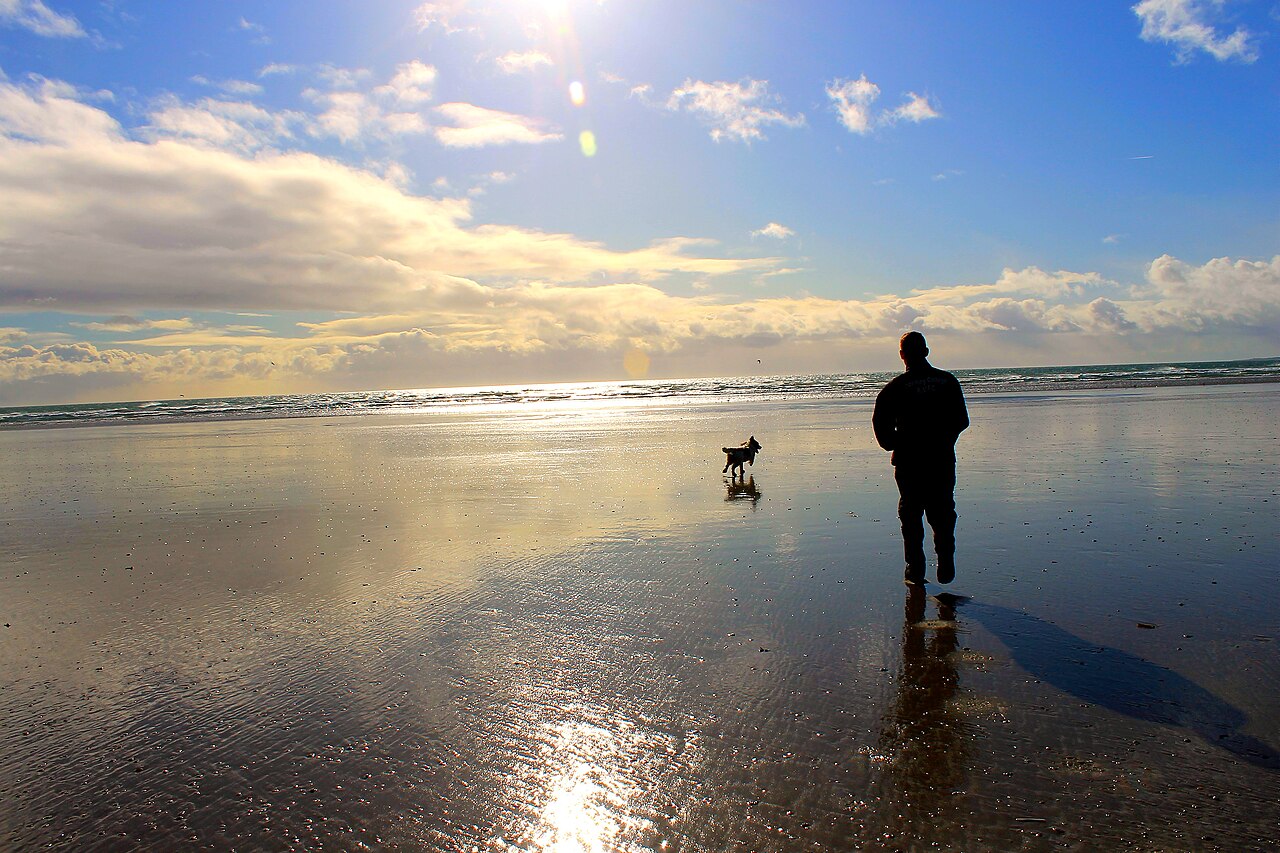
A springer spaniel walking with its owner on a beach. Staying near their person is one of the most deeply wired canine behaviors.
Image Credits: Wikimedia Commons
Reason 1: It is in their wiring
Dogs are social animals whose ancestors lived in packs, where staying together meant staying alive. Modern dogs tend to treat the human household as the pack, which makes trailing their favorite person the default setting, not a malfunction. As one pet behavior writer put it, following you room to room is often just curiosity and attachment doing what they evolved to do.
Puppies take this further. According to veterinarian Dr. Duncan Houston, writing for Ask A Vet, puppies imprint on whoever cares for them before 12 weeks of age and keep following that person to absorb cues about the environment. A young dog glued to your heels is often just running its factory-installed learning program.
Some breeds are simply more prone to it. Labrador Retrievers, Vizslas, Border Collies, Chihuahuas, and Cavalier King Charles Spaniels show up on nearly every "velcro dog" list. Herding and companion breeds were selected over generations to work beside humans or sit in laps, so their shadowing is a feature, not a bug. Individual personality matters too: two Labradors in the same house can have completely different ideas about personal space.
Reason 2: You are the source of everything good
Dogs are excellent economists. You control the food, the treats, the walks, the door, the toys, and the ear scratches. Keeping you in sight is a sound strategy for not missing out. Dogs also learn your routines fast: the sound of keys, the shoes going on, the kitchen drawer opening. Each of these becomes a cue that something good might be happening, and proximity is how they make sure they are first in line.
Owners often reinforce the shadowing without noticing. Every time a dog nudges a hand and gets a scratch, or trails you to the kitchen and gets a dropped crumb, the lesson lands: staying close pays. Even scolding can reinforce it, because for some dogs any attention beats none. None of this is a mistake on your part. It is just how learning works.
The scent angle adds another layer. Dogs have a sense of smell up to 100,000 times more sensitive than ours, and your scent lingers on your chair, your blankets, and your clothes. When your dog steals your warm spot on the couch the second you stand up, it is settling into a patch of concentrated you: warmth plus familiar scent plus the den feeling of the pack's sleeping area.
Reason 3: Something is needed right now
Sometimes following is a message. The dog may need a bathroom break, be hungry or thirsty, want play, or feel unwell. This is the most practical reason on the list and the easiest to check: run through the basics when the shadowing intensifies. Fresh water, a potty trip, a short walk, and a few minutes of play resolve a large share of suddenly clingy episodes.
Boredom deserves its own mention. Dogs that do not get enough physical and mental exercise often make their owner their sole entertainment system. A dog with puzzle toys, sniff walks, and training sessions to look forward to has less reason to audit your every move. If the following clusters around the hours when nothing is happening, enrichment is usually the fix.
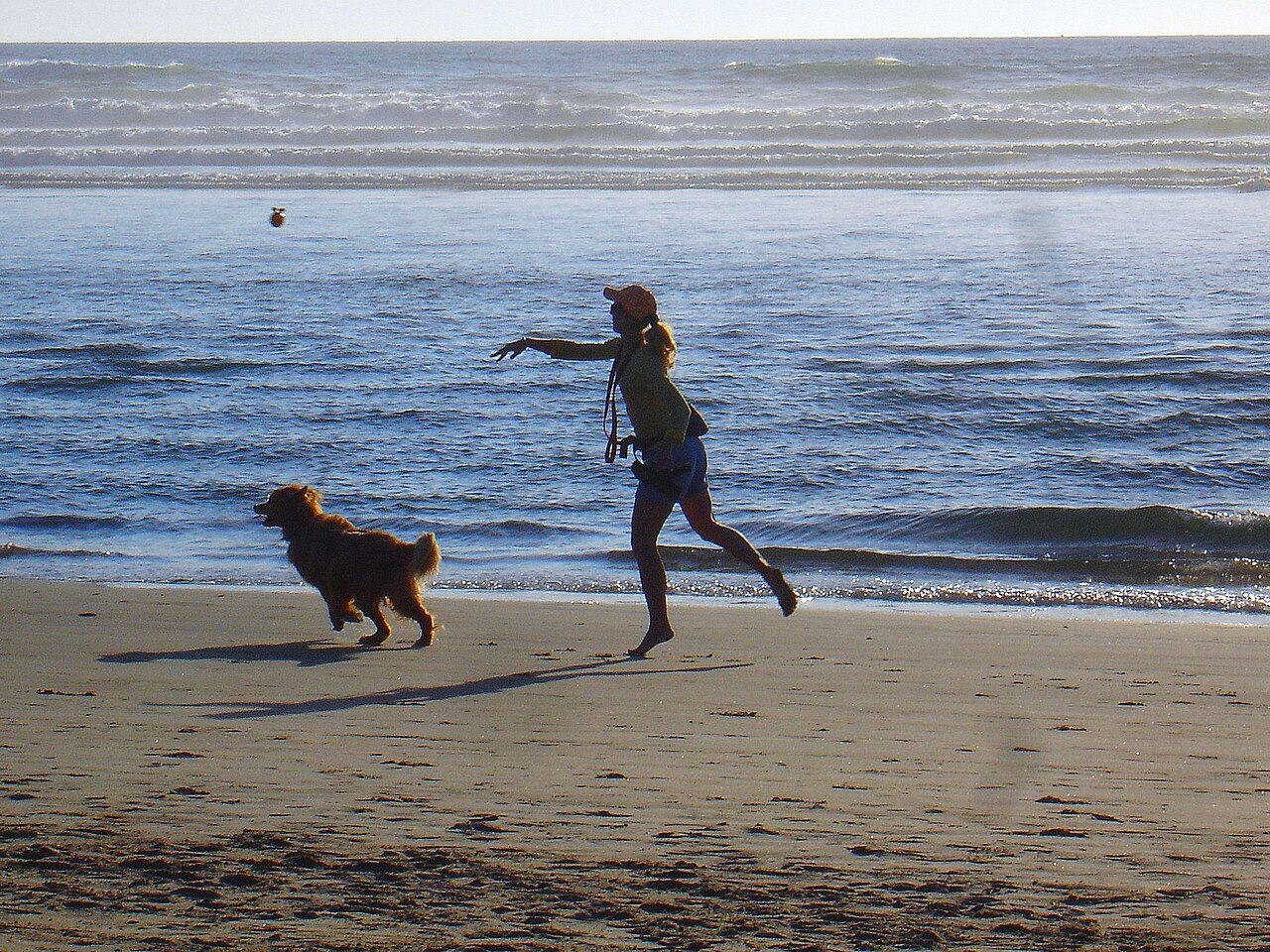
A dog chasing a toy its owner just threw. Dogs that get enough play and routine have less reason to shadow every step.
Image Credits: Wikimedia Commons
Reason 4: Anxiety about being alone
Here is where normal shadowing shades into something that needs attention. Separation anxiety is not just strong attachment. It is distress at being apart, and it shows up in specific ways: panic when you leave, destructive chewing or scratching at doors, excessive howling or barking, indoor accidents from a housetrained dog, constant pacing, or refusing food when alone.
Dr. Houston lists anxiety and confidence issues among the main veterinary-backed causes of constant following, and notes that dogs moved to new homes or rehomed can develop it. Rescue dogs deserve special mention: after uncertainty or abandonment, a new family can feel like the only safe thing in the world, and some rescues stay devotedly close for life. That loyalty is not a disorder. It becomes one only when the dog cannot cope with brief, normal separations.
Major life changes can trigger it in previously independent dogs: a house move, a new baby, a changed work schedule, the loss of another pet. If a confident dog suddenly becomes your shadow after a disruption, the context is the clue.
Reason 5: Age, health, or a sudden change
Older dogs often grow clingier as vision and hearing fade. A senior dog that cannot see or hear well stays close because you are its navigation system. That is dependence, not misbehavior, and it calls for patience and a vet check rather than training.
The red flag version is sudden clinginess in a dog that was previously independent. A dog that never cared where you went and now will not let you out of sight may be in pain, nauseous, or otherwise unwell. Dogs seek their trusted person when something feels wrong. If the change is abrupt and there is no obvious life disruption behind it, a veterinary visit comes before any behavior plan.
Normal shadowing vs. a real problem
Run this checklist. Normal following stops when the dog is redirected to a toy or bed, does not cause panic during brief absences, involves no destruction, and comes with no excessive whining. The dog is choosing your company.
It is a problem when the dog panics at departures, destroys things, vocalizes for long stretches, has accidents, paces constantly, or cannot eat when alone. That pattern is emotional distress, and it responds poorly to punishment. For severe cases, a professional trainer or veterinary behaviorist is the right call, not tougher rules.
For related quirks, see why your dog stares at you while you eat, why dogs tilt their heads when you talk, and why dogs bark at some strangers but not others. If your shadow is a young puppy, crate training step by step builds the independent rest skills that balance the attachment.
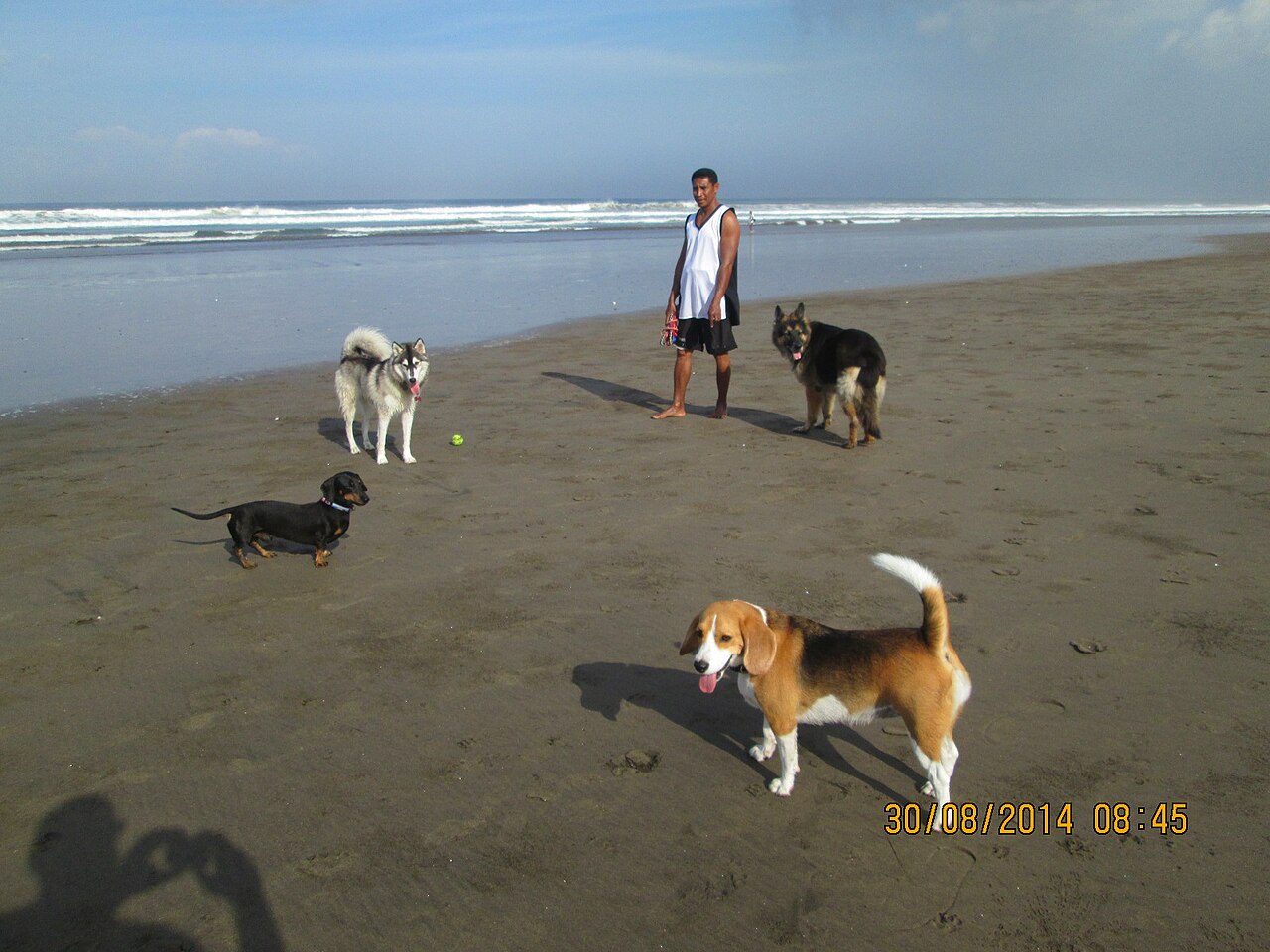
A dog owner walking dogs on a beach in the early morning. Regular walks and routine are among the simplest fixes for restless shadowing.
Image Credits: Wikimedia Commons
FAQ
Is it bad that my dog follows me to the bathroom?
No. Dogs do not understand privacy; they understand movement and closed doors. Following you there is usually just curiosity plus attachment.
What is a velcro dog?
A dog that sticks very closely to one person at all times. It can be breed-related, personality-based, or attachment-driven, and it is only a problem if it becomes distress-driven.
How do I get my dog to be more independent?
Meet the underlying needs first: exercise, mental enrichment, and predictable routine. Then build independence gradually with short, positive alone-time practice, rewarding calm solo behavior.
Should I worry if my senior dog suddenly gets clingy?
A gradual increase with age is normal as senses fade. A sudden change in any adult dog warrants a vet visit to rule out pain or illness.
The bottom line
Your dog follows you because, from the dog's point of view, you are the pack, the pantry, the entertainment, and home base. For most dogs, most of the time, that is all it is. Learn the five reasons, check the basics when the shadowing spikes, and reserve your worry for the sudden changes and the panic-at-the-door pattern.
This week, try adding one enrichment session to the day your dog shadows most. A tired, engaged dog is often a dog content to nap in the next room.
---
Topics: dog behavior, velcro dog, separation anxiety, pet care
Rive News is a research desk producing plain-language explainers from public sources. This article is for general information and is not veterinary advice. See your vet about health or behavior concerns.
Latest in Pets
- Why does my dog stare at me while I eat?
- Why do dogs tilt their heads when you talk?
- How to crate train a puppy step by step
Subscribe for one practical pet-care explainer in your inbox each week.
Rive News, 2026. Explainers are written from public sources and reviewed against our honesty checklist.
Related stories

Why Does My Dog Eat Grass and Vomit?
A UC Davis study of 1,571 owners found grass eating is normal dog behavior, not self-medication: only 10% were ill first. What the science r

Why Does My Dog Stare at Me While I Eat?
Dogs stare at you while you eat because it has worked before, and mutual gaze raises bonding hormones. Learn the reinforcement science and w

Foods toxic to dogs: the list, with reasons
Chocolate, xylitol, grapes, onions: common foods can harm dogs. Learn what makes each one toxic, the warning signs, and what to do if your d