
Why magnets lose their pull when heated past a limit
By Rive News / Research desk | Rive News / Published October 28, 2026 at 9:00 AM PKT
Key takeaways
- Heat adds thermal energy that scrambles the aligned magnetic domains inside a magnet.
- Each material has a Curie temperature where permanent magnetism collapses; for iron it is about 770 degrees Celsius.
- Cooling restores the ability to be magnetized, but a cooled magnet is usually much weaker than before.
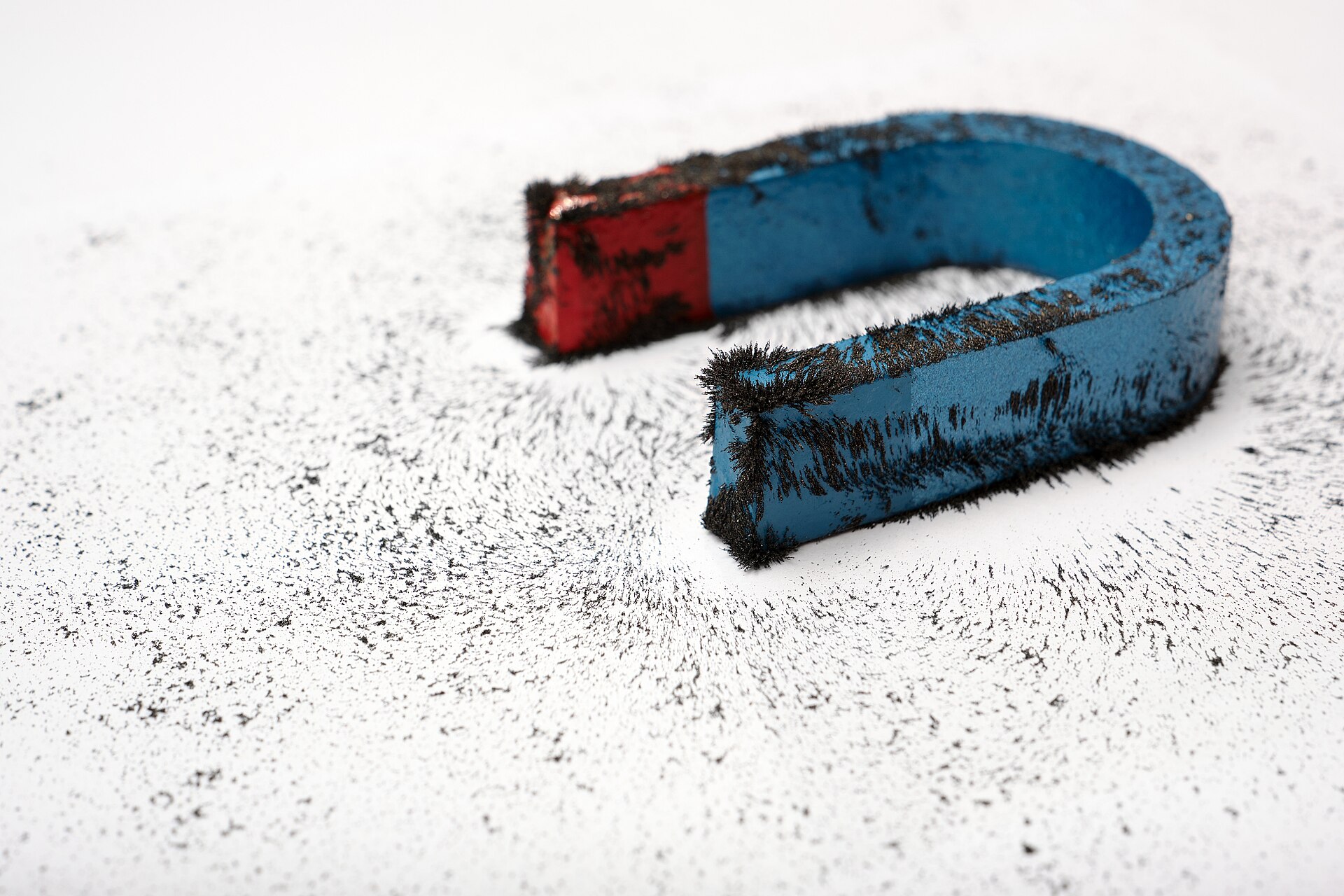
[A horseshoe magnet holding iron filings at its poles.] Photograph: a horseshoe magnet with iron filings
Image Credits: Wikimedia Commons
A magnet is not a solid block of magic. It is a crowd of tiny magnetic regions that happen to point the same way, and heat is very good at breaking up crowds. Warm a magnet gently and its pull weakens a little, because thermal jiggling starts to disturb that alignment.
Heat it past a specific threshold and the alignment collapses altogether, leaving an ordinary piece of metal. This article explains what keeps a magnet magnetic, how heat breaks that order, what the Curie temperature means, why different metals fail at different temperatures, and whether a heated magnet can recover.
What keeps a magnet magnetic
Inside a ferromagnetic metal such as iron, atoms behave like tiny magnets of their own, each with a magnetic moment set by the spin of its electrons. Those atomic magnets group into regions called domains, and within a single domain they all point the same way. In an unmagnetized piece of iron, the domains point in random directions, so their pulls cancel out and the piece shows no overall magnetism.
Magnetizing the piece means persuading enough domains to line up in one direction, so their pulls add up instead of cancelling.
What holds the domains in line is a quantum-mechanical effect called the exchange interaction. Supermagnete, a magnet manufacturer that publishes physics explainers, describes it as the energy that keeps electron spins aligned in parallel inside a magnetized ferromagnet. As long as the exchange energy beats the thermal energy of the atoms, the alignment holds.
A permanent magnet is therefore a truce between order and heat, and the truce only lasts while the temperature stays low enough.
How heat breaks that order
Heating a magnet feeds energy into every atom, and the atoms respond by vibrating more vigorously. That vibration is thermal energy, and it works directly against the exchange interaction. At first the damage is partial: some domains wobble, some walls between domains shift, and the magnet's overall pull drops a little.
The magnet still works, just less strongly than it did cold.
Push the temperature higher and the contest tips further. Supermagnete explains that above a characteristic temperature, the kinetic energy of the electron spins exceeds the energy of the exchange interaction, so the parallel alignment is completely lost. The domains do not vanish, but their orientations randomize, and a randomized crowd pulls in no particular direction.
The magnet stops being a magnet in any useful sense, even though the metal itself is unchanged in composition.
This is why the loss is gradual before it is sudden. A fridge magnet left near a hot oven may weaken slightly without ever crossing its threshold. The same magnet held in a flame will pass through the weakening stage quickly and then lose its pull entirely.
Temperature, not time alone, decides how far the damage goes, although holding a magnet hot for a long time can add its own wear through oxidation and structural change.
What the Curie temperature means
The threshold has a name: the Curie temperature, after the physicist Pierre Curie, who studied how magnetism changes with temperature. Above it, a ferromagnetic material becomes paramagnetic, which means it can still be weakly attracted to a strong external magnetic field but cannot hold magnetism of its own. Remove the external field and the weak attraction disappears with it.
The material has not become nonmagnetic in the everyday sense, but it has lost the property that made it a permanent magnet.
The numbers are specific to each material, which is why one magnet can fail while another survives the same oven. Supermagnete gives 769 degrees Celsius for iron, 1,127 degrees Celsius for cobalt, and 358 degrees Celsius for nickel. Testbook's exam solution rounds iron's figure to about 1,043 kelvin, which converts to 770 degrees Celsius, matching the same threshold.
Nickel is the fragile one of the three, losing its permanent magnetism in a hot kitchen oven range, while cobalt holds on far longer.
These thresholds matter far beyond the kitchen. Engineers who design electric motors, sensors, and magnetic couplings must keep working temperatures well below the Curie temperature of the chosen material, with a safety margin. A motor that regularly ran near its magnets' Curie temperature would slowly lose torque as its magnets weakened.
That is one reason high-temperature applications use special magnet grades and careful cooling, rather than ordinary magnets.
Why different metals fail at different temperatures
The Curie temperature is material-specific because the exchange interaction itself differs from one metal to another. Iron, cobalt, and nickel all have partially filled electron shells that allow strong exchange coupling, but the strength of that coupling is not the same in each. Cobalt's coupling is the strongest of the three, so it takes more thermal energy to break it, and its Curie temperature is the highest.
Nickel's coupling is weakest, so it gives up first.
Alloying and manufacturing change the picture further. Commercial magnets are rarely pure iron, cobalt, or nickel, and their Curie temperatures depend on the exact alloy and how it was processed. Some ferrite magnets lose strength at much lower temperatures than pure iron would, while some rare-earth magnets keep working at temperatures that would ruin others.
The principle stays the same in every case: when thermal energy beats exchange energy, order collapses. Only the temperature at which that happens moves.
Can a heated magnet recover
Cooling a magnet back below its Curie temperature restores its ability to be ferromagnetic, but it does not automatically restore the magnet you had. Testbook's explanation notes that once the metal cools, its ability to attract magnets returns, though its permanent magnetism becomes weak. The reason is simple: cooling recreates domains, but the domains point in random directions again, just as they did before the piece was first magnetized.
Random domains cancel out, so the cooled piece is weakly magnetic at best.
Getting the full strength back requires remagnetizing the piece, which means exposing it to a strong external magnetic field while it is cool. That field persuades the domains to line up once more, rebuilding the net pull. In practice, a hobbyist can sometimes restore part of a magnet's strength this way, but a precision magnet in a motor or sensor may never return to its original specification.
Repeated heating can also damage the material itself through oxidation, cracking, or changes to its crystal structure, and those changes no amount of remagnetizing can undo.
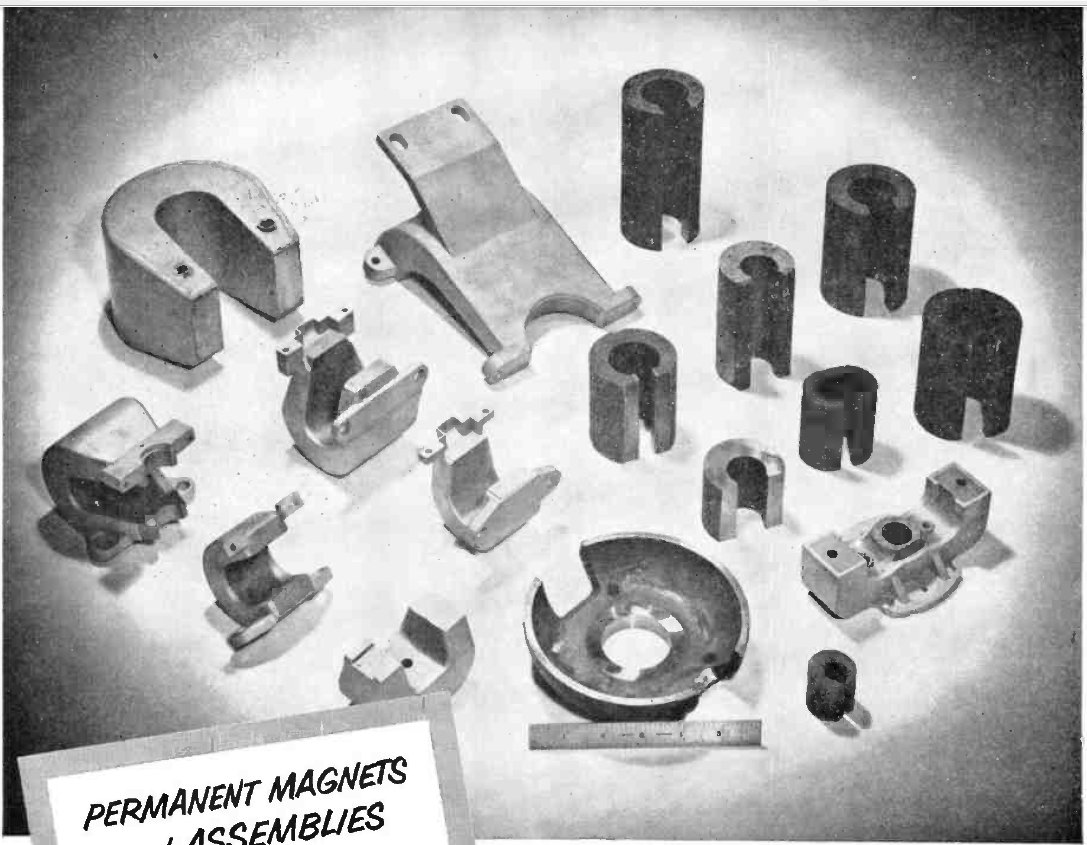
[Several horseshoe magnets of different sizes arranged together.] Photograph: an assortment of horseshoe magnets
Image Credits: Wikimedia Commons
Does a magnet lose strength in a hot car?
A car parked in summer sun can reach interior temperatures around 70 degrees Celsius, which is well below the Curie temperature of common magnet materials. A fridge magnet or a phone mount magnet will not cross its threshold in a hot car. It may lose a tiny amount of strength over many hot summers, because heat accelerates gradual aging, but it will not suddenly go dead.
The danger zone starts at temperatures far hotter than a car interior, such as near a stove element or inside an engine bay.
What happens to a magnet in a fire?
In a house fire, temperatures commonly exceed 600 degrees Celsius, which passes nickel's Curie temperature and approaches iron's. A magnet caught in such a fire would lose its permanent magnetism as it heated past its threshold. Once cooled, it would be an ordinary piece of metal until remagnetized.
Fire can also oxidize and distort the metal, so even remagnetizing may not restore the original shape or strength.
Why do some magnets weaken without any heat?
Heat is the most common cause of magnet weakening, but it is not the only one. Strong opposing magnetic fields, sharp mechanical shocks, and corrosion can all disturb domain alignment over time. Testbook's exam material lists heating, hammering, and dropping as three ways a magnet can lose its properties.
Each one attacks the same thing, the ordered alignment of domains, through a different kind of energy.
Is the Curie temperature the same as the melting point?
No, the two are unrelated. Iron's Curie temperature is about 770 degrees Celsius, while iron melts at about 1,538 degrees Celsius, far hotter. A magnet loses its magnetism long before it melts, because domain order is fragile compared with the metal's crystal structure.
The metal stays solid and recognizable well past the point where its magnetism is gone.
The bottom line
Magnets lose their pull when heated because thermal energy overcomes the exchange interaction that keeps their magnetic domains aligned. Past the Curie temperature, about 770 degrees Celsius for iron, the alignment collapses and permanent magnetism disappears. Cooling brings back the capacity for magnetism, but not the magnet itself, since the domains return in random directions.
If you want a magnet to last, keep it cool, keep it away from strong opposing fields, and remember that its strength is an arrangement, not a permanent property of the metal.
Tags: magnets, physics, Curie temperature, materials
Rive News's research desk writes plain-language explainers from public sources, with every key claim tied to a named document or institution.
Related
- How magnets work at the atomic level
- Why magnets only attract some metals and ignore others
- How a compass actually finds north so reliably
- Why does metal feel colder than wood at equal temperature
Subscribe for one plain-language science explainer in your inbox each morning.
Rive News publishes explainers from public sources; corrections are welcomed and noted on the article.
Related stories
Why diamond is hard and graphite is soft when both are carbon
Diamond and graphite are both pure carbon, yet diamond is 10 on the Mohs scale and graphite is 1 to 2. The difference is not the atoms;

Why Hot Water Can Freeze Faster Than Cold: The Mpemba Effect Explained
Hot water can freeze faster than cold under specific conditions. The Mpemba effect, named for a 1963 schoolboy experiment, still divides
How Magnets Work at the Atomic Level: Spins, Domains, and Iron
Magnetism comes from electrons: their spin and orbits make each atom a tiny magnet. In iron, quantum forces align these atomic magnets into