
Why do magnets only attract some metals and ignore others
By Rive News / Research desk | Rive News / Published October 20, 2026 at 9:00 AM PKT
Key takeaways
- A magnet pulls only materials whose atoms can act like tiny magnets and line up: iron, nickel, cobalt and a few alloys.
- In these ferromagnetic metals, atomic magnets align in patches called domains, and a nearby magnet lines those domains up.
- Copper, aluminum and gold have paired-up electrons that cancel out, so ordinary magnets leave them alone.
A fridge magnet grabs a steel paperclip but slides straight off an aluminum can. The difference is not the magnet. It is inside the metal itself.
Magnetism comes from the motion of electrons inside atoms. In a few metals, those atomic magnets can line up and pull together. In most materials, they cancel each other out.
This article explains why magnets pick and choose, including unpaired electrons, magnetic domains, the short list of magnetic metals, and why the rest stay put.

A horseshoe magnet pulls iron shavings toward its poles, the classic demonstration of ferromagnetism at work.
Image Credits: Wikimedia Commons
Unpaired electrons start the story
Every electron carries a tiny magnetic field, and in most atoms the electrons pair up with opposite spins. The paired fields cancel, leaving no net magnetism to work with.
Iron, nickel and cobalt are different. They hold unpaired electrons, especially in their 3D orbitals, and those unmatched spins create miniature magnetic fields that can point the same way. Iron, atomic number 26, carries its key unpaired electrons in the 3D shell.
A magnet's field does not create magnetism from nothing. It organizes what is already there, lining up the atomic magnets that most materials simply lack.
The arrangement matters as much as the count. Iron's unpaired electrons sit in the 3D orbitals, which point outward and overlap with neighboring atoms, so whole groups of atoms can lock into the same direction. That neighbor-to-neighbor influence is what separates a true ferromagnet from a metal that merely has a few unpaired electrons.
Magnetic domains multiply the effect
In ferromagnetic metals, atoms group into patches called domains where the atomic magnets already point together. The National Magnet Lab describes these aligned patches as the source of each material's local pull, as reported by Why Does That Science.
Hold a magnet near a paperclip and its field rotates those domains into line with itself. The aligned pull adds up across millions of atoms, and the paperclip jumps.
This also explains why magnets can die. Heating a magnet or banging it hard scrambles the domains, and the atomic magnets stop pulling together, according to LibreTexts physics materials.
The domains also explain temporary magnets. In some materials the alignment remains even after the outside field is removed, Sciencing notes, which is why a paperclip left sitting on a magnet can briefly pick up a second paperclip. Shake or heat the chain and the effect vanishes.
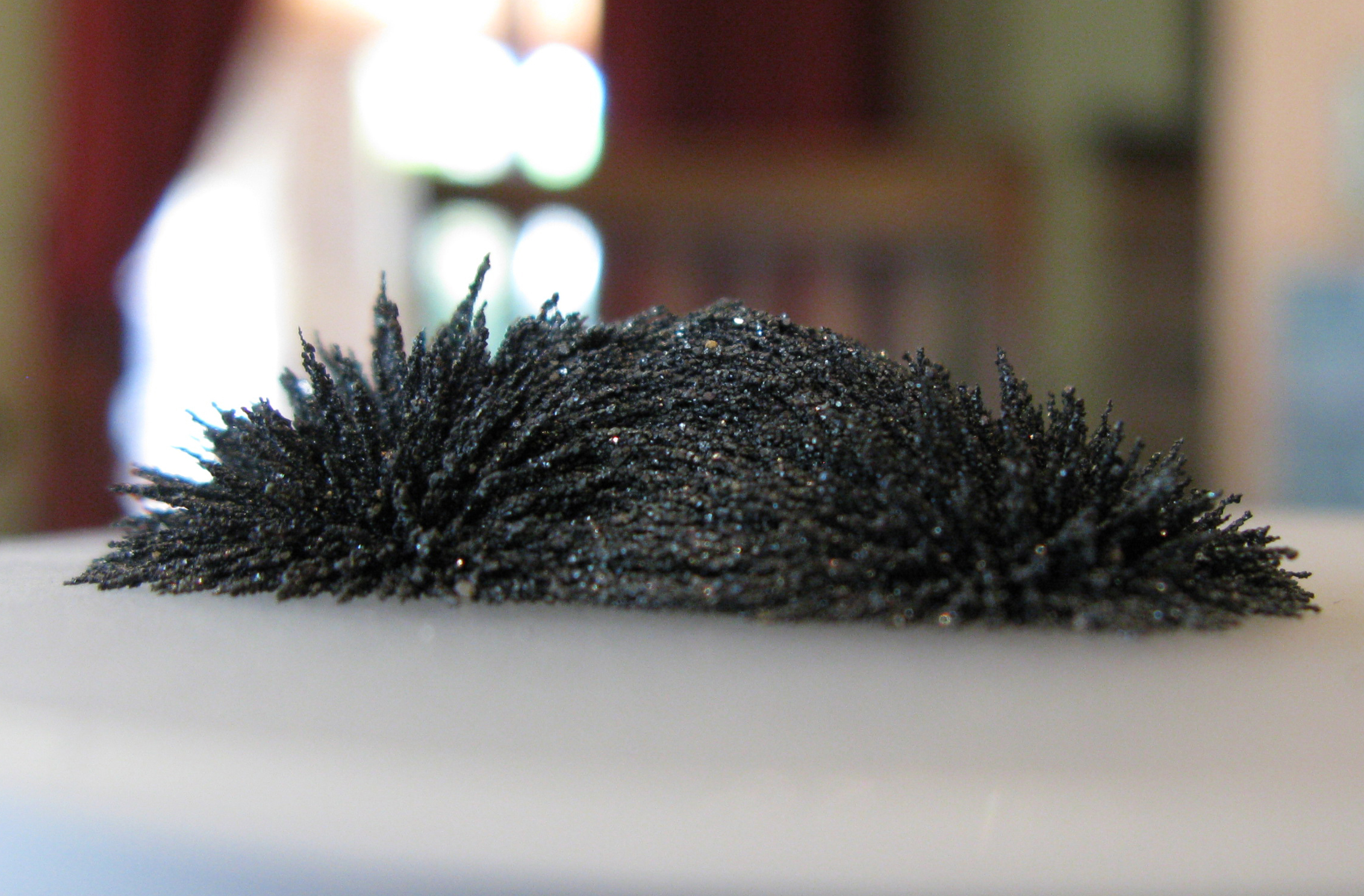
Iron sand attracted to a magnet. Each grain becomes a tiny temporary magnet and lines up along the field.
Image Credits: Wikimedia Commons
The short list of magnetic metals
The everyday ferromagnetic metals are just three elements: iron, nickel and cobalt. Alloys built from them, like steel, stick to magnets too, Sciencing reports.
Rare-earth metals such as gadolinium, neodymium and samarium are also strongly magnetic. They sit inside the powerful magnets used in headphones, hard drives and electric motors.
Stainless steel is a maybe. Collins Recycling notes that ferritic and martensitic stainless steels contain iron and stay magnetic, while high-chromium austenitic grades do not. A fridge magnet is a quick test.
Many practical magnets are alloys rather than pure elements. Alnico blends aluminum, nickel, cobalt, iron and copper, wairauite mixes cobalt and iron, and any alloy built from ferromagnetic metals keeps the property, Sciencing reports.
Even iron has a limit. Above a threshold called the Curie temperature, the atoms jiggle too hard for domains to hold together, and the attraction fades away.
Why other metals stay put
Aluminum and copper are paramagnetic, which means their atoms respond so weakly that you will never feel the pull with a household magnet. Their unpaired electrons are too few and too poorly aligned to matter.
Copper, silver and gold also show a diamagnetic response: a faint repulsion from magnetic fields instead of attraction. The effect is real but far too small to notice without lab instruments.
Wood, glass and plastic lack atomic-scale magnetism entirely. With nothing inside to line up, everyday magnets ignore them completely.
The rule of thumb holds up well. If a magnet grabs it firmly, iron, nickel or cobalt is almost certainly inside.
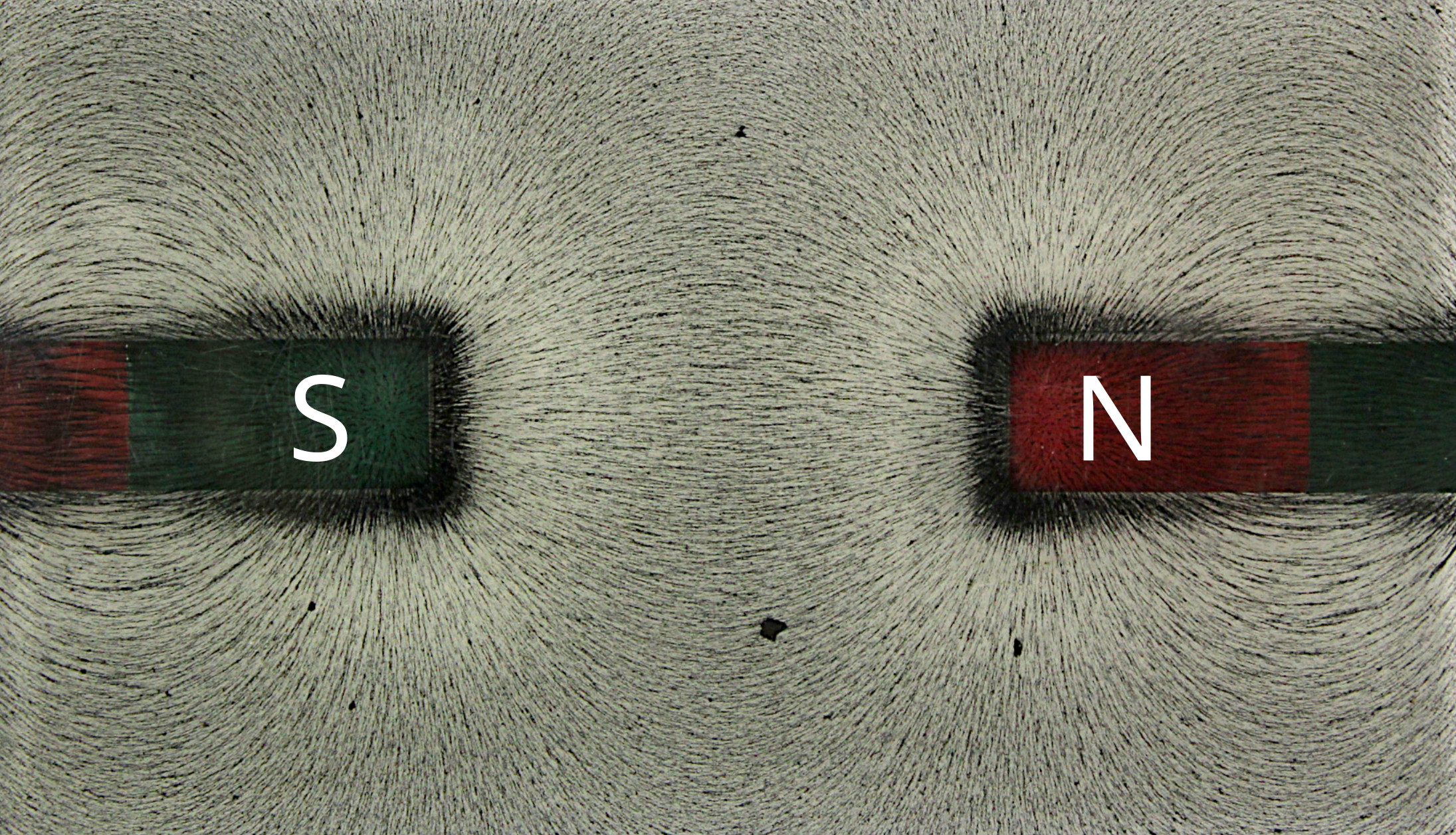
Bar magnets draw iron filings into visible curves. The filings trace the field lines that do the pulling.
Image Credits: Wikimedia Commons
Frequently asked questions
Will a magnet stick to stainless steel?
Sometimes. Ferritic and martensitic stainless steels contain enough iron to stay magnetic, while austenitic grades with high chromium do not, according to Collins Recycling. A fridge magnet is the fastest way to check a particular item.
Can a magnet lose its pull?
Yes. Heat and hard knocks scramble the aligned magnetic domains inside, and past the Curie temperature the alignment collapses entirely. That is why old magnets left in hot places feel weak.
Why does a magnet attract iron but not copper?
Iron's unpaired electrons let its atoms organize into magnetic domains that add their pull together. Copper's electrons are paired and cancel out, so its response is far too weak for an everyday magnet to show.
Do magnets attract all metals?
No. Only ferromagnetic metals, mainly iron, nickel, cobalt and their alloys, show a strong pull. The rest are paramagnetic or diamagnetic, with effects far too small for household magnets to reveal.
The bottom line
Magnets only attract metals whose unpaired electrons can line up in magnetic domains: iron, nickel, cobalt and a few relatives. Everything else either cancels its own magnetism or responds too weakly to matter.
Try the fridge test on a few objects at home and you will sort them in seconds. Curious about more everyday physics? Read why the sky turns orange at sunset, why you see lightning before you hear thunder, and why Earth has seasons.
Topics: magnets, magnetism, physics, metals, science
Rive News is the research desk behind Rive News's science explainers, covering how the physical world works in plain language.
Latest in Science
- Why Earth has seasons
- Why the sky turns orange at sunset
- How spiders make webs without getting stuck
- Why the sea is salty but rivers are not
Subscribe to the Rive News newsletter for one science explainer in your inbox every morning.
Published by Rive News. Information is for general purposes only.
Related stories
Why diamond is hard and graphite is soft when both are carbon
Diamond and graphite are both pure carbon, yet diamond is 10 on the Mohs scale and graphite is 1 to 2. The difference is not the atoms;

Why Hot Water Can Freeze Faster Than Cold: The Mpemba Effect Explained
Hot water can freeze faster than cold under specific conditions. The Mpemba effect, named for a 1963 schoolboy experiment, still divides
How Magnets Work at the Atomic Level: Spins, Domains, and Iron
Magnetism comes from electrons: their spin and orbits make each atom a tiny magnet. In iron, quantum forces align these atomic magnets into