
Why do we see lightning before we hear thunder? The speed gap
By Rive News / Research desk | Rive News / Published October 20, 2026 at 9:00 AM PKT
Key takeaways
- Light travels at about 300,000 kilometers per second, while sound manages only 343 meters per second, so the flash arrives essentially instantly and the thunder lags behind.
- Thunder is the sound of air explosively heated to 50,000 degrees Fahrenheit by the lightning channel, then rapidly cooling and contracting.
- Count the seconds between flash and thunder and divide by 5 to get the storm's distance in miles; if you can hear thunder, you are within striking distance.
Lightning and thunder are born at the same instant, in the same bolt. Your eyes get the news immediately. Your ears get it late, and the delay is the whole story.
The gap between the flash and the rumble is not a quirk of perception. It is a race between the fastest thing in the universe and something roughly a million times slower. Light wins by so much that the contest is over before it starts.
This article explains why we see lightning before we hear thunder, including the speed gap between light and sound, what thunder actually is, how to estimate a storm's distance, and what the different thunder sounds mean.
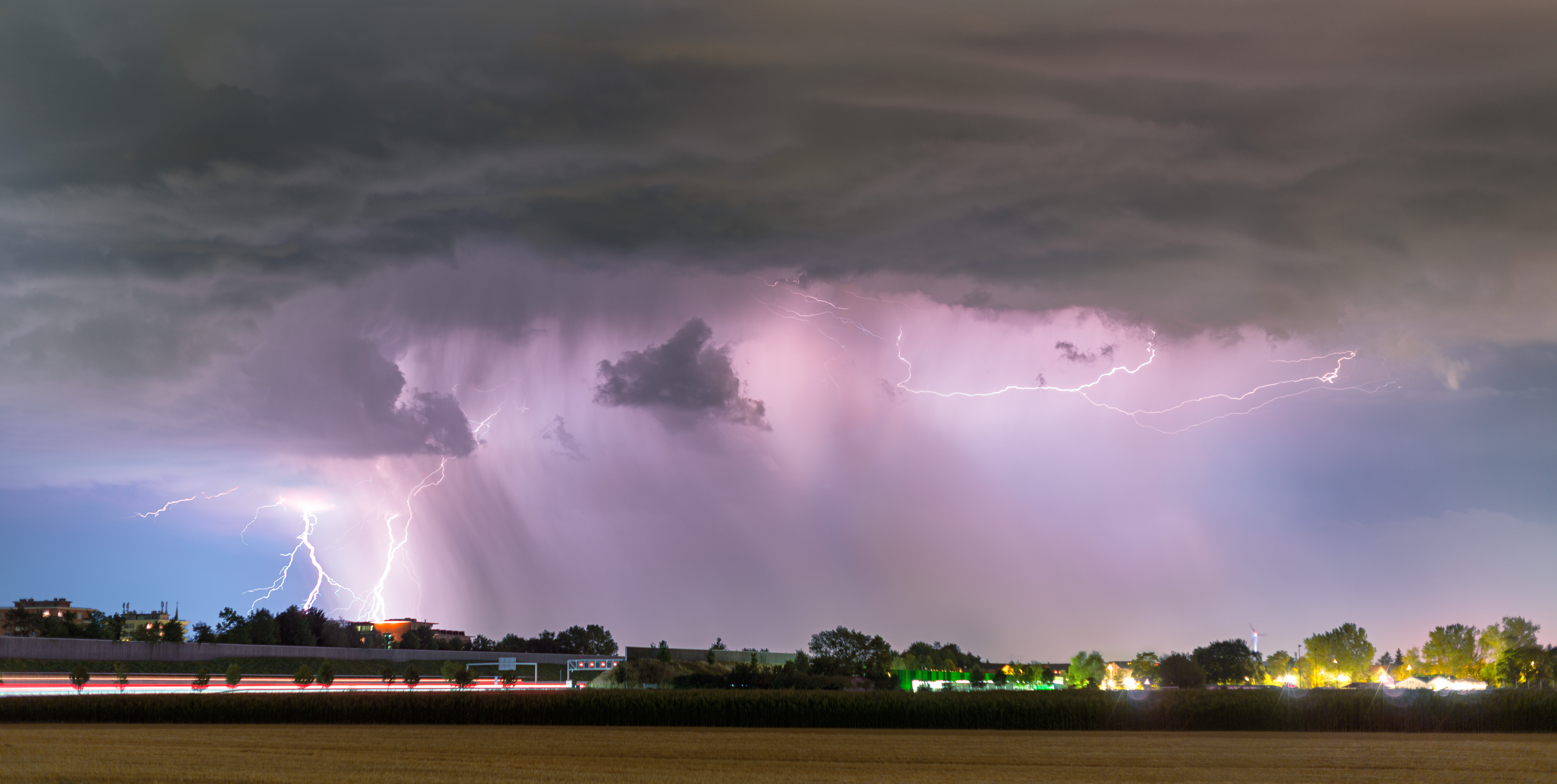
Lightning bolts fork through storm clouds; the flash reaches your eyes almost instantly while the thunder is still traveling.
Image Credits: Wikimedia Commons
Light is nearly a million times faster than sound
Light travels at approximately 299,792,458 meters per second in a vacuum, commonly rounded to 300,000 kilometers per second. Nothing in the universe moves faster.
Sound is far more modest. In air at sea level at room temperature, sound travels at about 343 meters per second. It needs air molecules to push against each other, and that takes time.
Do the division and light outpaces sound by roughly 874,000 times. For a lightning strike a few kilometers away, the flash reaches your eyes in a few millionths of a second.
The thunder needs several seconds to cover the same ground. That is why the flash always comes first: the light has finished its journey before the sound has barely started.
A useful comparison: light could circle the Earth more than seven times in one second. In that same second, thunder travels about a third of a kilometer.
What thunder actually is
Thunder is not a separate event from lightning. It is the sound lightning makes.
When a bolt cuts through the air, it heats the narrow channel around it with shocking violence. NOAA's thunderstorm science material puts the temperature inside the lightning channel as high as 50,000 degrees Fahrenheit, about five times hotter than the surface of the sun. The air explodes outward from the heat, then cools and contracts almost immediately.
That rapid expansion and contraction creates the sound wave we hear as thunder. Every bolt makes thunder; whether you hear it depends on distance. The rumble can fade below hearing range while the flash remains visible, which is why distant storms flicker silently on the horizon.
The University of Arizona's atmospheric sciences course notes that a bolt's energy splits three ways: visible light that you see, heat and expanding air that becomes thunder, and invisible radio waves. The flash and the bang are two faces of one discharge.
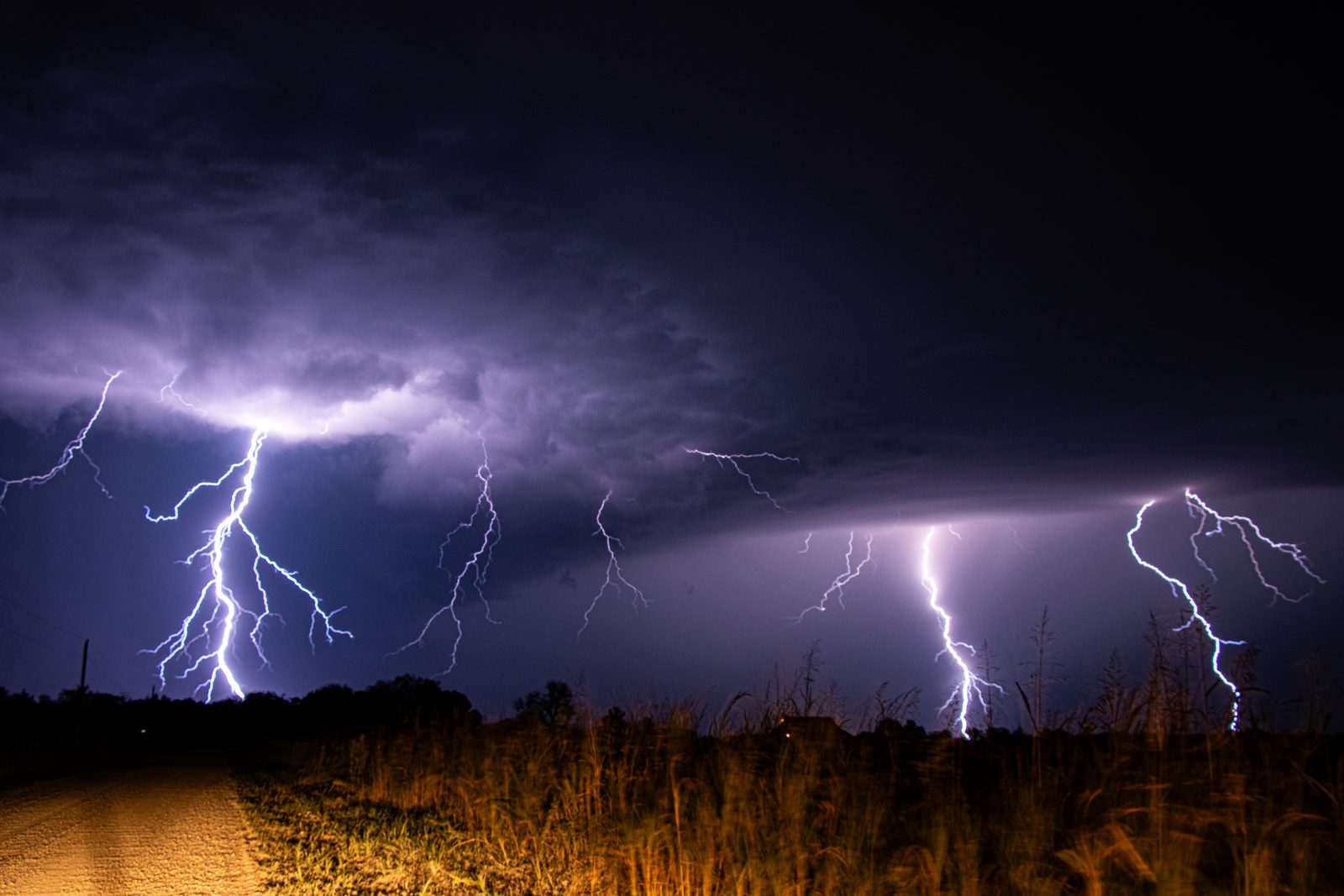
A long exposure captures three lightning strikes at once; each bolt heated the air around it to tens of thousands of degrees.
Image Credits: Wikimedia Commons
How to estimate how far away lightning struck
The flash-bang delay is a built-in rangefinder. Because light arrives effectively instantly, the whole delay is the sound's travel time.
Sound covers about one mile every five seconds. So count the seconds between the flash and the thunder, then divide by five.
- Ten seconds means roughly two miles.
- Fifteen seconds means roughly three miles.
- Zero seconds means the strike was essentially on top of you.
NOAA gives exactly this rule and adds the safety point that matters: if you can hear thunder at all, you are within striking distance of the storm and should already be in a safe place. Lightning can strike well ahead of the rain, so waiting for the storm to look close is waiting too long.
The University of Arizona teaches the related 30/30 rule used by safety experts. If the flash-to-bang count is 30 seconds or less, get inside a substantial building or a metal-topped vehicle immediately. Then wait 30 minutes after the last thunder before going back out.
For metric users, the same physics gives a handy rule: sound travels about one kilometer every three seconds. Divide the second count by three for the distance in kilometers.
Why thunder cracks, rumbles, and rolls
Not all thunder sounds alike, and the differences carry information about distance.
A sharp crack or click means the lightning channel passed nearby. You are hearing the nearest part of the bolt with little time for the sound to spread or echo. It is the sound that makes people jump.
A rolling rumble means the strike was at least several miles away, according to NOAA. A lightning bolt can be miles long, and you hear the nearest part of the channel first.
Sound from the farther parts arrives later and later, stretching one sharp explosion into a long rolling grumble. Terrain and buildings add echoes that stretch it further.
The loud boom sometimes heard in between comes from the main channel as it reaches the ground, where the discharge is most intense. So the texture of the thunder tells you roughly how far away the bolt was, before you even start counting.
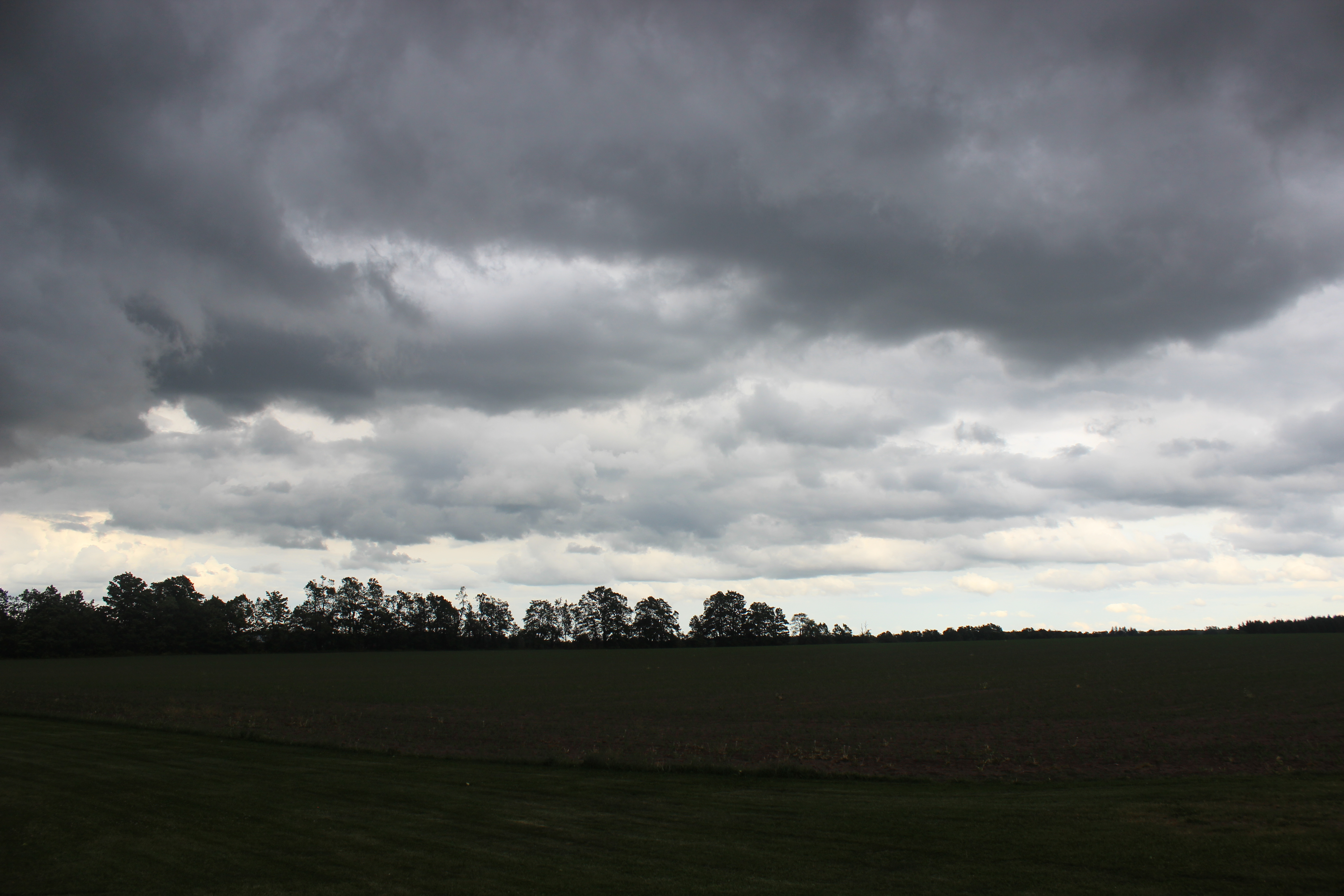
Dark storm clouds gather before a thunderstorm; every flash they produce will be followed by thunder, near or far.
Image Credits: Wikimedia Commons
Cloud-to-ground strikes get the most attention, but they make up only about 20 percent of lightning according to the University of Arizona's atmospheric sciences course, with most discharges staying within or between clouds. Those still make thunder. The sky can grumble for minutes from bolts you never see strike anything, which is another reason the orange glow of sunset and storm light shows both reward simply looking up.
Frequently asked questions
Can thunder itself hurt you?
The sound alone is not dangerous at the volumes heard outdoors, though very close strikes are painfully loud. The real danger is the lightning that made it. Treat thunder as an alarm bell: if you hear it, the storm can reach you.
Why does thunder sometimes rumble for several seconds?
A bolt is miles long, so sound from its far end arrives much later than sound from its near end. Reflections off terrain, buildings, and cloud layers stretch the sound further. What began as one sharp explosion arrives as a rolling rumble.
How far away can you hear thunder?
Several miles at minimum; NOAA notes that a rumble means the strike was at least several miles away. The exact range varies with terrain, wind, and background noise. If the flash-bang gap exceeds 30 seconds, the storm is far but still worth watching.
Does every lightning flash produce thunder?
Yes. Every discharge heats air and makes sound. Distant flashes can appear silent simply because the thunder faded before reaching you.
The bottom line
We see lightning before we hear thunder because light travels nearly a million times faster than sound: the flash arrives in millionths of a second while the thunder needs seconds. The bang itself is air explosively heated to 50,000 degrees by the bolt.
Next storm, count the seconds between flash and thunder and divide by five. That is your distance in miles, and if you can hear it at all, head inside.
Tags: weather, physics, storms, atmospheric science
Rive News is the research desk behind this publication, covering everyday science and practical explainers with sourced, verifiable facts.
Latest in Science
- Why the earth has seasons
- Why the sky looks orange at sunset
- Why the sea is salty but rivers are not
- When the Orionid meteor shower peaks in 2026
Get one practical explainer in your inbox every morning. Subscribe to the Rive News newsletter.
Published by Rive News. Information is for general purposes only.
Related stories

Why diamond is hard and graphite is soft when both are carbon
Diamond and graphite are both pure carbon, yet diamond is 10 on the Mohs scale and graphite is 1 to 2. The difference is not the atoms;

Why Hot Water Can Freeze Faster Than Cold: The Mpemba Effect Explained
Hot water can freeze faster than cold under specific conditions. The Mpemba effect, named for a 1963 schoolboy experiment, still divides
How Magnets Work at the Atomic Level: Spins, Domains, and Iron
Magnetism comes from electrons: their spin and orbits make each atom a tiny magnet. In iron, quantum forces align these atomic magnets into