
Why is the sea salty but rivers are not? The water cycle
By Rive News / Research desk | Rive News / Published October 20, 2026 at 9:00 AM PKT
Key takeaways
- Ocean salt comes mainly from rain eroding rocks on land; rivers carry about 4 billion tons of dissolved salts to the sea every year.
- Rivers stay fresh because rain constantly replenishes them, while the ocean is the end of the line where minerals accumulate.
- Evaporation removes water but leaves salt behind, and ocean salt input and output are now roughly balanced.
Rivers feed the sea, yet the two taste nothing alike. Scoop up a handful of river water and it tastes fresh. Take a mouthful of seawater and you spit it out.
The difference is not that rivers carry no salt. They carry enormous amounts of it. The difference is what happens at the end of the journey: rivers are a conveyor belt, and the ocean is the warehouse where everything piles up.
This article explains why the sea is salty but rivers are not, including where ocean salt comes from, why rivers stay fresh, what evaporation does to the balance, and why some seas are saltier than others.
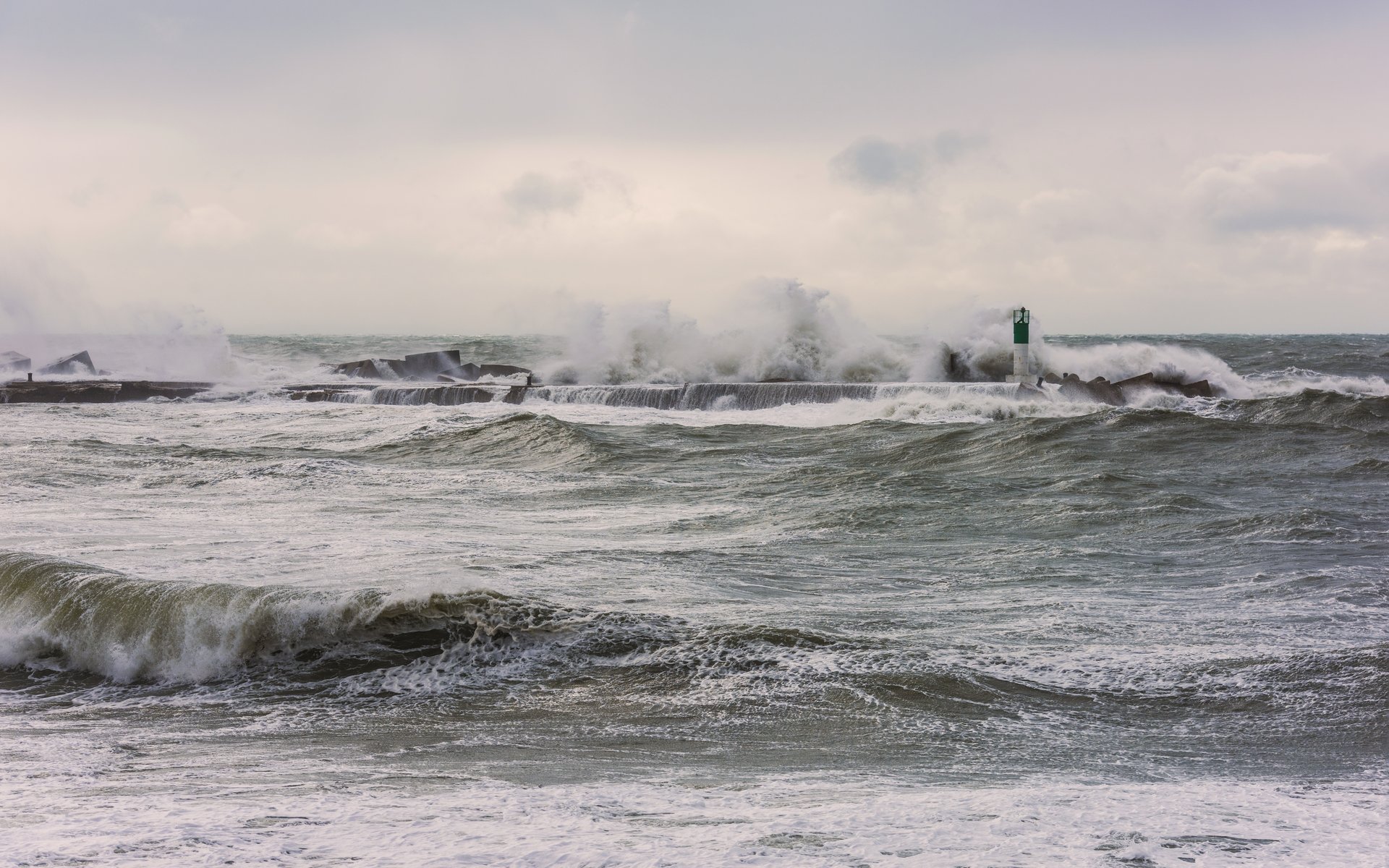
Waves break against a pier; the salt in this water arrived grain by grain, carried by rivers over millions of years.
Image Credits: Wikimedia Commons
Where the ocean's salt comes from
The story starts with rain. As rain falls through the atmosphere it absorbs small amounts of carbon dioxide, which makes it slightly acidic. That mildly acidic rain lands on rocks and wears them down, grain by grain, dissolving mineral ions out of the stone.
Rivers and streams collect those dissolved ions and carry them to the sea. The two ions that matter most are sodium and chloride, the ingredients of table salt. Together they account for more than 90 percent of all dissolved ions in seawater, according to the United States Geological Survey.
The scale is staggering. NOAA reports that rivers and streams flowing from the United States alone discharge about 225 million tons of dissolved solids and 513 million tons of suspended sediment into the ocean every year. Worldwide, rivers carry an estimated 4 billion tons of dissolved salts to the ocean annually.
Rocks are not the only source. On the seafloor, hydrothermal vents shoot mineral-rich water into the ocean where seawater seeps into hot crustal rock and returns loaded with dissolved metals and salts. Underwater volcanic eruptions add their share too, as seawater reacts with hot rock and dissolves minerals from it.
To grasp the total, consider the USGS comparison: if all the salt in the ocean were removed and spread evenly over Earth's land surface, it would form a layer more than 500 feet thick, about the height of a 40-story office building. That is hundreds of millions of years of river delivery, stacked up.
Why rivers stay fresh
If rivers deliver all that salt, why do they not taste salty? Because a river is constantly being refilled.
Rain replenishes rivers and streams with fresh water all the time, diluting the dissolved minerals as fast as they arrive. The salt never gets a chance to concentrate. NOAA puts it plainly: rain replenishes freshwater in rivers and streams, so they do not taste salty, while the ocean collects all of the salt and minerals from all of the rivers that flow into it.
Think of it as a bathtub with the tap running and the drain open. The water in the tub stays fresh because new water keeps arriving and old water keeps leaving. The ocean is a bathtub with the tap running and the drain plugged.
Fresh water is not salt-free, by the way. It contains many of the same dissolved minerals as seawater, just at concentrations far too low for your tongue to notice. The line between fresh and salty is a matter of degree, not kind.
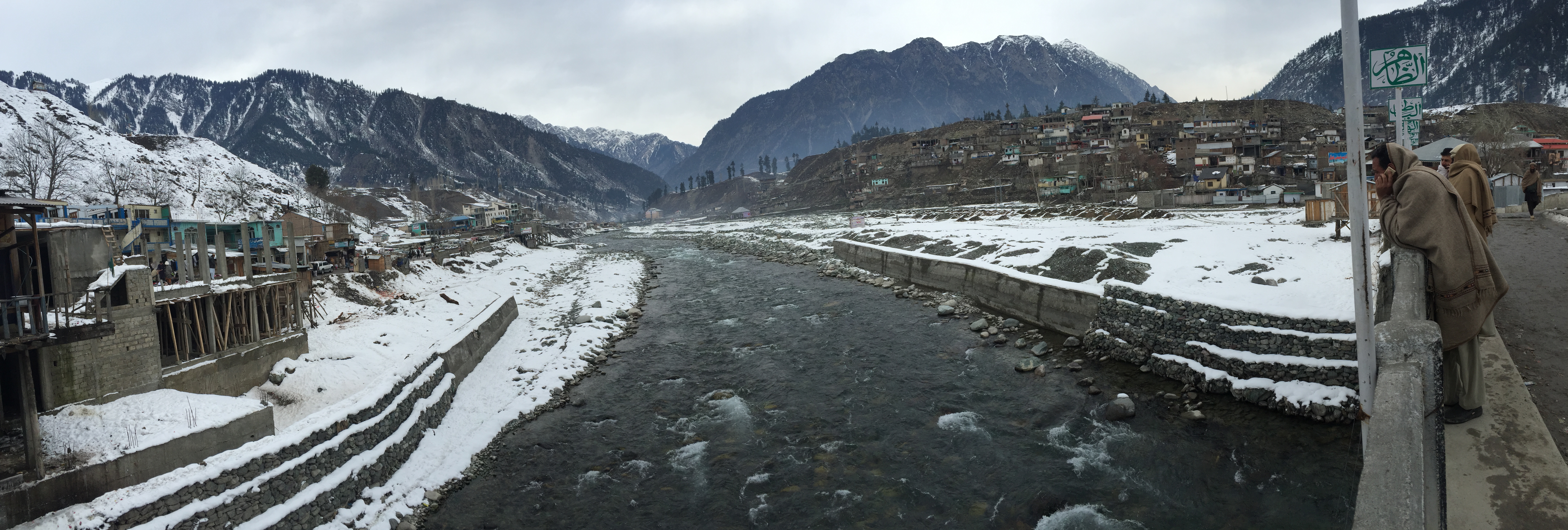
A mountain river carries dissolved minerals downstream; constant rain keeps its water fresh all the way to the sea.
Image Credits: Wikimedia Commons
What evaporation does to the balance
Evaporation is the engine that keeps the ocean salty and the rivers fresh. When seawater evaporates, only the water leaves. The salt stays behind.
That evaporated water rises, forms clouds, and falls again as rain, which is why rain is fresh. The cycle then repeats: rain erodes rock, rivers carry the minerals back to the sea, and the sea keeps the salt. Every loop adds a little more to the ocean's stockpile and none to the rivers'.
This same mechanism explains the saltiest lakes on Earth. The Great Salt Lake and the Dead Sea have no outlets, so water leaves only by evaporation and the minerals stay. They are rivers' endpoints taken to the extreme: all inflow, no outflow, and salt concentrations far beyond the ocean's.
Here is a twist most explainers miss. NOAA notes that the ocean is probably no longer getting saltier.
About as much salt is deposited as sediment on the ocean floor each year as rivers deliver, so gains roughly offset losses. The ocean's salt budget is balanced today; the great accumulation happened over geologic time.
Why some seas are saltier than others
Not all seawater is equally salty. The global average sits around 35 parts per thousand, but local conditions push it higher or lower.
The Red Sea and the Persian Gulf run saltier than average, according to salinity overviews. Both sit in hot, arid regions where intense evaporation removes water fast and little river inflow dilutes it. Polar waters run less salty, where melting ice and lower evaporation keep concentrations down.
Geography Realm summarizes the controls: rainfall, terrain and runoff, evaporation intensity, and ice formation all shift local salinity. Enclosed or nearly enclosed basins with high evaporation and low freshwater input climb the saltiest; regions with heavy rain and big rivers stay fresher.
This variation matters for ocean currents, since saltier water is denser and sinks, helping drive the deep circulation that moves heat around the planet. The salt in your local seawater is part of a planetary plumbing system, which ultimately runs on the same physics as why the earth has seasons: sunlight, water, and time.
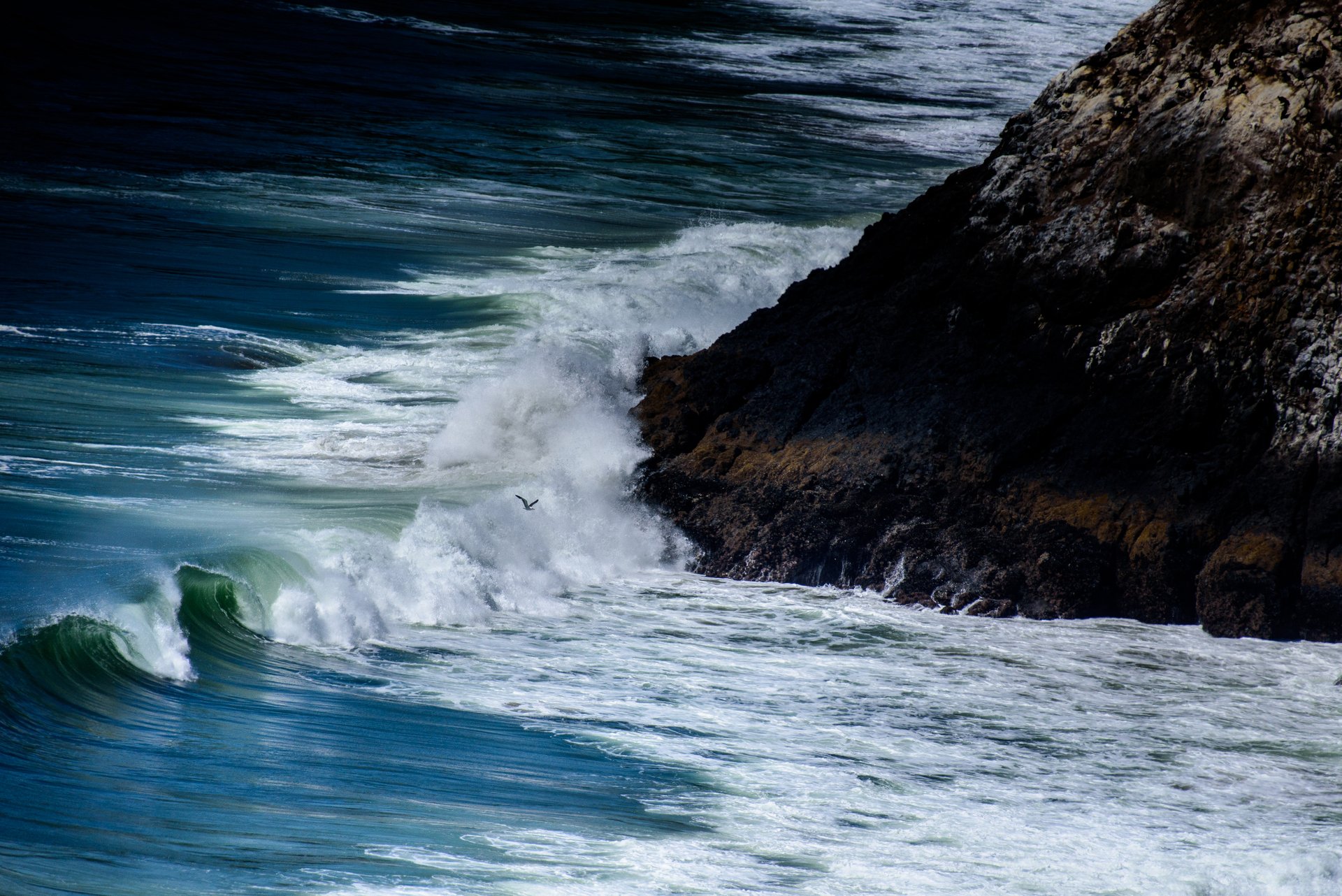
Waves crash on a rocky coast; evaporation lifts fresh water from the sea and leaves every grain of salt behind.
Image Credits: Wikimedia Commons
Frequently asked questions
Is the ocean getting saltier over time?
Probably not anymore. NOAA reports that yearly salt gains from rivers are roughly offset by salt deposited as sediment on the ocean floor. The ocean's salinity is effectively in balance today.
Why are the Great Salt Lake and the Dead Sea so salty?
They have no outlets. Water flows in carrying dissolved minerals and leaves only by evaporation, which leaves the minerals behind. Over time the concentration climbs far past seawater levels.
Do rivers contain any salt at all?
Yes. River water carries dissolved sodium, chloride, and other minerals, just at very low concentrations. Globally, rivers move about 4 billion tons of dissolved salts to the ocean each year, according to NOAA.
Why is the Red Sea saltier than most seas?
Intense evaporation in a hot, arid climate removes water quickly, while little rain or river inflow dilutes it. High evaporation plus low freshwater input is the general recipe for saltier seas.
The bottom line
The sea is salty because rivers have spent hundreds of millions of years delivering eroded rock minerals to it, and evaporation leaves every grain behind. Rivers stay fresh because rain dilutes them as fast as minerals arrive.
The ocean is the end of the line, and today its salt budget is roughly balanced. Next time you taste seawater, you are tasting mountains, dissolved one rainstorm at a time.
Tags: ocean science, earth science, water cycle, geology
Rive News is the research desk behind this publication, covering everyday science and practical explainers with sourced, verifiable facts.
Latest in Science
- Why the earth has seasons
- Why the sky looks orange at sunset
- Why we see lightning before we hear thunder
- When the Orionid meteor shower peaks in 2026
Get one practical explainer in your inbox every morning. Subscribe to the Rive News newsletter.
Published by Rive News. Information is for general purposes only.
Related stories

Why diamond is hard and graphite is soft when both are carbon
Diamond and graphite are both pure carbon, yet diamond is 10 on the Mohs scale and graphite is 1 to 2. The difference is not the atoms;

Why Hot Water Can Freeze Faster Than Cold: The Mpemba Effect Explained
Hot water can freeze faster than cold under specific conditions. The Mpemba effect, named for a 1963 schoolboy experiment, still divides
How Magnets Work at the Atomic Level: Spins, Domains, and Iron
Magnetism comes from electrons: their spin and orbits make each atom a tiny magnet. In iron, quantum forces align these atomic magnets into