
How do spiders make webs without getting stuck
By Rive News / Research desk | Rive News / Published October 20, 2026 at 9:00 AM PKT
Key takeaways
- Orb webs combine dry structural threads with glue-coated capture threads, and the spider walks only on the dry ones.
- Branched leg hairs called setae and a nonstick chemical coating keep glue droplets from grabbing the spider's legs.
- Careful footwork plus silk recycling lets spiders build, patrol and rebuild webs without ever getting trapped.
A spider web looks like a single sheet of silk, but it is really two tools in one. Some threads hold the structure up. Others carry glue that traps flying insects.
The spider lives on the first kind and hunts with the second. Its body is built to tell them apart, and to touch only the dry threads when it walks.
This article explains how spiders avoid their own glue, including dry structural threads, nonstick leg hairs, careful footwork, and the way old silk gets recycled.
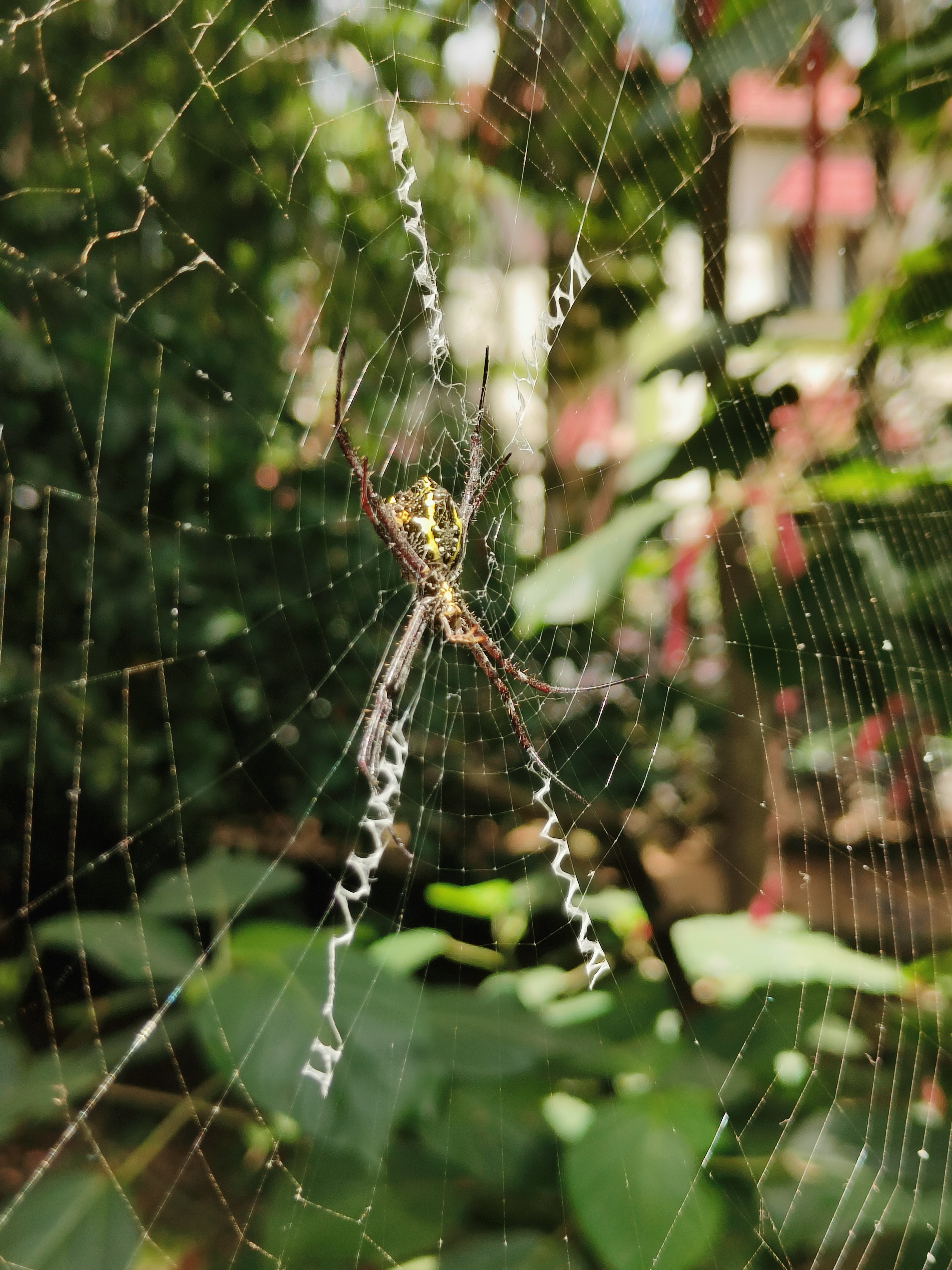
An orb-weaver spider rests at the hub of its web, where the threads it stands on are dry and free of glue.
Image Credits: Wikimedia Commons
Dry structural threads carry the spider
The radiating spokes of an orb web are called draglines, and they are not sticky at all. The concentric circles strung between them are coated with tiny glue droplets that do the catching.
A spider lays the dry spokes first and treats them like a scaffold. Only after that does it lay the sticky spiral, stepping carefully from spoke to spoke the whole way around.
The silk itself starts as liquid inside glands in the spider's abdomen. Spinnerets at the rear of the body shape it into threads that harden on contact with air, according to A-Z Animals.
About 50,000 spider species are known, and most never spin webs at all. All of them still produce silk, using it for shelter, safety lines and egg sacs instead.
Nonstick leg hairs do the gripping
Orb weaver legs are coated with hair-like structures called setae, and they all point down toward the tip of the leg. When the spider presses on a sticky strand, the strand slides along the hairs instead of pressing into the leg itself, AskNature reports.
The hairs are branched, which stops a strand from sliding all the way to the hair base. That small gap keeps glue droplets away from the leg surface.
Researchers have also found a nonstick chemical layer on the legs. How Everything Works describes it as "a specialized, nonstick chemical layer" that "acts much like cooking spray on a frying pan," so even a brushed droplet struggles to cling.
A-Z Animals notes that recent research revealed this chemical coating alongside the bristles. Dense, stiff bristles around the claws cut the contact area down even further.
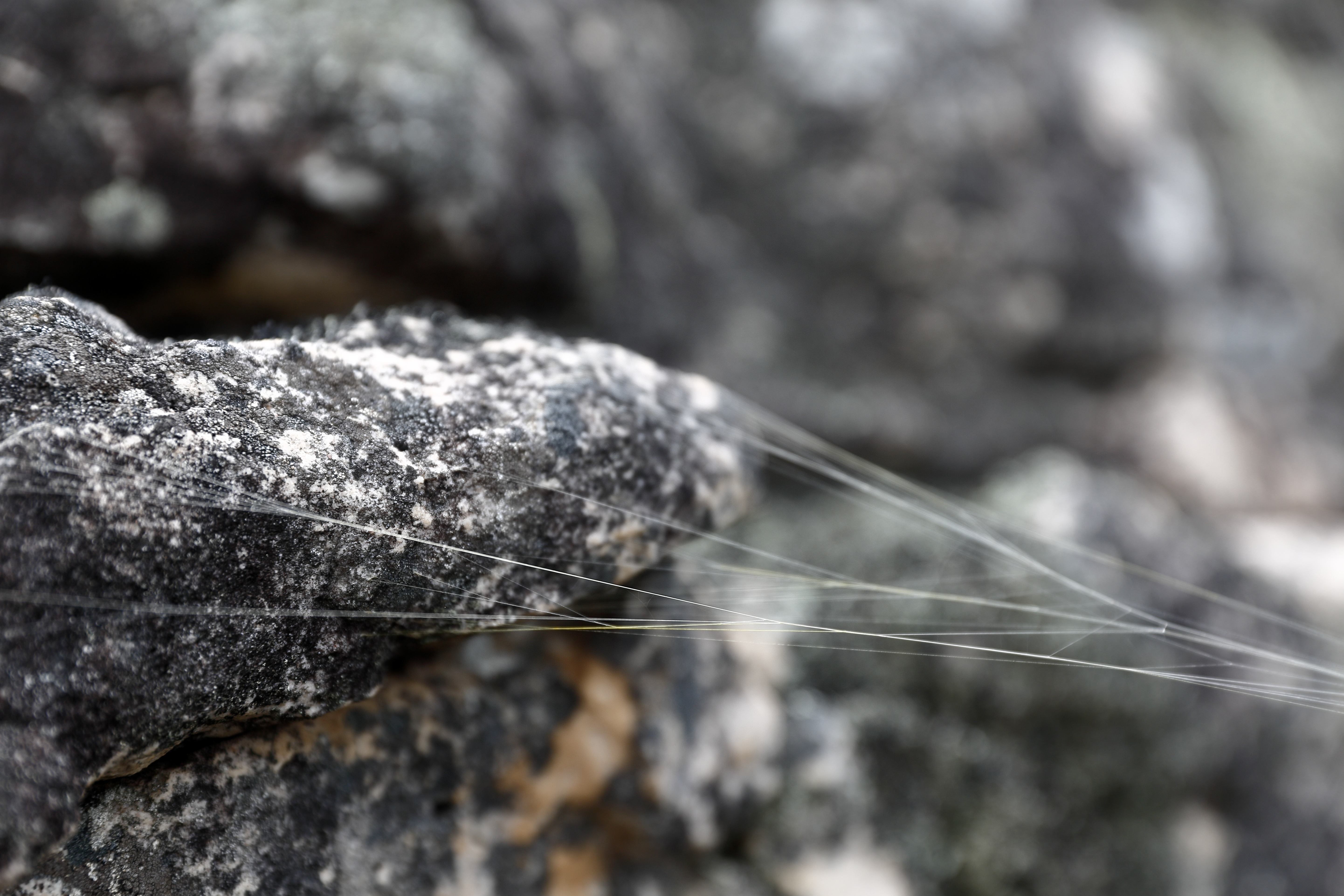
Close-up of orb web silk. The web mixes dry support lines with glue-dotted capture threads, and the spider learns to walk only the dry ones.
Image Credits: Wikimedia Commons
Careful footwork keeps glue away
Spiders choose their steps. AEANET notes that they grip the non-sticky threads with specialized claws and simply avoid walking on the glue-coated ones.
Movement across fresh silk is slow and deliberate. The spider contracts its legs to keep each touch light when it must cross near sticky strands.
The system is skilled, not perfect. If a spider is forced onto a sticky strand at the wrong angle, it can get tangled like any other victim, as How Everything Works points out.
Some species skip the problem entirely. Jumping spiders and wolf spiders hunt on foot instead of building webs, so the glue question never comes up for them, according to AEANET.
Old silk gets recycled
Many spiders eat their own webs when the silk gets old or damaged. Digesting the threads lets the spider recover the proteins and energy that went into making them, AEANET reports.
Rebuilding is routine work. A small simple web can go up in as little as 30 minutes, while a large complex orb web can take several hours.
Recycling also keeps the trap fresh, because glue droplets lose their stickiness over time. A spider that rebuilds daily always hunts with fresh glue.
Late summer and autumn are peak season. As the seasons shift and insect traffic rises, garden orb weavers build and rebuild almost every night. A fresh web beaded with dew catches the light the way a sunset sky does, which is why webs seem to appear out of nowhere on autumn mornings.
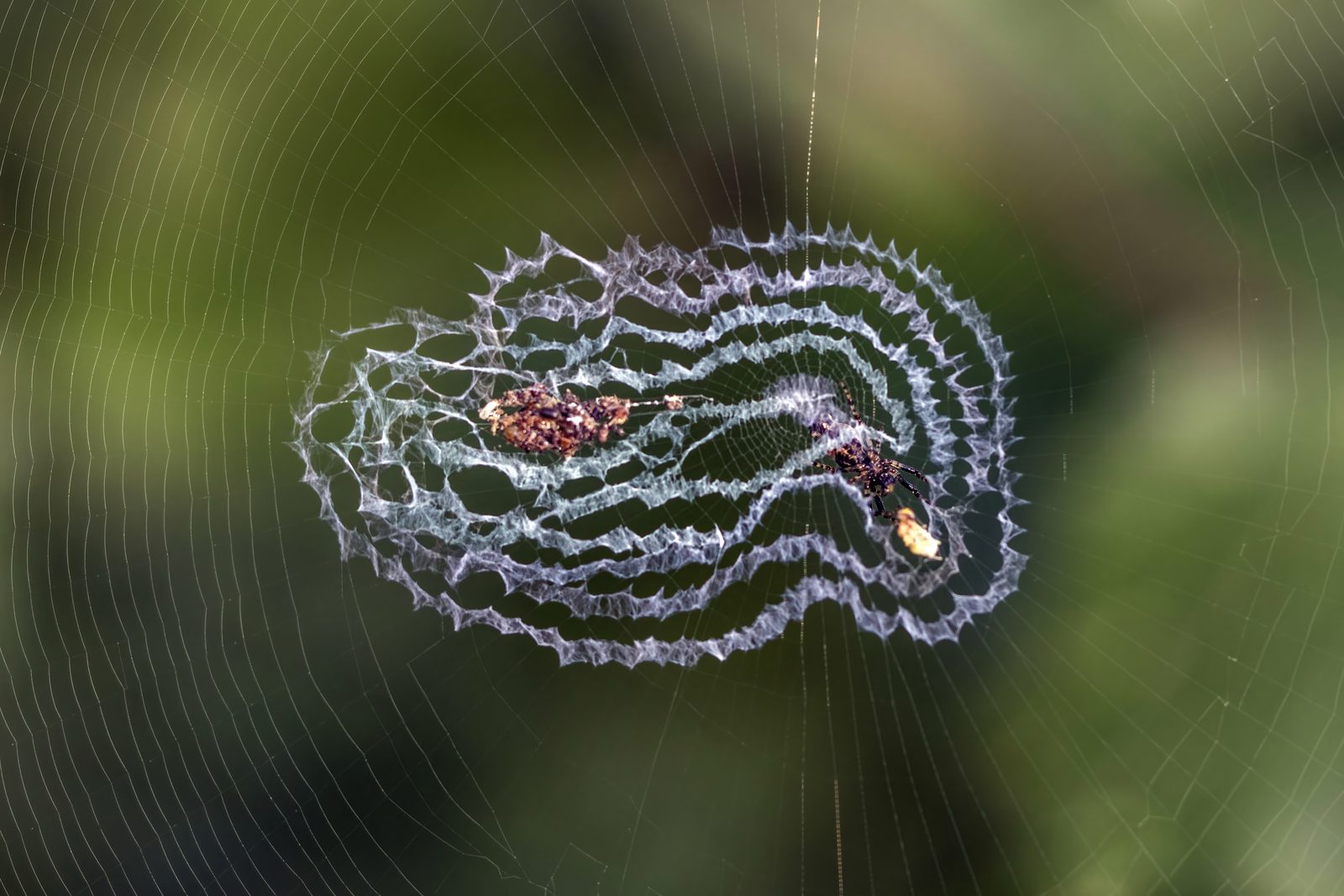
An orb weaver on its web near a zigzag band of silk called a stabilimentum, whose exact purpose researchers still debate.
Image Credits: Wikimedia Commons
Frequently asked questions
Do spiders ever get stuck in their own webs?
Yes, it happens. The nonstick system works when the spider moves carefully on dry threads, but a spider shoved onto sticky silk at a bad angle can get tangled just like prey. Researchers describe spiders as skilled at avoiding glue, not immune to it.
Is all spider silk sticky?
No. In an orb web, the radial spokes are dry dragline silk and only the spiral capture threads carry glue. Many species spin no sticky silk at all, and some hold prey with tangles of dry thread or even electrostatic forces.
How long does it take a spider to build a web?
It depends on size and complexity. AEANET reports that a small simple web can take as little as 30 minutes, while a large complex orb web can take several hours. Experienced spiders work faster, and many species rebuild daily.
Do spiders eat their webs?
Many do. Spiders recycle old or damaged webs by eating the silk, which lets them recover the proteins and energy used to make it. Recycling also replaces glue droplets that have dried out and lost their stickiness.
The bottom line
Spiders stay unstuck through a stacked system: dry structural threads to walk on, branched leg hairs and a nonstick coating to shed glue, careful steps, and daily recycling of old silk. No single trick does it alone.
Next time you spot an orb web, look for the spider at the hub, standing only on the dry spokes while the sticky spiral waits around it. For more everyday physics, read why you see lightning before you hear thunder.
Topics: spiders, spider webs, orb weavers, arachnids, nature
Rive News is the research desk behind Rive News's science explainers, covering how the natural world works in plain language.
Latest in Science
- Why Earth has seasons
- Why the sky turns orange at sunset
- Why you see lightning before you hear thunder
- Why the sea is salty but rivers are not
Subscribe to the Rive News newsletter for one science explainer in your inbox every morning.
Published by Rive News. Information is for general purposes only.
Related stories
Why diamond is hard and graphite is soft when both are carbon
Diamond and graphite are both pure carbon, yet diamond is 10 on the Mohs scale and graphite is 1 to 2. The difference is not the atoms;
Why Hot Water Can Freeze Faster Than Cold: The Mpemba Effect Explained
Hot water can freeze faster than cold under specific conditions. The Mpemba effect, named for a 1963 schoolboy experiment, still divides
How Magnets Work at the Atomic Level: Spins, Domains, and Iron
Magnetism comes from electrons: their spin and orbits make each atom a tiny magnet. In iron, quantum forces align these atomic magnets into