
NASA's Swift telescope falls back to Earth after failed rescue
Web StoryWatch this story in 15 seconds →Key takeaways
- NASA's Swift space telescope is falling back to Earth within days.
- The US Space Force predicts reentry on or around Friday this week.
- Most of the 1.5-ton telescope will burn up. A few dense parts may survive.
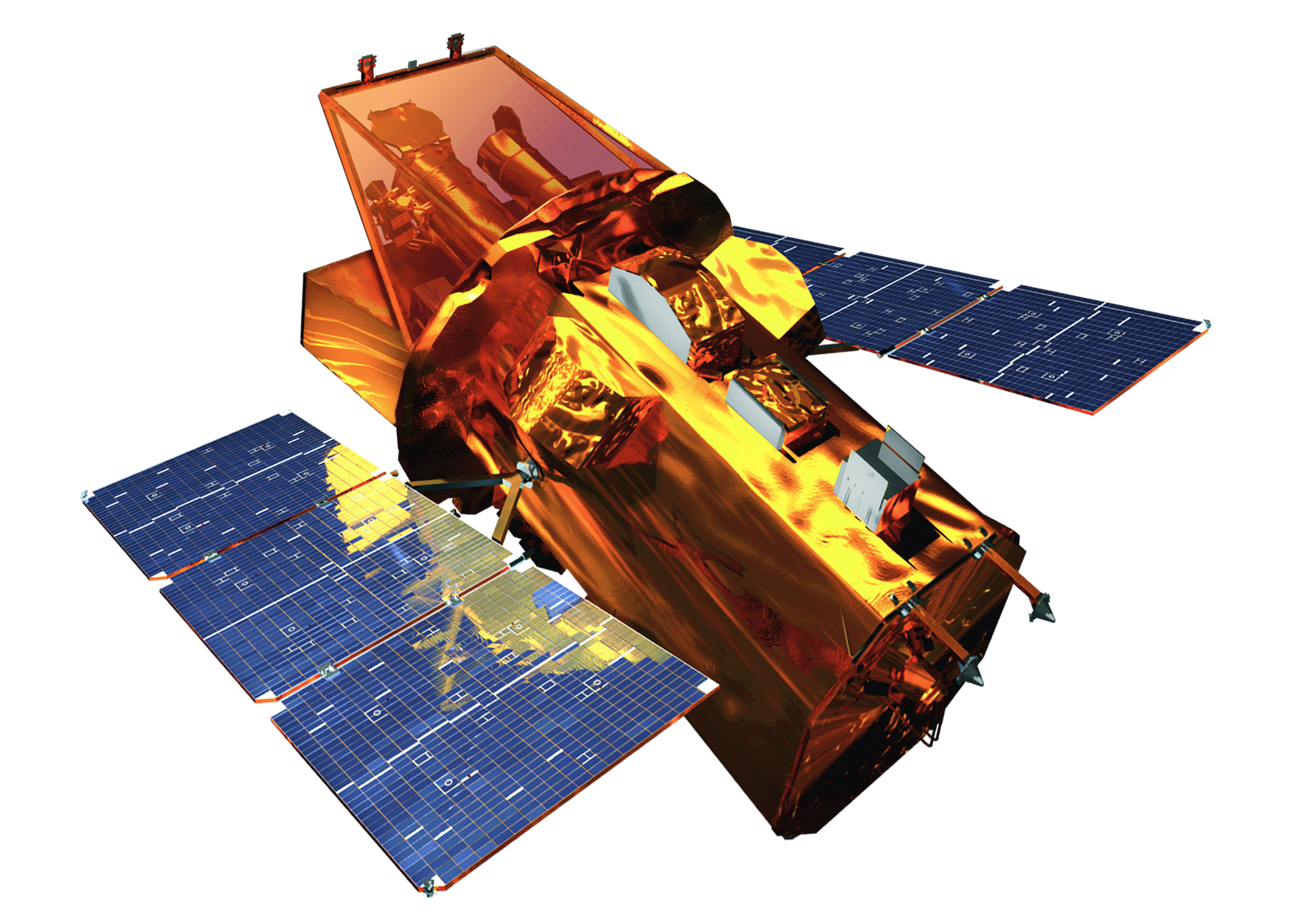
NASA's Swift space telescope is about to fall from the sky. After 22 years in orbit, it will burn up in Earth's atmosphere this week.
A rescue mission failed to save it. Now gravity is winning.
What happened
Swift ran out of altitude. It has been sinking lower for years. Intense solar activity dragged it down faster than planned.
NASA ended its science mission in late October. Swift's final observation came on October 20, after 22 years of work. By then, it was orbiting less than 171 miles above Earth.
The air is thicker at that height. The telescope could no longer hold still enough to study the stars.
Swift rode to orbit on a Delta II rocket in 2004. It was an old-style rocket. Today's Falcon 9 rockets are reusable.
The failed rescue
NASA did not want to lose Swift. About a year ago, it hired a company called Katalyst Space. The company built a three-armed robot named Link.
Link launched in July to push Swift into a higher orbit. The robot ran into trouble. Its steering system failed.
Link got no closer than 7 to 9 miles (12 to 15 kilometers) from Swift. The rescue was called off. Link burned up in the atmosphere in September.
After the rescue failed, Swift kept observing for a while. But by late October it was too low to work. Its control team at Pennsylvania State University shut down its systems.
Why it matters
Swift was a giant of astronomy. It launched on November 20, 2004. Its job was to hunt gamma-ray bursts.
These are the most powerful explosions in the universe. Swift found more than 2,000 of them. It also studied over 1,400 exploding stars.
Its data helped write about 7,000 scientific papers. Swift was astronomy's first responder. It could swivel fast toward sudden events in the sky.
Bigger telescopes, like Hubble and Webb, would then take a deeper look. NASA calls Swift a revolution in rapid-response science.
Falling spacecraft are becoming common. Low orbit is more crowded every year.
A Russian satellite recently drifted close to a US satellite. It shows how busy low orbit has become.
Darren McKnight of the tracking firm LeoLabs keeps count. He said reentering objects are now 10 times more common than five years ago.
What happens next
Most of Swift will burn up. It weighs about one and a half tons. But a few dense parts may survive the fall.
Brad Cenko is the mission's chief scientist. He said pieces made of tungsten could reach the ground. Tungsten is denser than lead.
Some mirror parts may survive too. What exactly might survive? Swift's six heavy reaction wheels, which spin inside the telescope to aim it.
Parts of its X-ray and optical telescopes may also make it down. The 52,000 tiny lead tiles of its detector mask will melt.
"Only a handful of small, scorched fragments are expected to make it down. Nothing recognizable as a telescope," said Dean Sladen, an aerospace engineer.
Where will it fall? Most likely the ocean. Swift orbits in a band about 21 degrees above and below the equator.
Much of that area is water. But Africa, Australia, India, Southeast Asia, and South America are also under the path. The US Space Force is tracking the orbit.
The exact time and place are still unknown. McKnight said the fall is not expected to pose a casualty risk on the ground.
The end of an era
"Swift delivered an incredible, lasting return on investment for the nation," said Shawn Domagal-Goldman, a director at NASA Headquarters. Swift was built for a two-year mission. It worked for more than 10 times that long.
John Nousek led the mission's control team at Pennsylvania State University. "We've known this day would come since before Swift was launched," he said.
"At least in low-Earth orbit, what goes up must come down."
If you want a quieter sky show this week, try the October Hunter's Moon. It will not burn up.
NASA says Swift leaves behind nearly 22 years of data. That archive will fuel new discoveries for decades. It holds over 1.5 million images and about 12 terabytes of science.
The telescope is falling. Its legacy will stay in orbit for a long time.
Related stories

Why diamond is hard and graphite is soft when both are carbon
Diamond and graphite are both pure carbon, yet diamond is 10 on the Mohs scale and graphite is 1 to 2. The difference is not the atoms;

Why Hot Water Can Freeze Faster Than Cold: The Mpemba Effect Explained
Hot water can freeze faster than cold under specific conditions. The Mpemba effect, named for a 1963 schoolboy experiment, still divides

How Magnets Work at the Atomic Level: Spins, Domains, and Iron
Magnetism comes from electrons: their spin and orbits make each atom a tiny magnet. In iron, quantum forces align these atomic magnets into