
How Do Scientists Know the Earth Is 4.5 Billion Years Old? Dating Explained
Key takeaways
- Earth is about 4.54 billion years old, plus or minus roughly 50 million years, based on radiometric dating of meteorites and ancient rocks.
- Earth's own crust is too recycled to preserve its formation date, so scientists date meteorites that formed with the solar system.
- The figure comes from dozens of independent measurements that converge, not from a single rock or one laboratory.
Nobody has ever found a rock stamped with Earth's birthday. The widely cited figure, about 4.54 billion years, was built from several independent lines of physical evidence that all point to the same ancient moment. Understanding how researchers produced that number makes it far more interesting than the number itself.
The short version is that scientists read atomic clocks locked inside meteorites and the oldest Earth materials, then cross-checked the results. This article explains how scientists date the Earth, including why Earth rocks alone are not enough, how radiometric dating works, the Canyon Diablo breakthrough of 1953, and what zircon crystals add to the picture.
Why Earth's own rocks can't give the full answer
It would be convenient if the oldest rock on Earth carried the planet's formation date. It does not, and geologists understood the problem early.
Earth's crust is constantly recycled. Plate tectonics drags surface rock back into the mantle, volcanoes resurface the land, and erosion grinds mountains down grain by grain.
The US Geological Survey explains that Earth's oldest rocks alone cannot reveal the planet's formation date because the crust has been repeatedly melted, eroded, and recycled. Every surviving rock is younger than the planet itself. The oldest intact formation, the Acasta Gneiss in northwestern Canada, dates to about 4.03 billion years, and that is already half a billion years younger than the accepted age of Earth.
Scientists needed material that had escaped the recycling. That is where meteorites come in. Most meteorites are fragments of asteroids that formed early in the solar system's history and then sat in space, untouched by geology.
They preserve the chemistry of the original solar system material from which Earth itself accreted. Dating them dates the formation of the whole planetary system.
How radiometric dating works
Radiometric dating relies on a simple, dependable fact. Certain atoms are unstable and decay into different atoms at a steady, predictable rate.
Uranium-238, for example, decays into lead-206 with a half-life of about 4.47 billion years. That means that in any sample of uranium-238, half of it will have become lead-206 after 4.47 billion years, and half of the remainder will transform in the next 4.47 billion.
By measuring the ratio of the parent isotope to the daughter isotope in a mineral, scientists can calculate how much time has passed since the mineral formed and the clock started. The decay rates do not change with temperature, pressure, or chemical environment. They are among the most stable constants in nature.
Several isotope systems are useful for deep time. Uranium-235 decays with a half-life of about 704 million years, and potassium-40 with a half-life of about 1.25 billion years.
The uranium-lead method has a special advantage: it offers two independent decay chains, uranium-238 to lead-206 and uranium-235 to lead-207, which lets scientists cross-check a date against itself. If both clocks agree, confidence in the result is high.
Carbon dating, the method most people have heard of, is useless for this job. Its isotope, carbon-14, has a half-life of only about 5,730 years, so it is spent after tens of thousands of years. Dating the Earth needs clocks with billion-year hands.
The 1953 Canyon Diablo breakthrough
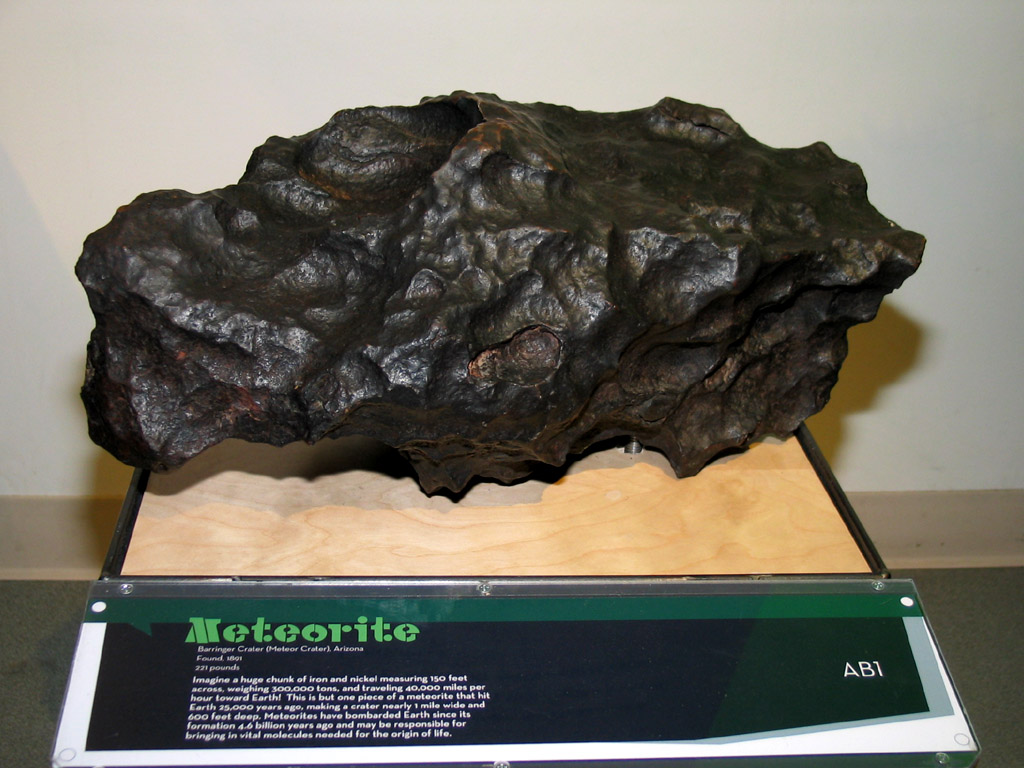
The decisive measurement came from geochemist Clair Cameron Patterson at the California Institute of Technology. In 1953, Patterson measured the ratios of lead isotopes in the Canyon Diablo meteorite, the iron meteorite responsible for Meteor Crater in Arizona. His results put a tight constraint on the age of the Earth.
Patterson's insight was to compare lead isotope ratios in ancient Earth materials with those in meteorites. Lead on Earth has been chemically separated and mixed by geological processes, but meteoritic lead preserves the original mix from the early solar system. Plotting the two against each other anchored the whole timeline.
More than 70 meteorites of different types have since been measured radiometrically, with ages clustering between 4.53 and 4.58 billion years. The consensus figure of 4.54 billion years, with an uncertainty of about 50 million years, comes in large part from these lead-isotope comparisons. That error bar is under one percent of the total, which is remarkable for an event nobody witnessed.
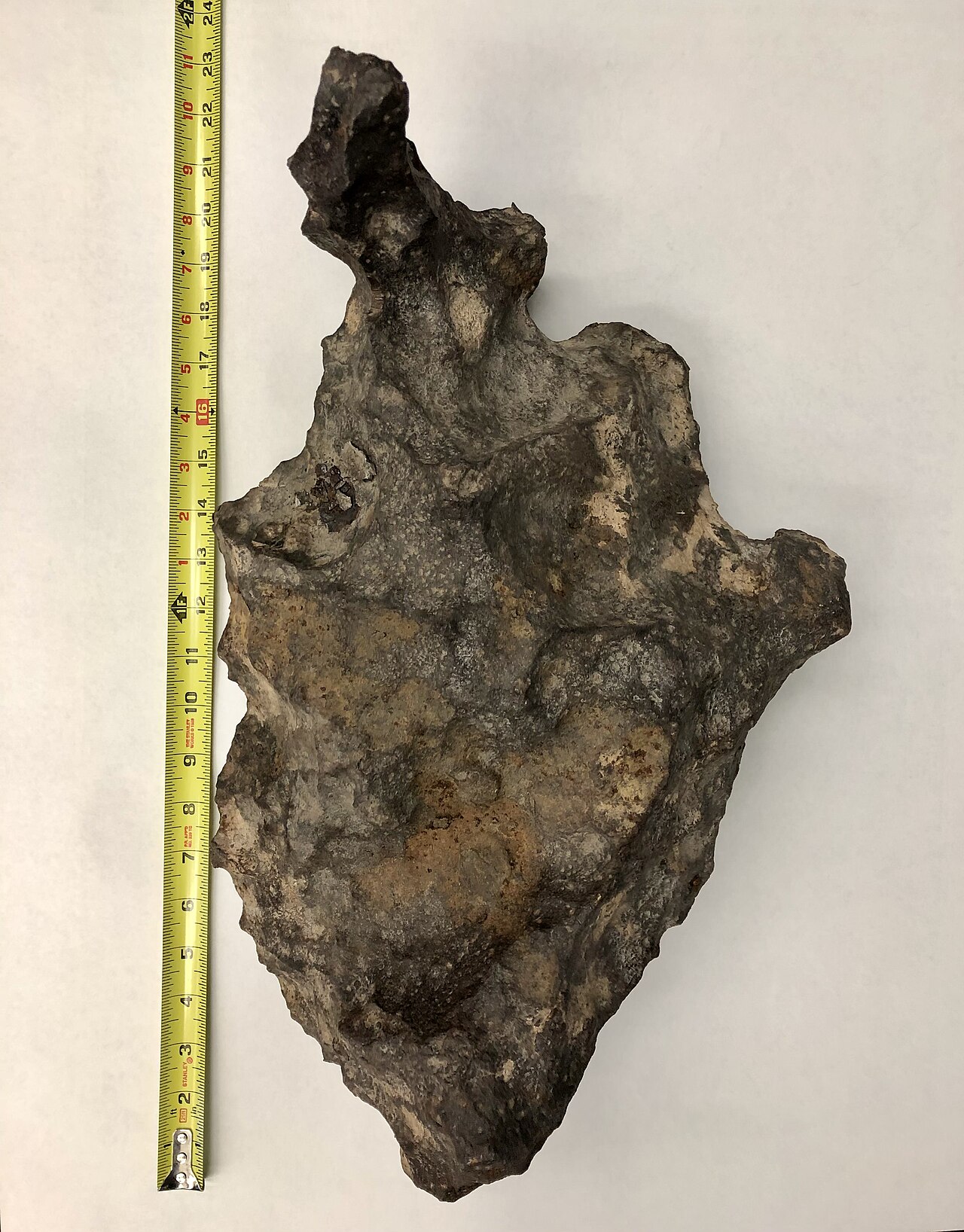
Lunar samples strengthen the case. Rocks collected during the Apollo missions date to as much as 4.51 billion years old. The Moon formed from material blasted out of the early Earth system, so its ancient rocks should be nearly as old as the Earth itself, and they are.
What zircon crystals add to the picture
Meteorites give the system's age, but Earth rocks give a floor: the planet cannot be younger than its oldest surviving material. Tiny zircon crystals from Western Australia, found in the Jack Hills region, have been dated to about 4.4 billion years.
Zircons are ideal timekeepers because they readily incorporate uranium into their structure while rejecting lead when they crystallize. Any lead found in them later must come from decay, which makes the clock clean to read.
These crystals tell a striking story. Within 150 million years of Earth's formation, the surface had cooled enough for oceans to exist and for zircons to crystallize in them. The planet went from a molten ball of accreting rock to a world with liquid water in a geological eyeblink.
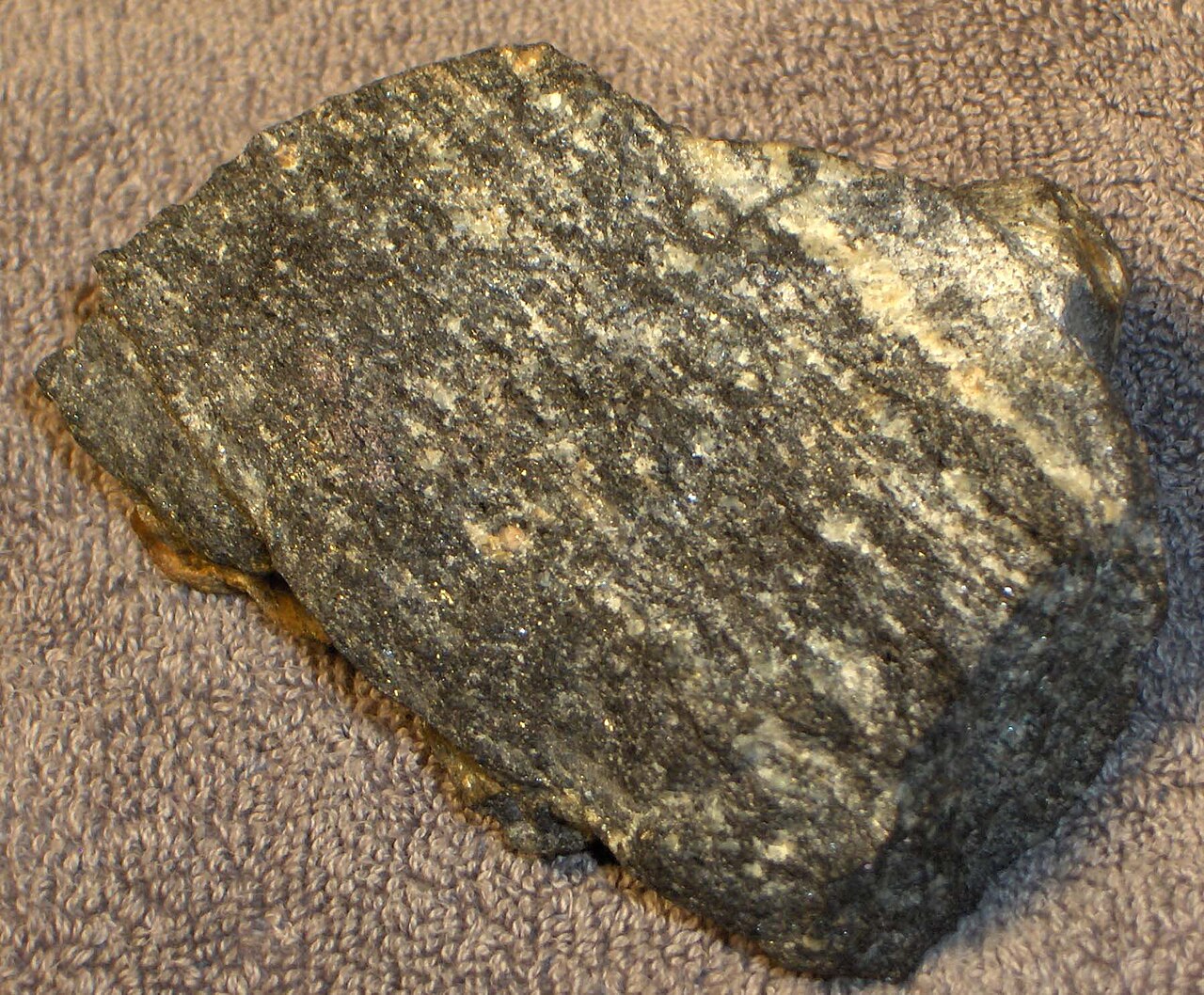
The Acasta Gneiss itself, at 4.03 billion years, is the oldest known intact rock formation, but it is far from the oldest Earth material. Individual zircon grains push half a billion years further back. Each discovery tightens the window between Earth's formation and the appearance of a habitable surface.
How the 4.54 billion year figure holds up
Skeptics sometimes ask whether all of this rests on one assumption. It does not.
The strength of the 4.54 billion year figure is convergence. Meteorites of different types, dated in different laboratories, using different isotope systems, keep landing in the same narrow window.
The uranium-lead system agrees with the potassium-argon system. Chondritic meteorites agree with iron meteorites.
Apollo lunar rocks agree with the Canyon Diablo results. When independent methods built on different physics reach the same answer, the shared answer is on solid ground.
Earlier attempts at the problem show how far the science has come. Nineteenth-century physicists tried to date the Earth from its cooling rate or from the salt accumulating in the oceans.
Those methods produced answers ranging from tens of millions to a few hundred million years, and each rested on an assumption that turned out to be wrong. Radiometric dating replaced guesswork about rates with direct measurement of atoms.
The figure also fits the broader picture. The universe is about 13.8 billion years old, and the oldest known stars are over 13 billion years old. The solar system forming 4.54 billion years ago puts Earth at roughly one-third the age of the universe, exactly where independent astronomy expects it.
FAQ
Why not just date the oldest Earth rock and call it done?
Because the oldest intact rocks postdate Earth's formation by hundreds of millions of years. Geological recycling destroyed the original crust. Dating the oldest rock gives a minimum age, which is useful, but the true formation date has to come from meteorites that escaped the recycling.
What is a half-life, exactly?
A half-life is the time it takes for half of a sample of radioactive atoms to decay. It is a statistical property of the isotope and never changes. Uranium-238's half-life of 4.47 billion years makes it a natural yardstick for solar system history.
Could the decay rates have been different in the past?
There is no evidence for it, and the physics says they are effectively constant. Decay rates are set by fundamental nuclear forces, and measurements across cosmic distances confirm they behave the same in ancient starlight. Multiple isotope systems agreeing on one date is itself strong evidence the clocks ran steadily.
How precise is 4.54 billion years?
The accepted uncertainty is about plus or minus 50 million years, under one percent. That precision comes from the tight clustering of more than 70 meteorite dates. For context, 50 million years is an eyeblink on a 4.54 billion year timeline but longer than the entire age of primates.
The bottom line
Scientists know Earth is about 4.54 billion years old because atomic clocks in meteorites, lunar rocks, and ancient zircons all point to the same formation era. No single rock proves it. Dozens of independent measurements converging on one number do, and that convergence is why geologists treat the figure as settled.
Tags: geology, radiometric dating, earth science, meteorites, science explainer
Latest in Science
- Why helium makes your voice squeaky
- How touchscreens detect your finger
- Why we see shimmering mirages on hot roads
- Why salt melts the ice on winter roads
Get one clear science explainer in your inbox every morning. Subscribe for free.
Related stories

Why diamond is hard and graphite is soft when both are carbon
Diamond and graphite are both pure carbon, yet diamond is 10 on the Mohs scale and graphite is 1 to 2. The difference is not the atoms;

Why Hot Water Can Freeze Faster Than Cold: The Mpemba Effect Explained
Hot water can freeze faster than cold under specific conditions. The Mpemba effect, named for a 1963 schoolboy experiment, still divides

How Magnets Work at the Atomic Level: Spins, Domains, and Iron
Magnetism comes from electrons: their spin and orbits make each atom a tiny magnet. In iron, quantum forces align these atomic magnets into