
Mars rock found in Sahara is 4.1 billion years old: why scientists call it a Rosetta Stone
Web StoryWatch this story in 15 seconds →Key takeaways
- A rose-colored rock found in the Sahara in 2022 is a piece of Mars. It formed over 4.1 billion years ago.
- The rock is named Teghaza 001. Scientists dated it with a new method. The sample was smaller than a fingernail.
- Its minerals show that water soaked deep into the young Mars. So the planet was once warmer and wetter.
- Only three Mars rocks on Earth are older than four billion years. This is one of them.
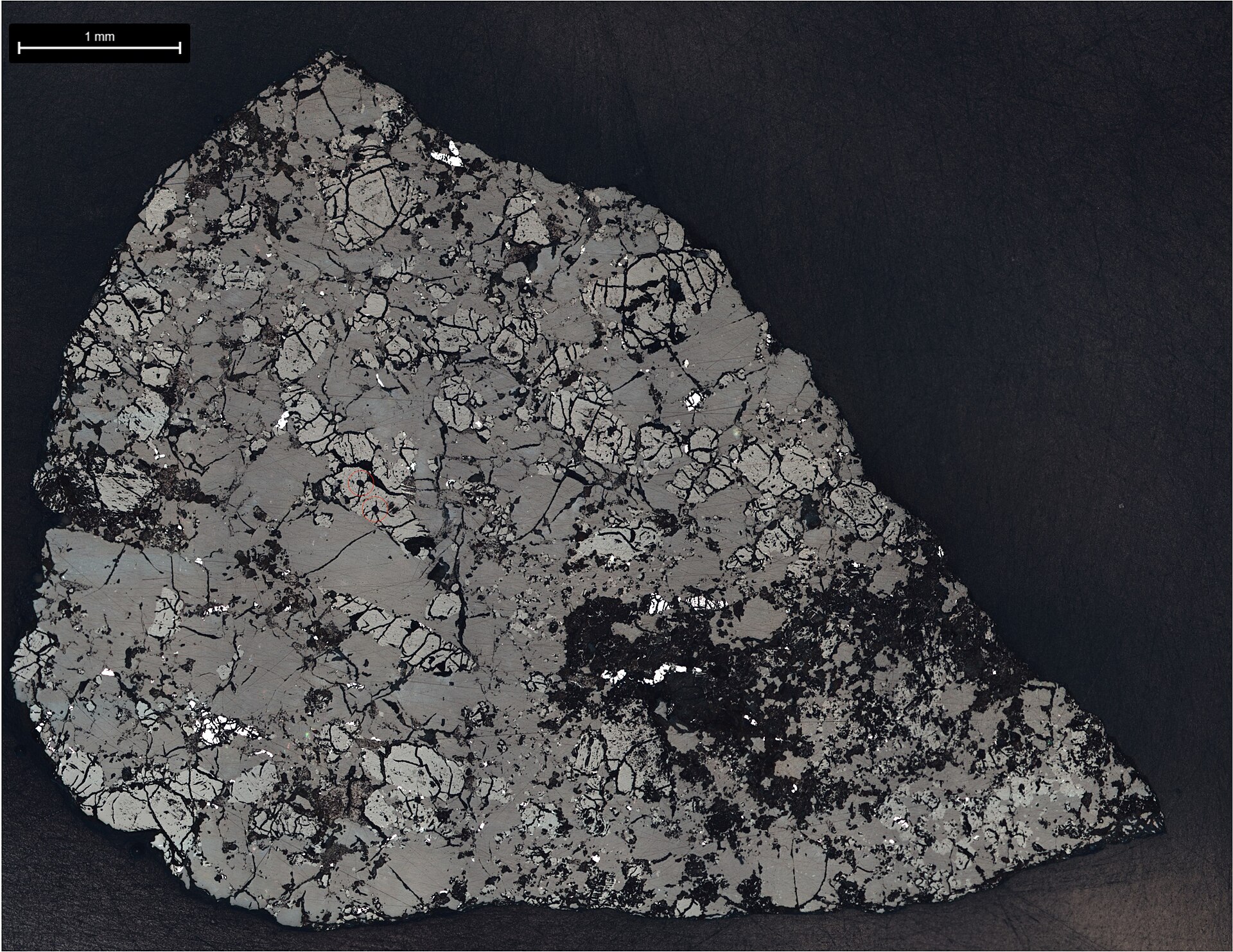
A strange pink rock turned up in the Sahara Desert. It is a piece of Mars. Scientists say it formed more than 4.1 billion years ago.
The planet was still young back then. It is the first detailed study of this rock. It appeared in the journal Science.
The rock is called Teghaza 001. It is one of the oldest pieces of Mars ever found on Earth. One peer reviewer gave it a famous name: "a Rosetta Stone for Mars." That means the rock can help scientists decode the early history of the red planet.
What happened
In September 2022, meteorite hunters found eight stone fragments in the Sahara Desert. Hunters picked them up about 21 miles from the village of Bir Chali in Mali.
That is about 34 km. At first, nobody knew how old they were or where they came from.
Researchers at the University of New Mexico studied the rock first. They matched its oxygen isotopes to other Mars rocks.
Oxygen isotopes act like a chemical fingerprint for each planet. The match proved the rock came from Mars.
The rock was named Teghaza 001. The name comes from the Teghaza salt plain in Mali, near the discovery site. All eight pieces weigh about 800 grams together.
That is close to two pounds. The largest chunk is about the size of a fist.
A team led by Yang Liu of NASA's Jet Propulsion Laboratory then studied the rock. The team published its findings in Science on October 29, 2026. NASA funded the study.
Researchers came from JPL, Caltech, and UCLA. Others came from the University of New Mexico and the University of Maine.
Dating the rock was the hardest part. The team found tiny zircon crystals inside it.
Zircons contain uranium, which breaks down into lead at a steady pace. By measuring the uranium-to-lead ratio, scientists can read the rock's age like a clock.
The team also used a new method called in-situ rubidium-strontium dating. It was developed by Caltech coauthor Francois Tissot. Instead of dissolving the whole sample, the method studies single mineral grains on the surface.
It used a piece of Teghaza 001 smaller than a fingernail. This matters because rare Mars rocks should be preserved for future study, not destroyed.
The results shocked even the researchers. The rock was altered by water on Mars about 4.1 billion years ago. That means the rock itself must have formed even earlier than that.
"It was only after we started looking closely that we realized this meteorite is really unique," Liu told NASA. "One of the paper's reviewers called it a Rosetta Stone for Mars."
Why it matters
Only three Mars rocks on Earth are older than four billion years. The other two are Allan Hills 84001 and Northwest Africa 7034. The first was found in Antarctica in 1984. The second is nicknamed "Black Beauty.
" It was found in Morocco in 2011. About 435 Mars meteorites are known on Earth. According to the new study, Teghaza 001 may be the oldest of all.
Teghaza 001 is different from its two ancient peers. Allan Hills 84001 is made almost entirely of one mineral. That limits what it can tell us.
Teghaza 001 has a rich mix of volcanic minerals. These include feldspar, pyroxene, and iron-titanium oxides.
This mix records how the crust of Mars cooled. It cooled from hot magma billions of years ago.
The chemistry also matches orbiter observations of Mars. NASA's Mars Reconnaissance Orbiter has mapped the cratered southern highlands. No lander has ever touched that region.
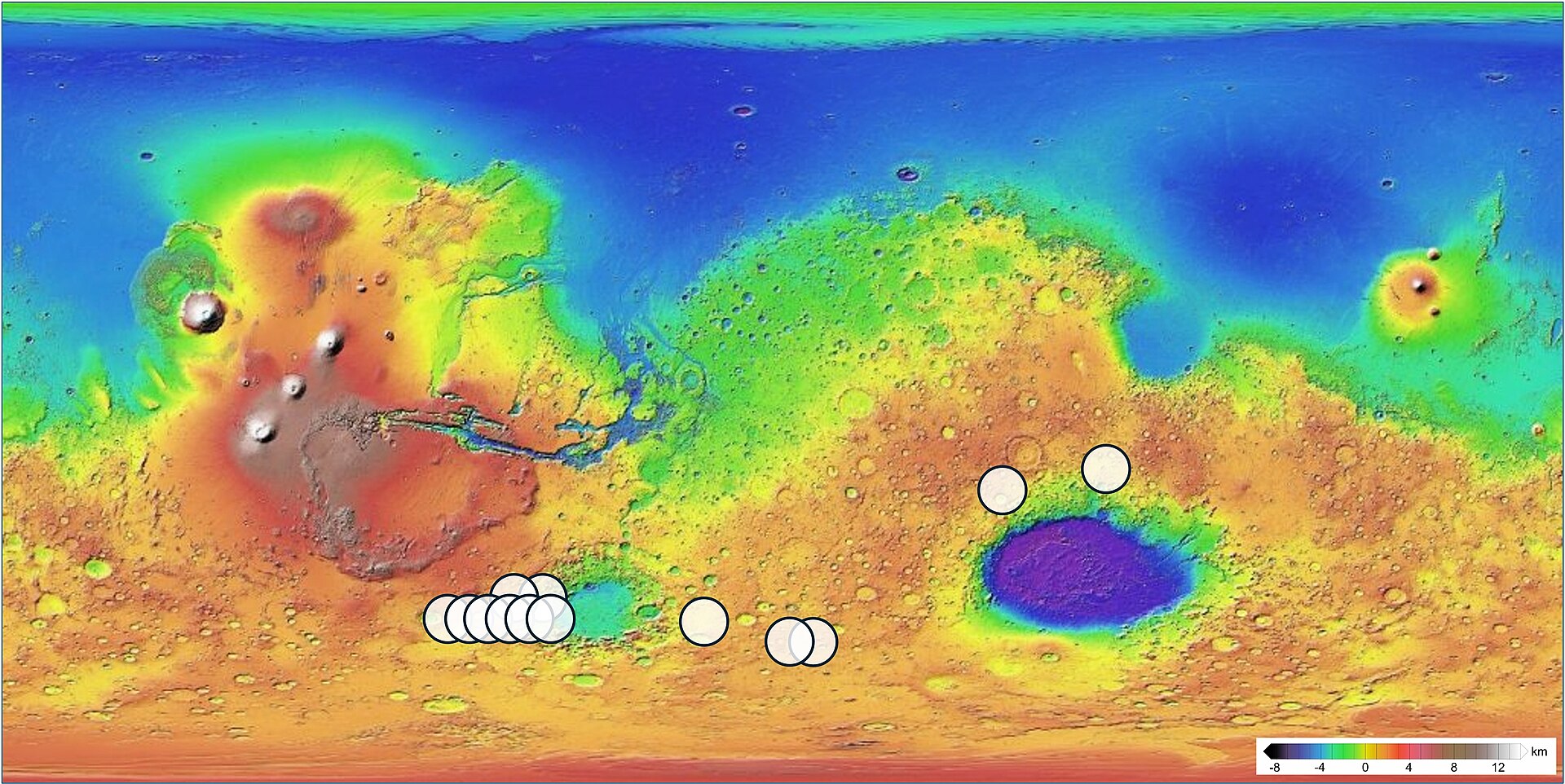
"This is really our first piece of Martian crust from a part of Mars we've never had a sample of before," said Lee Saper, the study's second author. Saper did the research at JPL and now works at NASA's Ames Research Center.
The biggest payoff is the water story. The minerals show that water soaked deep into the young planet's crust. It mixed with molten rock there.
This resembles the water cycle we see on Earth today. The rock is a coarse-grained type called gabbro.
Gabbro forms when magma cools slowly underground. Its chemistry shows the cooling magma interacted with water beneath the surface of Mars.
Water is a key ingredient for life as we know it. The findings support an idea about early Mars. Saper told Reuters that it had the ingredients and conditions needed for life.
But he was careful about the limits of the discovery. The rock does not prove that life ever existed on Mars.
"The rock is a snapshot in time that shows how a wetter early Mars with a thick atmosphere could have supported habitable conditions," Saper said. He added that those conditions faded fast.
This happened over the first billion years of the planet's life. It turned Mars into the dry world we see now.
This matters because Mars once looked very different. Billions of years ago it had rivers and lakes. It even had an ocean in the northern hemisphere, according to Reuters.
Today Mars is cold, dry, and barren. But its atmosphere once trapped much more heat. Teghaza 001 helps scientists understand when and how that change happened.
What happens next
The October 2026 paper is only the first full study of the rock. A separate paper already looked at the rock's water content in detail.
It appeared in Science Advances in June. Liu and her coauthors expect many more studies to follow.
"We've only scratched the surface," Liu said.
One open question is the rock's journey. We know an impact blasted it off the surface of Mars. It flew through space until its path crossed Earth's.
It then fell through the atmosphere as a meteor and landed in the Sahara. But scientists do not know when it landed on Earth, Liu told Reuters.
Another open question is the exact crater it came from. Researchers may narrow the list of 13 possible source regions.
That will happen as more orbiter data comes in. Each new Mars mission adds detail that can be compared with the rock's chemistry.
The new dating method matters too. Tissot said his lab is one of very few in the world. Few labs can date rocks this way.
The team hopes to date more Mars meteorites. It also wants to date samples from other planets and their moons.
Meteorites like Teghaza 001 are often found in deserts or snowy plains. They stand out against the bare ground there, JPL explains. Scientists confirm a rock is Martian by matching its minerals and chemistry.
They compare them with data from NASA missions. That data comes from the Viking landers and from the Curiosity and Perseverance rovers.
For now, Teghaza 001 is a time machine to a young Mars. It is a window into a time when the planet was warmer and wetter. That time ended billions of years ago.
As Liu put it to Reuters, the rock is "a witness to a time. " We will likely hear more from it. New studies will keep digging into its ancient minerals.
Related stories
Why diamond is hard and graphite is soft when both are carbon
Diamond and graphite are both pure carbon, yet diamond is 10 on the Mohs scale and graphite is 1 to 2. The difference is not the atoms;
Why Hot Water Can Freeze Faster Than Cold: The Mpemba Effect Explained
Hot water can freeze faster than cold under specific conditions. The Mpemba effect, named for a 1963 schoolboy experiment, still divides
How Magnets Work at the Atomic Level: Spins, Domains, and Iron
Magnetism comes from electrons: their spin and orbits make each atom a tiny magnet. In iron, quantum forces align these atomic magnets into